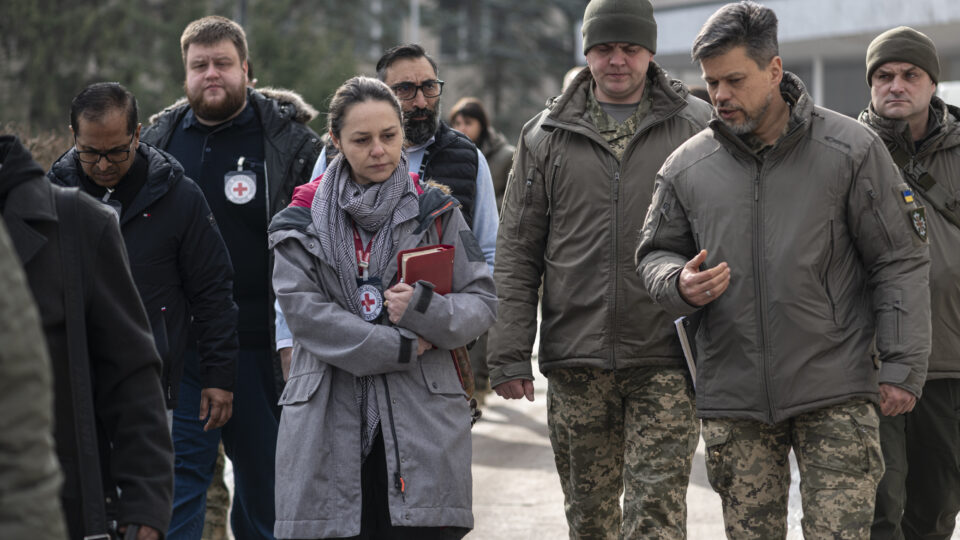
The international delegation, headed by Ana Lucía Bueno, ICRC Public Health Coordinator, and Sujit Panda, Head of the Physical Rehabilitation…

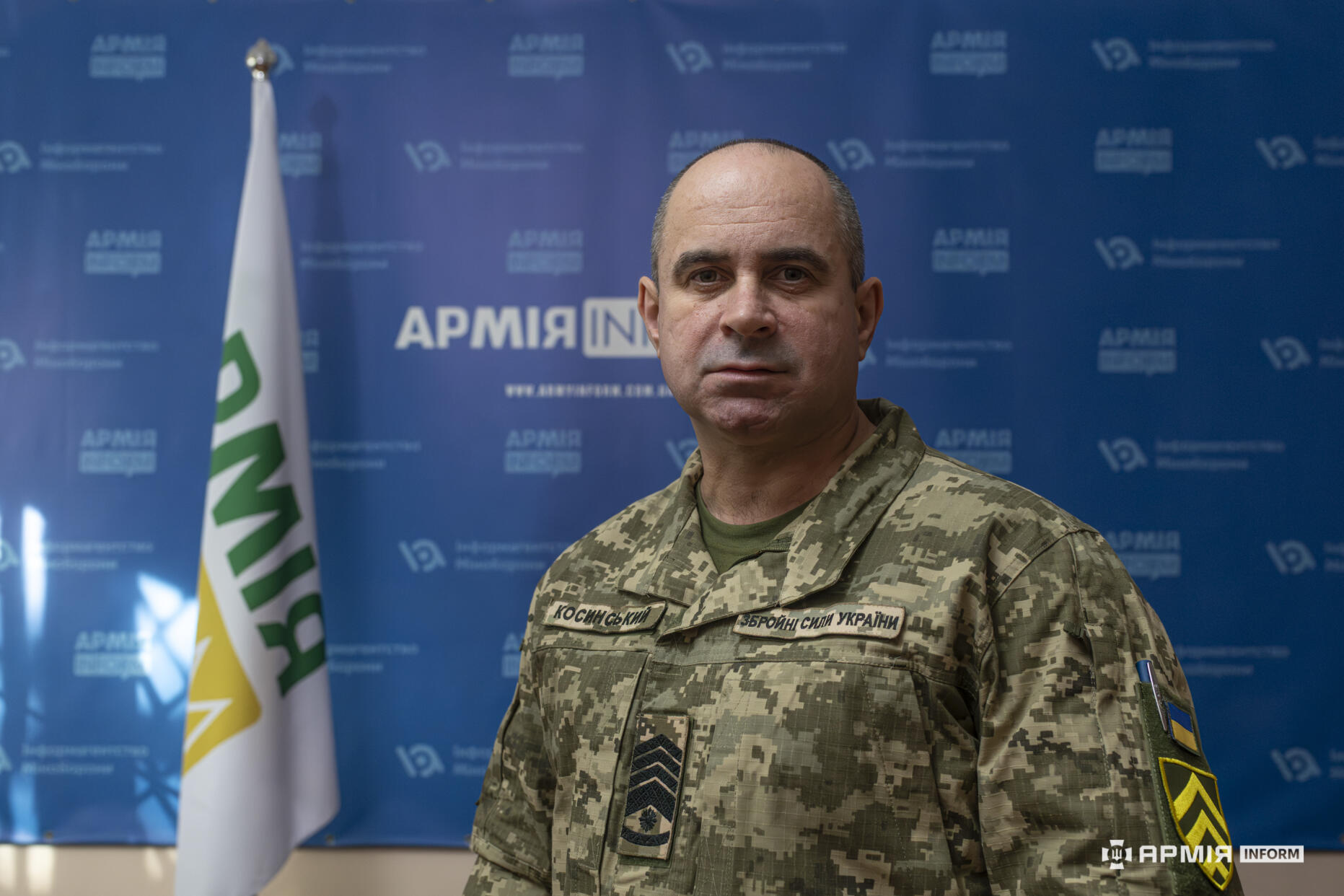
Basic General Military Training (BGMT) is conducted by the training centers of the Armed Forces of Ukraine, which have instructors, weapons, equipment, training grounds, and more at their disposal.
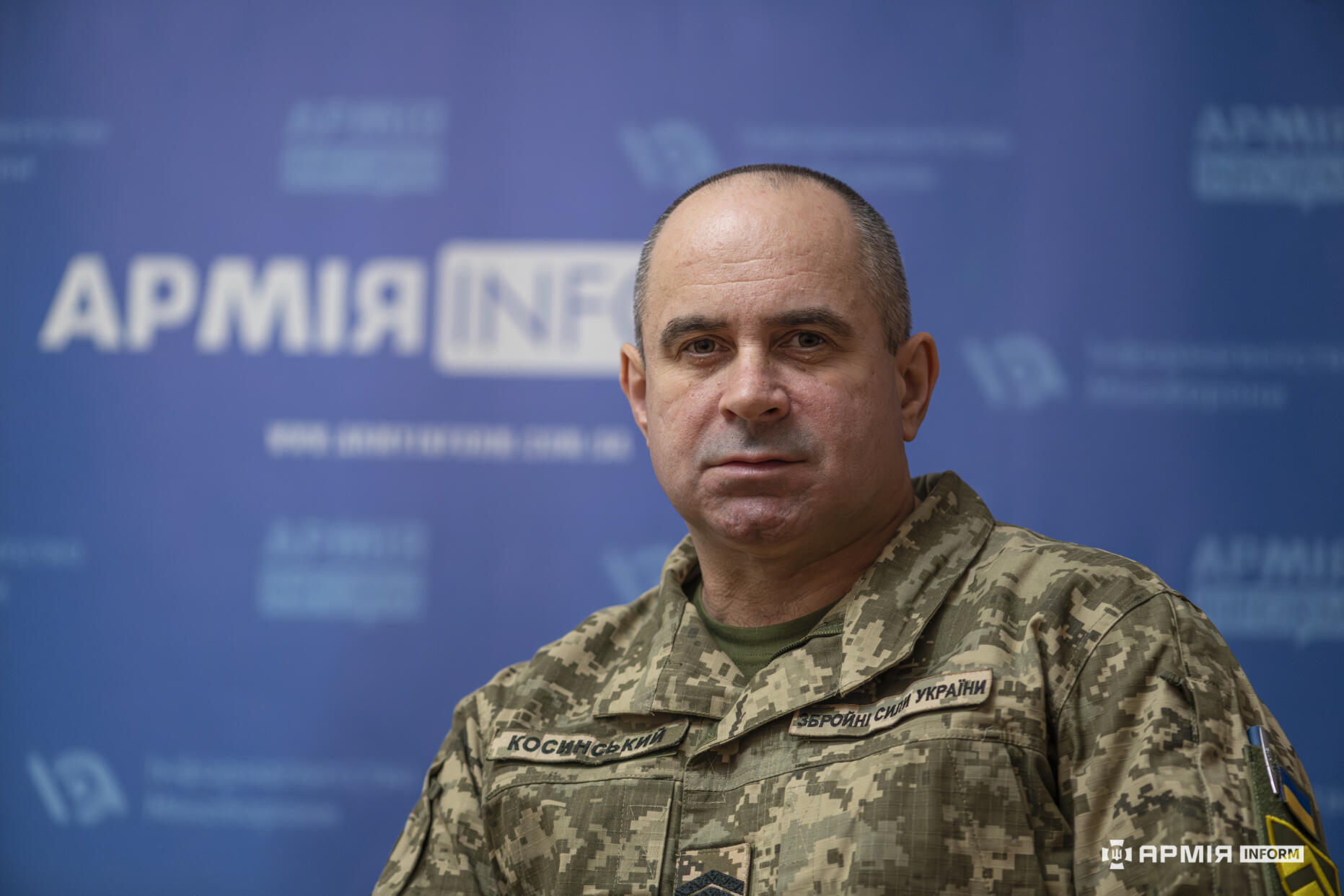
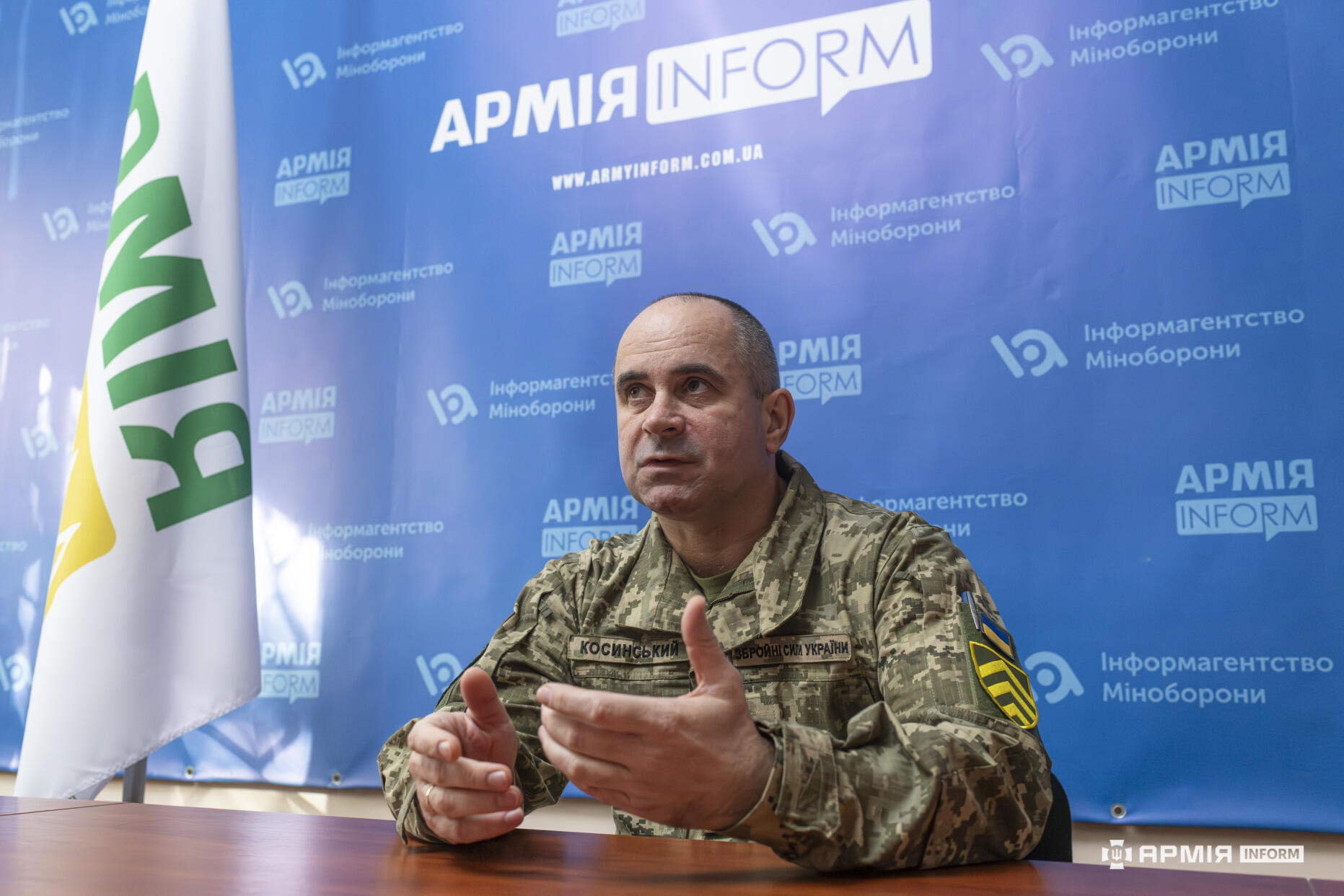
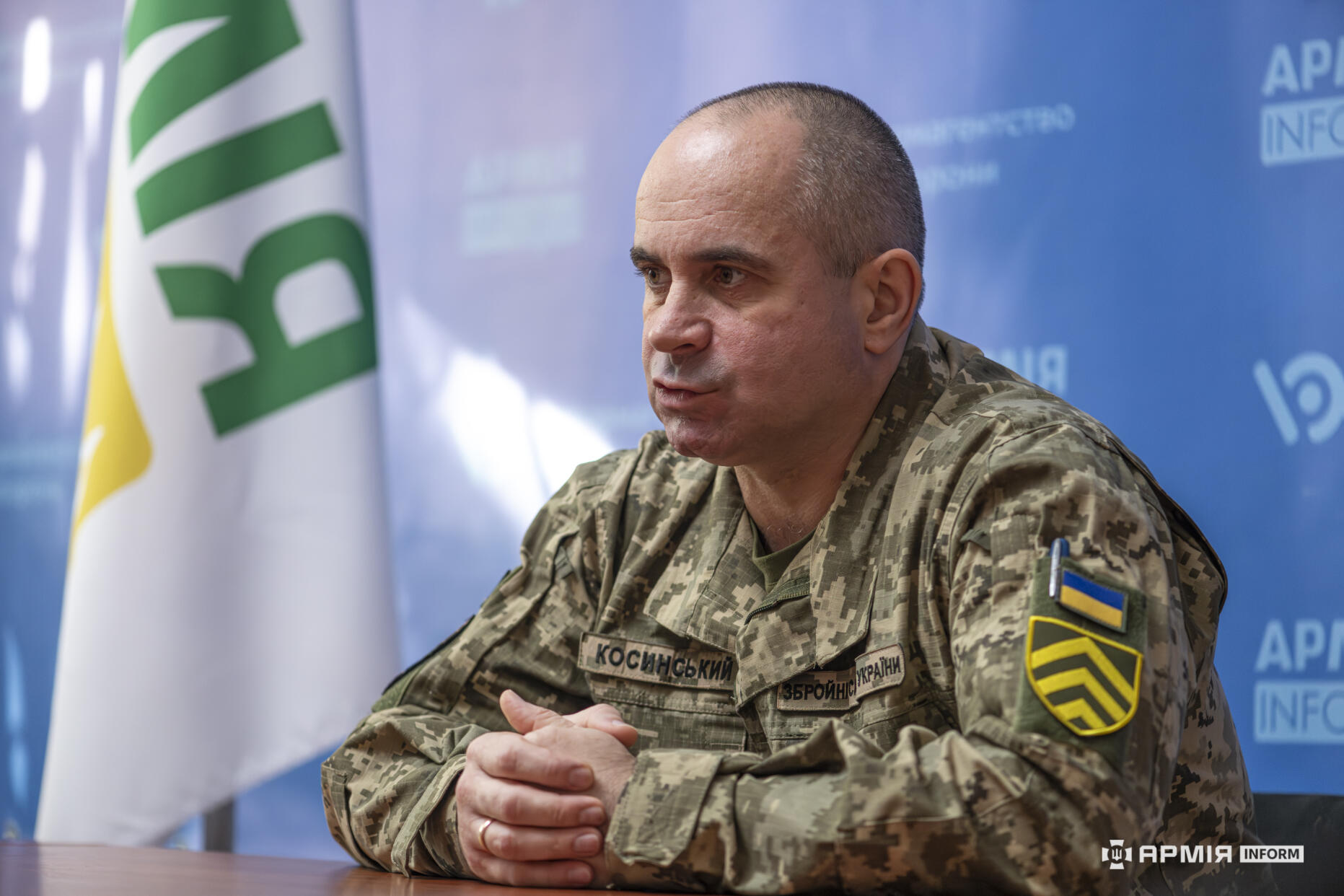
Senior Sergeant of the Armed Forces of Ukraine Oleksandr Kosynskyi explained in an interview with an ArmyInform correspondent when BGMT was introduced, how Russia’s full-scale invasion changed soldier training, and what skills an instructor at a training center must possess.
— Tell us when and how Basic Military Training appeared in the Armed Forces of Ukraine. After all, it did not always exist…
— When I assumed the position of Senior Sergeant of the Armed Forces of Ukraine, BGMT did not exist. At that time there were gatherings of new recruits or a young-recruit course, which was also called “quarantine” or KMB (kurs molodoho biitsa — young fighter course). In different units the duration varied. According to regulations it was not to exceed one month before the Oath ceremony, but it could last two or three weeks. These courses were held at different times. The program hardly included any professional training. It was a general drill: how to wear a uniform, what subordination is, the duties of a soldier and of personnel on duty, how to make a bed, drill exercises. The task was to make a person entering the army as disciplined and prepared for further service as possible. Fire training was very limited. At the end of KMB, there was shooting — nine rounds. It was unclear where you shot — and that was it, you were ready for the Oath.
Since 2005, when the development of a professional NCO corps began, some programs began to improve. Approved programs for training young soldiers, riflemen, etc. appeared. Elements of tactical and shooting training gradually increased, but it was still insufficient. Since 2014, we began working with NATO experts involved in the NATO DEEP (Defence Education Enhancement Program), which aims to improve the education and training of NCOs and officers. And they immediately said: if we are building a professional training system for your NCOs, we cannot avoid addressing Basic Military Training.
We spent a lot of time implementing BGMT. Some structures responsible for staffing and training opposed it because it involved different approaches, took more time, delayed filling positions, and so on. We even launched BGMT instructor courses on our own initiative — Lithuanian specialists came and trained such instructors for three months. But eventually, in 2017, we succeeded in getting the term “Basic General Military Training” approved in regulatory documents.
At first BGMT lasted only one month — they would not agree to more. But over time we achieved an extension to three months. Initially, these three months were only for contract service members going into combat units, while others — medics, finance personnel, lawyers, etc. — had one month. Later, practically right before the full-scale war began, the duration reached three months for absolutely everyone. Two BGMT schools were created within the training centers of the Land Forces. Discussions even began about establishing a single Basic General Military Training center for the entire Armed Forces, which would allow cascading standardized training for everyone joining the Armed Forces of Ukraine. This would have dramatically improved the quality of BGMT, as everything would be concentrated in one center, allowing proper instructor development, effective training processes, and quicker resolution of issues. But the full-scale invasion prevented this.
— What is the current state of Basic Military Training?
— At the beginning of the full-scale invasion, BGMT disappeared entirely. Brigades and battalions were formed in extremely short timeframes — sometimes in just two weeks. In spring 2022, I served as Senior Sergeant of the operational-strategic group of troops “Khortytsia”. Working in units along the front line, I began meeting mobilized men and women who had received no training at all.
They were drafted, and while the battalion, regiment, or brigade was being formed, someone might train them on the range, but there was no structured program like BGMT, and they entered combat having none of the skills they actually needed. In May 2022, I reported to the Commander-in-Chief of the Armed Forces of Ukraine that this was a serious problem requiring a solution, and I proposed that new recruits, conscripts, and mobilized personnel must undergo at least 30 days of BGMT before deploying to combat zones.
Deputy Commander-in-Chief Lieutenant General Yevhen Moisiuk shared this view, and thanks to him the initiative was implemented. Since June 2022 BGMT reappeared, now lasting up to 30 days.
However, again, different commanders conducted it differently until the requirement was codified into law.
Today BGMT has a unified program, followed by everyone entering the Armed Forces of Ukraine. The program is constantly being refined, the duration increased, and new subjects are being integrated.
— Where is BGMT conducted now? What hinders improving training quality?
— It was not easy to deploy BGMT for the massive number of people who joined in 2022–2023 — thousands. New training centers, units, and battalions were created. Naturally, we wanted to man them with the best sergeants, but in practice this didn’t happen — people without combat or instructional experience were often appointed. Brigade commanders did not always send their best personnel to training centers… Many qualified instructors were sent to the front at the beginning of the invasion, and it was difficult to secure their return. All this affected BGMT quality. And in subsequent years, as you know, ongoing efforts have been made to improve training quality.
Today we have training centers that have reached very high levels of BGMT. But we must understand: perfection will not be achieved until BGMT lasts three months. Only in three months can a person mentally become a soldier. During this time you can work on physical fitness, bring them up to standards, deepen shooting skills to make a real marksman, and integrate modern technologies: drones, Starlinks, communication systems, EW systems, etc. Tactical medicine also needs to be taught to the point where soldiers perform key actions reflexively. Many aspects cannot be taught fully in just a month and a half. So three months is ideal, but given the current situation, this duration is unrealistic.
In the current hot phase of the war, we must train people quickly — our time is limited. To do this effectively we need very strong instructor teams.
Some training centers have reached a good level even under these constraints.
But there are centers that have not, and some where training is frankly poor. No matter how often we go there, replace instructors or unit commanders, the training does not improve significantly. I say this because I gather real data, work with different brigades, and receive feedback from commanders and senior sergeants — what they think about recruits arriving from various centers. Improving BGMT must be the main priority, because it is the foundation upon which professional NCO training is built — it is called basic for a reason.
— Where do you find instructors to train the recruits?
— In BGMT overall, an instructor must be able to explain, demonstrate, and present material effectively to service members. They must have some combat experience, understand what really happens on the battlefield, and know how everything works in reality. But they also need a solid professional background and must be experts in the specialty they teach: if it’s shooting — then a shooter; if tank operation—then a tank operator, etc. And they must be methodically trained — able to transfer their personal knowledge and skills effectively.
These are demanding requirements for mobilized service members, who now largely form the NCO corps of the Armed Forces of Ukraine. You can find such people only in combat brigades. Therefore training centers are constantly searching for suitable candidates — a very difficult task. Commanders do not want to release their best sergeants, and not all sergeants want or are motivated to leave combat units for training centers — and this is not just about money.
Beyond needing qualified instructors, there are other challenges. One is the nature of service at a training center, where an instructor has a heavy workload, not only preparing for and conducting classes.
They stand duty shifts, serve as supervisors of tent camps — managing personnel and ensuring daily routine tasks are performed. They lead morning exercises, formations, meal procedures. And they still need time for themselves.
Training centers hold six training days a week, with 9–10 hours of classes daily. If lessons begin at 08:00, they finish at 18:00–19:00. This means instructors must gather recruits beforehand, take them to sometimes distant training sites, start on time, and after classes return them and restore training materials. There are also night classes. So instructors work non-stop from Monday to Saturday, like spinning tops, with only Sunday for personal time — unless they’re on duty.
Instructors have almost no personal time and quickly burn out. They lack time for self-development and even proper preparation for classes.
Another issue is the material base. For example, to teach someone to throw a grenade far and accurately, they must throw real grenades, not a mock-up. But there are not enough live grenades — this affects training quality.
Now the Commander-in-Chief of the Armed Forces of Ukraine has initiated measures to address these issues. For example, ensuring instructors do not get pulled away from instruction for duties — expanding security units to handle that. Instructors should focus solely on conducting training.
Decisions have also been made to improve the organizational structure of training platoons. We want to increase the number of instructors in training companies and create dedicated subject-area instructor groups: tactical training, fire training, tactical medicine. This would reduce the load on platoon instructors, who currently teach everything. Platoon instructors would handle general matters and assist with subject-specific lessons.
We also want to introduce drill instructors at the training-squad level, responsible for instilling military mentality, discipline, and improving recruits’ physical fitness — distributing responsibilities across the daily and weekly training cycle.
As always, there are opponents of these ideas — those who do not understand or who obstruct. Those who previously blocked BGMT are now obstructing needed reforms in training. But I am confident we will overcome these challenges and achieve results. It’s just unfortunate that we are losing so much time.
— Obviously, instructors, just like junior commanders, also need to be trained…
— Yes. Currently, the Armed Forces of Ukraine have a three-level system for instructor training. When I assumed the position of Senior Sergeant of the Armed Forces of Ukraine, the concept of instructor courses did not exist in the Armed Forces at all. The first instructor courses were once initiated by General Viktor Muzhenko, back when he was Deputy Chief of the General Staff. At that time, in Desna, they began conducting instructor courses on fire training, tank and combat-vehicle driving, weapons employment of combat vehicles, and on the so-called “Warrior Combat Survival System”, the predecessor of the “BARS” system. And then we began following the example of our colleagues from the United Kingdom, the United States, and other NATO countries and introduced methodological courses for instructors.
The idea is that a sergeant who becomes an instructor must, by definition, already know, be able to do, and possess everything required. So training an instructor means giving them methodology: how to structure a class correctly, prepare for it, work with learners, and effectively transfer their knowledge and skills.
But now, for these courses — the instructor courses — once again, commanders of certain units do not send their best sergeants, because the best sergeant is needed here and now in the unit itself. And the people who do arrive often do not fully possess instructor qualities or are not sufficiently competent in certain areas of training. Therefore, we must work to bring them up to the required level. These are the realities: the “material” we receive is not always suitable for training as a future methodologist. And we have to adjust the programs so that a person can at least strengthen their basic soldier skills, and only once they have reached certain standards do they move on to methodological training as a future instructor.
There is also a major problem: at present, those sent to instructor courses are mostly not the people intended for appointment to instructor positions — candidates who, if they do not complete the training, will not be appointed to instructor roles. Instead, most of those who come to the courses are people who are already serving in instructor positions. That is, commanders have already appointed them, and only afterward send them to the training center. Meanwhile, some individuals in the training centers remain appointed to instructor positions even though they have not yet been sent for training. So we end up with a so-called “instructor” who does not even have the right to be called an instructor.
Overall, to sum up, the level of BGMT (Basic General Military Training) directly affects the quality of instructor training. Because there is a difference — who you are working with, how you structure the training process, where you start, and what you focus on: whether you are teaching a person to shoot, or teaching a person to teach others to shoot.
The same applies to squad-leader courses, the so-called junior commander courses. If a person arrives already more or less professional as a soldier, you do not need to teach them how to shoot again, perform tactical actions, provide pre-hospital medical aid (self-aid), and so on. They already know all this, and they have already reinforced it in practice and through experience in a combat brigade.
So now, in the squad-leader course, we can teach them to lead other people, understand them, form them into a team, train and coach them, plan a battle, organize certain processes, manage the squad in combat, conduct AARs, etc. In other words, teach them the “higher matters”, which for a commander are more important than their personal skills, because the survival of the unit and the success of the mission depend on these abilities.
Unfortunately, however, now very many people come to squad-leader courses who still need their basic soldier skills improved. So instead of teaching them how to control the fire of a small group, build the squad’s fire system, employ the firepower of combat vehicles, and so on, we are forced to teach them what a basic soldier learns.
Therefore, BGMT, squad-leader courses, and instructor training form an interconnected system of service-member development, distributed over time in accordance with the stages of evolution — soldier, specialist, commander, instructor… And the quality at each stage determines how the sergeant will continue to develop professionally throughout their service.

The enemy is attempting to develop the production of naval drones and copy successful Ukrainian practices — both technical solutions and tactics.
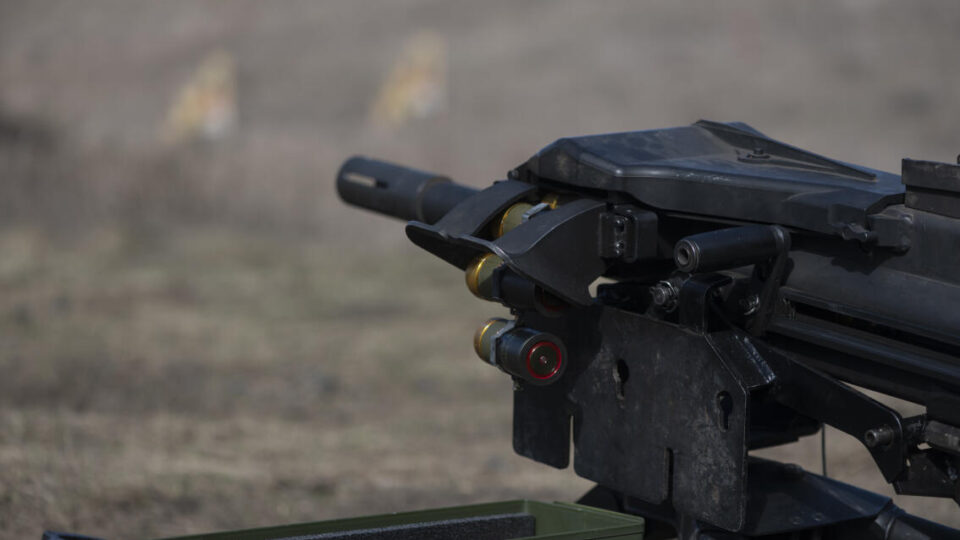
Fighting continues in the northern part of the city of Pokrovsk in the Pokrovsk direction. A mechanized assault was repelled there the day before.
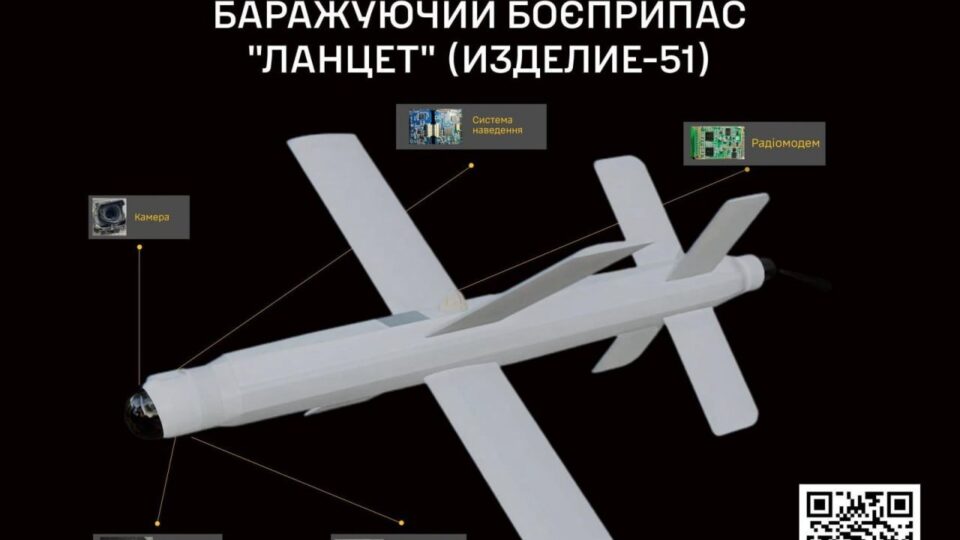
The Main Intelligence Directorate of the Ministry of Defense of Ukraine has published data on enterprises involved in the production of Russian loitering muniti

Another two-day round of negotiations between Ukraine and the United States concluded in Florida on March 22.
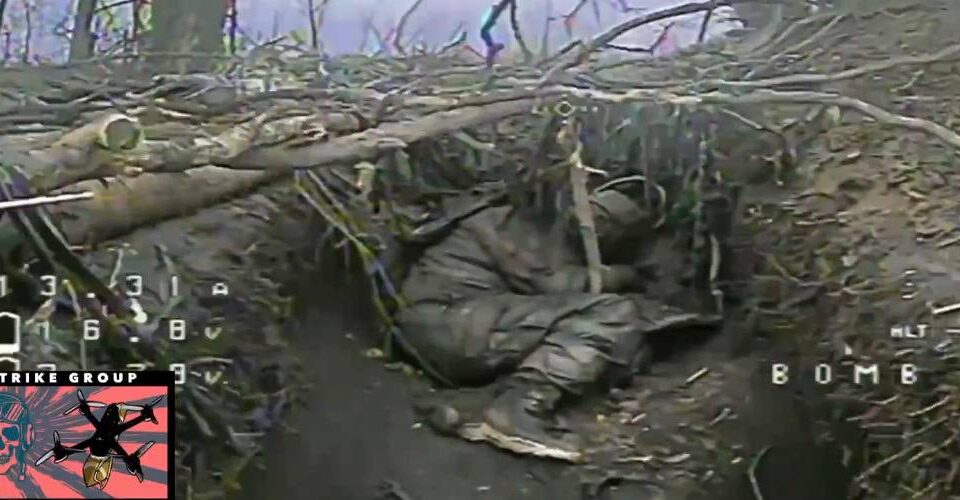
The enemy continues daily pressure and attempts to break through Ukrainian defenses in the Sloviansk direction.
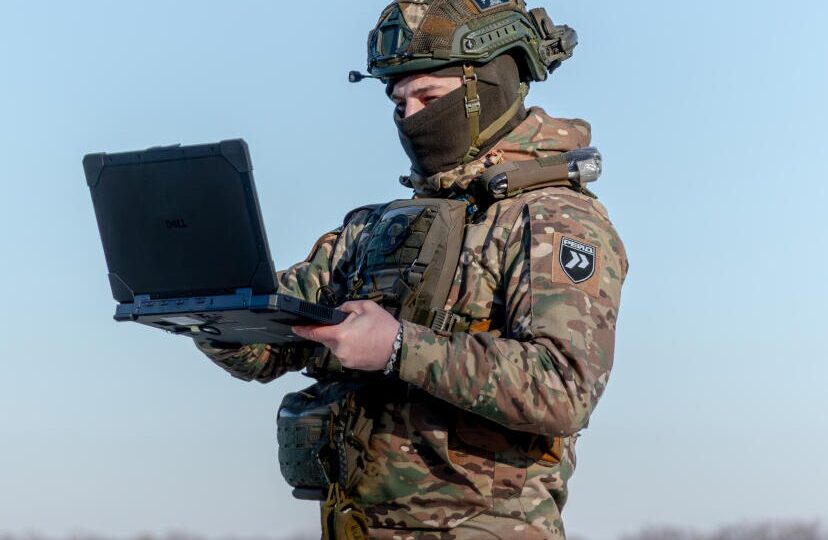
Over the past day, units of the Unmanned Systems Forces struck/destroyed 1,078 enemy targets.
The international delegation, headed by Ana Lucía Bueno, ICRC Public Health Coordinator, and Sujit Panda, Head of the Physical Rehabilitation…