From Storage Tanks to Tankers: How Ukraine Is Weakening Russia’s Oil Exports by Striking Ust-Luga

Ukraine’s strike on Ust-Luga hit one of Russia’s key export hubs. The damage could complicate oil processing, storage and shipment.
On the night of November 11, Ukraine’s Defense Forces struck one of the most important elements of Russia’s oil infrastructure on the Baltic Sea — the port of Ust-Luga in the Leningrad Region. This was not an isolated strike against a single facility, but an attack on a major industrial and transport hub responsible for storing, processing and exporting Russian energy resources.
According to preliminary information from the General Staff of the Armed Forces of Ukraine, five oil product storage tanks with a combined capacity of 150,000 cubic meters were damaged in the strike. A hydrocracking unit, an air-cooling unit, a pumping station and a berth used to load oil products onto tankers were also hit. Fires broke out at several facilities.
The Security Service of Ukraine (SBU) specified that the operation targeted infrastructure belonging to several facilities at once: the Novatek-Ust-Luga and Ust-Luga Oil terminals, JSC Faktor, and Luzhskaya railway station. At the Novatek-Ust-Luga facility, drones struck several storage tanks, each with a capacity of 30,000 tonnes. An oil product spill was also reported.
Russian authorities confirmed the attack and a fire in the port area. According to Leningrad Region Governor Alexander Drozdenko, three workers were injured, and an electrical substation was shut down as a result of the attack.
Thus, the strike hit not only fuel storage tanks but also elements of the production, pumping, railway and export infrastructure. It is precisely this comprehensive nature of the damage that matters most when assessing its economic consequences.
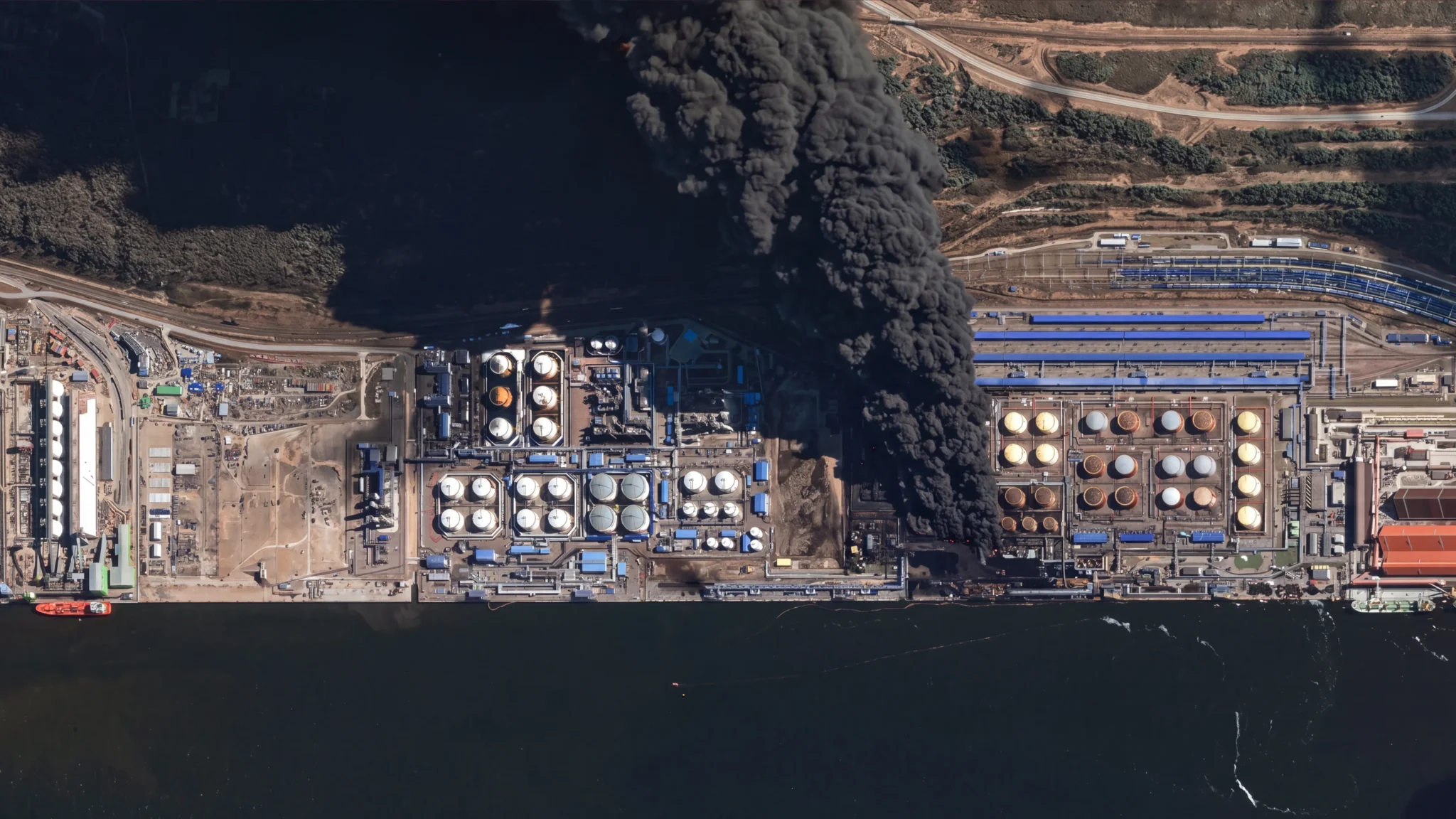
Ust-Luga: One of Russia’s Main Channels for Oil Revenue
To understand the scale of Russia’s potential losses, it is necessary to examine the role Ust-Luga plays in the country’s energy system.
The port is located on the southern shore of the Gulf of Finland in the Baltic Sea. It is one of Russia’s largest seaports, handling exports of crude oil, petroleum products, gas condensate, coal and other cargo.
Its strategic importance lies in the fact that Ust-Luga brings together several technological processes. Raw materials arrive there, are stored and, in part, processed into higher-value products before being shipped by sea to international markets.
According to estimates cited by the Ukrainian publication The New Voice of Ukraine, based on oil market data, approximately 1.15 million barrels of oil and petroleum products passed through Ust-Luga per day in 2025. This accounted for roughly 20% of Russia’s seaborne oil exports.
For comparison, the neighboring port of Primorsk handled approximately 22%, while Novorossiysk accounted for 17%. Together, these three maritime hubs handle approximately 59% of Russia’s seaborne oil exports.
These figures demonstrate just how concentrated Russia’s export infrastructure remains. Despite its vast territory and numerous oil fields, a significant share of its maritime shipments depends on a limited number of major port complexes.
This dependence is also confirmed by the International Energy Agency. In its April 2026 report, the IEA noted that up to 60% of Russia’s seaborne crude oil exports passed through Primorsk, Ust-Luga and Novorossiysk.
In other words, damage to one of these hubs is not merely a localized problem affecting an individual facility. It poses a risk to a substantial part of the aggressor country’s export system.
Why Damage to Storage Tanks Is Only Part of the Problem
Particular attention should be paid to the types of facilities targeted.
A tank farm is an intermediate link between the supply of raw materials and their shipment to buyers. Oil and finished petroleum products are stored in tanks, export consignments are assembled, and the uninterrupted loading of tankers is ensured.
Damage to five storage tanks with a combined capacity of 150,000 cubic meters creates additional constraints on the storage and transshipment of products. At the same time, it is important to distinguish between the capacity of the tanks and the actual volume of fuel lost: as of now, there is no independently verified data on exactly how much petroleum product was stored in them at the time of the strike.
Damage to the pumping station and pipeline infrastructure is no less important. These systems are responsible for moving oil and petroleum products between processing facilities and berths. Even if storage tanks remain intact, damage to pumping equipment or pipelines can complicate the delivery of products to loading points.
Another factor is the berth used to load petroleum products onto tankers. It is effectively the final link in the export chain. Russia may have extracted oil, processed fuel and available storage capacity, but without functioning marine loading equipment, it will be unable to ship planned volumes through its usual route.
Therefore, from an economic perspective, damage to the berth could prove no less significant than a fire in the tank farm.
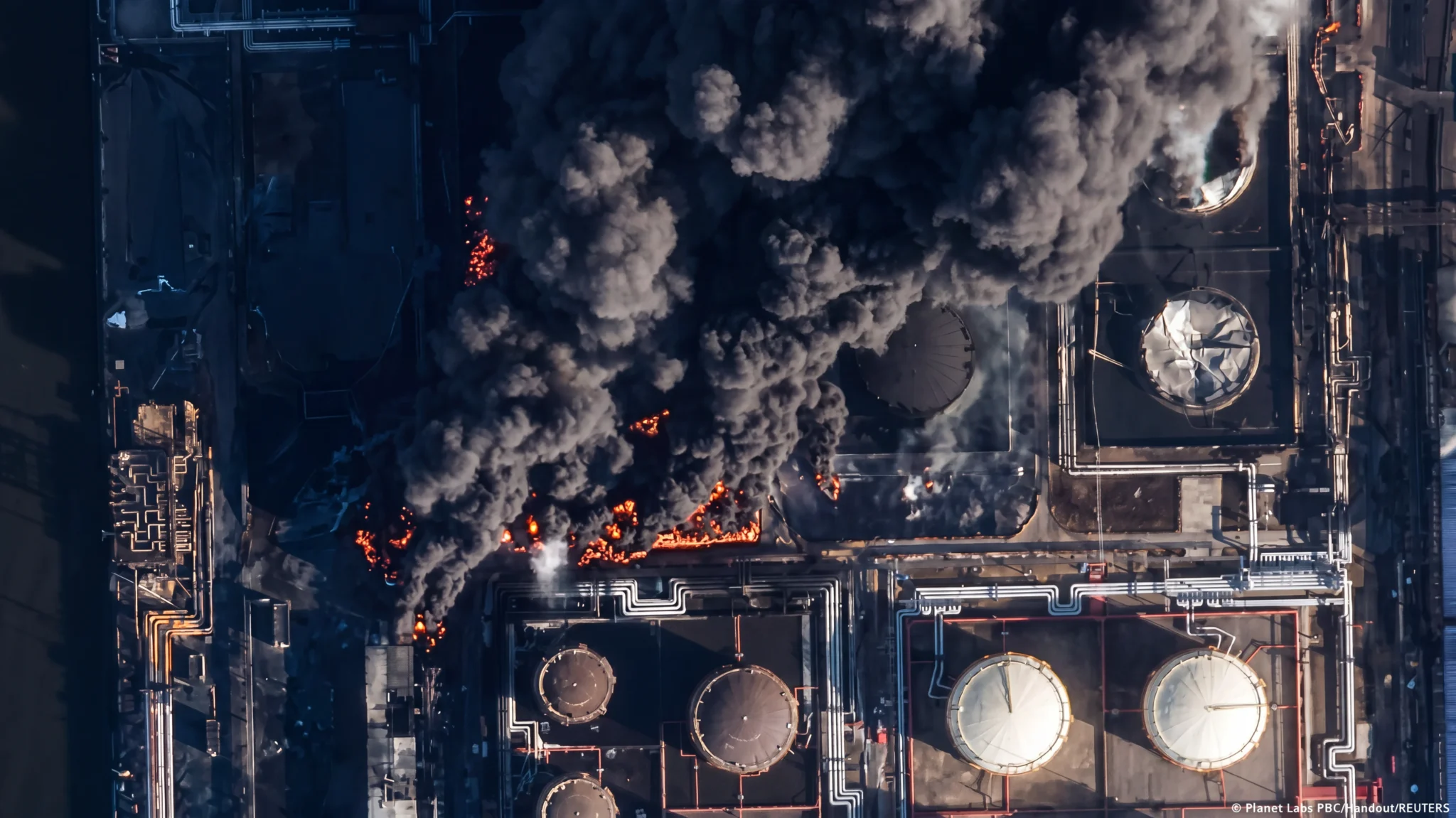
Strike on NOVATEK: Russia Loses the Ability to Generate Revenue by Processing Raw Materials
Another important element of the targeted infrastructure is the Novatek-Ust-Luga complex, owned by Russian gas company NOVATEK.
Unlike a conventional oil terminal, this facility specializes in the fractionation and transshipment of stable gas condensate.
The plant processes gas condensate into light and heavy naphtha, aviation fuel, marine fuel components and gas oil. The company supplies the resulting products to international markets.
This is economically important: Russia exports not only raw materials but also processed products, which can command higher market prices.
According to NOVATEK itself, the Ust-Luga complex was developed, among other things, to optimize logistics and reduce transportation costs when supplying products to foreign markets.
Consequently, damage to the production facilities creates risks not only for the physical export of raw materials but also for the production of finished petroleum products.
Particular attention should also be paid to the hydrocracking unit, which the General Staff of the Armed Forces of Ukraine reported as having been hit. This technology is used to convert heavier hydrocarbon fractions into more valuable light products, including diesel fractions and aviation fuel components.
In other words, damage to such equipment potentially affects the production cycle itself, rather than merely limiting the temporary storage of finished products.
At the same time, there is currently insufficient open-source data to determine exactly how long each unit will remain shut down or how much production will be lost. This would require a technical damage assessment and information on the restoration of the facility’s operations.
Railways, Pipelines and Tankers: Why Russia Will Struggle to Compensate for the Losses Quickly
Ust-Luga is important not only because of its maritime terminals. It is a major logistics hub where railway and pipeline routes converge.
During the November 11 operation, fires were also reported at Luzhskaya railway station, according to the SBU. This adds another dimension to the consequences of the attack.
Railways are used to deliver various types of cargo to port terminals, including petroleum products. Damage to railway infrastructure can complicate the delivery of goods, cause delays and increase pressure on alternative routes.
In theory, Russia could redirect some cargo to other ports on the Baltic or Black Seas. However, this does not mean that the losses at Ust-Luga can be compensated for without significant disruption.
The situation following previous strikes on Russian Baltic ports in March 2026 is particularly illustrative.
At the time, Reuters reported, citing sources in the oil industry, that traders were considering redirecting some petroleum products to Vysotsk or Taman because of shipping disruptions. However, Vysotsk has lower handling capacity, while using Taman would require additional railway capacity.
In other words, alternative routes do exist, but they face limitations in terms of throughput, transportation resources and logistics costs.
An additional risk is that disruptions at export terminals can create problems even for Russian producers whose facilities have not been directly affected by the strikes.
If a refinery continues producing fuel but cannot export it, finished products begin to accumulate. This forces companies to seek alternative routes, adjust production schedules or reduce refining volumes.
Thus, localized damage to port infrastructure can have a knock-on effect across a much broader segment of Russia’s oil industry.
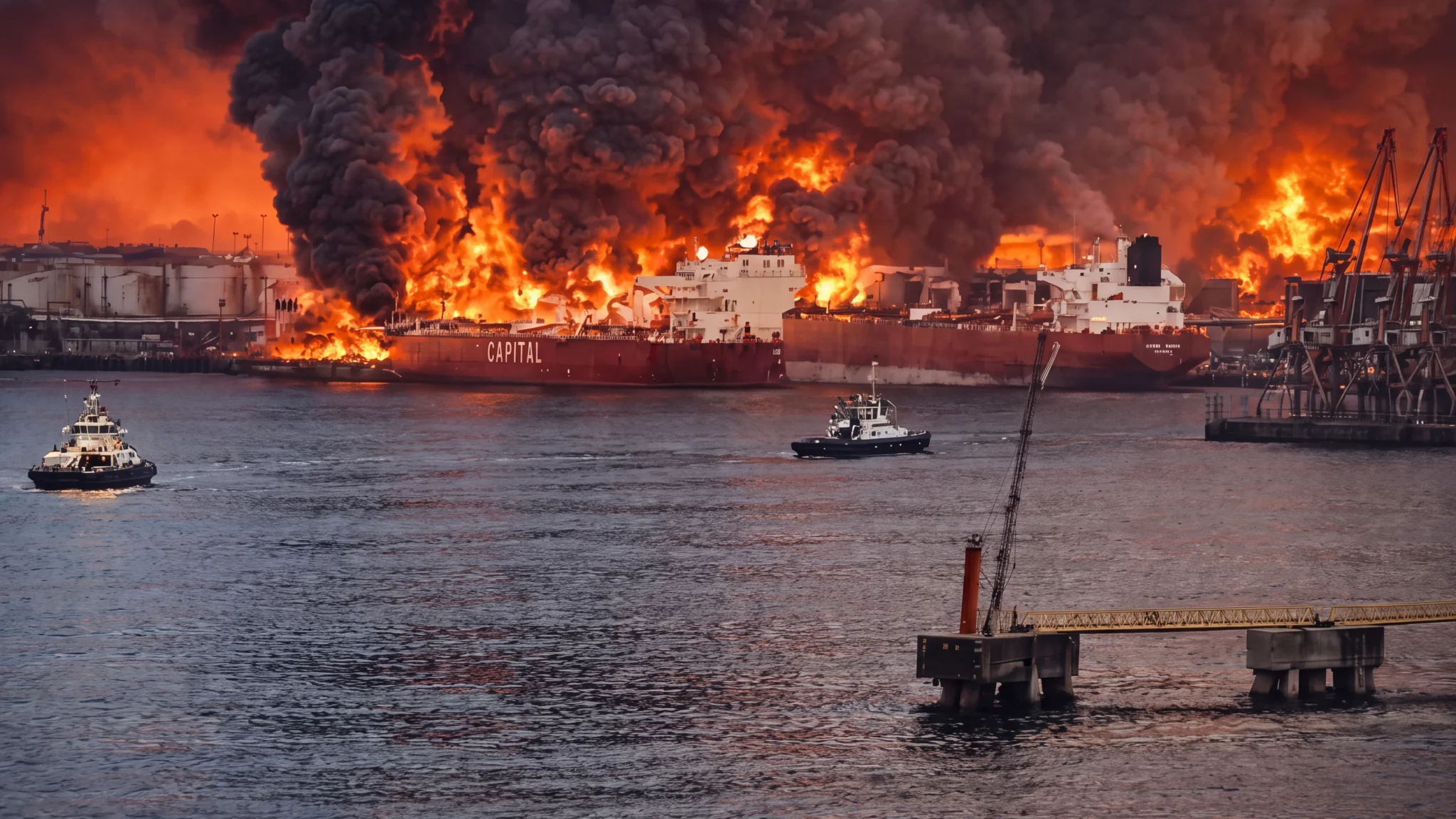
Economic Impact: Russia Loses Not Only Cargo but Also Time and Money
Oil exports are one of Russia’s main sources of foreign currency revenue. Income from energy sales provides budget revenues that finance government spending, including military expenditure.
Therefore, the impact of strikes on export infrastructure goes far beyond the value of damaged equipment or lost fuel stocks.
Russian companies may face several costs simultaneously:
- Loss of or delays to export shipments;
- Repair costs for storage tanks, pumping stations and processing equipment;
- The need to redirect cargo through alternative routes;
- Increased railway transportation costs;
- Tanker idle time and shipping delays;
- Additional costs associated with insurance and the organization of maritime transportation.
The findings of a study by the Kyiv School of Economics (KSE Institute), published in April 2026, are particularly revealing.
Analysts estimated that, as a result of the previous campaign of strikes against Russian oil ports between March 23 and April 5, Russia lost approximately $1.76 billion in oil export revenues compared with a scenario in which the attacks had not occurred.
The study examined the combined impact of strikes on several ports, not Ust-Luga alone. Nevertheless, it demonstrates how significant the consequences of disruptions to export infrastructure can be, even over a relatively short period.
According to KSE estimates, during the previous period of disruption, crude oil exports through Ust-Luga fell from approximately 725,000 barrels per day to between 101,000 and 155,000 barrels per day. The number of loaded tanker departures dropped from 16–17 per week to just two per week between March 30 and April 5.
These figures relate to the previous attacks in spring 2026 and are not an assessment of the consequences of the November 11 strike. However, they confirm that damage to port infrastructure can quickly affect Russia’s actual export volumes.
Why This Is Particularly Painful for Russia Under Sanctions
Russia’s oil industry is already operating under sanctions, increasingly complicated logistics and the need to use alternative mechanisms for maritime exports.
A separate role is played by the so-called shadow fleet — a network of tankers through which Russia attempts to circumvent some international restrictions on oil trade.
A study published by the Brookings Institution in February 2026 analyzed Russian oil shipments through the Baltic ports of Primorsk and Ust-Luga during the first half of 2025.
According to the study, 65% of the recorded voyages were carried out by shadow fleet vessels.
This demonstrates that even with alternative transportation mechanisms available, Russian exports remain dependent on physical infrastructure — storage tanks, pumps, pipelines, berths and the ability to load tankers safely.
No shadow fleet can compensate for a damaged berth or restore the operation of a destroyed pumping station.
Moreover, the longer the disruptions continue, the harder it becomes for Russian companies to maintain their usual supply schedules and fulfill export contracts.
Systemic Pressure on Russia’s Oil Infrastructure
The strike on Ust-Luga should be viewed in the context of Ukraine’s broader campaign against Russian energy infrastructure.
Throughout 2026, Ukraine’s Defense Forces have struck Russian refineries, tank farms, pumping stations and maritime export terminals.
As a result, comprehensive pressure is being applied to different stages of the oil supply chain.
Strikes on refineries limit Russia’s ability to process crude oil into fuel. Attacks on tank farms create problems with the storage of raw materials and finished products. Damage to pipelines and pumping stations complicates transportation. Meanwhile, attacks on maritime terminals directly affect the ability to sell energy resources abroad.
The final link in this chain is particularly important: extracting or processing oil is not enough — it must be delivered to the buyer, and payment must be received.
Ust-Luga is one of the key hubs through which Russia converts its energy resources into foreign currency revenue.
Therefore, damage to its infrastructure creates not only direct material losses for the Kremlin but also the risk of prolonged disruptions to the country’s export system.
At the same time, the full scale of the economic consequences of the November 11 strike can only be assessed once data becomes available on actual shipment volumes, the duration of terminal downtime and the results of restoration work at the damaged facilities.
Ukraine is consistently expanding the range of vulnerable elements within Russia’s war economy. Whereas the primary focus was previously on oil refineries, logistical infrastructure — without which Russia cannot fully export its energy resources — is now also coming under sustained pressure.
For a country whose budget depends heavily on oil and petroleum product sales, this means additional costs, reduced export reliability and the risk of declining foreign currency revenues that help finance the war against Ukraine.