German Far Right Shares “Little Jesus of Borshchahivka” Video, Then Admits Falling For Russian Propaganda

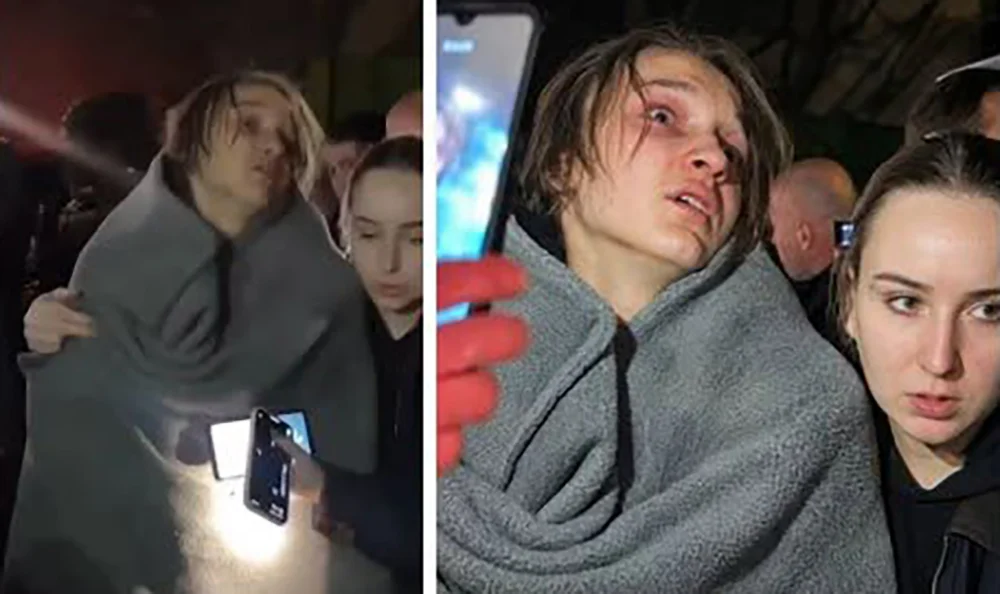
Far-right politicians from Germany’s Alternative für Deutschland party seized on footage of the unrest in Petropavlivska Borshchahivka to discredit Ukraine.
A video showing a 14-year-old boy being led out of a military facility wrapped in a blanket provoked a particularly heated reaction among AfD supporters.
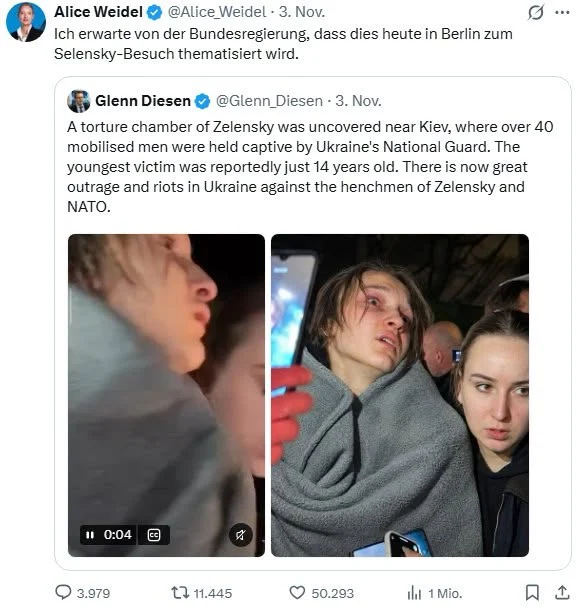
Alice Weidel, co-leader of AfD and its parliamentary group in the Bundestag, called on the German government to raise allegations she had circulated about the torture of mobilised personnel in Ukraine during Zelenskyy’s visit to Berlin.
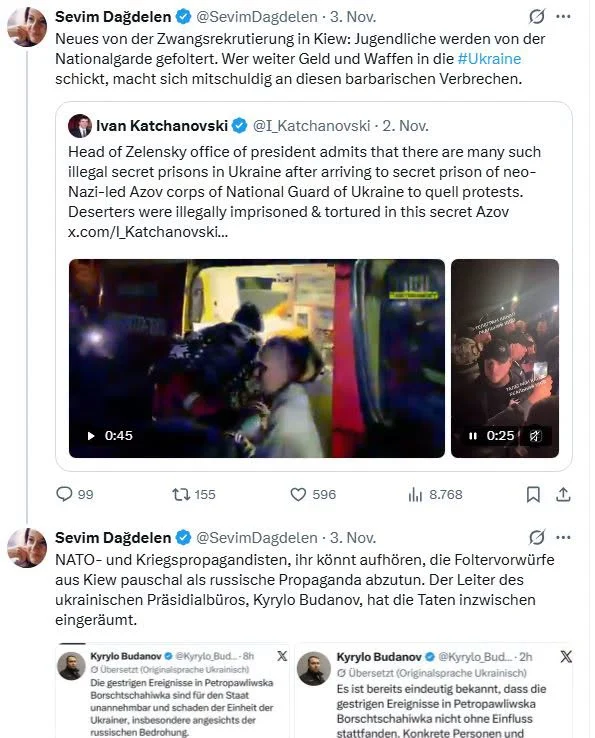
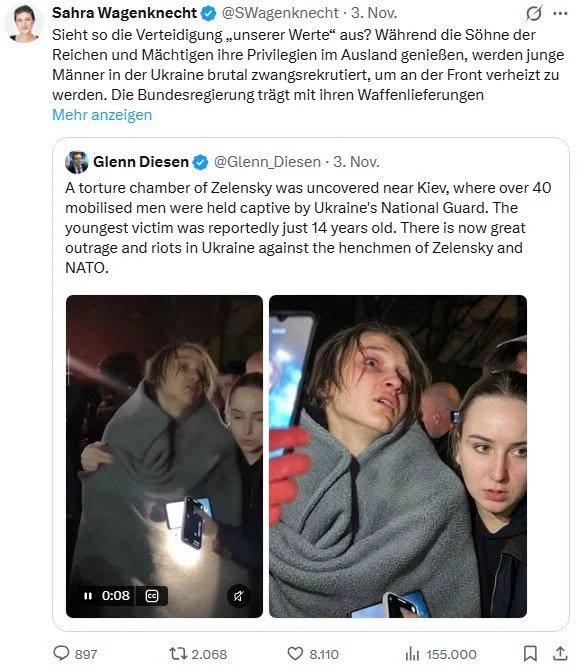
BSW founder Sahra Wagenknecht and fellow party member Sevim Dağdelen, a former Bundestag member, also used claims of forced mobilisation and torture to criticise aid to Ukraine. Dağdelen explicitly described continued funding and weapons supplies to Ukraine as complicity in crimes.
Emotive claims about “the youngest victim of a secret nationalist torture chamber for mobilised Ukrainian men near Kyiv” spread on social media. Within hours, however, those circulating them were forced to acknowledge that they had once again fallen for Russian propaganda without properly checking the original sources.

By the evening of 2 November, Russia had already begun another large-scale attack on Ukraine.
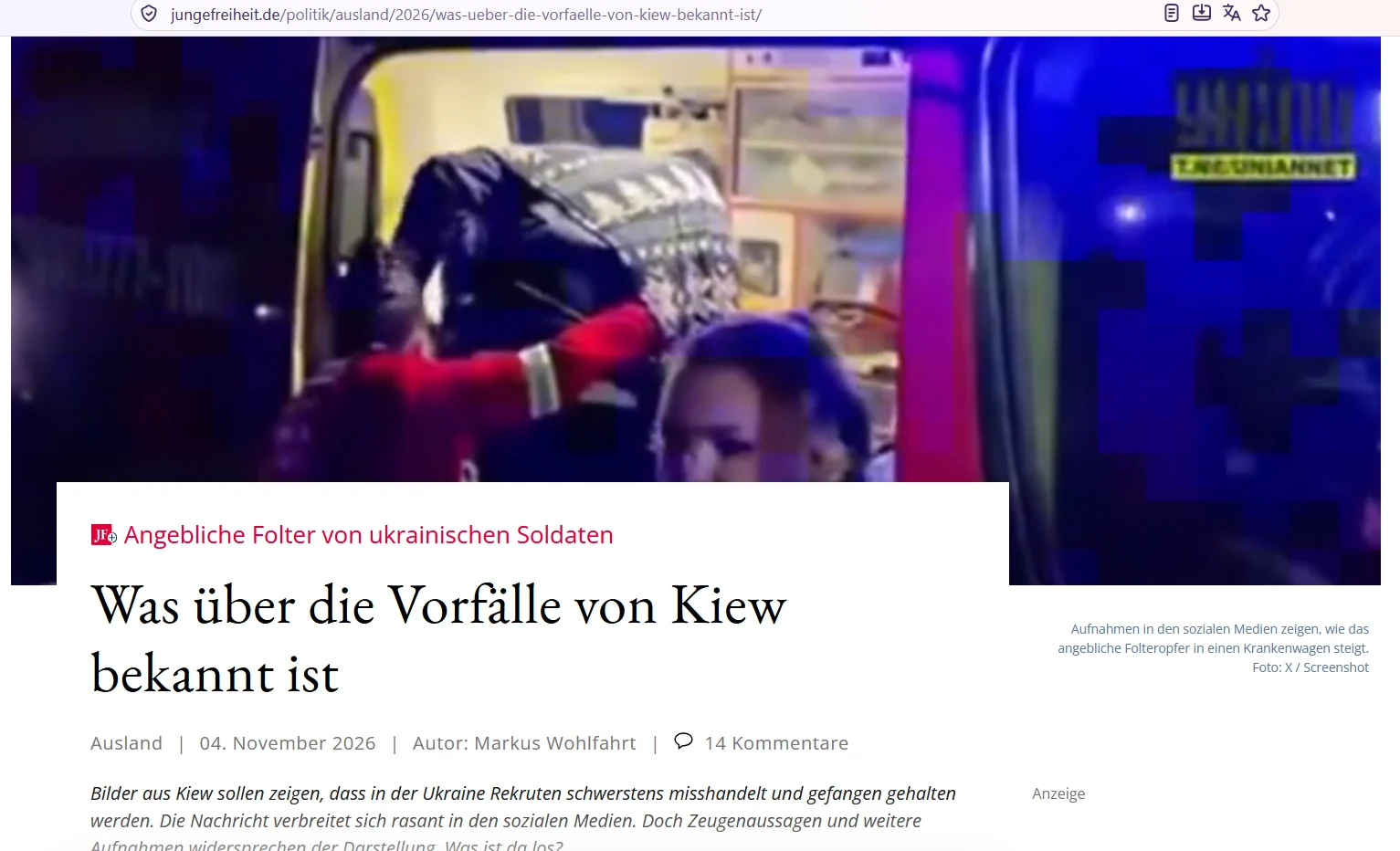
The German conservative magazine Junge Freiheit even published an explainer, “What is known about the events in Kyiv”, carefully examining the version of events spread by Russian propaganda. It once again asked why German right-wing politicians and their supporters so readily pick up Kremlin disinformation — and what Germans should ultimately do about it.
Anton Pavlushko, a Germany-based OSINT analyst of Ukrainian origin and a volunteer with the InformNapalm international intelligence community, spoke exclusively to ArmyInform about why the unrest in Petropavlivska Borshchahivka near Kyiv attracted such attention from Germany’s far right, and whether the damage to Ukraine from the Russian disinformation was ultimately contained.
“They seize on any news from Ukraine that can be used to discredit the country — whether it concerns corruption scandals, false claims about military personnel or accounts of men being forcibly bundled into recruitment vans.
All of this is then used as evidence that Ukraine should not receive support: either everything will be stolen, or Ukrainians are no different from Russians. And the economic crisis, they argue, is caused by high energy prices, which in turn are caused by the war in Ukraine.
Stop military aid to Ukraine, and there you have it — the solution to all the German economy’s problems, as AfD supporters see it,” he said.
This time, striking footage of a 14-year-old boy with unnaturally wide eyes, wrapped in a blanket and being led out towards the crowd, played into the German far right’s narrative.
“I think what helped this time was a convincing acting performance by the 14-year-old supposedly injured with a shovel. Without context or explanation, the video does look truly shocking.
Add commentary about a torture chamber, secret prisons and the like, and their followers will lap it up.
On the other hand, the excessive theatrics prompted numerous comments immediately debunking the false story. The way the supposedly ‘beaten’ teenager was carried out was simply too theatrical,” the analyst explained.
Whether the boy’s expression reflected convincing acting or genuine fear and surprise, it merely reinforced the views of a German far-right audience already accustomed to consuming anti-Ukrainian propaganda.

Following the events of November 2 in Petropavlivska Borshchahivka, Ukrainians responded to the provocateurs’ actions with dozens of memes.
In Anton Pavlushko’s view, subsequent corrections to politicians’ initial emotional posts mattered, but their impact was limited. Germany’s far-right voters had already absorbed the striking image of the teenager, while cautious clarifications and rebuttals were unlikely to attract the same attention.
“Ultimately, for people accustomed to consuming pro-Russian news regardless of the circumstances, the image of a boy struck with a shovel and tortured will remain in their memory, however thoroughly you debunk it.
Some politicians later had to soften their statements, but they never deleted their original posts. And, let’s be honest, nobody is going to read the rebuttals,” he observed.
Nevertheless, the willingness of Germany’s far-right politicians to fall for and consume Russian propaganda without checking it will be remembered both by their opponents and by the more critically minded among their supporters.
This makes Germany’s far-right toxic to other political forces, forcing it to choose between supporting the Kremlin and seeking influence in German society and politics.
“On the other hand, AfD supporters have once again unthinkingly used Russian disinformation without checking anything. Both their voters and their opponents can see this. Their opponents will use this lack of scrutiny against them as evidence that they are working for the Kremlin.
As long as they remain overtly pro-Russian, nobody from other parties will want to work with them, because such ties are toxic. But abandoning their political trademark — support for the Kremlin — is also difficult for them, because they believe it wins them extra votes,” Anton Pavlushko explained.