The Fleet Few Talk About: What russia Is Building in the Arctic and Why It Needs Warships

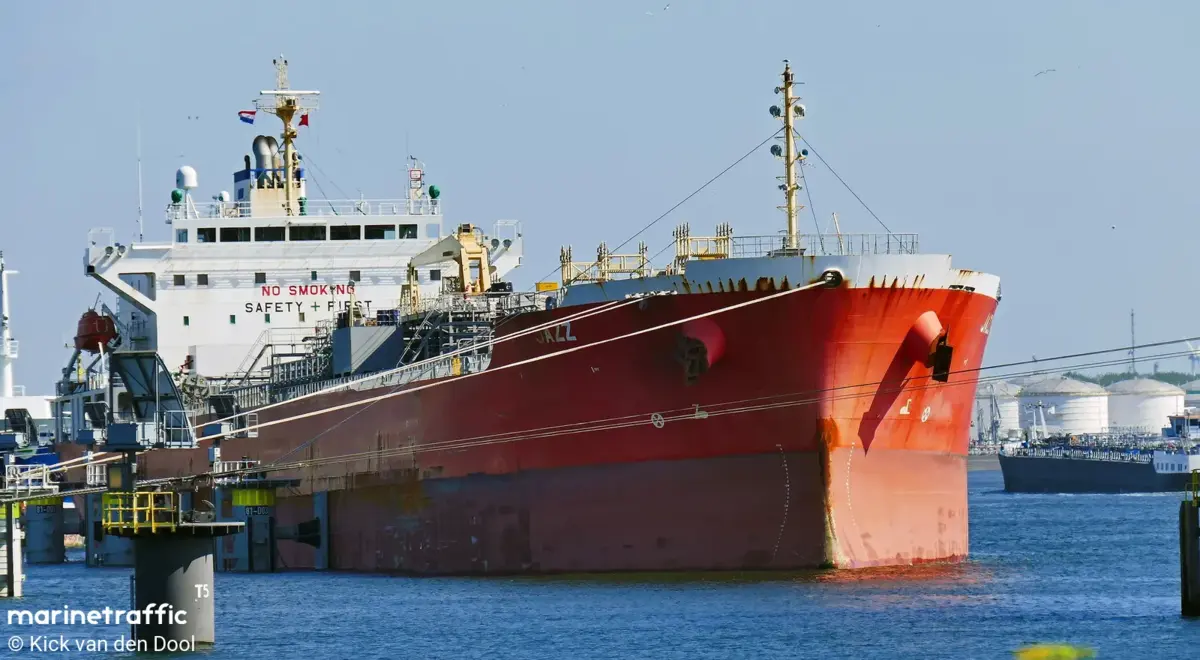
russia sees northern sea routes as a priority and seeks to protect its economic interests in the Arctic with its military fleet.
This was stated by Ukrainian Navy spokesman Captain 2nd Rank Dmytro Pletenchuk during the “United News” national telethon.
According to him, Moscow has long declared its interests in the Arctic, while the Northern Sea Route is now one of russia’s key directions. In particular, the route is important for russia because it allows Moscow to bypass some sanctions restrictions.
Pletenchuk noted that amid the active development of the Arctic, a kind of competition is taking place between states, while the development of an icebreaking-class fleet is of particular importance to russia.
“All icebreaking-class vessels and ships that russia has are, accordingly, used in these northern waters, first of all, and secondly, they are being developed,” the Navy spokesman explained.
He added that russia’s capabilities in the north are significantly greater than in the Black Sea or the Caspian Sea.
In particular, russia has nuclear-powered icebreakers, as well as a developed shipbuilding industry that operates both in northern areas and in the Baltic.
According to Pletenchuk, large warships of the russian fleet also remain an important element of these plans.
Among them, he mentioned the heavy nuclear-powered missile cruiser Admiral Nakhimov, which the russians recently showcased after a lengthy overhaul.
“Therefore, of course, nominally, there are more powerful fleets there than here, in the Black Sea or the Caspian,” the military spokesman noted.
Pletenchuk separately drew attention to the use of warships to escort merchant vessels.
In this way, Moscow is trying to protect its economic interests in the Arctic by military means.
At the same time, according to him, the international community has sufficient legal and practical tools to enforce the sanctions regime.
However, the question of using them remains largely political.
“Sanctioned vessels are periodically detained, but given their enormous number, these cases can be described as isolated,” the Navy spokesman stated.
Speaking about russia’s “shadow fleet,” Pletenchuk stressed that, in his view, it is more accurate to refer to vessels that operate directly in russian waters and sail under the russian flag, often being in poor technical condition and lacking proper insurance.
At the same time, a significant share of tankers transporting russian oil on international routes formally has legal owners, including in Europe. Therefore, it is quite difficult to call the entire fleet a “shadow fleet.”
“It is effectively out in the open for everyone to see and often passes through chokepoints via territorial waters. And yet no one stops them,” Pletenchuk concluded.
As ArmyInform reported, the russian fleet is increasingly forced to look for safer locations for its ships.