From 100 to 200 kg of Explosives: The Czech Republic Develops New Variants of Its Own Cruise Missile

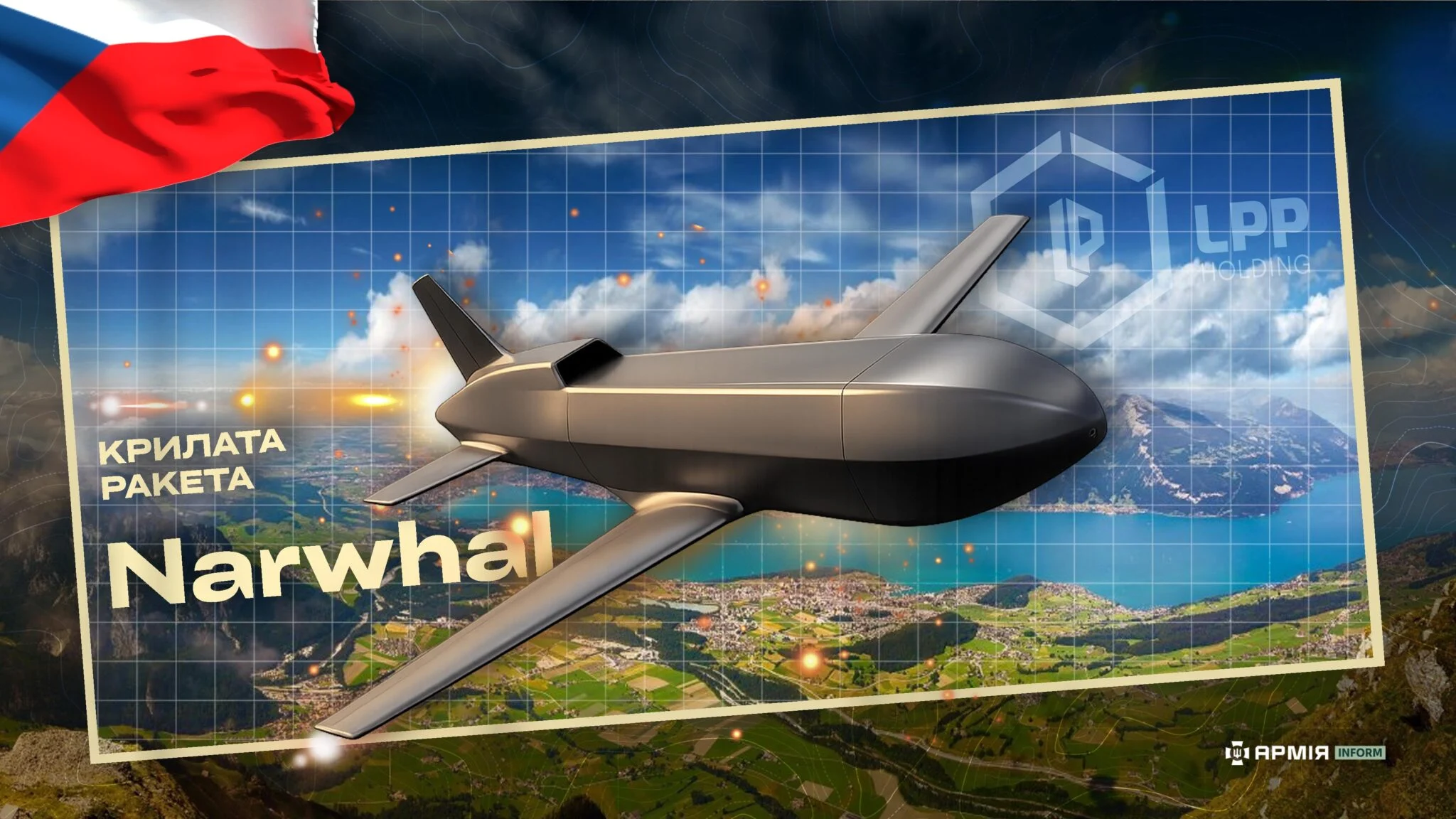
Czech defence company LPP Holding is continuing to develop its Narwhal family of cruise missiles, creating new modifications with an increased warhead weight.
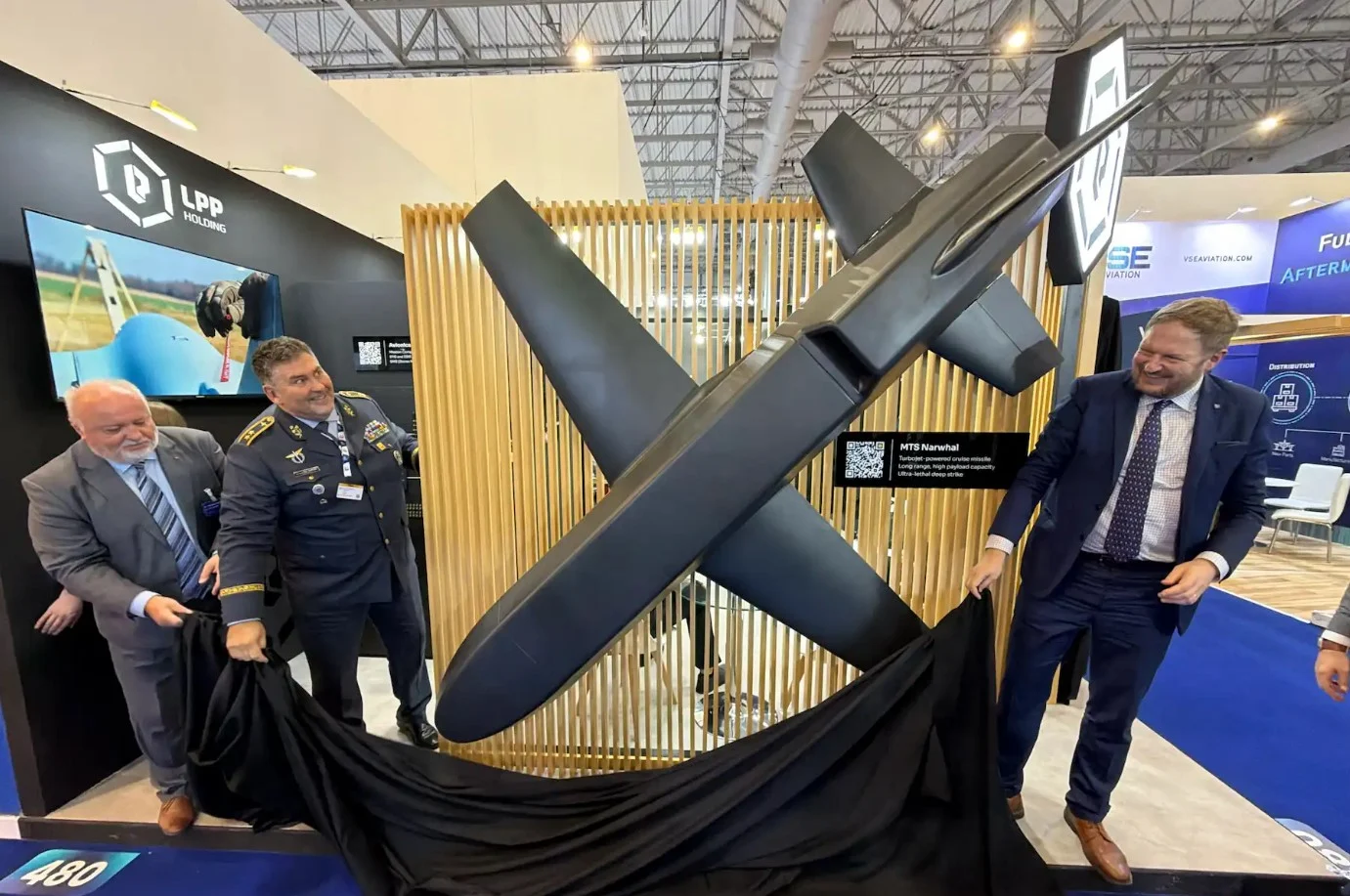
This class of munition reached the market remarkably quickly. As reporters from the Czech outlet Hospodářské noviny note, in early September 2025 the country’s Minister of Foreign Affairs Jan Lipavský said at the Prague Defence Summit that the Czech Republic had ambitions to produce missiles of its own. By late November last year, the first Narwhal missile was presented at the Dubai Airshow.
In a short presentation release on its official portal, the management of the defence company LPP Holding explained that the Narwhal is a subsonic, ground-launched cruise missile powered by a turbojet engine. It uses the same visual navigation technology as the company’s combat-proven MTS unmanned aerial vehicles.
This allows the missile to strike targets deep inside areas with no GPS signal. The Narwhal is available in three variants adapted to different target types and mission profiles, delivering a warhead weighing between 40 and 200 kg to a range of up to 638 km. It can reach a speed of 750 km/h while maintaining a low flight altitude.
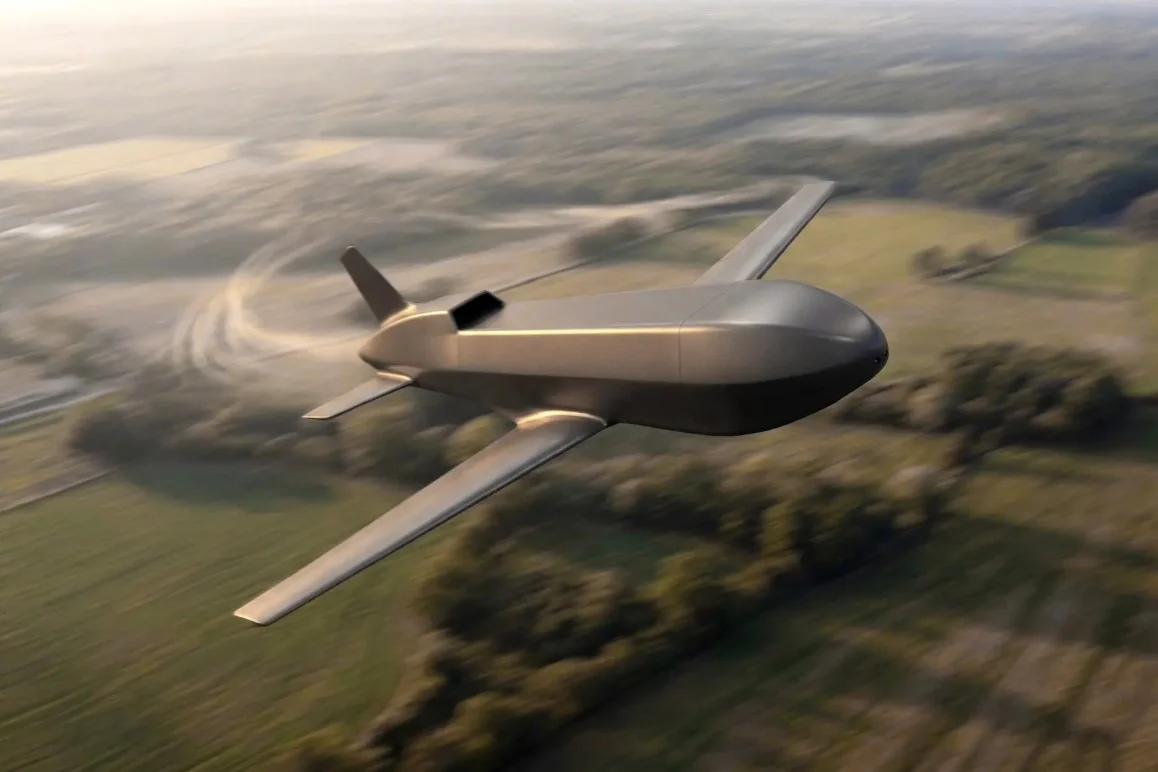
The Narwhal is supplied as a ready-to-deploy kit containing all components, including the autopilot, visual navigation, electronics, propulsion unit, warhead, airframe and mission planner. The entire system is designed and manufactured in-house in the Czech Republic.
Experts from the well-known Belgian defence technology research site Army Recognition (AR) have set out the details of individual systems developed by LPP Holding’s engineers and designers. According to them, the expanded Narwhal family includes the tested lightweight variant, a model with an intermediate 100 kg warhead, and the Narwhal 540, with a take-off weight of 540 kg, carrying a 200 kg payload and reaching speeds of up to 750 km/h.
Operating without primary reliance on GNSS (Global Navigation Satellite System — Ed.) or continuous radio communications, these subsonic ground-launched missiles use the ZT J160 turbojet engine and are launched either from a catapult or from a reusable launcher, supporting an operational flight range from 638 kilometres.
In the last third of July 2026, journalists from the Czech outlet Deník reported that LPP Holding had announced an expansion of its Narwhal programme following successful trials of the Narwhal 140 — the first cruise missile developed in the Czech Republic. The family of ground-launched cruise missiles now comprises the tested Narwhal 140, an intermediate Narwhal with a 100 kg warhead, and the Narwhal 540 with a 200 kg warhead.
The two heavier variants are expected to retain a maximum speed of 750 km/h and a flight range of 638 to 640 km.
AR specialists point out that the Czech missiles share common mission planning software, visual navigation, flight control logic, propulsion principles and launch methods. This reduces the number of separate baseline software packages, operator procedures and support systems that would otherwise be required for three independently developed cruise missiles.
The programme has thus moved on from testing whether an autonomous Czech-made cruise missile can fly properly to determining how far the same architecture can be scaled up without losing its core range and speed characteristics.
The original Narwhal was 4 m long, with a wingspan of 2.6 m and a maximum take-off weight of 260 kg, whereas the Narwhal 540 is 4.9 m long, has a wingspan of 3.4 m and weighs 540 kg at take-off. The fuselage is therefore 22.5% longer, the wingspan 30.8% greater, and the overall mass has increased by 107.7%.
The combat payload rises from a previous maximum of 120 kg to 200 kg, an increase of 66.7%, while the missile’s total mass grows by 280 kg. The warhead accounts for 37% of the Narwhal 540’s take-off weight, compared with 46.2% for the 120 kg payload in the earlier 260 kg configuration, indicating that a substantial share of the additional mass is allocated to the enlarged structure, powerplant, fuel, control equipment and the systems needed to preserve range.
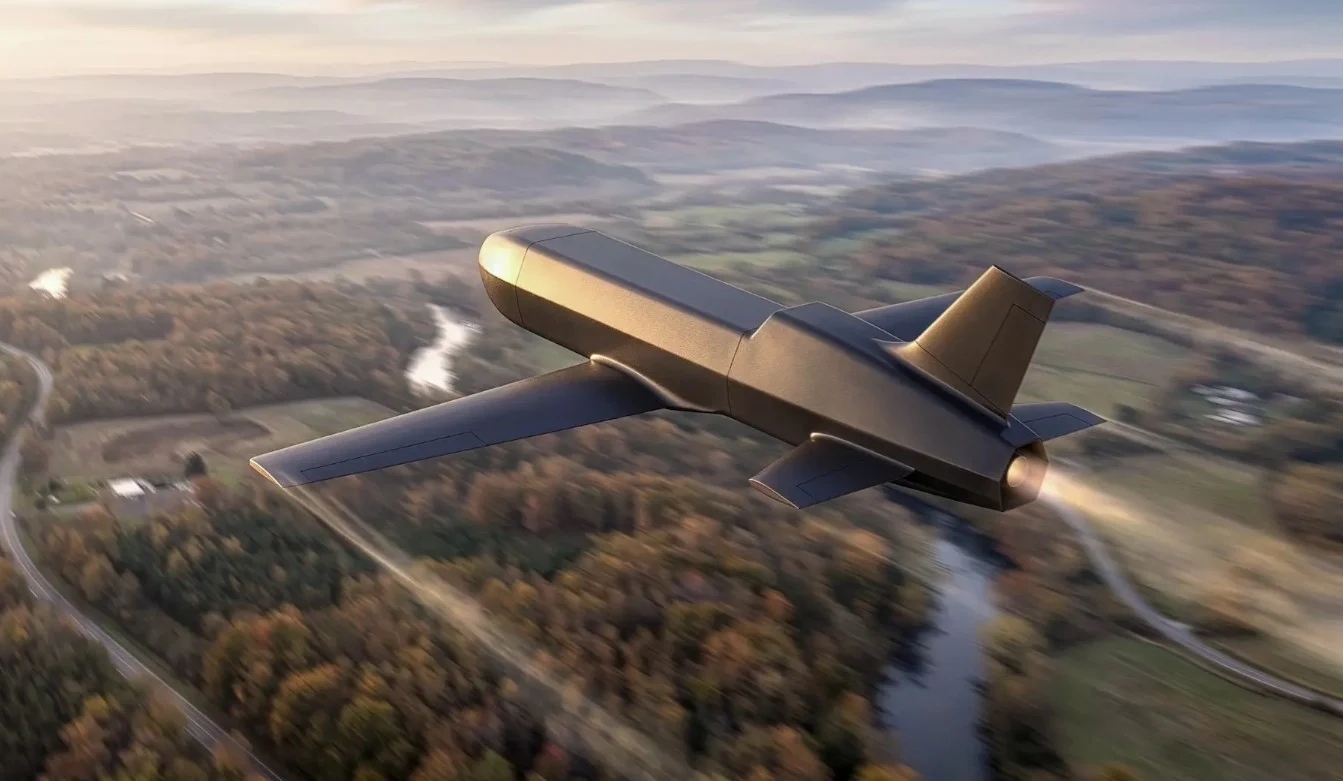
LPP lengthened the fuselage rather than replacing the overall aerodynamic layout, which suggests the company is retaining a proven wing and control concept while increasing internal volume. The result is a larger missile whose engineering challenge lies not only in carrying an extra 80 kg of warhead, but in doing so without a proportional increase in drag, fuel consumption or loss of endurance.
In flight, the missile’s onboard sensors capture images of the terrain, and the navigation computer compares them with stored reference data, allowing the autopilot to estimate the missile’s position and correct accumulated drift. GNSS can support the navigation solution when available, but the missile is not designed to depend on continuous satellite reception throughout the mission.
This matters because a weapon flying for more than 50 minutes may cross several zones with varying levels of interference and encounter spoofed satellite signals intended to divert it from its programmed route. The Narwhal can also fly a pre-programmed mission without continuous radio control, reducing its reliance on a data link that could be jammed, detected or geolocated.
As noted above, these missiles can be launched using a pneumatic catapult or from a road or runway using a reusable transport platform. This avoids the need for a dedicated fixed launcher or a large solid-fuel booster in the baseline configuration.
The road-launch concept increases the number of potential firing positions, but it also imposes practical constraints. A missile 4.9 m long with a 3.4 m wingspan and a take-off weight of 540 kg requires appropriate transport, space for assembly, sufficient clearance for launch and a reasonably straight surface.
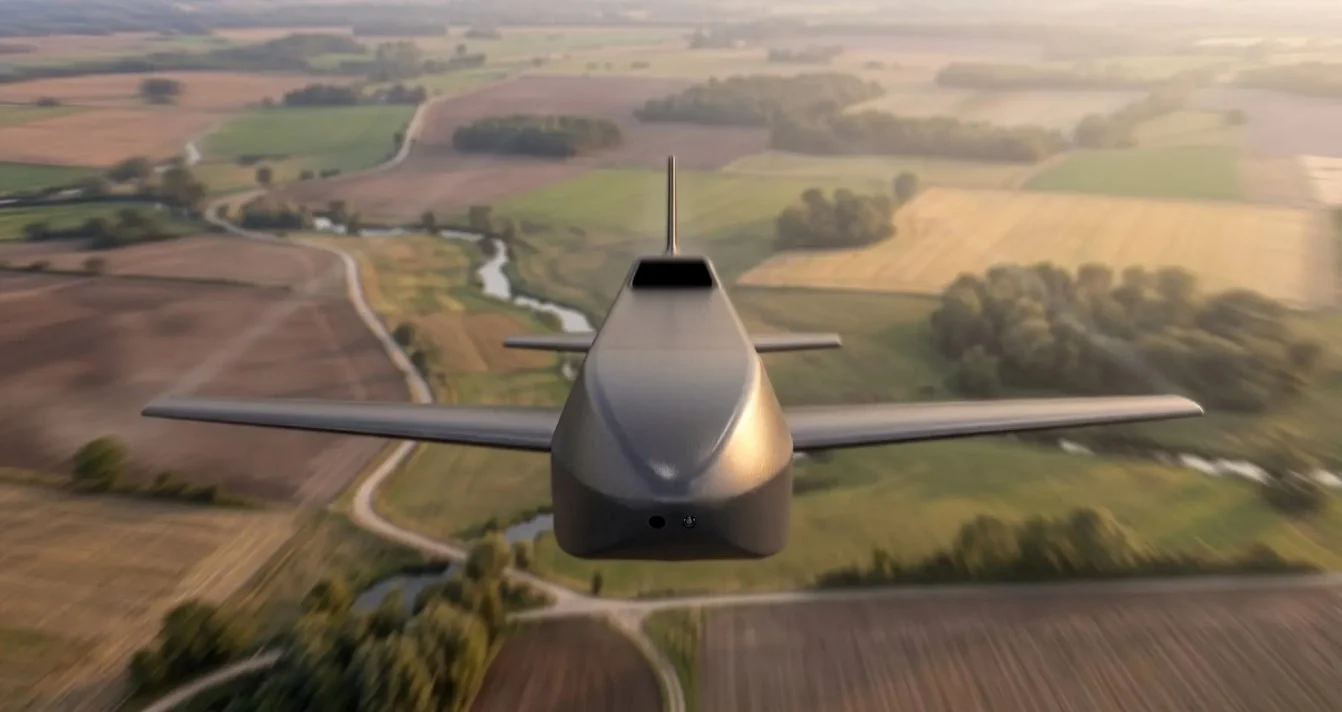
The platform-based design also means that launch preparation must take into account take-off distance, surface condition and the option of either recovering the reusable launch equipment or leaving it in position.
Summing up their research, arms market analysts note that the outcome for the Czech defence industry is not simply the production of a single type of cruise missile, but the creation of a genuinely domestic family of such ground-launched weapons, covering the 40 kg, 100 kg and 200 kg payload classes at ranges of 638 to 730 km.