Grew up under occupation, chose Ukraine and military service — and found the love of her life

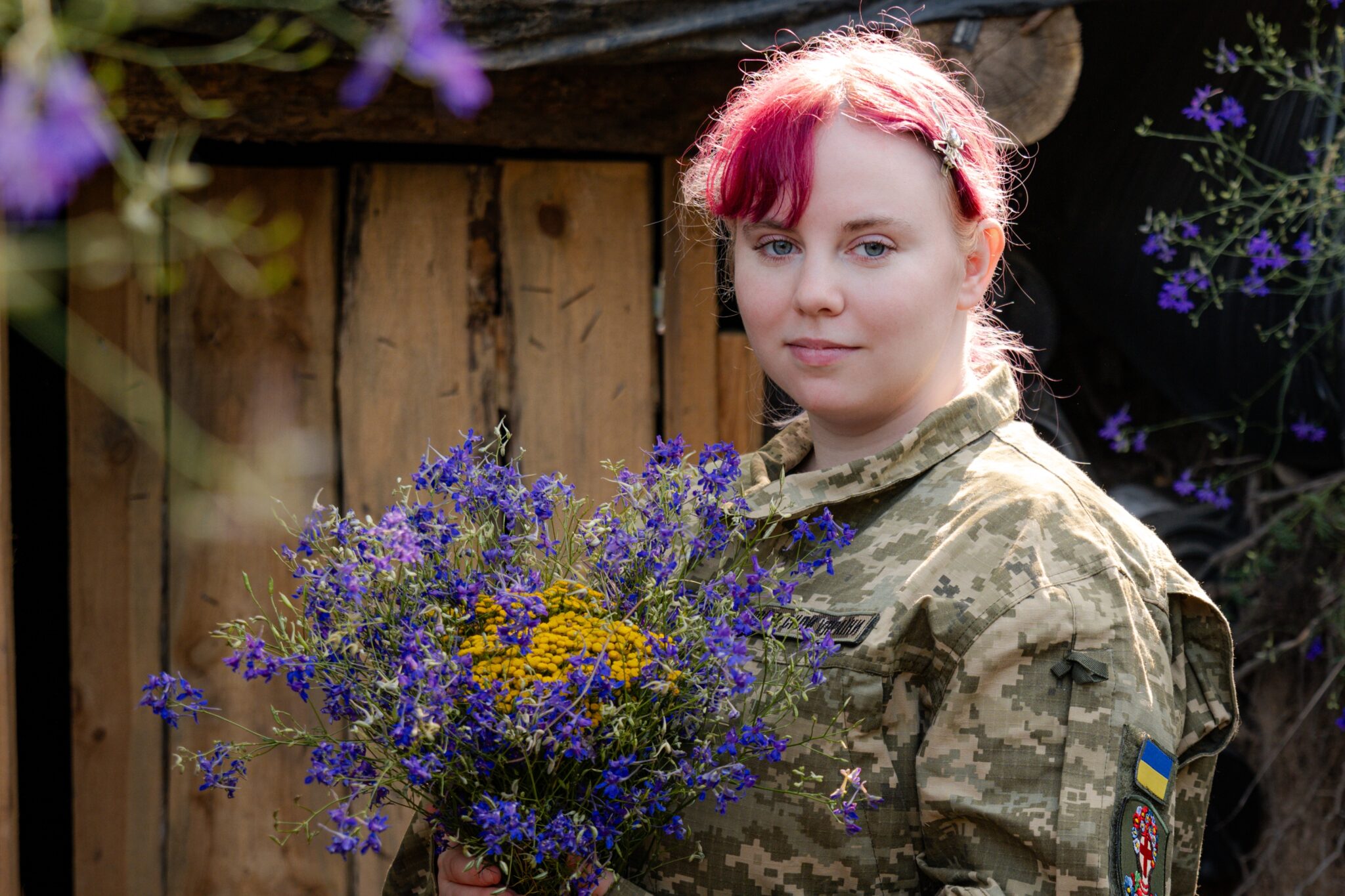
Maria, callsign “Barvinok”, spent nine years living in occupied Donetsk.
After leaving the occupied territory, she joined Ukraine’s Defense Forces, where, while serving with the 28th Separate Mechanized Brigade, she met her future husband — Adam, an American drone operator.
“Everything Ukrainian became forbidden”
Maria witnessed the occupation of her hometown as a child in 2014.
“I didn’t understand what was happening. At one point, the flags simply changed, and everything Ukrainian suddenly became bad, forbidden”, — she recalls.
For years afterward, Maria struggled to answer a simple question: who was she?
Russia’s full-scale invasion in 2022 found her old enough to begin asking herself difficult questions. Talking to her parents did not help; according to Maria, they hold pro-Russian views.
“It quickly became clear that those conversations wouldn’t change anything”.
So she searched for answers herself. She reached out online to friends who had continued living in Ukraine. While still under occupation, she gradually began switching to the Ukrainian language, trying to relearn what had almost disappeared from her education: at her school in Donetsk, Ukrainian had been taught only as an optional class once every two weeks.
“Living in occupied Donetsk became so unbearable that I decided there was only one way to achieve something and do something meaningful with my life — I had to leave”, — Maria says.
She finally managed to do so in 2023.
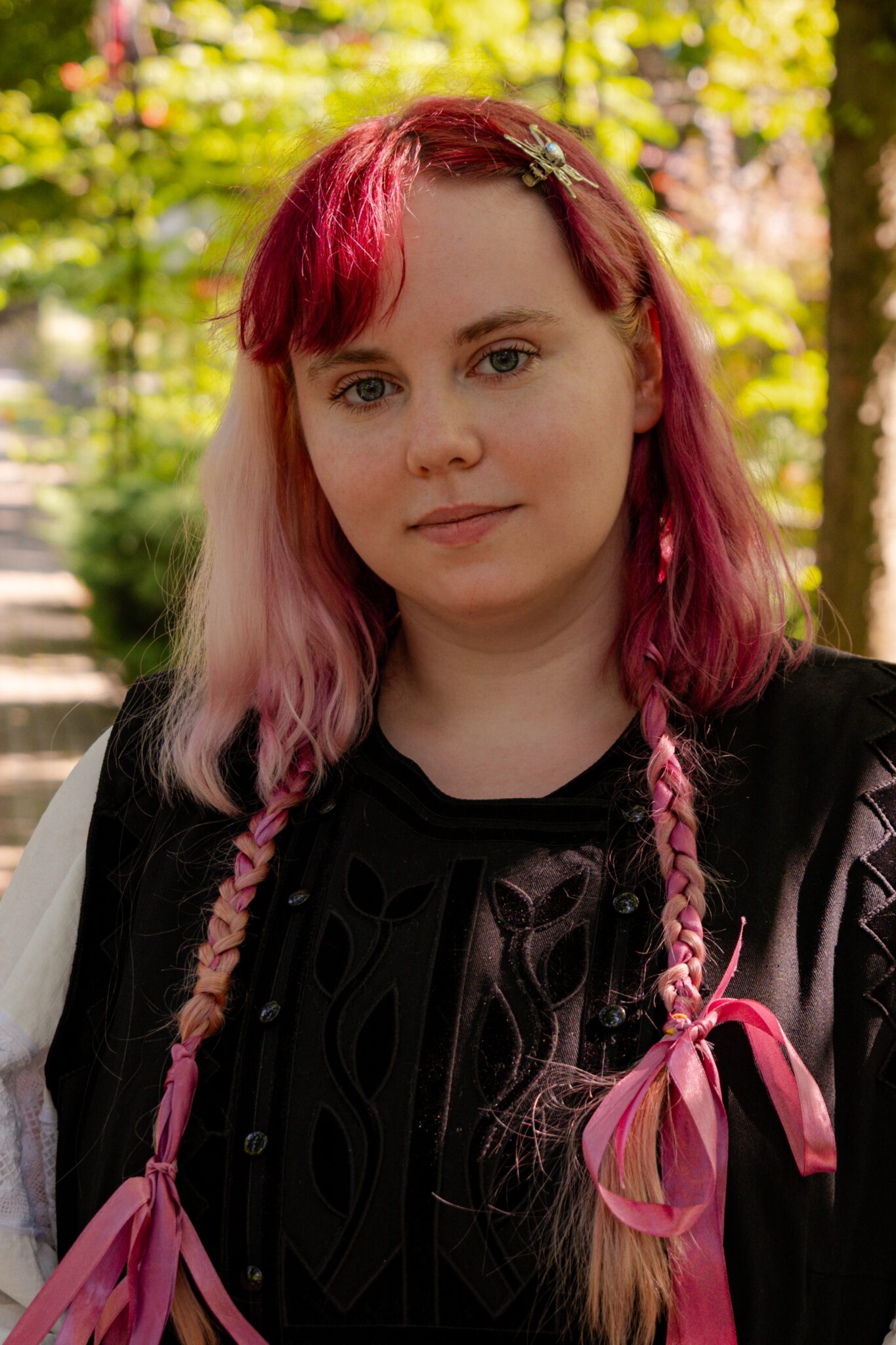
“I felt I had to do more”
What followed, she says, were two difficult years of adaptation. During that time, Maria lived in Kharkiv and volunteered: she joined cultural organizations, wove camouflage nets, and participated in a Czech project supporting children from Kherson and Kharkiv.
She came to the military from a civilian profession few would expect to lead there — she had been an elementary school teacher.
“At some point I realized it wasn’t enough for me. I felt I had to do more”, — she explains.
One of the main reasons she decided to enlist was her English. Maria knew that many foreign volunteers were serving in Ukraine’s military and believed her language skills could be useful. She contacted the Flash Battalion, passed an interview, and was accepted.
“We assign targets to the pilots”
Maria serves in an unmanned systems battalion that operates FPV drones and various types of heavy bomber drones. As a combat duty operator, she relays targets to drone crews and helps guide them onto those targets.
“The pilots and duty operators work separately. We assign targets to the pilots and help them strike those targets accurately so they can destroy them”.
According to Maria, working with FPV crews is easier because heavy bomber drones face much greater risks. She says they are deliberately hunted by the Russian Rubikon unit in an effort to disrupt Ukrainian logistics.
“A heavy bomber drone can inflict far more damage than an FPV because it carries a much larger payload. That’s why operating bombers is dangerous — they’re frequently shot down, and someone can get wounded”.
Despite describing herself as naturally gentle — “which is, in many ways, the opposite of the kind of person you’d expect in the military”— her fears about how others would perceive her proved unfounded.
“Quite the opposite. Everyone supported me and helped me learn. If I don’t understand a term, I can Google it or ask directly, and the guys and girls always explain it”.
Maria has no doubt that Russia will lose this war.
“Russia had no reason to start this war. They did it because of imperial ambitions, not because Ukraine or any other country threatened them. We are defending our home, and people all over the world support us”.
She says the proof is all around her: the Flash Battalion includes an entire foreign unit, while volunteers from safe countries serve across different branches of Ukraine’s Armed Forces because, as she puts it, they understand the consequences if Russia succeeds in fully occupying Ukraine.
A Love story that began with the wrong coordinates
Maria met her partner while serving. She and Adam, an American volunteer and drone operator, first got to know each other through work — under circumstances that were anything but romantic.
It was a night shift, and heavy bomber drones were operating. The unit received a request to deliver supplies — water and food — to infantry soldiers. However, the infantry duty officer provided incorrect coordinates, and Maria unintentionally directed Adam to the wrong location.
The battalion commander said the mission should not be repeated: resources were limited, and organizing logistical deliveries to frontline positions was difficult.
“I messaged Adam about it, and he replied, ‘No, we have enough. We’re ready to share. They’re our Ukrainian brothers — we have to help them’”, — Maria recalls. — “That was the moment I really noticed him. I was genuinely surprised. I wouldn’t have judged him if he’d simply followed the battalion commander’s order. But he insisted”.
Maria asked the command for permission once again, and the second mission — this time using the correct coordinates — was completed successfully.
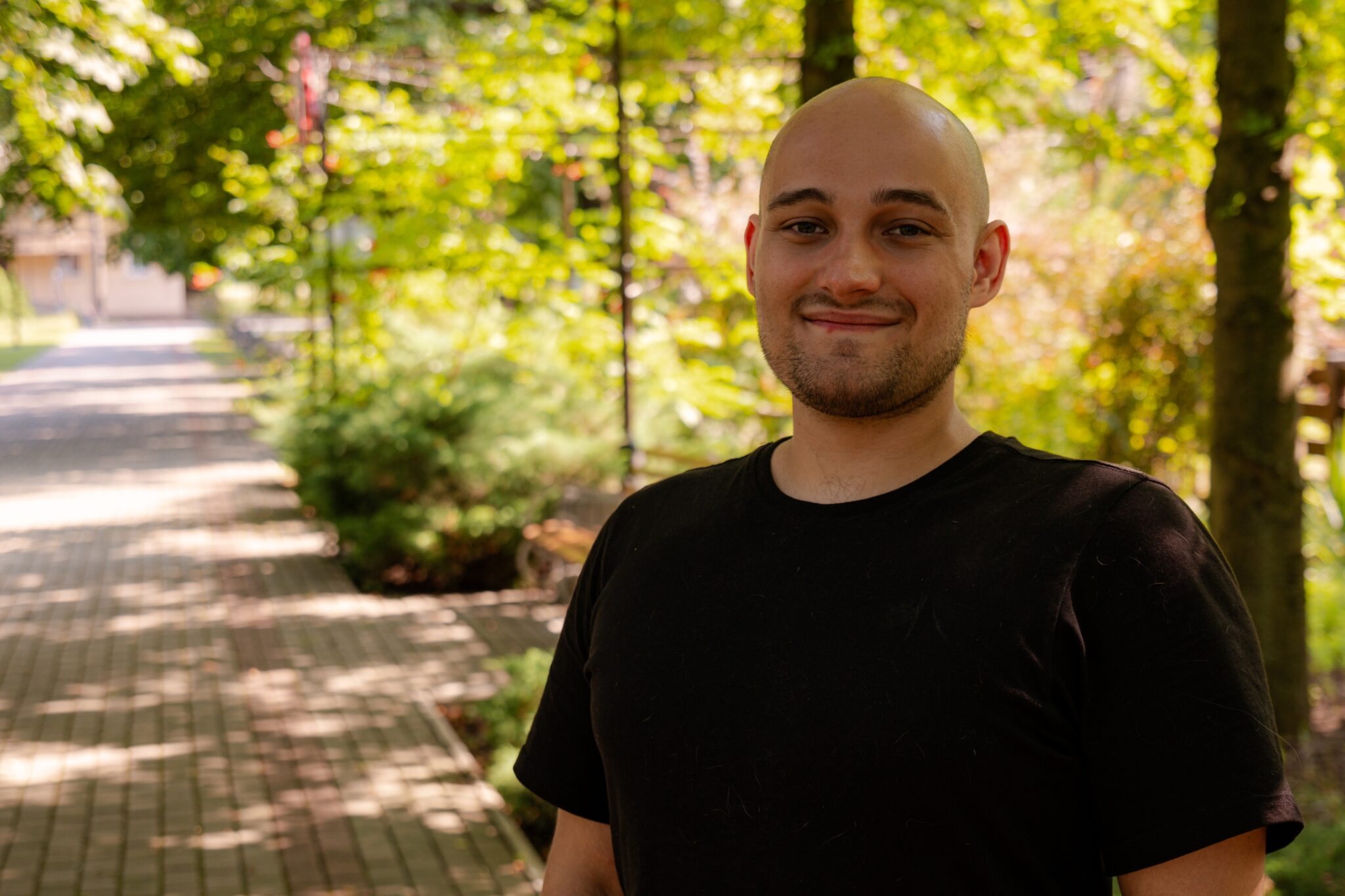
After that, they began talking more in private messages. Maria, who was still new to the unit, asked him how the Vampire drone worked, and Adam patiently explained everything.
They arranged to meet, but tragedy struck the unit: during a combat mission, their comrade June was killed. Adam helped evacuate his body so it could be returned to his family and buried with dignity.
“He shared his feelings with me, and I became the person who supported him. That brought us very close”.
Eventually, they started dating. They saw each other whenever they both had free time, and stayed connected online the rest of the time.
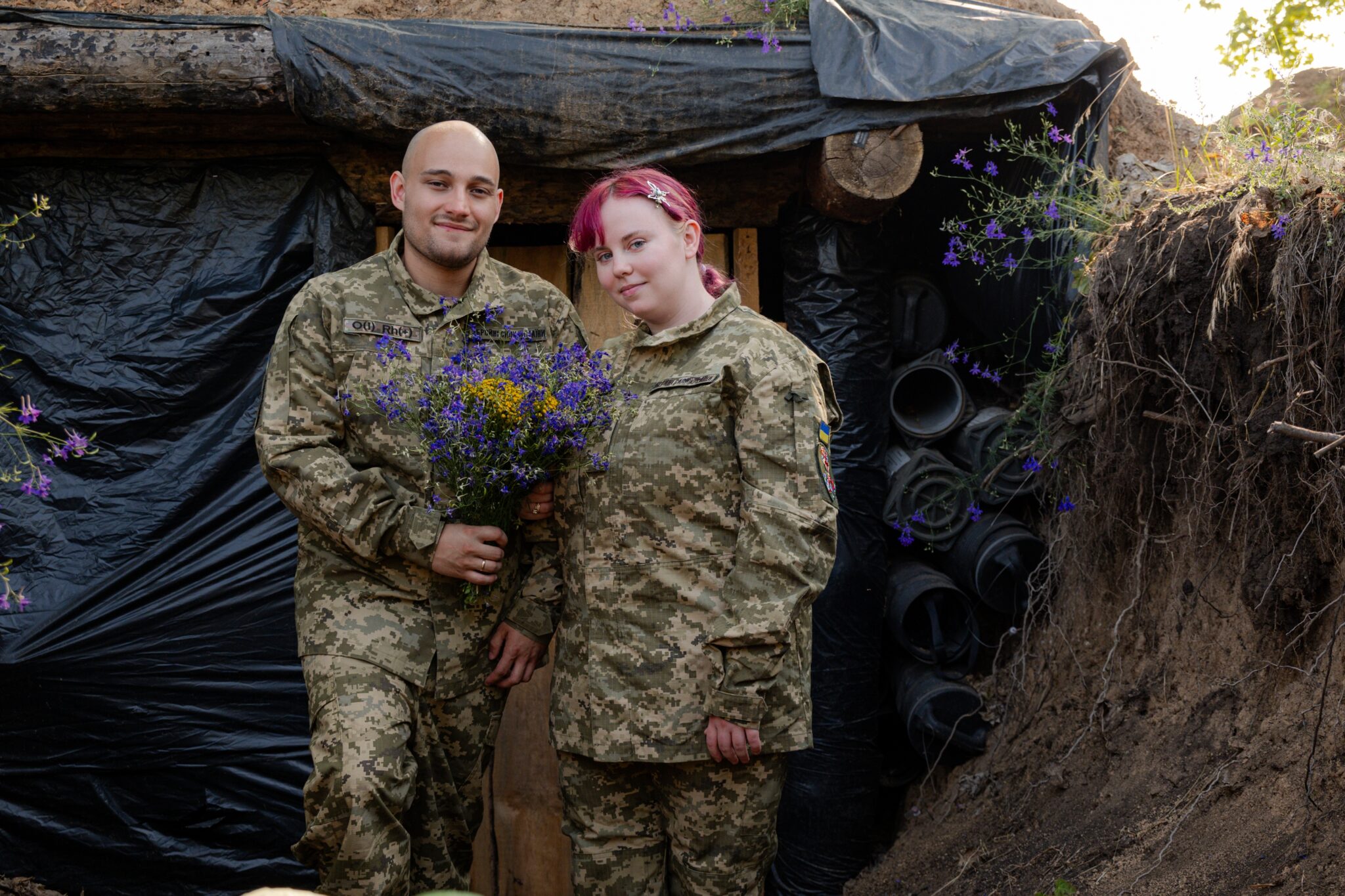
“That’s how partnership works. When one person has no strength left, the other has to be a little stronger. Then, later, the roles reverse. That’s exactly how it works for us. We support each other”.
Recently, Adam proposed to Maria. The couple are now completing the paperwork to get married.
“Don’t be afraid to try”
Maria has one piece of advice for people her age — and for those who are younger:
“Anxiety — ‘What if I fail? What if they don’t accept me?’— so often prevents people from truly achieving something or taking that first step. If one path doesn’t work out, you can always find another. There are very few situations with no way forward”.
Her plans for life after victory are simple and deeply personal.
She wants to go to the sea — not ideally to Crimea, but to Berdiansk, a place that reminds her of childhood and of a free Donetsk.
She wants to illustrate children’s books.
And she hopes to join communities that travel on ethnographic expeditions to Ukrainian villages, preserving and recreating authentic traditional clothing and folk songs.