Where Others Cannot Pass: US Marine Corps to Receive New Batch of Ultra-Light Tactical Vehicles

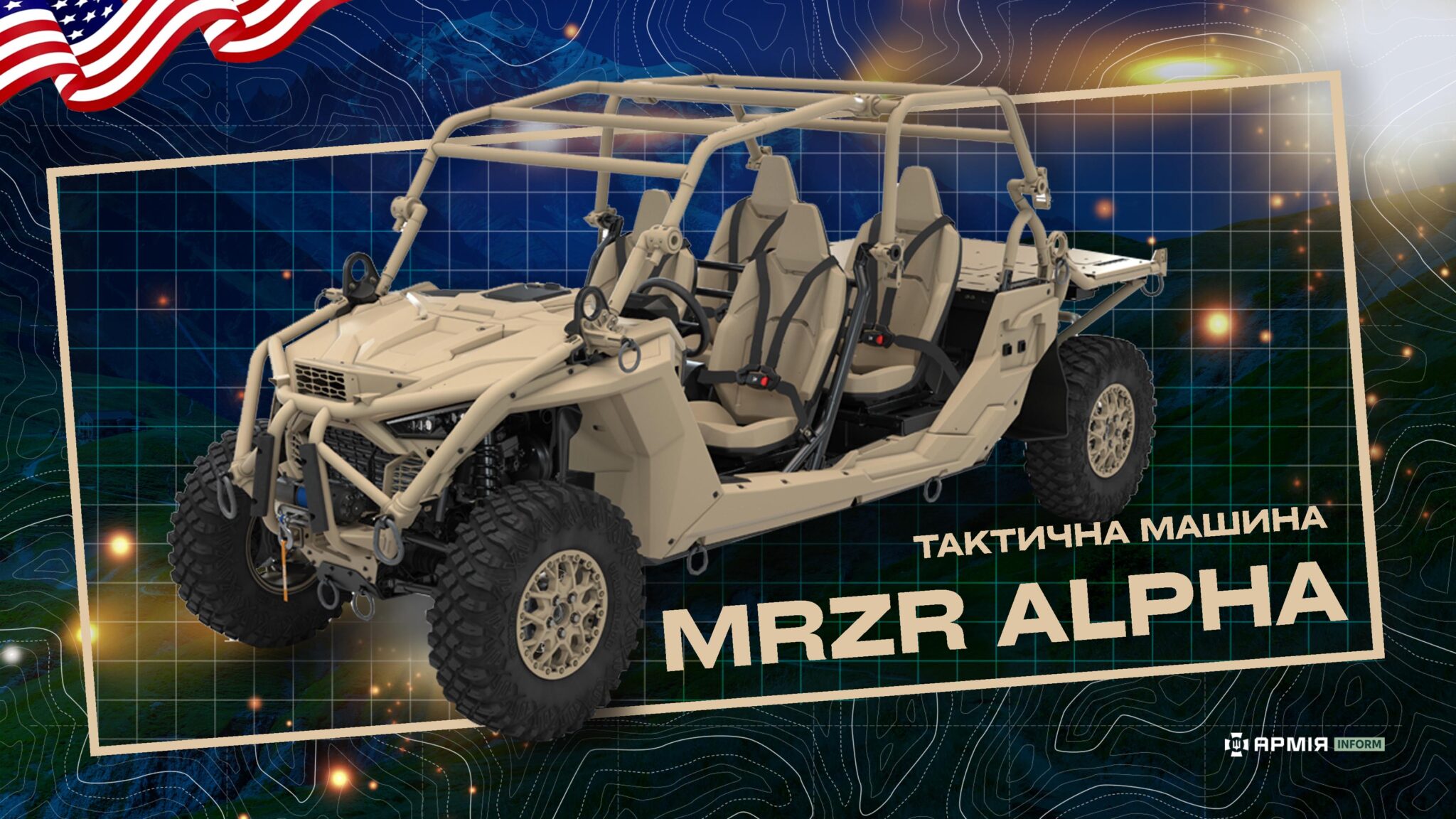
Polaris won a USMC contract to build ultra-light tactical vehicles enhancing mobility, logistics, and rapid deployment of expeditionary forces.
Polaris has secured a contract with the US Marine Corps (USMC) to manufacture ultra-light tactical vehicles designed to enhance mobility, logistical support, and the rapid deployment of expeditionary forces.
According to military analysts at European Defence Review (EDR), the agreement focuses on the MRZR Alpha Ultra-Light Tactical Vehicles (ULTV). The contract is valued at over $98 million. It is an Indefinite Delivery/Indefinite Quantity (IDIQ) contract awarded through the Marine Corps Systems Command (MCSC) Program Manager for Light Tactical Vehicles, with an ordering period of up to five years.
These vehicles provide Marine Corps units with a lighter, faster way to transport supplies, equipment, and power resources across rugged terrain. Crucially, they remain highly transportable for Marine forces during high-tempo operations.
EDR correspondents describe the MRZR Alpha as Polaris’s most advanced light tactical vehicle, engineered to meet the evolving requirements of expeditionary forces in dynamic operational environments.
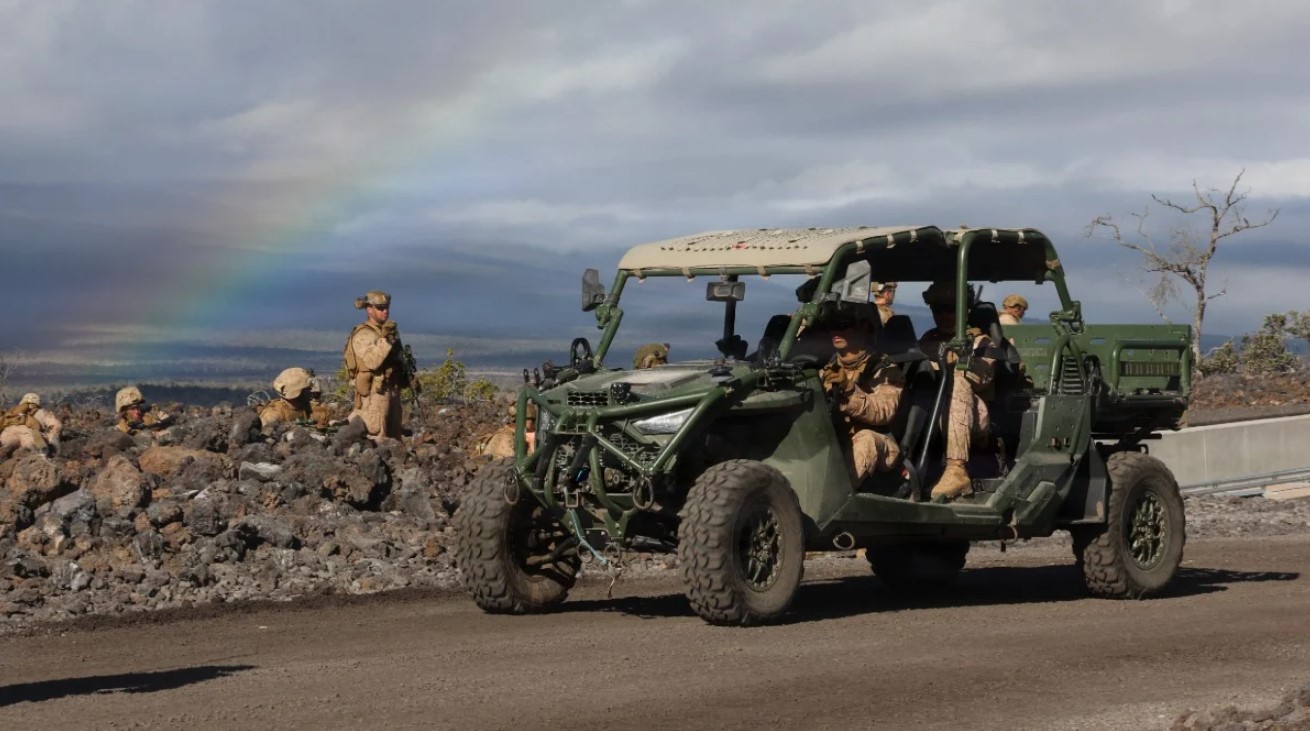
Designed for high payload capacity, tactical airlift compatibility, and off-road capability, the MRZR Alpha ensures rapid unit deployment and exceptional maneuverability on complex terrain. Additionally, its high durability reduces overall logistical footprints.
Meanwhile, defense technology market analysts at the Belgian portal Army Recognition Group (AR) noted that because the ULTV is designed for internal transport aboard MV-22 Osprey and CH-53K helicopters, it allows Marines to deploy mobile support assets directly alongside frontline units without relying on larger ground convoys.
This platform supports the Marine Corps’ broader transition toward dispersed, highly mobile formations capable of sustaining combat operations in challenging environments, while reducing logistical vulnerability and increasing operational flexibility.
The contract covers the production of both the logistics and high-power variants of the Ultra-Light Tactical Vehicle (ULTV). This indicates that the USMC is moving beyond basic, general-purpose transportation to specialized mission configurations that support distributed logistics, mobile command and control, and expeditionary power generation.
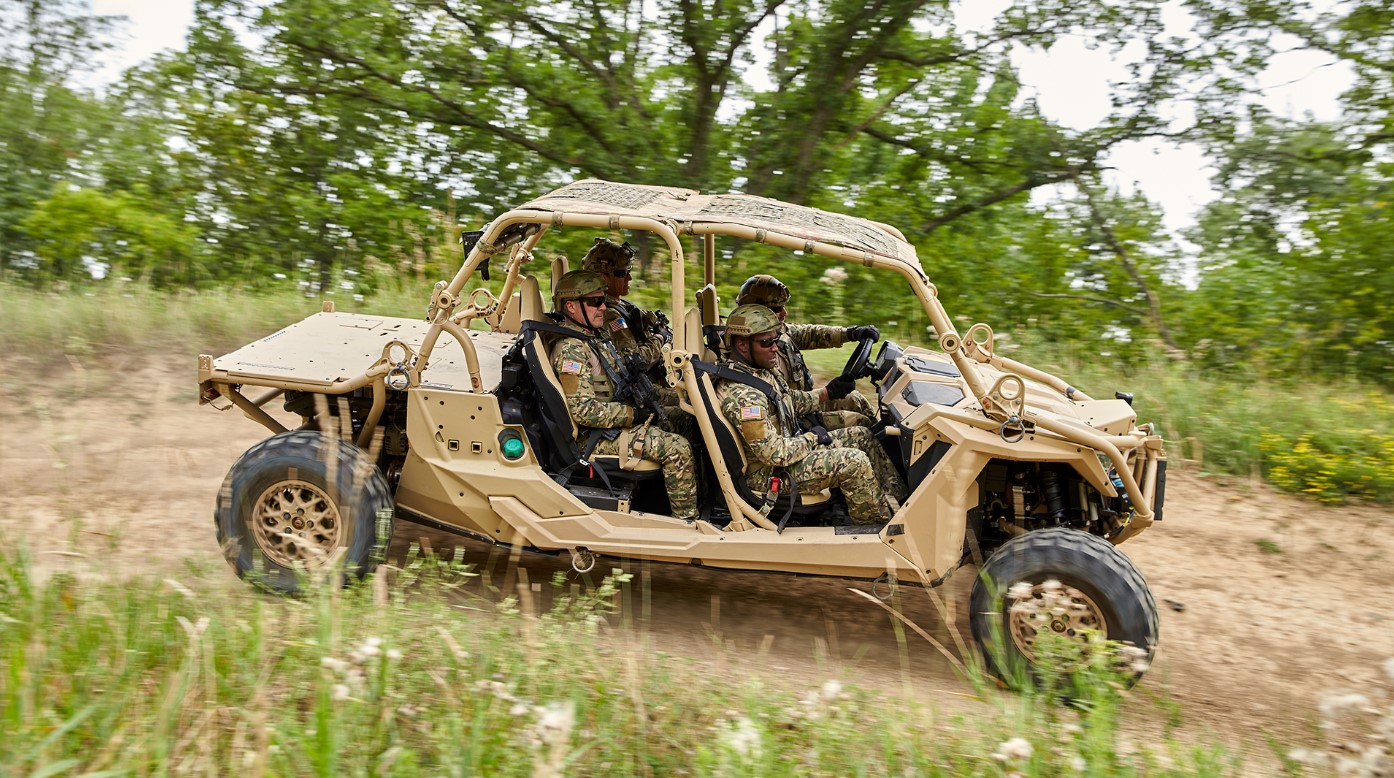
The capability to transport these vehicles internally within the MV-22 Osprey is a vital operational advantage for the concepts of Marine Littoral Regiments and Expeditionary Advanced Base Operations (EABO), where rapid deployment and a minimal logistical footprint are critical for survivability.
According to Army Recognition experts, unlike conventional tactical vehicles – such as the Joint Light Tactical Vehicle (JLTV), which our editorial team covered in detail in one of our respective reviews – the Polaris ULTV was engineered under strict size and weight constraints. This allows it to fit into the restricted cargo bays of helicopters and tiltrotors without requiring significant disassembly.
This capability enables Marines to quickly deploy tactical mobility assets directly to forward littoral areas, significantly reducing the time needed to establish dispersed expeditionary positions.
The high-power variant is particularly crucial within the framework of the US Marine Corps’ evolving Force Design 2030 architecture. Expeditionary Marine units increasingly rely on mobile power generation to run radar systems, communication suites, counter-unmanned aerial systems (C-UAS), and to coordinate long-range precision fires.
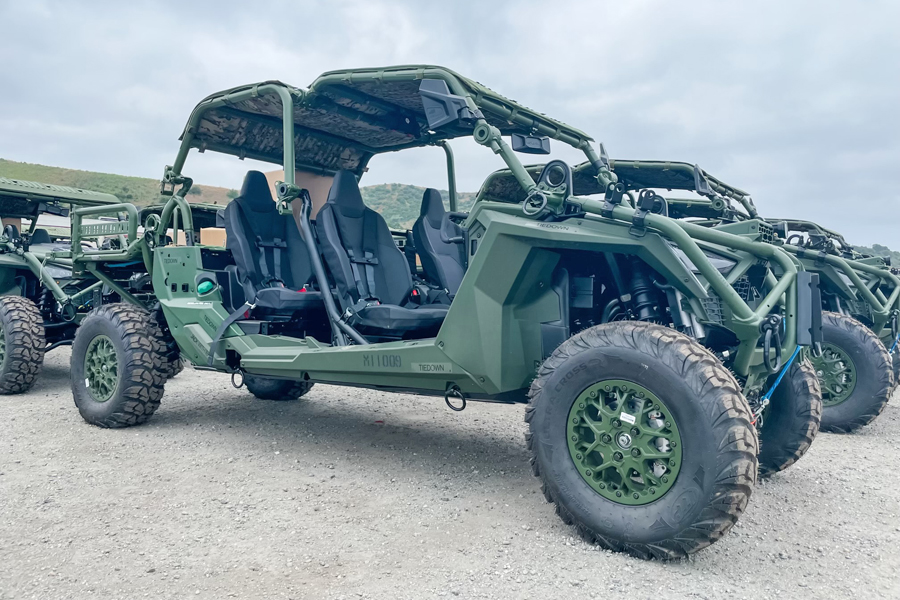
A light tactical vehicle capable of carrying both personnel and expeditionary power generation systems greatly enhances the autonomy of Marine units operating far from traditional logistics hubs.
Notably, this new contract marks the first time the MRZR Alpha will feature a 5 kW exportable power capability, alongside funding for ongoing support from Polaris’s engineering and logistics teams. Providing 5 kW of 24V exportable power—both while stationary and on the move—meets the growing demand from power-hungry systems, including tactical edge computing and air defense systems.
It also enables the powering of external loads, such as forward-deployed tactical networks, which are critical for conducting littoral operations in contested environments.
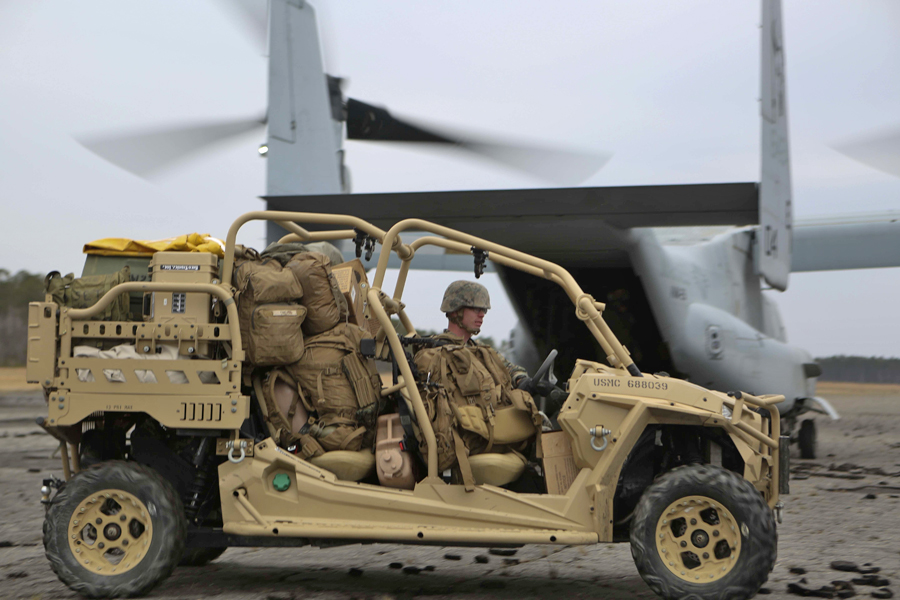
Commercial platforms like the Polaris MRZR Alpha have played a vital role in accelerating the deployment of highly mobile systems to the field. Polaris ensures global parts availability through its existing worldwide dealer and distributor network, promoting greater self-reliance for distributed forces.