The sky that never fell: how Ukraine’s surface-to-Air Missile Forces became one of the defining symbols of the Nation’s Resilience

When Russia launched its full-scale invasion on February 24, 2022, one of its primary objectives was to strip Ukraine of its ability to defend its own skies.
The Kremlin fully understood that without air defense, Russian aviation would gain freedom of action, missiles would strike critical infrastructure with impunity, and Ukrainian ground forces would be left without aerial protection.
That is why, from the very first minutes of the war, the enemy launched massive strikes against airfields, command posts, radar stations, surface-to-air missile positions, and other elements of Ukraine’s integrated air defense system.
Moscow was convinced that Ukraine’s air defense would cease to exist within days.
But it miscalculated.
Instead of a swift victory, Russia encountered a sky that fought back. Ukrainian air defenders not only held their ground — they forced one of the world’s largest militaries to fundamentally change its tactics.
It was then that one truth became unmistakably clear: the battle for Ukraine begins with the battle for its skies.
The first test that was meant to be the last
The first weeks of the full-scale invasion became, without exaggeration, historic for Ukraine’s Surface-to-Air Missile Forces.
Russia expected to repeat the scenarios it had previously employed in Syria and Georgia: rapidly suppress air defenses, establish air superiority, and then support advancing ground forces without fear of retaliation.
Ukraine’s air defense crews fought by entirely different rules.
Constant repositioning, rapid maneuvering, camouflage, swift restoration of damaged equipment, effective command and control, and the determination of personnel accomplished what had seemed nearly impossible: Ukraine’s air defense system continued operating despite relentless attacks.
Every launcher that survived meant dozens of lives saved in the future.
Every radar that remained operational meant another chance to detect an incoming missile in time.
Every aircraft shot down meant another attack on Ukrainian cities had been prevented.
It was then that Russian pilots first realized that Ukraine’s skies were no longer a place of impunity.
A war that long ago ceased to be fought only on the ground
Modern warfare has long extended far beyond the trenches.
Today, battles are fought simultaneously in the air, in space, in the information environment, in cyberspace, and across the electromagnetic spectrum. The enemy employs ballistic and cruise missiles, attack drones, combat aviation, electronic warfare systems, and reconnaissance assets.
Under these conditions, Ukraine’s Surface-to-Air Missile Forces have become one of the key pillars of the country’s defense system.
Their task is not merely to destroy aerial targets.
Their mission is to prevent the enemy from changing the course of the war through air superiority.
Every successful interception is more than a military achievement.
It is an apartment building saved.
A hospital that continues treating patients.
A power plant that remains standing instead of becoming ruins.
A school that opens its doors to children the following morning.
From Soviet legacy to the world’s most advanced technologies
At the beginning of the full-scale war, Ukraine’s air defense relied primarily on Soviet-era systems.
Many in the West doubted they could effectively counter modern Russian missiles.
Ukrainian servicemen proved otherwise.
But the war demanded much more.
That is why the Air Force embarked on an unprecedented modernization effort.
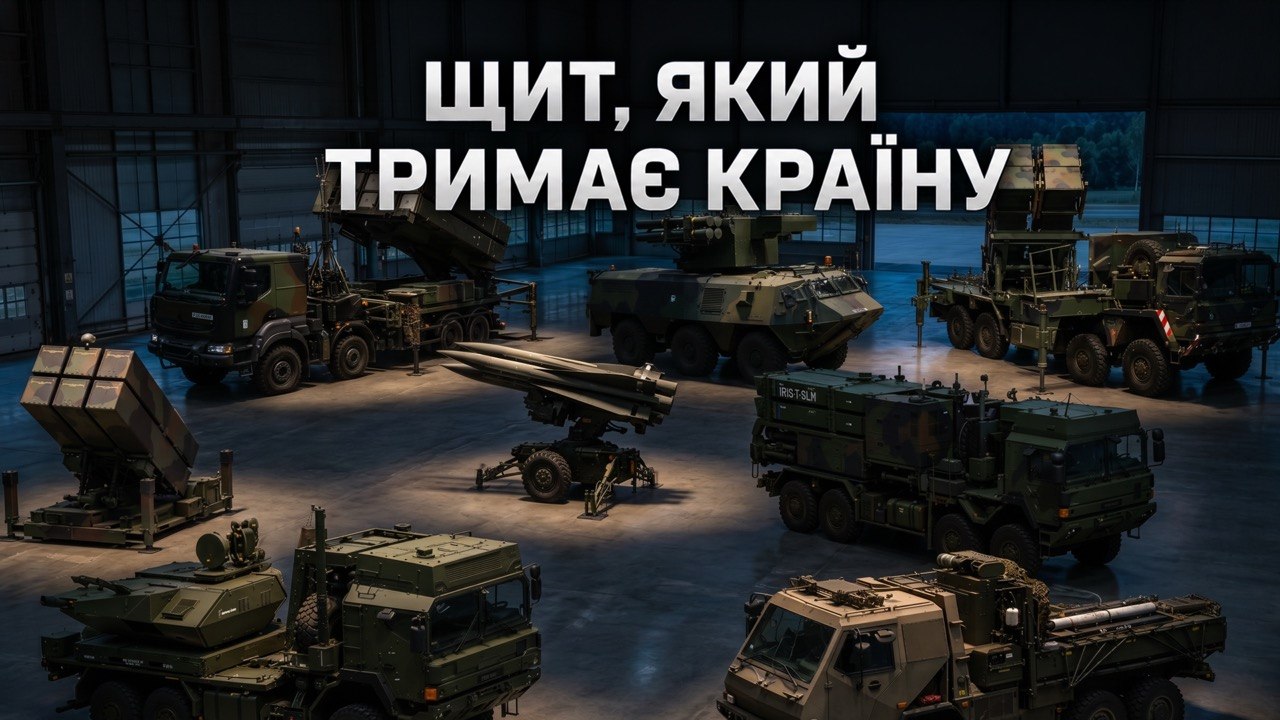
Ukraine received modern Western systems — including Patriot, NASAMS, IRIS-T SLM, SAMP/T, Crotale, Hawk, Raven, FrankenSAM, and others — which were gradually integrated into a unified air defense network.
This was not merely a transfer of new equipment.
It was a comprehensive transformation of the entire philosophy of air defense warfare.
Ukrainian personnel simultaneously mastered multiple systems, integrated them into a single operational network, and combined the capabilities of Western platforms with upgraded Soviet equipment, creating one of the world’s most flexible air defense systems.
The day the myth of the “unstoppable” Kinzhal collapsed
In May 2023, something happened that many military experts had until then considered nearly impossible.
Ukrainian air defenders destroyed a Russian Kh-47M2 Kinzhal air-launched ballistic missile.
For years, Russian propaganda had portrayed the missile as a “hypersonic weapon without equal” that supposedly could not be intercepted.
That moment became a turning point.
The world witnessed not only the capabilities of the Patriot system.
It witnessed the professionalism of Ukrainian servicemen.
Because even the most advanced weapon does not fight by itself.
People make the decisions.
They analyze the tactical situation, track incoming targets, execute combat engagements within seconds, and bear responsibility for every interceptor launched.
The night war against Shahed drones
Today, the face of aerial warfare has changed.
Russia increasingly relies on massive attacks by Shahed loitering munitions.
Dozens — and sometimes hundreds — of Shahed drones simultaneously enter Ukrainian airspace, attempting to exhaust the country’s air defense system.
In response, Ukraine has built a layered defensive architecture.
Surface-to-air missile systems, fighter aviation, electronic warfare units, and mobile fire groups equipped with heavy machine guns, man-portable air defense systems (MANPADS), thermal imaging devices, and night-vision sights operate side by side.
Together, they function as a single mechanism.
Its effectiveness depends not on individual systems, but on the seamless coordination of every component.
A war where the price of mistakes is measured in human lives
The service of Ukraine’s Surface-to-Air Missile Forces is almost invisible to most Ukrainians.
Unlike infantry or assault units, they rarely find themselves in the spotlight.
Their work is often mentioned only when a brief morning report appears:
“18 out of 20 missiles intercepted”.
“87 attack drones destroyed”.
Behind those dry figures lie hours of combat duty, complex calculations, constant repositioning, operations under the threat of retaliatory strikes, and enormous responsibility.
There is virtually no room for error.
A single incorrect decision can cost dozens of human lives.
That is why the professionalism of Ukrainian air defenders is measured not only by the number of targets destroyed.
It is measured by the cities that remain standing.
By the people who wake up after another night of attacks.
By the lights that never went out.
The shield that protects the nation
Ukraine’s Surface-to-Air Missile Forces are far more than just one branch of the Air Force.
They are a sophisticated system where advanced technology is combined with human endurance, calm judgment, and the readiness to operate under constant danger.
They rarely speak about their successes.
They never reveal the locations of their combat positions.
They do not talk about the countless sleepless nights they spend on duty.
Their work does not require grand words.
Its results are visible to the entire country every single morning.
When the sun rises once again over Ukrainian cities, when children go to school, when hospitals, power plants, businesses, and public transport continue operating, it means only one thing:
That night, Ukraine’s shield stood firm once again.
And as long as that shield holds the sky, Ukraine lives.