Fortifications, Demining, Anti-Drone Protection: What the State Special Transport Service Does During the War

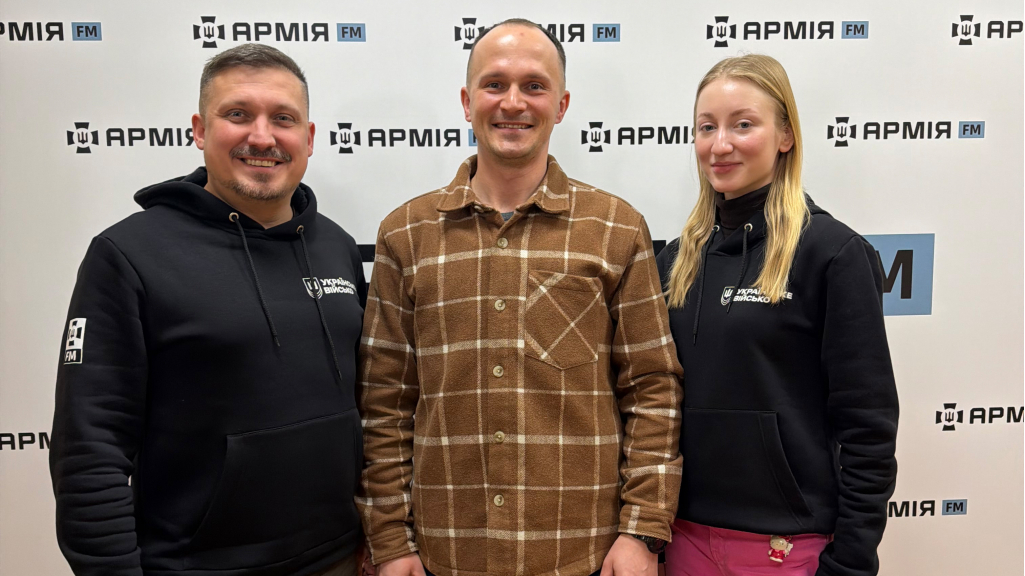
Yevhenii Martynov, officer of the Communications Directorate of the Administration of the State Special Transport Service, spoke about the work of the SSTU.
The interview was published on the ArmyFM website.
“The State Special Transport Service is now an important component of Ukraine’s Defense Forces and is part of the Ministry of Defense structure. It has evolved from railway troops established in 1992 to the modern military formation officially created in 2004.
Before the full-scale aggression, SSTU units carried out tasks in the ATO and JFO areas — guarding infrastructure facilities, restoring them, demining, building bridge crossings, and other engineering work.
Since the beginning of the large-scale war, the volume and complexity of these tasks have grown significantly. Today, the main task of the SSTU is to ensure conditions in which combat units can effectively perform their missions.
Among the main tasks are engineering equipment of defensive lines, construction of fortifications, and creation of multi-layered engineering barriers. Anti-drone protection of roads and logistics routes in frontline areas is also actively being built.
Additionally, demining of de-occupied territories and waters, restoration of transport and energy infrastructure, and protection of state-significant facilities are critical tasks. As of today, SSTU units have equipped nearly 700 kilometers of roads with anti-drone protection. Work continues around the clock.
The biggest challenge for our service is the massive use of enemy drones and constant strikes on logistics infrastructure. This is why the number of engineering units has been significantly increased, along with additional funding and equipment. The pace of work continues to grow”.
Yevhenii Martynov listed the main priorities of the SSTU for 2026:
“The main priorities are increasing the pace of fortification construction, expanding anti-drone protection of logistics routes, increasing humanitarian demining volumes, restoring energy infrastructure, and digitalizing management processes with modern IT solutions”.
He spoke about the importance of fortifications:
“Engineering structures are one of the key elements of defense. Modern multi-layered barriers force the enemy to spend time overcoming them, allowing our forces to detect and destroy the enemy in time. If earlier the depth of engineering barriers was around 50 meters, it is now 150 meters or more. This significantly increases defense effectiveness and saves the lives of our soldiers”.
Martynov explained whether the SSTU needs new specialists:
“We invite applicants to join the military training faculty of the State Special Transport Service at the Ukrainian State University of Science and Technology. Graduates receive officer ranks and serve in SSTU units and other components of the Defense Forces.
We also invite engineering, technical, and construction specialists to join on contract or through mobilization. Training is conducted at our own center in about 20 specialties. You can apply on the website or by phone: 098 108 48 88”.