Oleshky Under Russian Occupation: Civilians Face Hunger, Blockade and No Safe Way Out

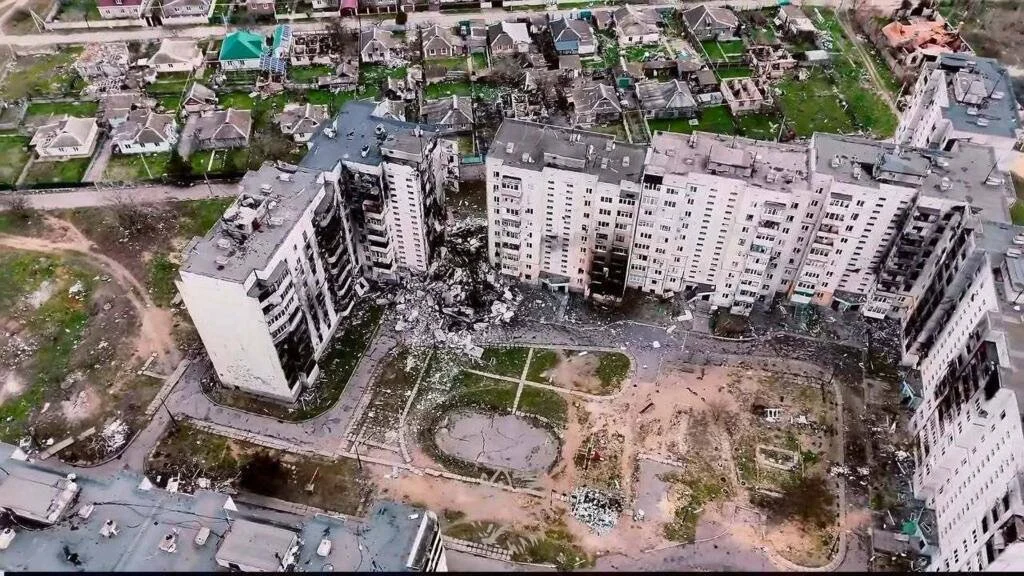
Russia has occupied Oleshky for more than four and a half years. Now the city is on the brink of starvation.
This week, Ukraine raised the issue of the humanitarian catastrophe in the occupied city at the level of the United Nations.
“If you remember only one thing from this meeting, remember Oleshky. Hear their cry for help.”
This is how Ukrainian Foreign Minister Andrii Sybiha addressed the international community. He called for demands that Russia open humanitarian corridors and directly described Moscow as “the only cause of this catastrophe and the only obstacle to ending it.”
Russian forces seized Oleshky in the first days of the full-scale invasion in February 2022. Since then, the city has endured repression against civilians, fighting, catastrophic flooding following the destruction of the Kakhovka Dam, and years without reliable electricity, water or gas. Now a humanitarian blockade has been added to the list.
At the beginning of the occupation, Human Rights Watch documented abductions, unlawful detentions and torture of civilians by Russian forces in southern Ukraine. One such case occurred directly in Oleshky: on April 7, 2022, about ten armed Russian soldiers came to the home of a 49-year-old local resident, searched the house, interrogated his family and took the man away in handcuffs.
After Russian forces destroyed the Kakhovka Dam, UN representatives documented how Russian occupation forces prevented volunteers carrying food and medicine from reaching Oleshky. Four volunteers were detained by Russian forces, and some were threatened with imprisonment in a basement.
Now the consequences of the Russian occupation can literally be seen on the plates of those who have remained in the city.
Before the full-scale war, about 24,000 people lived in Oleshky. According to Ukrainian estimates, around 2,000 civilians remain there today. Together with nearby settlements in the occupied part of Kherson Region, up to 6,000 people may need humanitarian assistance, including more than 180 children.
Oleshky has been without electricity for years and without gas for more than a year. Since the end of May, food supplies have virtually stopped.
The UN Human Rights Monitoring Mission reported that as of June 24, the last known delivery of food to the city had taken place on May 26. The last grocery store had already stopped operating normally in January.
People lived for months on their own supplies. Now those supplies are also running out.
A resident of Oleshky who managed to leave the city at the end of May told Suspilne Kherson that people she knows have already been boiling and eating purslane, a plant that remained growing in their gardens. They cook food over makeshift fires because there is no gas.
One family described its daily diet as follows: thin soup without potatoes in the morning and a few spoonfuls of buckwheat in the evening.
In critical cases, sick and wounded people have to be transported on garden carts. Transport is barely operating, while the hospital lacks fuel for its generator and food for patients.
This is no longer simply about “difficult living conditions under occupation.” People in this Ukrainian city do not know what they will eat tomorrow.
The Road Out of Oleshky Has Become a Deadly Route
The Russian occupation has not only left people without adequate supplies. Getting out of the city has also become extremely difficult. The roads around Oleshky are heavily mined, while civilians remain under constant threat of Russian attacks.
On September 1, volunteer Kseniia Arkhipova told the Vgoru outlet about a convoy of four civilian vehicles that tried to deliver food to Oleshky and evacuate people on the way back.
According to her, the drivers had agreed in advance with Russian forces to enter the city. The occupiers did not allow the vehicles through. As the convoy turned around, the first vehicle hit a mine planted on the road. Russian drones then attacked the convoy.
One vehicle burned down, while the others were unable to continue. The evacuation failed.
Arkhipova also reported that Russian forces are preventing local residents from leaving Oleshky. In June, another convoy carrying humanitarian aid hit a mine near the entrance to the city. One person was killed and three others were wounded.
Dmytro Lubinets, the Ukrainian Parliament Commissioner for Human Rights, said that Ukraine had already verified 358 people who urgently need assistance to leave the city safely.
According to him, the Ukrainian side has prepared an evacuation plan and secured the support of the International Committee of the Red Cross. However, after negotiations, Russia has for a long time refused to confirm its readiness to allow a humanitarian mission.
People cannot wait indefinitely. Some are trying to leave on their own — even crossing mined fields.
Ukraine is ready to evacuate civilians. But a safe corridor still depends on the consent of Russia — the occupying state that controls Oleshky and has failed to provide people with either adequate supplies or a safe way out.
Food Comes from the Sky — If the Drone Makes It
When food can no longer be delivered by road, efforts are being made to send aid by air.
The 34th Marine Brigade of the Armed Forces of Ukraine says that back in the spring, Ukrainian troops began delivering food and medicine to civilians in Oleshky using drones.
A few kilograms of supplies will not save an entire city. But for a particular family, such a package can mean several more days with food.
And even these humanitarian drones are being targeted by Russian forces.
There is another danger: revealing the location of the people who are supposed to receive the aid.
The route has to be planned so that Russian forces cannot track the drone and determine where the supplies will be delivered. As a result, even delivering a few kilograms of food becomes a separate operation.
“Remember Oleshky”
The effort to save people in Oleshky has now gone far beyond Kherson Region.
The All-Ukrainian Council of Churches and Religious Organizations has appealed to Pope Leo XIV, the World Council of Churches, UN member states and the International Committee of the Red Cross, calling for help in organizing a humanitarian mission and evacuation.
The appeal states that the city is under a humanitarian blockade, people lack basic necessities, and Russian forces are preventing them from leaving the occupied territory.
Now Ukraine is also speaking about Oleshky at the United Nations.
Foreign Minister Andrii Sybiha said that Russia is deliberately making life in the city impossible and called on the international community to demand that Moscow open humanitarian corridors.
This is not an act of goodwill that Ukraine is asking from the occupier. As the occupying power, Russia is obligated to ensure that the civilian population has access to food and medicine and not obstruct humanitarian assistance and evacuation.
Instead, after years of Russian occupation, Oleshky has become a city where normal life has been destroyed, aid has to be delivered through a combat zone, and civilians still have no safe way out.
For a Marine from the 34th Brigade, behind the statements from the UN podium and international negotiations are real people — his fellow Ukrainians who still call from the occupied city.
“We will return to the left bank anyway. Oleshky, Hola Prystan, the entire Kherson Region — it will be Ukraine.”
Ukraine will return to Oleshky. But those who remain there now need to be rescued now.
Because while the world talks about humanitarian corridors and guarantees, the Russian occupation has already reduced life in this Ukrainian city to three terribly simple questions:
Will there be anything to eat tomorrow? Will the drone carrying medicine make it? And will it be possible to escape Oleshky alive?