“Everyone’s alive—only the track came off”: An Abrams tank mechanic and driver recounted how the tank saved the crew in Kursk

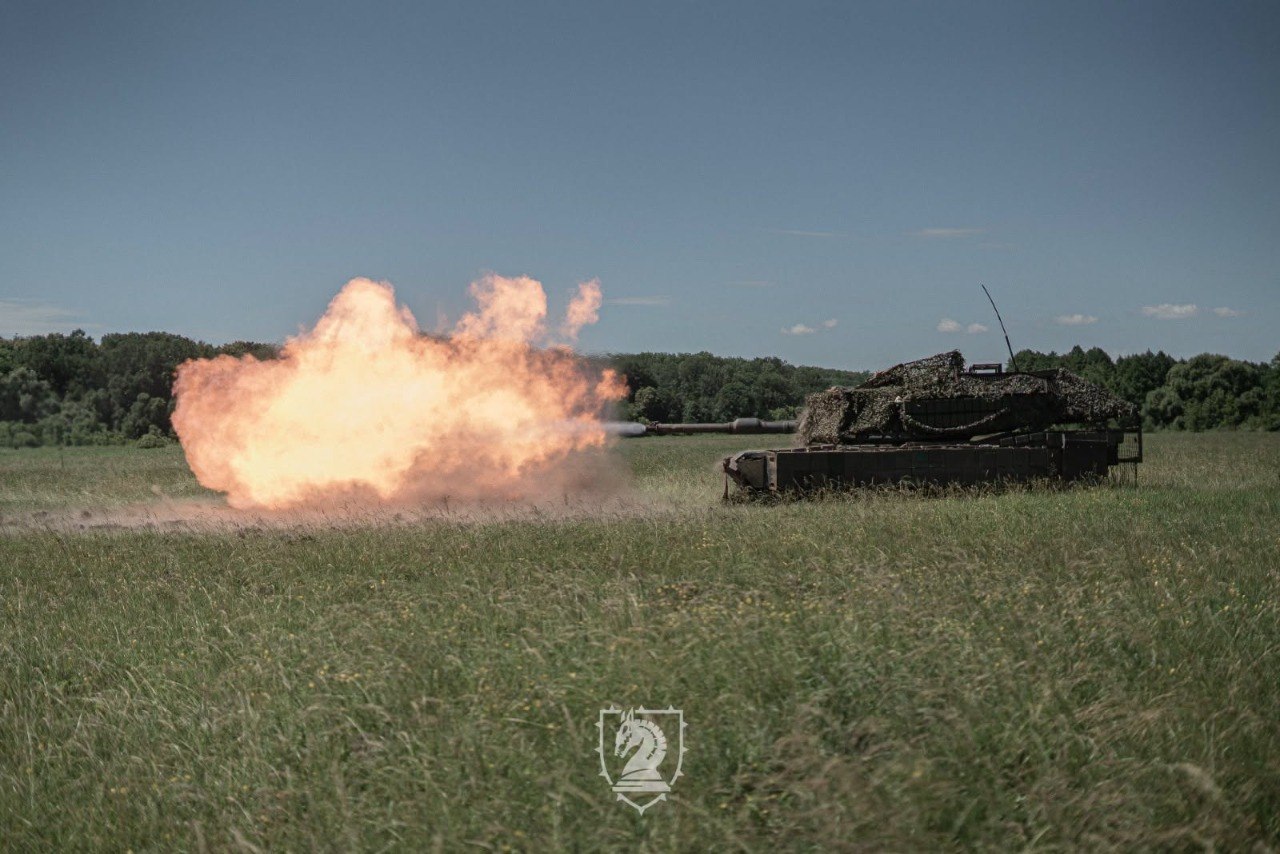
Pavlo, a mechanic and driver of an American Abrams tank, recounted how the vehicle withstood an anti-tank mine explosion in the Kursk region and saved the crew.
This is detailed in a video released by the 47th Separate Mechanized Brigade “Magura.”
The Abrams’ first combat deployments as part of the brigade took place in early 2024 during the defense of the Avdiivka Coke Plant.
According to Pavlo, despite weighing about 65 metric tons, the tank remains fast and maneuverable. The vehicle can accelerate to 60 km/h, has an automatic transmission, and is easy to operate.
“The transmission is automatic. You shift into drive—and that’s it, you’re off,” says the mechanic-driver.
He notes that the Abrams is easier to maintain and repair than Soviet tanks. By American standards, replacing the engine takes about 45 minutes. In addition, the vehicle has an emergency mode that allows it to move even with a damaged engine, so it can leave a dangerous area or wait for evacuation.
The toughest ordeal for the crew was hitting an anti-tank mine during combat operations in the Kursk region.
As a result of the explosion, the tank lost a track, and the soldiers suffered concussions, but everyone survived.
“Everyone’s alive—only the track blew off. It can withstand those mines,” Pavlo said.
He says the main task of a driver-mechanic is to get the crew to their position, bring them back alive, and keep the vehicle moving no matter what.
Pavlo joined the military in 2022. Before the full-scale war, he worked as a railroad engineer and had a deferment, but he asked to have it canceled himself.
“It had to be done. Who else but us?” the soldier explains.
At first, he trained on the T-72; later, in the 5th Separate Tank Brigade, he mastered the Abrams; and eventually, along with his crew, he transferred to the 47th Brigade and almost immediately headed for Avdiivka.
Pavlo recalls that the first combat missions were the hardest. The Russians quickly pinpointed their firing positions, so the crew had to constantly change their operating locations.
“My hands were shaking, my legs were shaking. But then I gained combat experience—and it wasn’t so scary anymore,” he says.
For his actions in the battles on the Pokrovsk front, Pavlo was awarded the “Golden Cross.” He recalls how, after firing through their entire ammunition load, the loader announced that there was one shell left. As they were withdrawing, the crew turned the gun around and fired one final shot.
“They completely destroyed the enemy position. That gave us the opportunity to press on with the assault,” the mechanic explained.
Pavlo has no plans to change units. He says that in the 47th Brigade, he knows his crew and trusts his comrades.
He sums up his motivation succinctly:
“So that all of this will end sooner. Only our victory—and that’s it.”