Rock ‘n’ Roll on the UR-77 and Combat Engineering: The Story of a Military Engineer from the 91st Support Brigade with the Callsign “AC/DC”

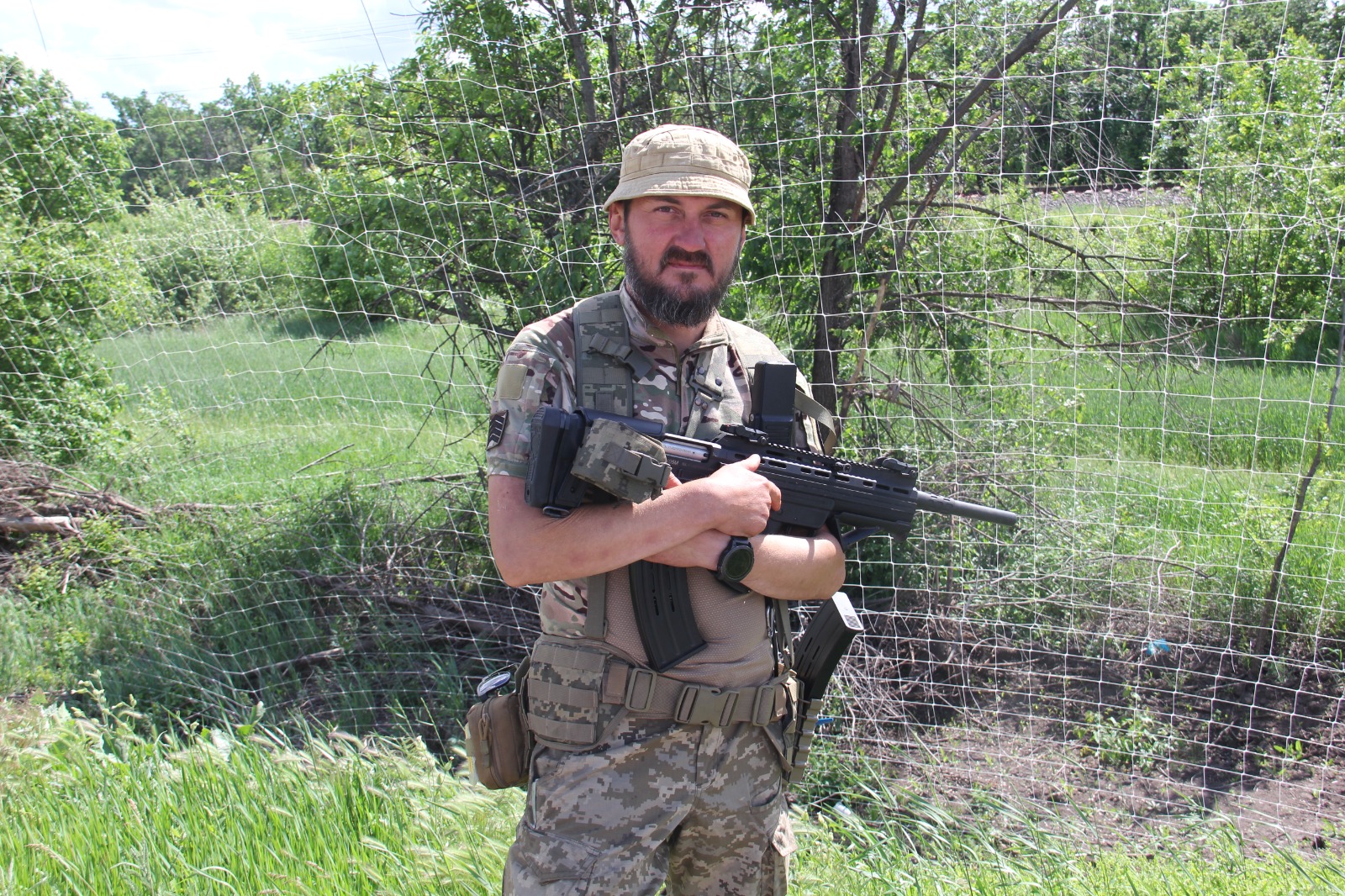
A support brigade is about much more than obstacles and fortifications.
It also provides direct support to combat units on the battlefield. Laying mines along the forward edge of the front, breaching enemy minefields — this is dangerous but critically important work carried out by combat engineers whose motto is: “Ahead of the First”.
ArmyInform tells the story of a serviceman from the 91st Separate Okhtyrka Support Brigade, known by the callsign “AC/DC”, who fought during the southern counteroffensive and later entered Russia’s Belgorod Region alongside combat units.
“My wife used to say I even found rock ‘n’ roll in the army”
“Once, the detonation of the charge from our UR-77 triggered a chain reaction, and the entire minefield exploded. If someone had filmed it with a drone, the footage would have looked like the apocalypse”, — recalls Dmytro, a serviceman of the 91st Support Brigade with the callsign “AC/DC”.
His callsign was no coincidence. While operating the UR-77 mine-clearing vehicle, Dmytro always played music by the rock band AC/DC through a portable speaker, and that’s how the callsign was born.
Dmytro volunteered for military service at the very beginning of Russia’s full-scale invasion. On the night of 24–25 February 2022, he and his friends — football supporters from Dnipro — were deciding where to enlist. His friends joined a combat brigade, while Dmytro, lacking a military ID, was delayed and later ended up at a training center where combat engineers were being trained.
“As it turned out, I found my place here. My wife used to say I had even found my own rock ‘n’ roll in the army. The most exciting job in the engineer troops is working on the ‘URka’” , — Dmytro recalls.
The “URka” is the UR-77 Meteorit, a self-propelled rocket-propelled mine-clearing vehicle. It carries a special explosive line charge containing up to 900 kilograms of TNT attached to a 450-meter braking cable. Once launched, everything along its path is blown apart, creating a safe passage.
From Kherson Region to Belgorod Region: Unconventional Use of Military Equipment
Dmytro’s baptism by fire came in Kherson Region, near Davydiv Brid. On the very first day while the unit was unloading equipment, they came under a phosphorus bombardment. He says that “fireworks display” is something he will remember for the rest of his life.
Later came the Kherson counteroffensive and the difficult operation near Robotyne in Zaporizhzhia Region. The engineers were given an extremely challenging mission — to breach enemy minefields so assault units could advance.
“Our task was to reach Polohy. We were the ones who had to break through the enemy’s mined defensive lines. We made several sorties every day. But it was incredibly difficult. Everything that could possibly be mined had been mined. It was hard even to get close enough to the distance we needed for our work. We prepared for it thoroughly. Every vehicle, every serviceman. Everything was planned. We all knew the mission by heart. Unfortunately, we weren’t able to accomplish everything”, — Dmytro recalls.
The UR-77 occasionally had to be used in unconventional ways — sometimes by design, sometimes by accident.
“Once I was tasked with creating a breach. But we ended up firing the charge slightly off target and destroyed a bunker instead. Later we found out it was a very large bunker packed with enemy infantry. Afterwards, the battalion commander of the unit we were supporting presented me with an award. If they had sent soldiers to clear that bunker manually, there would have been many casualties. Instead, they entered it and simply collected weapons from the already dead occupiers”, — the serviceman says.
During the operation in Belgorod Region, when units of the Sheikh Mansur Battalion, the Russian Volunteer Corps (RDK), and the Freedom of Russia Legion entered Russian territory, Dmytro received another unusual mission — not to breach minefields, but to destroy a specific building.
“That building was being used as a communications hub. It was covered with repeaters and antennas. We went in and blew it apart. It literally exploded into pieces. On the way back, however, our vehicle was struck by an enemy Lancet loitering munition. After that, the entire crew had to make their own way out”, — “AC/DC” recalls.
The crew successfully left enemy territory without casualties. For that operation, Dmytro was awarded the Golden Cross.
“Ahead of the First”
The battlefield has changed dramatically since then.
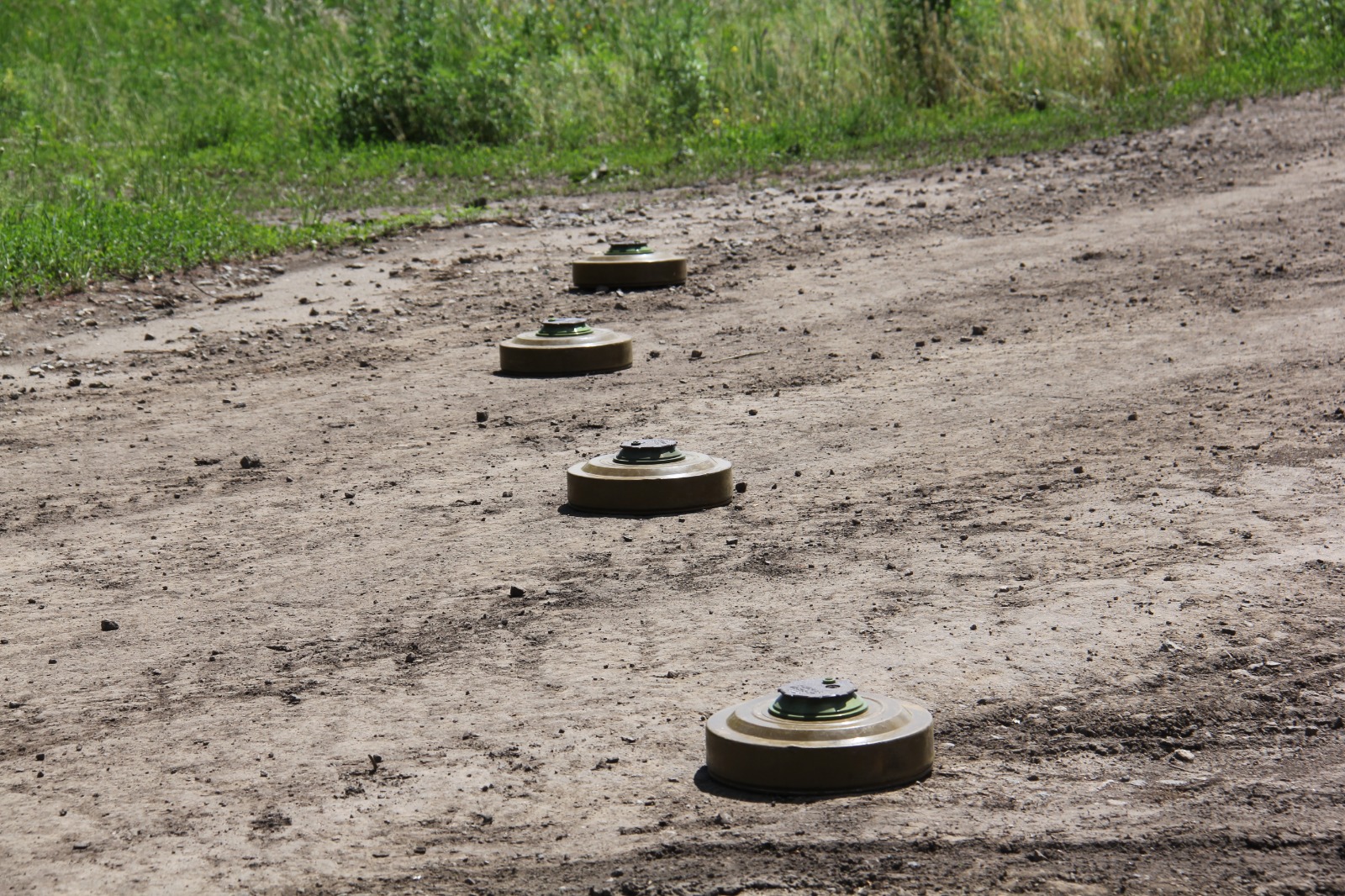
Because of the sheer number of drones in the air, using the UR-77 has become virtually impossible. As a result, Dmytro now primarily serves as a combat engineer (sapper). He installs various obstacles, including concertina wire, low-visibility barriers, TM-62 anti-tank mines, and OZM bounding anti-personnel mines. His team frequently operates directly on the line of combat contact.
“For some reason, many people think engineers work in safer conditions. That’s simply not true. Our motto is ‘Ahead of the First’. Infantry hold their observation posts, and our job is to surround them with concertina wire. That means getting even closer to the enemy. In just a few minutes we have to jump out, stretch the wire, and even emplace an OZM anti-personnel mine. So it’s extremely demanding work. But it’s necessary. The more obstacles we can put in place, the longer we’ll be able to delay the enemy”, — Dmytro says.
At the moment, however, he is recovering from a gunshot wound.
For now, he leads a security team protecting soldiers who install and repair anti-drone nets over roads. His group has already shot down six enemy drones, hunting Lancets, Molniya drones, and FPV drones. Still, Dmytro says that as soon as he has fully recovered, he will immediately return to his combat engineer team.