Ukrainian drones visited Moscow’s largest refinery, hitting core processing unit that supplies 40% of capital’s fuel

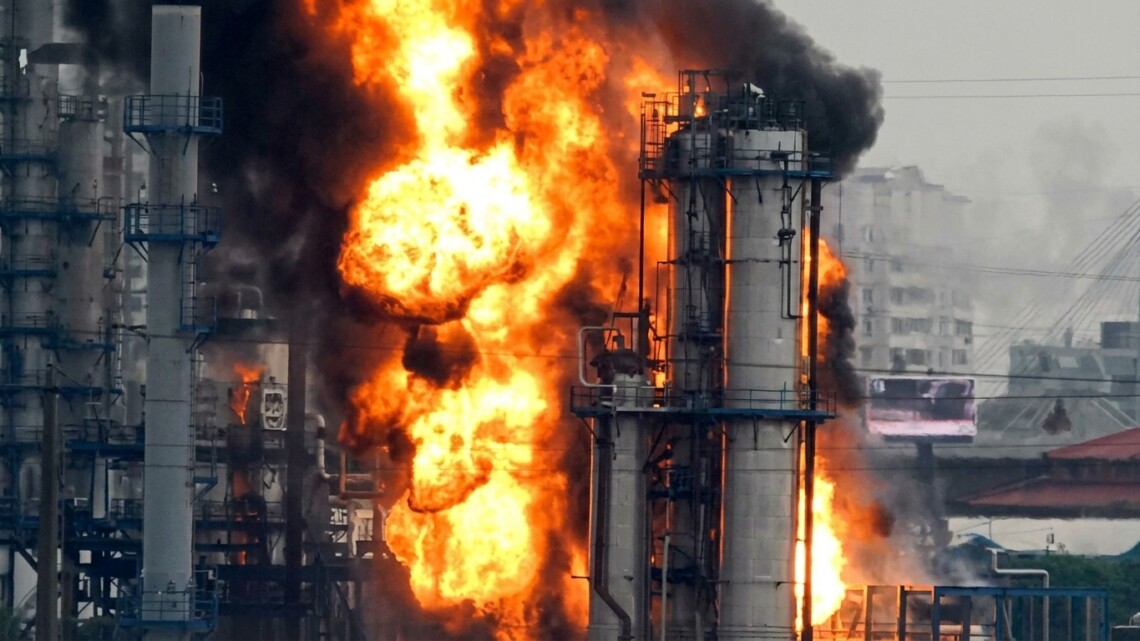
Ukrainian drones struck the Kapotnya oil refinery in Moscow overnight, hitting the facility's primary crude distillation unit and igniting a fire.
June 16 — Ukrainian drones struck the Kapotnya oil refinery in Moscow overnight, hitting the facility’s primary crude distillation unit and igniting a fire that Moscow Mayor Sergei Sobyanin confirmed in a public statement — bringing Ukraine’s sustained campaign against Russian oil infrastructure to the Russian capital itself.
The Kapotnya plant is Moscow’s largest refinery and supplies approximately 40 percent of the fuel needs of Moscow and the surrounding region. The confirmed strike target was the ELOU AVT-6 installation — an atmospheric vacuum distillation unit that performs the primary conversion of crude oil into usable fuel products. Without a functioning AVT unit, a refinery cannot process crude oil regardless of the condition of its surrounding infrastructure.
Russian air defence systems claimed to have intercepted “dozens of drones” during the attack. The AVT-6 unit was burning regardless.
The Kapotnya strike follows the same doctrine Ukraine has applied consistently across Russia’s refinery network since January 2026: identify the processing heart of the facility and destroy it, rather than targeting peripheral storage or logistics infrastructure.
AVT installations are the irreplaceable core of any oil refinery. Their destruction halts primary processing operations and forces an extended shutdown — one that cannot be remedied by repairing tanks, pipelines, or loading infrastructure. This targeting logic has been applied at Ryazan, Saratov, Yaroslavl, Toapse, the Kuibyshev refinery in Samara, and the TANEKO and TAIF-NK complexes in Tatarstan — all struck in 2026.
The June 16 strike on Kapotnya is the first confirmed major drone strike on a refinery within Moscow’s city boundaries. The Kapotnya strike occurs against a backdrop of sustained and cumulative damage to Russia’s oil processing sector.
Since January 2026, Ukraine’s Defence Forces have conducted more than 40 confirmed strikes on Russian oil infrastructure. Independent assessments estimate that approximately 40 percent of Russia’s primary oil refining capacity has been degraded. The Russian government imposed a ban on aviation fuel exports — the first such restriction in modern Russian history — citing the need to stabilise domestic fuel markets. Fuel rationing has been introduced in occupied Crimea, Kursk region, and Belgorod region.
The financial consequence has entered Russia’s sovereign planning: due to collapsing hydrocarbon export revenues, Russia budgeted an 11 percent reduction in defence spending for 2026 — the first military budget cut in four years of full-scale war.
General Syrskyi confirmed in his June 11 monthly briefing that Ukraine struck 111 Russian military-industrial, energy, and fuel infrastructure targets in May alone, causing approximately $1.058 billion in direct and indirect economic damage.
Previous strikes in the campaign have targeted refineries and fuel depots in Tatarstan, Samara, Krasnodar, St. Petersburg, and across occupied Ukrainian territory. Each has been significant. The Kapotnya strike carries a different weight.
Kapotnya is not a regional facility. It is a facility inside Moscow — a city whose leadership has consistently presented the full-scale war as something happening at a distance from the Russian capital, manageable and contained.
The strike does not change the military balance of the war in any single engagement. It continues a campaign that is changing the financial balance of the war through cumulative economic attrition — one processing unit at a time.
Putin told Russians the war was far away.
Tonight it reached the city where he governs.