“I’ll open a bar after the war”: The story of BabyDoc, an American legionnaire from Utah

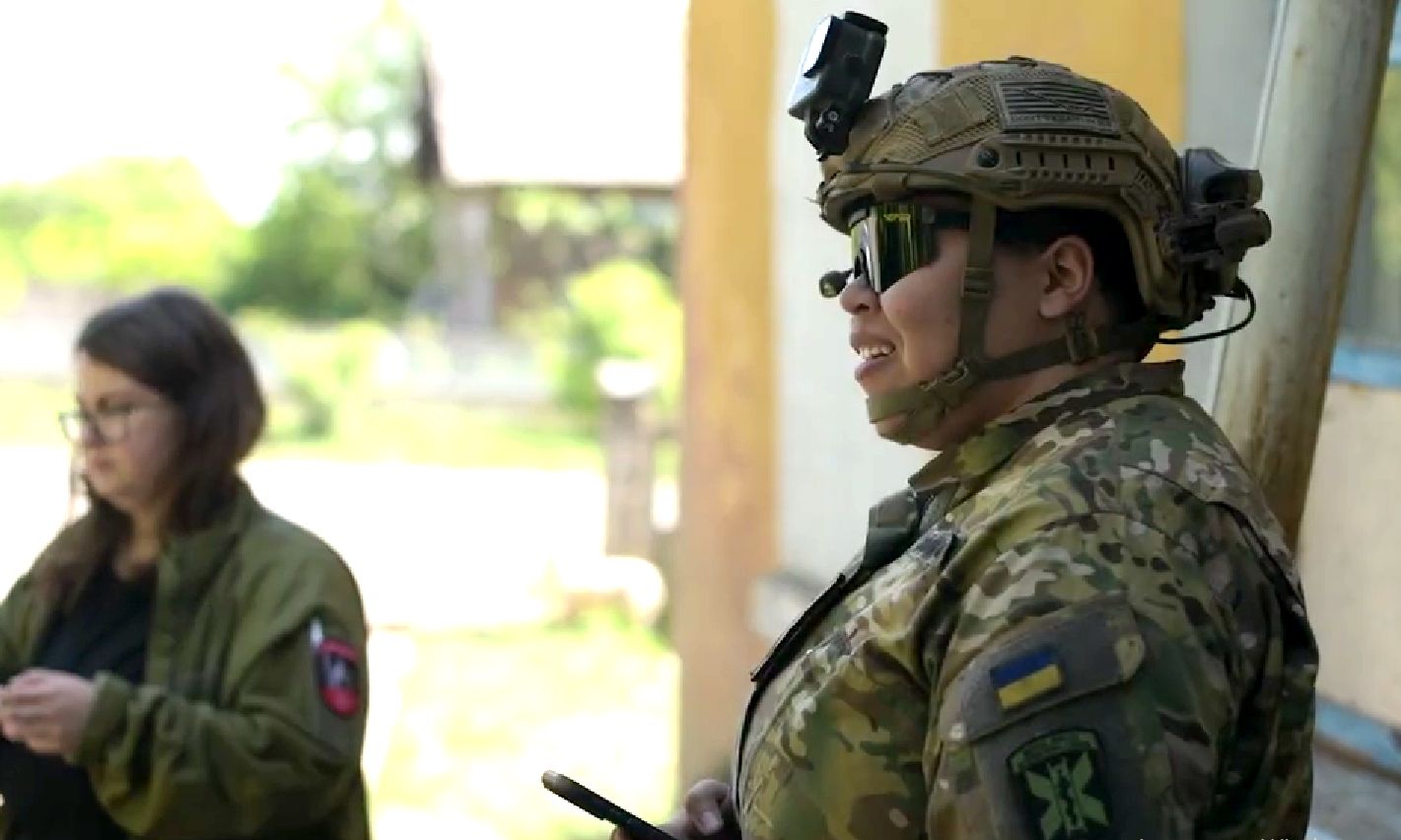
Glenn Manchigo, an American combat medic who goes by the nickname BabyDoc, has become so enamored with Ukraine that she plans to stay here even after the war.
Her story was shared by the International Legion for the Defense of Ukraine.
With both medical and military training under her belt, Glenn Manchigo decided that these skills could be useful where “life-and-death decisions are made every day.” So, while the rest of the world was still trying to grasp the scale of the catastrophe following Russia’s full-scale invasion, she had already made a decision that changed her life.
“Glenn spent her first months of service in Ukraine in one of the international assault units. There weren’t many Ukrainians there—mostly commanders and officers. The core of the personnel consisted of foreign volunteers, mainly from English-speaking countries. She later joined the Second International Legion of the Defense of Ukraine, where cooperation between Ukrainian and foreign soldiers was much closer,” the article states.
Four years have passed since then, and during that time, Ukraine has become much more to this foreign volunteer than just a place of service.
“The Ukrainians’ motivation is perfectly clear. They are defending their homeland, their families, and their right to remain Ukrainian. Being by their side and serving alongside them is incredibly inspiring. It boosts morale and constantly reminds you why you’re here. Being with them makes you realize very clearly what contribution you’re making and why it matters,” the soldier shares.
Today, Glenna works mostly at stabilization points and notes that the hardest part of her job is the psychological burden.
“The hardest part of this job is seeing your friends, brothers-in-arms, and sisters-in-arms suffering from terrible pain and suffering severe injuries, while you’re desperately trying to save their lives. I remember very well the words of one of our instructors during the medical training course. They are etched in my memory forever: ‘You appear before a person on the worst day of their life to become their best friend,’” says BabyDoc.
However, despite all the challenges—including language barriers—her military experience taught her to quickly find solutions in any situation and make do with what she had.
“When I served in an assault unit, the working language was English. But at the same time, we learned specific Ukrainian words and commands to speed up communication and get short, clear answers exactly when it matters most. Google Translate is a huge help, especially since you can use it without an internet connection. And sometimes gestures are enough. In medicine, it’s a bit easier, since most terms and drug names are similar across languages, which makes the job much easier,” the soldier explains.
As for her future, Glenna views it with cautious optimism and already has a few options.
“After the war, I plan to live here in Ukraine and go back to university. Or maybe open my own bar—so far, it’s about fifty-fifty. That’s my plan for the future right now,” says the combat medic.