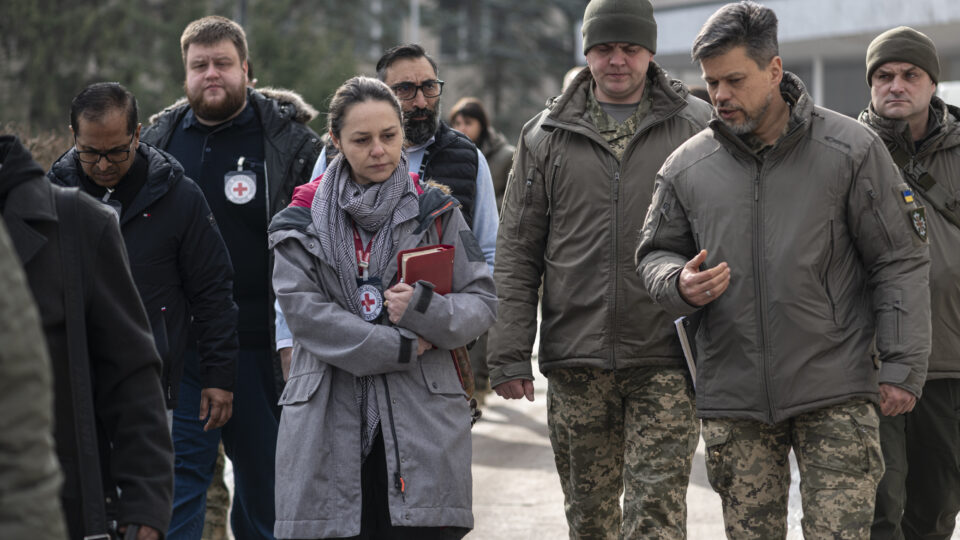
The international delegation, headed by Ana Lucía Bueno, ICRC Public Health Coordinator, and Sujit Panda, Head of the Physical Rehabilitation…

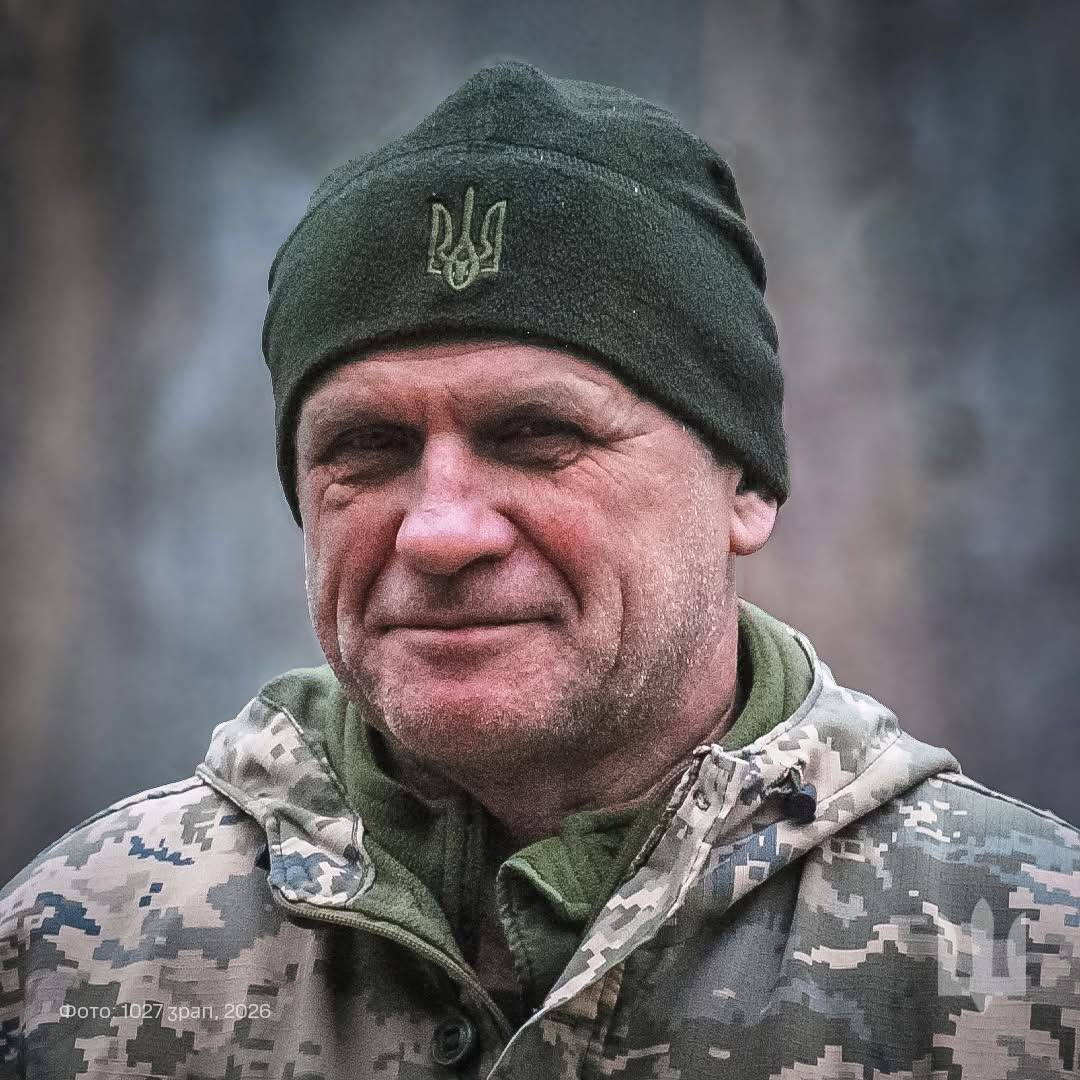
“Znakhar” did not crave loud roles and did not search for “his” unit. He simply knew: when war starts, sitting and waiting is not an option.
The story of the defender was published on the page of the 1027th Anti-Aircraft Missile and Artillery Regiment.
“Znakhar” is a serviceman of the 1027th regiment, who joined the ranks on the first day of the full-scale invasion. His story is about responsibility, unpretentious calm, and the people who must be kept together in order to defend their land.
His military path began back in 2017, when he was summoned to the Territorial Recruitment Center, passed the medical commission, and entered the first-tier operational reserve. And from the first day of the full-scale invasion, he was already in formation.
According to the soldier, his family reacted to his decision with anxiety.
“My wife actually took my documents — she didn’t want to let me go, but I ‘stole’ them and went to the enlistment office”, — he laughs.
He ended up in an air-defense unit by assignment.
“We were sitting at the enlistment office waiting for distribution. They asked whether I’d go to a unit, and I replied that I didn’t care where — just give me a rifle and let’s go fight, enough sitting”, — Znakhar says.
He took part in the defense of Kyiv and the Kyiv region and remembers the events of the first days well.
“Honestly — there was no fear. There was chaos. Nobody really understood where the enemy was or what was happening. We dug trenches, built fortifications and checkpoints. And then we got onto a GAZ-66 truck. They needed people over 40 — and we started carrying out missions on the ZU-23-2”, — he recounts.
He received his callsign “Znakhar” from comrades because it resembled his surname; it had nothing to do with healing.
After the liberation of the Kyiv region, he mostly worked with equipment: repair, maintenance, and of course combat duty. He was the senior sergeant of the maintenance and repair group in the division.
He says he’s not an IT guy, but finding spare parts and arranging repairs is his thing.
The hardest part of this work, in his opinion, is keeping together guys with different experience, characters and temperaments. It truly costs nerves.
“In civilian life everyone is different, with ambitions and achievements, but at war it doesn’t matter who you were. If something needs to be built — then everyone builds. I talk to people a lot, trying to understand what matters to them and how I can help”, — says Znakhar.
He built cohesion and atmosphere in the unit through communication. When you establish contact, you see people as they really are.
“We motivated each other: if something must be done — then it must be done. If you need to learn — then you learn. Sometimes a soldier just needs to be listened to. It’s very important — so that he feels he’s not alone, adapts faster and doesn’t close in on himself”, — the soldier emphasized.
His main motivation at the start of the war and now is to defend the country. And also — there were very young guys beside him, practically children.
“They still have to live. We protected them because they didn’t always fully understand what was happening. I’ve lived my life already. If anything — I’ll take five to seven with me. And they — they must live”, — Znakhar said.
When asked what he felt during combat duty when they saw a target and opened fire, the soldier says simply — excitement.
“Excitement to shoot down that filth. A sort of hunting thrill. Only afterwards do you think that it might hit you too. But during the work you don’t think about it”, — he shares.
At home, his wife and son are waiting for him. He dreams of the war ending, peace and quiet — and also a garden and household.

The enemy is attempting to develop the production of naval drones and copy successful Ukrainian practices — both technical solutions and tactics.
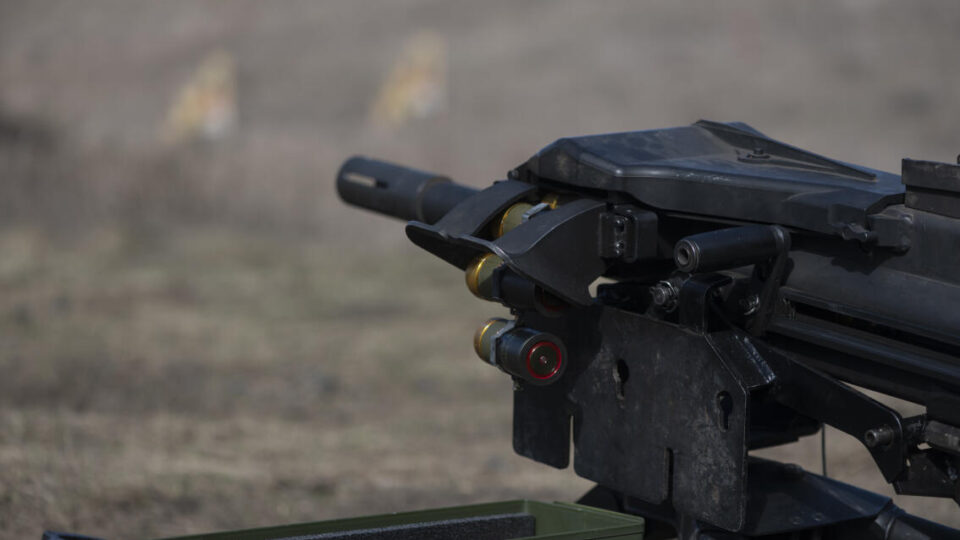
Fighting continues in the northern part of the city of Pokrovsk in the Pokrovsk direction. A mechanized assault was repelled there the day before.
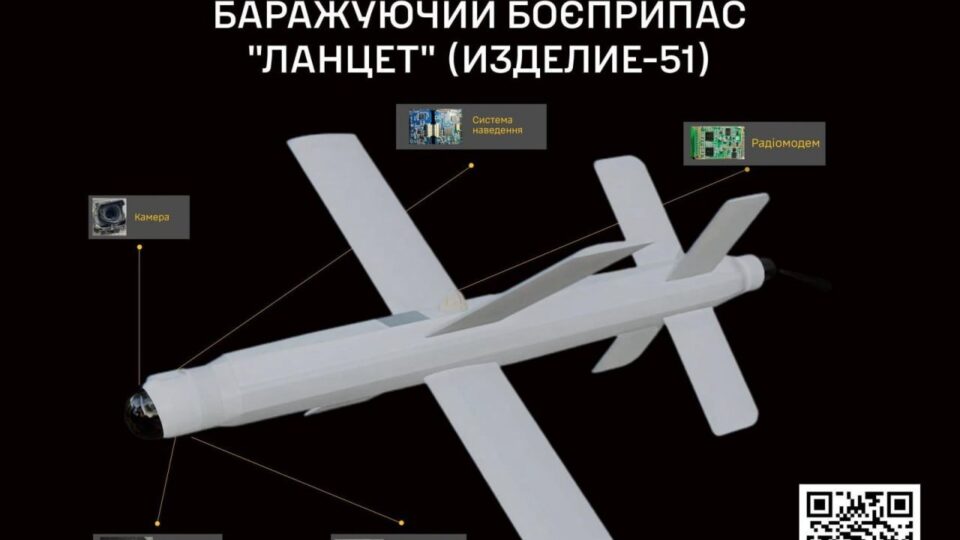
The Main Intelligence Directorate of the Ministry of Defense of Ukraine has published data on enterprises involved in the production of Russian loitering muniti

Another two-day round of negotiations between Ukraine and the United States concluded in Florida on March 22.
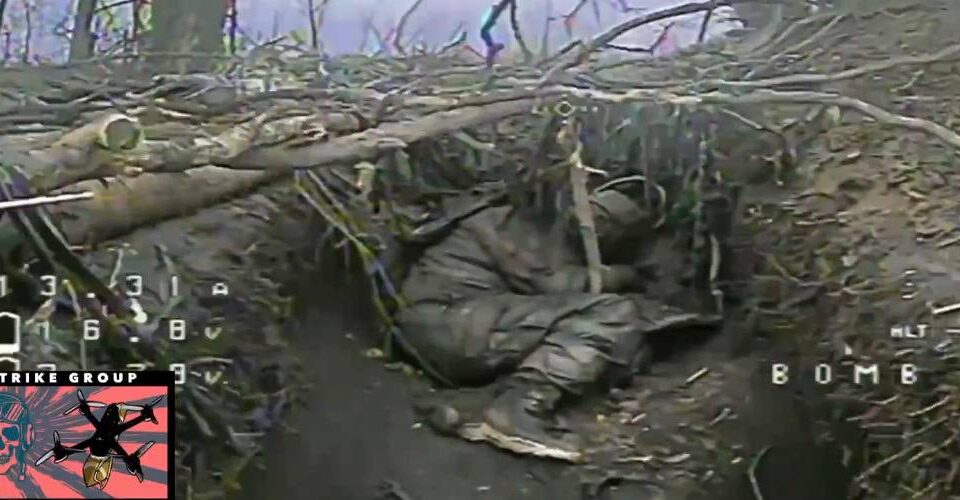
The enemy continues daily pressure and attempts to break through Ukrainian defenses in the Sloviansk direction.
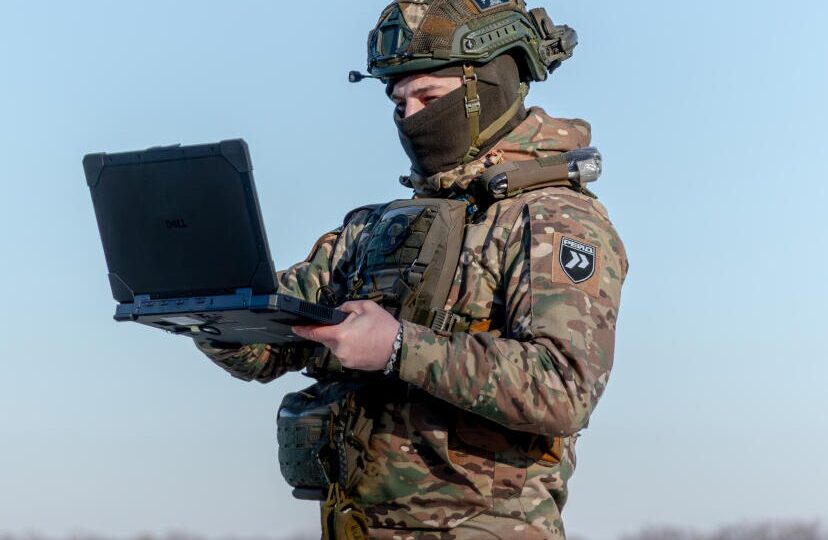
Over the past day, units of the Unmanned Systems Forces struck/destroyed 1,078 enemy targets.
The international delegation, headed by Ana Lucía Bueno, ICRC Public Health Coordinator, and Sujit Panda, Head of the Physical Rehabilitation…