Saved in 45 Minutes: HUR medics performed an extremely complex surgical operation in the Open Sea

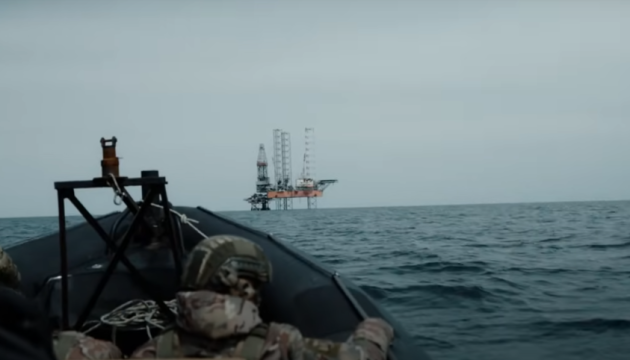
Specialists of the surgical team of the Active Operations Department of the HUR MoD provided medical assistance in the open sea to a severely wounded soldier who had spent some time in cold water.
Direct participants in the operation spoke about it on the air of the national telethon “United News”.
An operation at the limit of possibility
On a platform in the open sea, medics of the Active Operations Department of the HUR MoD carried out a complex rescue operation — without a hospital and without an operating room.
The medical team knew about the wounded soldier even before he was brought in — everything was calculated in advance, as every minute was critical. The fighter had spent some time in the water, which further complicated an already severe condition.
“The tourniquets were applied later than they could have been. Because of this, blood loss increased, and general hypothermia also worsened the situation”, — says a surgical team specialist with the call sign “Tochini”.
The goal is not only to save a life, but to preserve maximum potential for rehabilitation
“The patient was under constant supervision and was delivered to us. A significant role in this was played by combat medics who were in the forward units”, — recalls one of the rescuers.
The fighters applied tourniquets and effectively stopped the bleeding. The most difficult stage followed — transferring the wounded person from one platform to another.
The injuries were extremely severe: mine-blast trauma, amputation, massive blood loss, hemorrhagic shock, and traumatic brain injury.
Thanks to the medics’ skilled actions, clear coordination, and organization, all necessary procedures were completed and the wounded person’s condition stabilized.
“The key in these actions is not only saving a life, but also preserving maximum functionality for future rehabilitation. The surgeon and his assistant chose the tactics, and I, so to speak, simply helped them medically and with free hands”, — one of the fighters said.
The medics performed at 100 percent — even faster than planned. Instead of the allocated hour, all manipulations were completed in 45 minutes.
“The entire operation, resuscitation, and surgical care lasted 45 minutes. We planned up to an hour of work with the patient — we managed faster”, — one of the medics recalled.
“They save lives where it is almost impossible”
Thanks to the coordinated work of medics, the wounded soldier is undergoing rehabilitation.
“The patient is already training, already trying to walk with a prosthesis. I can’t tell you the exact amount of time that has passed, but it’s a relatively short period”, — the medic said.
For HUR medics, working in such conditions, specialists say, is not an exception but the norm. They save lives where it is almost impossible.
“It can be a boat, a helicopter, any basement, just a room, or even here. We are all trained at the same level, and in some situations we can all replace each other. I think this is perhaps the best example in our country among special services of who was able to do this — and did it effectively”, — the medic concluded.