
The international delegation, headed by Ana Lucía Bueno, ICRC Public Health Coordinator, and Sujit Panda, Head of the Physical Rehabilitation…

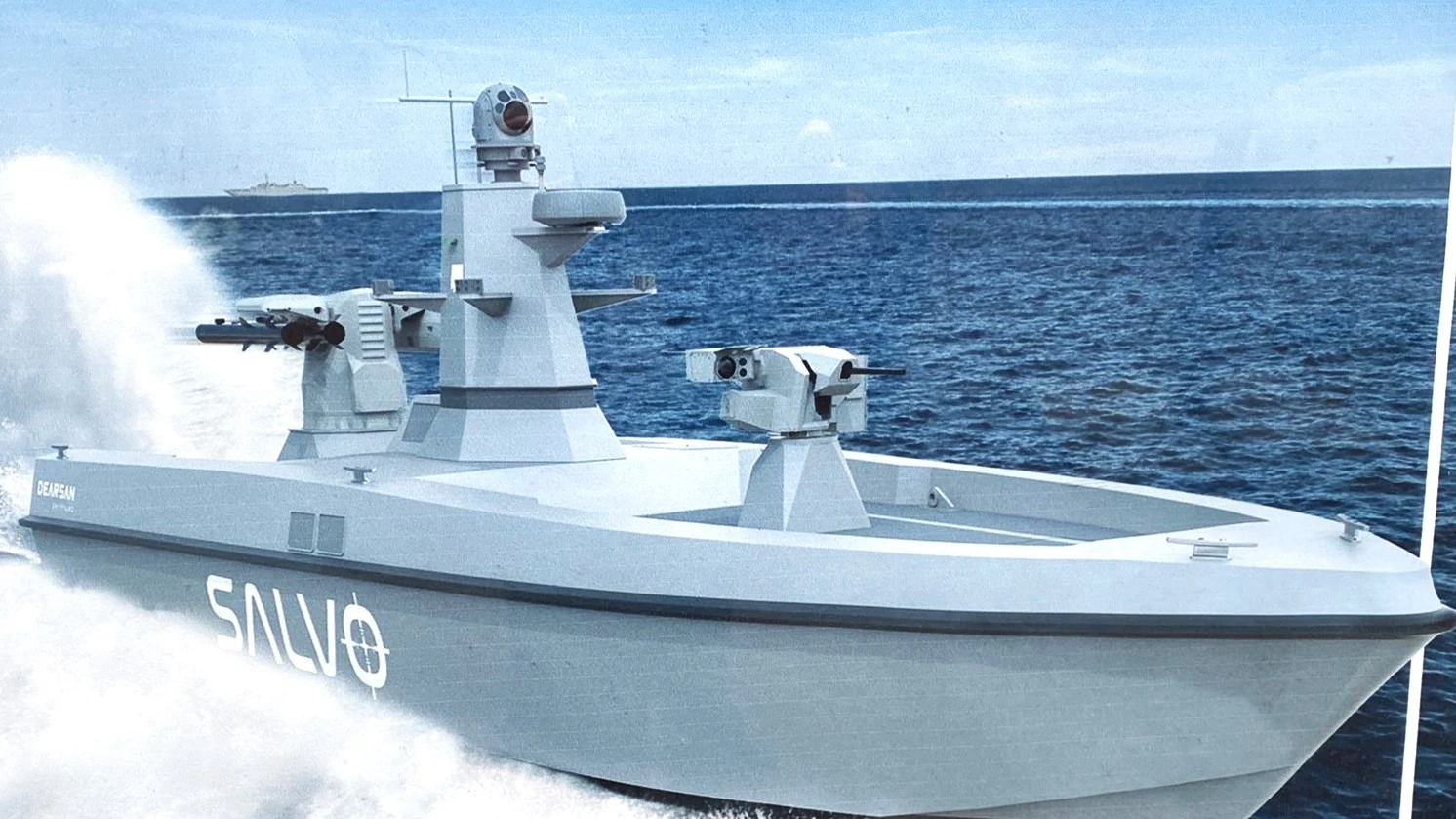
The Navy of the Republic of Azerbaijan has commissioned Turkish-made Salvo unmanned surface vehicles.
As reported by the Azerbaijani information portal Haqqin.az, during recent naval exercises of the Azerbaijani Navy in the Caspian Sea, defense sector experts spotted the Turkish unmanned boat Salvo, developed by the company Dearsan, which completed its final trials in 2024, ArmyInform notes.
The operating principle of Salvo: it is a fully automated and remotely controlled vessel equipped with surveillance, communication, and weapon systems, capable of operating without a crew. It can be controlled from shore-based command posts or other ships, providing deployment flexibility and enabling a wide range of missions — from reconnaissance and escort to strike operations.
A release published on the official website of the manufacturer emphasizes that, in addition to the Turkish shipbuilding company Dearsan, the development of Salvo involved well-known local defense industry companies such as Aselsan and Roketsan, repeatedly covered by our agency, as well as the defense enterprise Yaltes.
The hull of this unmanned vessel is made of composite materials, ensuring light weight and high speed. The platform is 14.8 meters long and 3.8 meters wide. The vessel can reach speeds of 45 to 60 knots (83–111 km/h) and has a range of about 300 nautical miles (550 km). This is achieved using diesel engines with waterjet propulsion, providing high maneuverability and stability at high speeds.
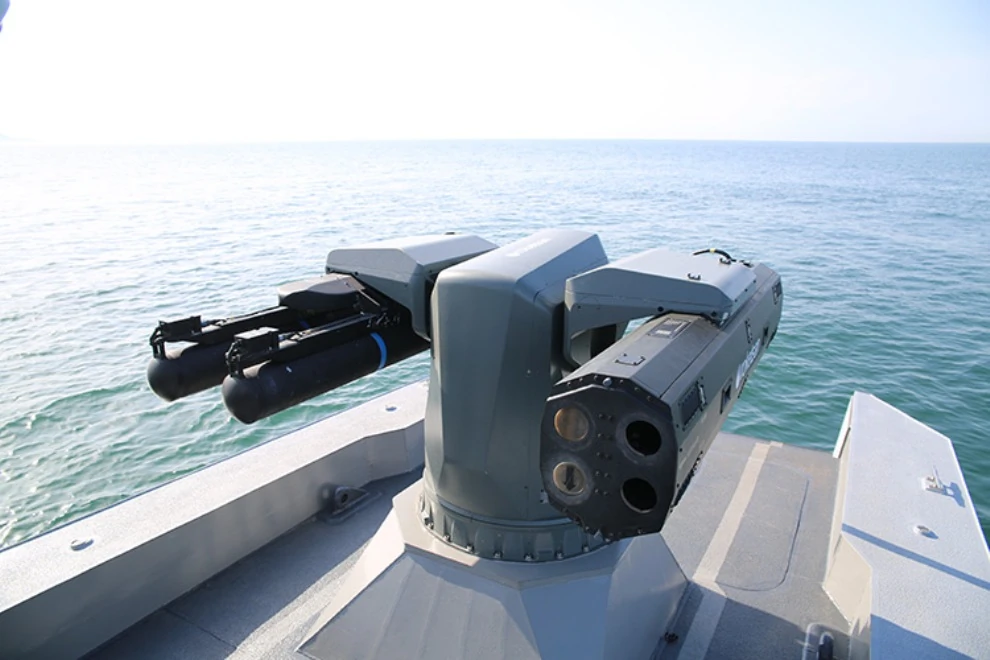
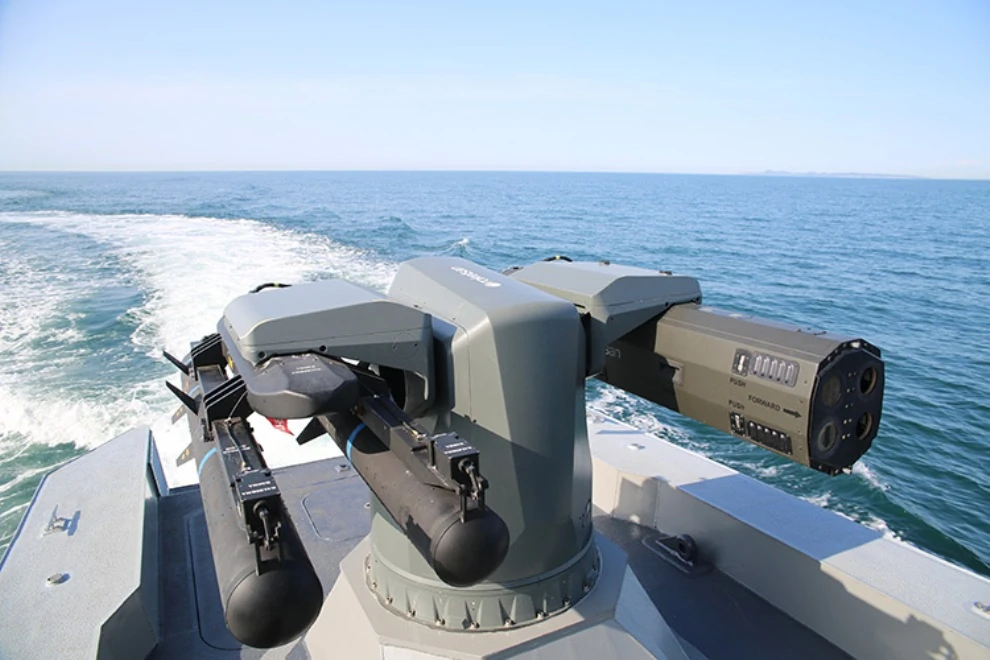
The armament includes a remotely controlled combat module with a 12.7 mm Aselsan STAMP machine gun and a launcher for Cirit or L-UMTAS guided missiles, which ArmyInform has covered in detail. This allows engagement of both small surface targets and shore-based objects. The sensor suite includes electro-optical stations, 360-degree situational awareness systems, navigation radars, and satellite communication systems, enabling Salvo to operate at any time of day and in difficult weather conditions.
During trials off the coast of the Turkish city of Bursa in 2022, Salvo accurately hit a target with a Cirit missile from the YALMAN system and also conducted aimed machine-gun fire against surface targets. Military attachés from several countries observed the trials, which may have been decisive in Azerbaijan’s decision to acquire these unmanned vessels.

This unmanned boat is among the modern developments of Turkey’s defense industry, alongside vessels such as ULAQ, RD-09, and Sancaq.
Last March, the Turkish company Unirobotics successfully integrated the UKSS TRAKON LITE remote weapon system onto the Salvo vessel. This equipment provides accurate fire against targets at distances of up to 1 kilometer.
The platform’s functionality includes reconnaissance, patrol, protection of ports and infrastructure, escorting vessels, and participation in asymmetric operations against a larger adversary. The ability to integrate into the overall naval network allows Salvo to operate in coordination with other unmanned and manned platforms, enhancing the fleet’s overall combat capability.
Compared with regional counterparts, Salvo stands out for its balanced characteristics. For example, other Turkish projects such as ULAQ have similar functionality but lower speed and range, while one-time strike boats used in the Black Sea are significantly inferior in versatility. Thus, Azerbaijan is acquiring not a narrowly specialized asset, but a multipurpose platform suitable for prolonged patrols and combat operations.

The appearance of Salvo in the Azerbaijani Navy reflects a strategic shift toward more flexible and technologically advanced defense. This is not merely a demonstration of capabilities, but a practical strengthening of the country’s position in the Caspian Sea, where competition for security and influence continues to intensify.
As Azerbaijani analysts emphasize, equipping the Azerbaijani Navy with Turkish-made unmanned combat boats significantly enhances its combat capability. Reporters from this country, located at the crossroads of Southeastern Europe and Western Asia and bordering Russia — with which official Baku has had rather tense relations recently — reminded readers that similar vessels were first used in real combat conditions by the Armed Forces of Ukraine in the Black Sea.
“Explosive-laden unmanned vessels of the Ukrainian Navy have, since 2023, struck large ships of Russia’s Black Sea Fleet, sinking several of them. As a result, the Russian fleet failed to block export routes from the ports of Odesa and Mykolaiv, which forced it to withdraw to Novorossiysk and partly to the Abkhaz coast.
Subsequently, Ukrainian defense enterprises improved unmanned boats by equipping them with anti-aircraft missiles, heavy machine guns, and other weapons. A Ukrainian unmanned boat became the first in the world to destroy Russian combat aircraft and helicopters over the Black Sea. Thus, drones costing only a few hundred thousand dollars managed to significantly limit the capabilities of the Russian fleet in the Black Sea theater of operations”, — Azerbaijani media emphasized.
They also highlighted that the Azerbaijani Navy is assessing the potential of naval drones against large combat ships of possible adversaries in the Caspian Sea and, taking into account Ukraine’s experience, promptly acquired these new weapons systems.
An unmanned surface vessel Salvo of the Azerbaijani Navy took part in specialized military maneuvers in the Caspian Sea. Video: Ministry of Defense of Azerbaijan.

The enemy is attempting to develop the production of naval drones and copy successful Ukrainian practices — both technical solutions and tactics.
Fighting continues in the northern part of the city of Pokrovsk in the Pokrovsk direction. A mechanized assault was repelled there the day before.
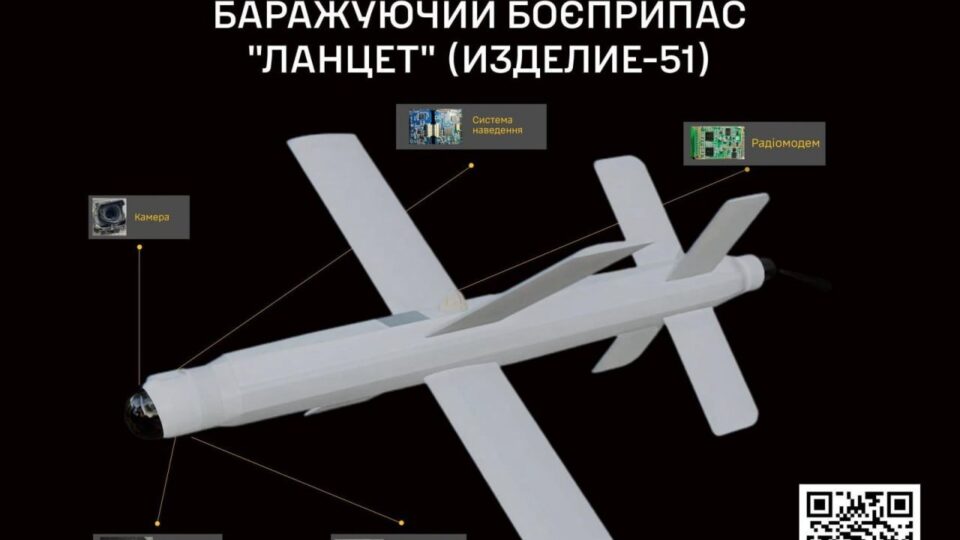
The Main Intelligence Directorate of the Ministry of Defense of Ukraine has published data on enterprises involved in the production of Russian loitering muniti

Another two-day round of negotiations between Ukraine and the United States concluded in Florida on March 22.

The enemy continues daily pressure and attempts to break through Ukrainian defenses in the Sloviansk direction.
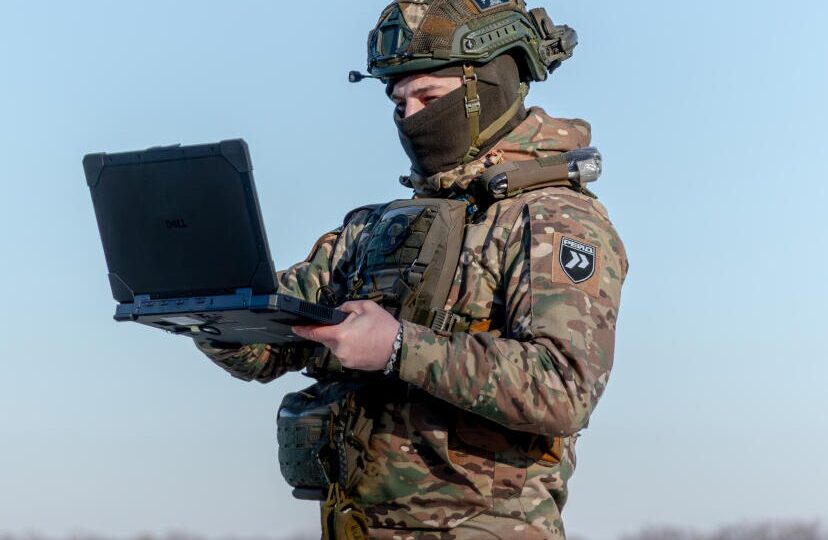
Over the past day, units of the Unmanned Systems Forces struck/destroyed 1,078 enemy targets.
The international delegation, headed by Ana Lucía Bueno, ICRC Public Health Coordinator, and Sujit Panda, Head of the Physical Rehabilitation…