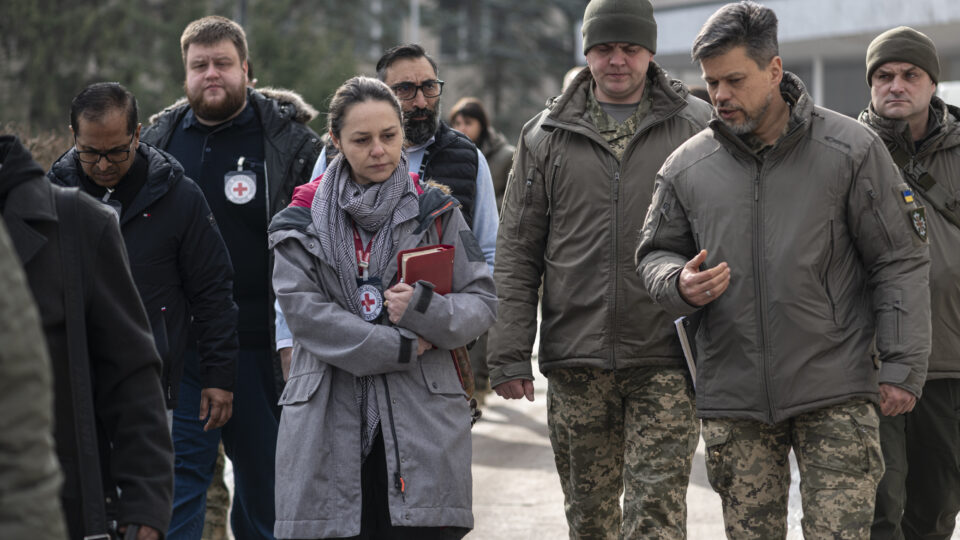
The international delegation, headed by Ana Lucía Bueno, ICRC Public Health Coordinator, and Sujit Panda, Head of the Physical Rehabilitation…

Russian aggression, which began in February 2014, led to a rapid quantitative expansion of the Armed Forces of Ukraine. Newly formed brigades required combat equipment.
Since production significantly lagged behind demand, and procurement abroad was not an option for financial and political reasons, new brigades received equipment from storage bases, including BMP-1 infantry fighting vehicles. This made the issue of modernizing these vehicles particularly relevant.
Previously, an ArmyInform correspondent discussed some of the specialized projects with Andrii Kharuk, a researcher of military history, equipment, and armaments, Doctor of Historical Sciences, and professor at the Hetman Petro Sahaidachnyi National Army Academy. Today, we offer readers a continuation of the topic on the history of domestic armored vehicles.
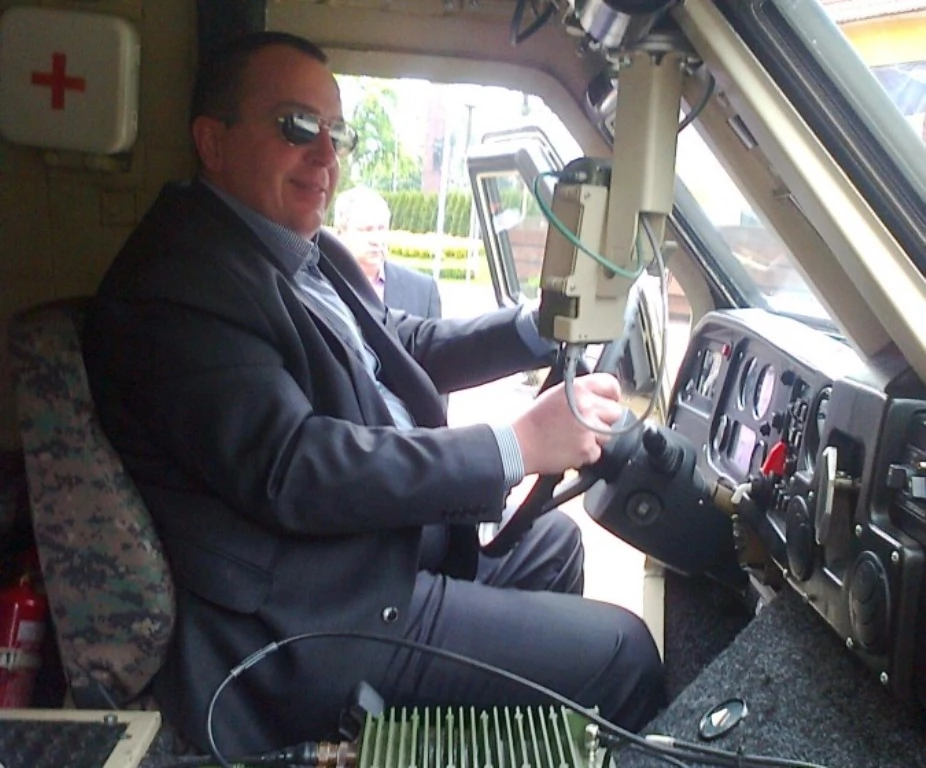
— Professor, how do the vehicles discussed today differ from the initiatives we examined earlier?
— Specialists at the Zhytomyr Armored Vehicle Plant attempted to propose a comprehensive modernization option that was not limited solely to replacing the entire weapons system. This resulted in the BMP-1UM project.
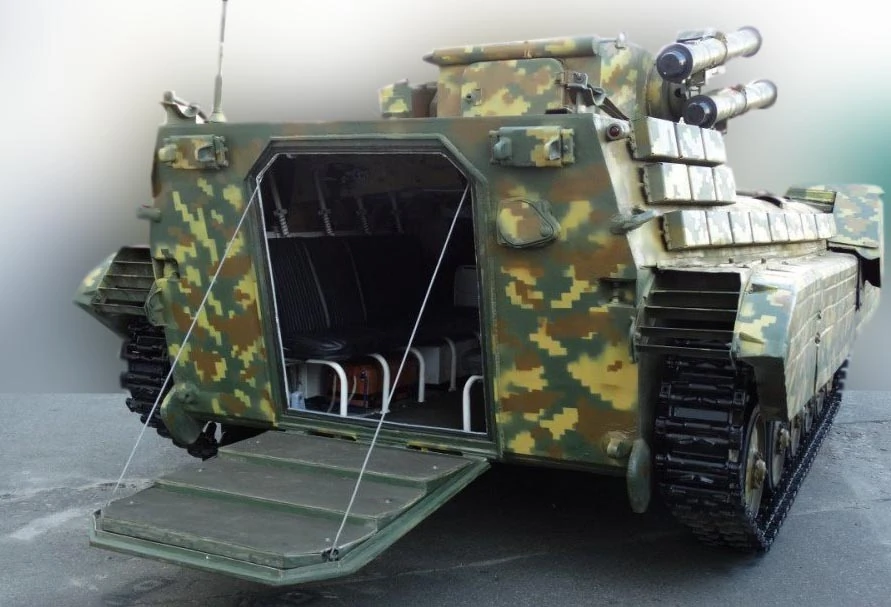
The BMP-1UM prototype was first presented in September 2015 at the Weapons and Security – 2015 exhibition. It was equipped with the already familiar Shkval-A combat module used on the BMP-1M. In addition, significant changes were made to the powerplant and the hull. The UTD-20 engine with 300 hp was replaced with a 3TD-2 engine producing 400 hp.
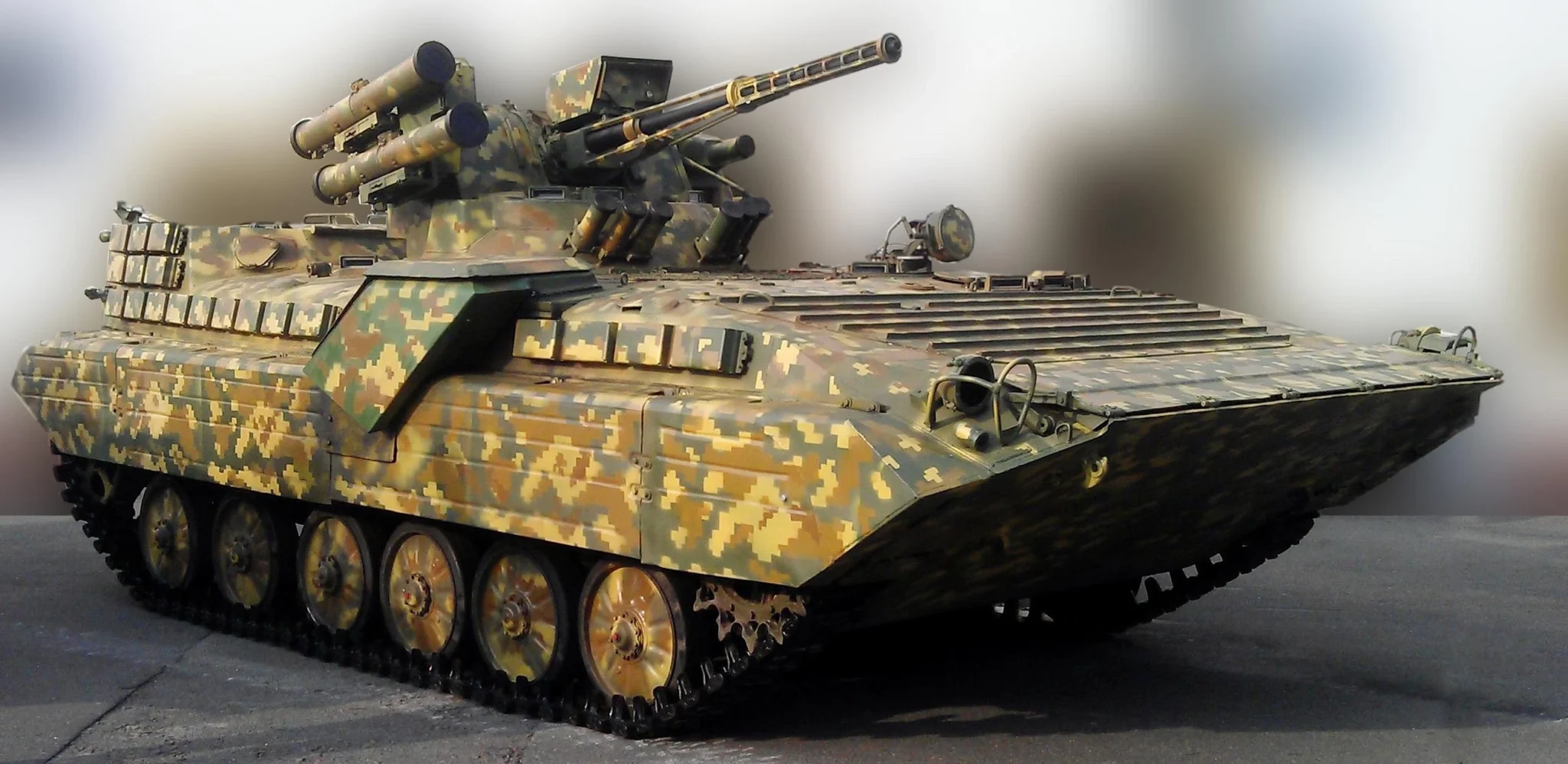
This two-stroke, three-cylinder diesel engine was unified with the 5TD-F and 6TD tank engines. To improve troop accommodation, the height of the troop compartment roof was increased by 15 cm, and the small, inconvenient rear doors were replaced with a ramp (though not hydraulically operated, but with a simple mechanical system). Kontakt-1 explosive reactive armor blocks were installed on the vehicle’s sides — a solution that is, to put it mildly, questionable given the thin armor.
— What interesting innovations did you identify after studying this project?
— Improved protection was achieved by relocating the fuel tanks (they were now installed between the troop seats and the sides), installing enlarged side skirts, adding anti-fragment lining made of aramid fabric, and an energy-absorbing structure under the troop compartment floor.
Other innovations applied on the BMP-1UM included the SN-3003 receiver for GLONASS and GPS satellite navigation systems. The TKN-3B commander’s sight gained the ability to display images from the Tandem-2 system cameras. An exhaust masking screen-deflector was installed. The track guards-floats were enlarged to increase buoyancy.
— How would you assess the tactical and technical characteristics of the vehicle modernized in Zhytomyr?
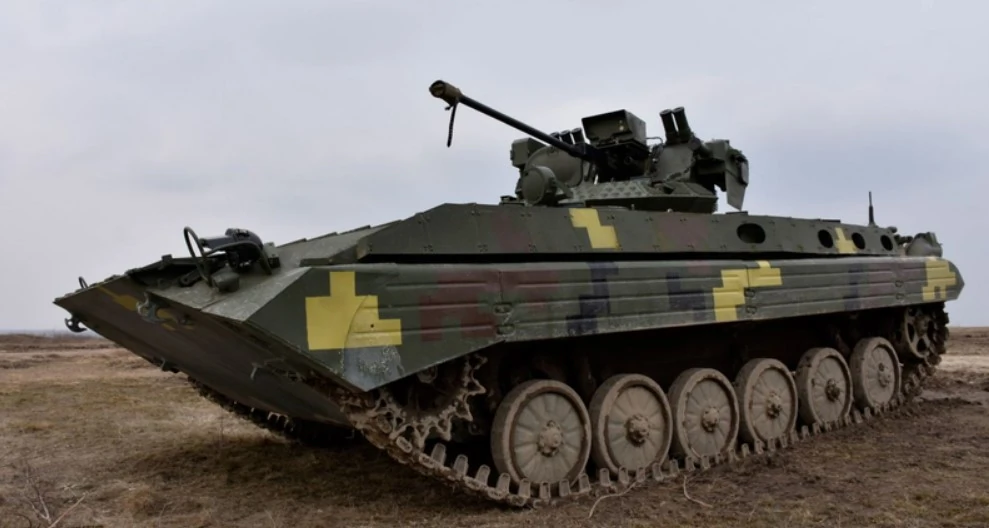
— The BMP-1UM’s tactical and technical characteristics were significantly improved compared to previous modernization variants. However, even this version became only an intermediate stage. As early as October 2016, at the next Weapons and Security exhibition, ZhBTZ presented an updated version — the BMP-1UMD.
Its main differences were a new engine and a new combat module. The vehicle was equipped with a Deutz TCD2013 L64V — a four-stroke, six-cylinder turbocharged diesel engine with an electronic control unit. It delivers 330 hp (with the possibility of software-based increase to 390 hp), while also having a longer service life, lower noise level, and greater fuel efficiency than the UTD-20 or 3TD-2 engines.
The desire for unification also played an important role in selecting the Deutz engine — engines of this family were already used on BTR-4 armored personnel carriers.
— As far as is known, this BMP also received a more modern module at that time.
— Indeed, instead of the Shkval-A module, a new Stylet combat module was installed, featuring a digital fire control system, the Trek-M sighting complex (manufactured by the Chernihiv Radio Equipment Plant), and the SVU-500-3Ts weapon stabilizer.
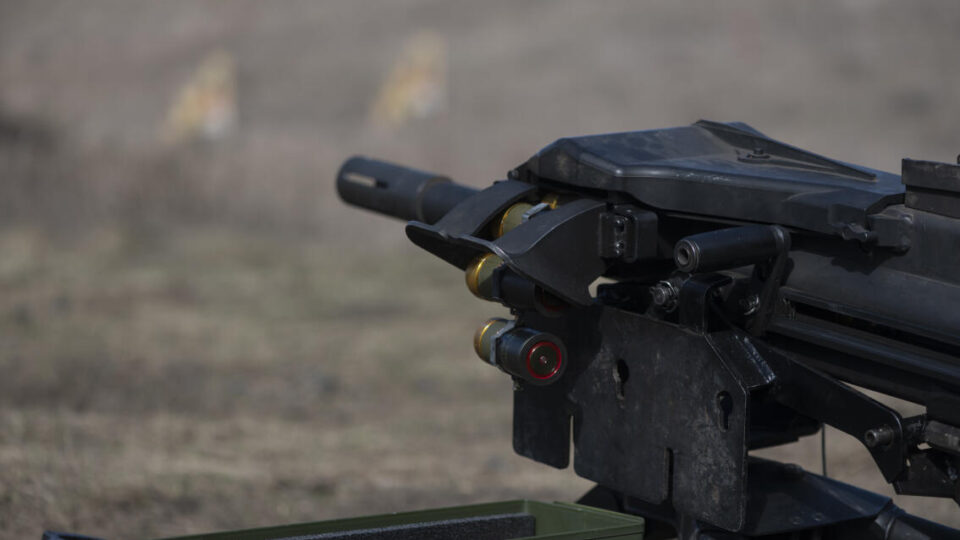
The armament includes a 30-mm ZTM-2 automatic cannon (the Ukrainian equivalent of the Soviet 2A42), a 7.62-mm KT-7.62 machine gun, a 30-mm AG-17 automatic grenade launcher, and two launchers for the Barrier anti-tank guided missile system.
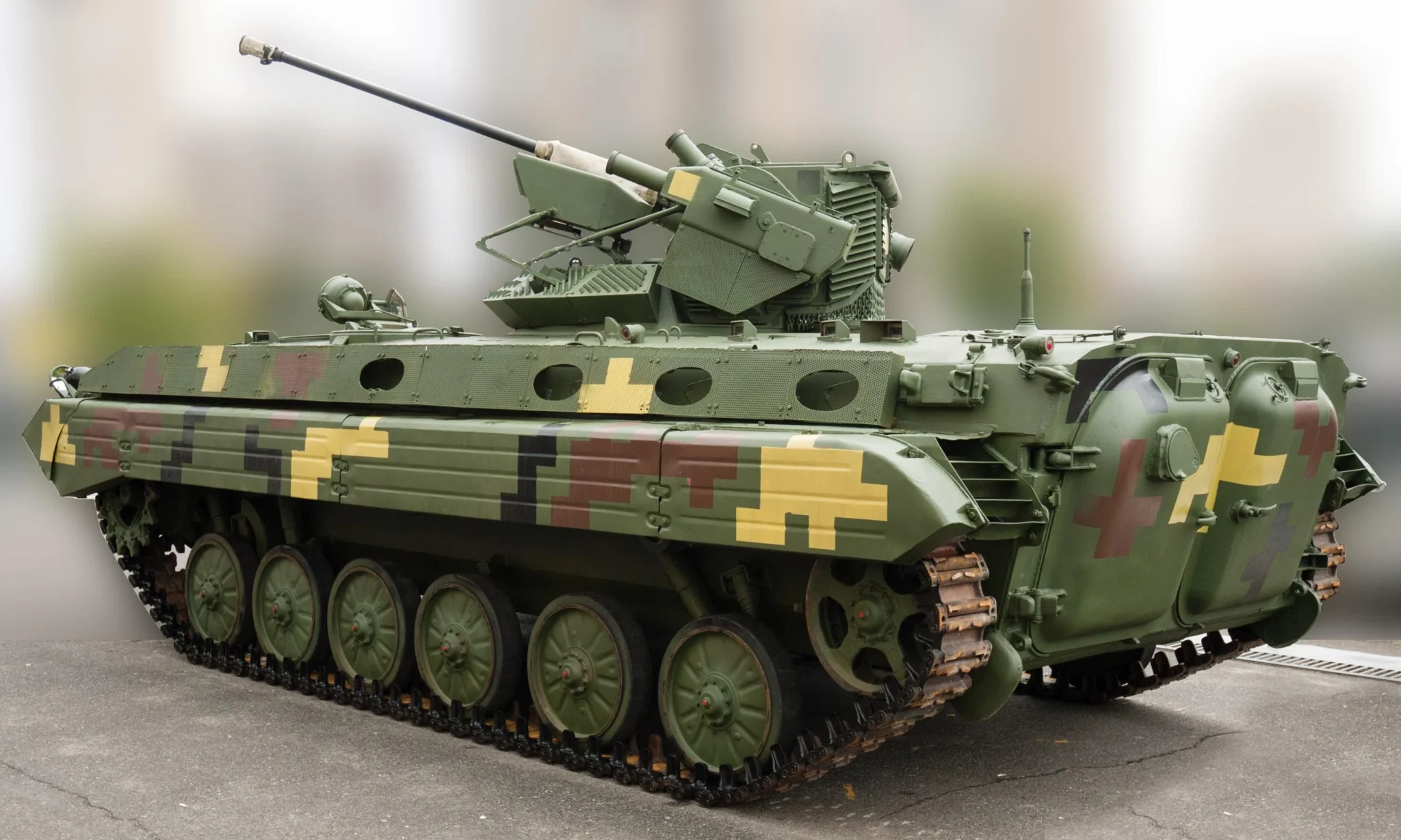
The BMP-1UMD lacks explosive reactive armor blocks; instead, additional side screens are installed in the upper part of the hull sides. Unlike the BMP-1UM, the troop compartment fully corresponds to the unmodernized BMP-1: it has standard height and rear doors instead of a ramp.
Taking this into account, as well as the developers’ statement that the version with the Deutz engine was prepared in only three months, one can conclude that this was not a full-fledged prototype but rather a technology demonstrator, used to test the integration of a new engine and combat module.
— Andrii Ivanovych, how did this vehicle perform during direct field tests?
— In March 2017, comparative trials were conducted of two BMP-1UMDs: one with the Stylet module and the other with the older Shkval module. The tests were carried out in the interests of the Ministry of Defense, but their results were not officially disclosed.
Apparently, the results did not fully satisfy the military, because in July 2020 another set of comparative trials took place involving modernized BMP-1s with the Stylet, Shkval, Spys, and Parus combat modules. It should be emphasized that these were tests of the modules themselves, not of the modernized BMPs as such.
All modules had generally identical armament — a 30-mm cannon, a 7.62-mm machine gun, a 30-mm automatic grenade launcher, and two Barrier ATGM launchers. They differed in sighting devices, guidance and stabilization systems, and other details.
Installation of the Parus module on a BMP-1. Photo: mvs.gov.ua
The variant with the BM-7 Parus combat module was developed by the State Enterprise Kharkiv Morozov Machine Building Design Bureau. In its main parameters, it corresponds to the Shturm module but, unlike it, does not occupy space inside the combat vehicle.
The module uses the Trek-M sighting complex. The Parus module was installed on BTR-4E armored personnel carriers, and if a decision had been made to install such modules on modernized BMP-1s, it would have allowed at least partial unification of armament within mechanized units. However, the state defense order for 2021 included only the overhaul of BMP-1 vehicles, not their modernization.

The enemy is attempting to develop the production of naval drones and copy successful Ukrainian practices — both technical solutions and tactics.
Fighting continues in the northern part of the city of Pokrovsk in the Pokrovsk direction. A mechanized assault was repelled there the day before.
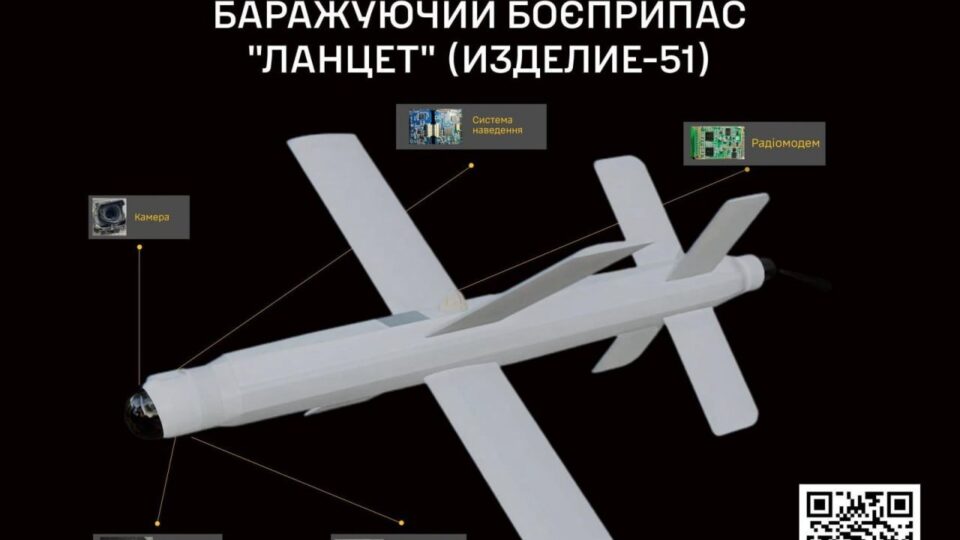
The Main Intelligence Directorate of the Ministry of Defense of Ukraine has published data on enterprises involved in the production of Russian loitering muniti

Another two-day round of negotiations between Ukraine and the United States concluded in Florida on March 22.
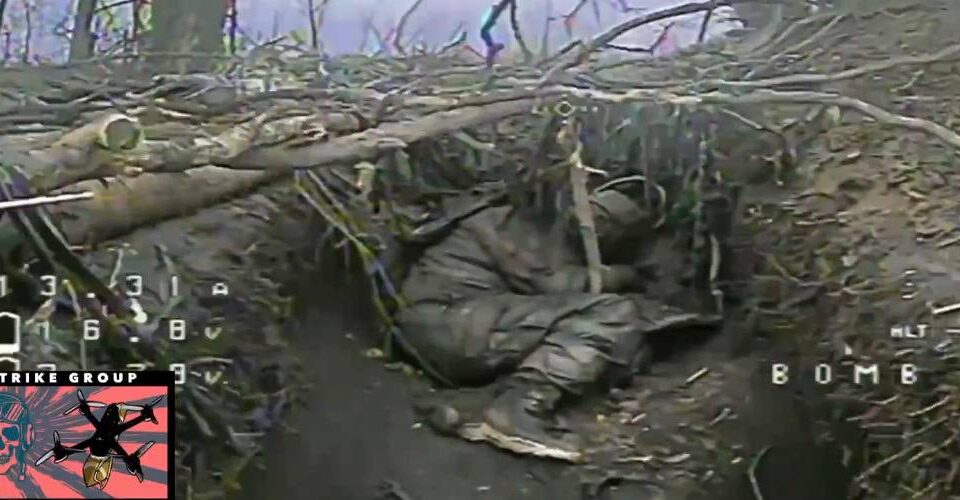
The enemy continues daily pressure and attempts to break through Ukrainian defenses in the Sloviansk direction.
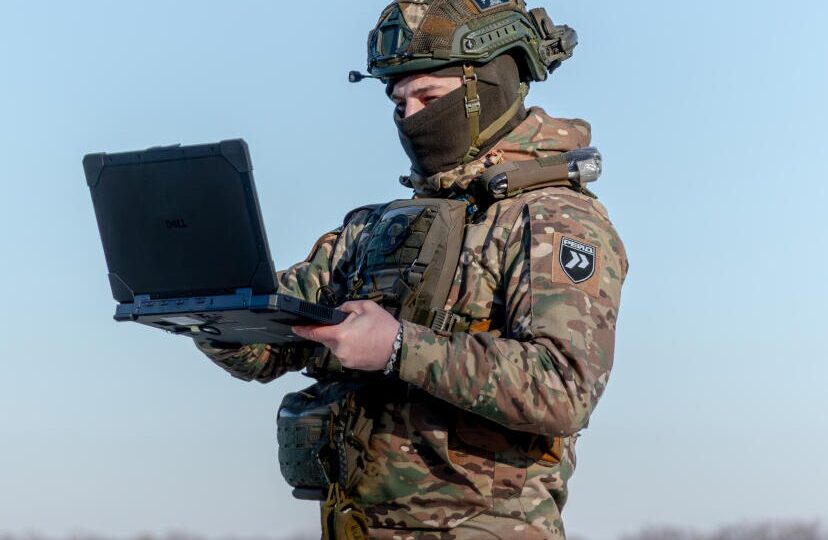
Over the past day, units of the Unmanned Systems Forces struck/destroyed 1,078 enemy targets.
The international delegation, headed by Ana Lucía Bueno, ICRC Public Health Coordinator, and Sujit Panda, Head of the Physical Rehabilitation…