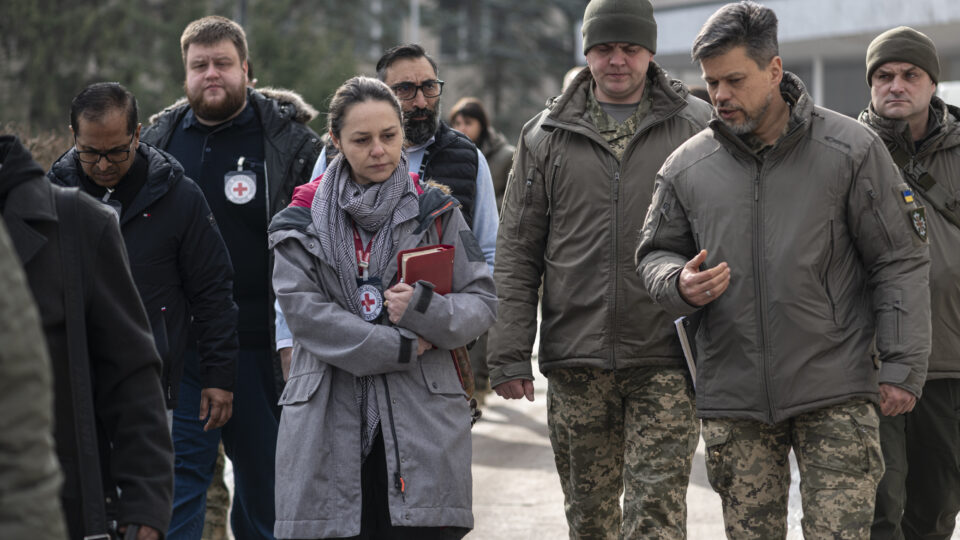
The international delegation, headed by Ana Lucía Bueno, ICRC Public Health Coordinator, and Sujit Panda, Head of the Physical Rehabilitation…


If you feel like a warrior, your path is constant struggle. It is service despite danger, doubt, and exhaustion.
Even if your task is to hold back the Russian horde pushing toward Kyiv without counting its losses.
Even if the waves of the Black Sea split your boat in half, leaving you amid raging waters dozens of kilometers from the shore.
Hearing the call that comes from deep within the heart, a warrior goes forward without hesitation, because the lives of his comrades — and the fate of an entire nation — may depend on his determination and devotion.
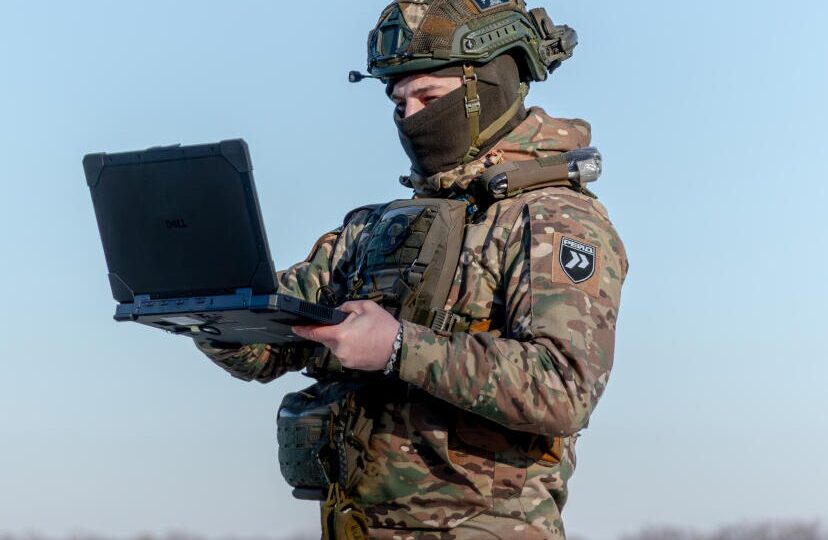
This is exactly the path chosen by “Tjur”, the commander of the engineering and sapper unit “Lyubart’s Blacksmiths” of the 20th Brigade “Lyubart”, 1st Corps of the National Guard of Ukraine “Azov”.
“Tjur” chose his callsign in honor of the god of war, honor, and omen of victory in Old Norse mythology.
“I spent part of the first year of the war at sea and felt like a real Viking. Because, just like the Cossacks, Vikings represent a way of life. Long before the full-scale invasion, I had already made my choice — I stepped on this path, the path of a warrior”, — the Ukrainian officer shares.

His first steps along this path began in his youth. As he recalls, everything started with sports and the fan movement.
“When the Maidan began, one of its driving forces was the ultras, who later became the first volunteers, the first top-level units performing combat missions in the East. I was 14–15 at the time. I did sports, volunteered at a local center. It started with weaving nets and helping soldiers however we could. At the same time, I attended various sports sections and military training courses”, — “Tjur” recalls.
Later he lived abroad for a while, but ultimately decided to return, sensing the coming storm.
“I studied in Poland but realized that wasn’t my path. I wanted to live in my own country. So I returned, and after some time joined the service. I knew I had to prepare, knew that a large-scale war would begin sooner or later. And the day before the invasion, I was at training. I served in a unit based in Kyiv, so I was there when the enemy arrived. We worked in a special-purpose group, demining and mining certain areas”, — the soldier says.
His first missions took place near the village of Moschun in the Bucha district, where Ukrainian defenders had to stop the Russian advance toward Kyiv.
“We conducted counter-sabotage actions and reconnaissance. Many units were in Moschun — SOF, Intelligence Directorate units… Essentially, everyone was working in sync. There were problems in coordination, because there were a lot of units on one axis. That’s why corps were later created — to simplify interaction. Back then everything was chaotic, but everyone did their job. There were many enemy corpses. Our groups suffered no losses during the missions”, — “Tjur” notes.
As it turned out, the Russians’ arrogance became their downfall, because they were not prepared for such fierce resistance from motivated Ukrainian fighters.
“They (the enemy — ed.) counted on a different scenario. They were already preparing for a parade in Kyiv — but there was no parade. Because the people united, and a huge number of volunteers joined the Defense Forces. Many began helping at all levels, forming a unified fist that pushed back one of the largest armies in the world. Unity of the people — that is what matters most”, — the defender emphasizes.
Those early events were only the prologue to years of relentless struggle. Since then, “Tjur” has worked on many sections of the frontline: liberating Kherson, crossing to the left bank of the Dnipro, fighting on the Zaporizhzhia front. But the operations on Zmiinyi Island left the deepest mark.
“By that time, I had changed units and moved to the naval direction. My task was to perform demining, land a group, conduct clearing operations, secure the area, and remove the Russian flag. It was a unique experience for me — I had never worked at sea, never even sailed on boats in the sea, let alone carried out combat missions. It was all new”, — “Tjur” says.

Thanks to Ukrainian fighters, the blue-and-yellow flag once again flew over Zmiinyi Island. But during one mission, they discovered that the flag had been damaged by storms and couldn’t leave it that way.
“We replaced it some time later, closer to autumn. The constant sea winds damaged it. We were on another mission, so we hung a new flag. The old one is now in my hometown because it has its own story. I signed it together with my brothers-in-arms and gifted it to the town”, — he notes.
Among the island’s “locals”, he remembers the animals — especially a small black kitten the soldiers took under their protection.
“There were many cats, but one was the youngest and smallest. And not just cats — there were roosters and chickens running around too. I don’t know how they got there. Each mission, we fed them”, — he recalls.
But not everything during these operations was as peaceful. One day, the team got into serious trouble.
“It was a routine mission like many others — except we got caught in a severe storm. In the Black Sea, waves move chaotically — one larger, one smaller… We were returning when our boat began sinking. It split almost in half. We had an inflatable raft and transferred to it when we realized we were going under. The shore was 20 kilometers away. We took essential gear, weapons, and spent more than two days in open water”, — “Tjur” remembers.
Eventually, hunger forced them to open Russian rations taken as souvenirs for volunteers — but the biggest issue was drinking water.
“At first, command even thought we had died. But by some miracle, we managed to make contact. We used smoke signals, a helicopter spotted them, and eventually we were rescued. By that time, we had drifted about 70 kilometers from shore”, — he adds.
Reflecting on how the war has changed over four years of full-scale invasion, “Tjur” notes that the key innovation is unmanned systems.
“The war has changed countless times. Every three months it changes. The turning point came when drones began to be widely used at the tactical level. Reconnaissance drones appeared en masse — at first, they were rare. Then came dropping mechanisms. After that — the first FPVs”.
Today, all available weapons are used in this war, except nuclear. And every new technology appears on the battlefield in Ukraine.
“We must adapt quickly. Only constant development and improvement brings results. People say the enemy is advancing — but look at the losses they pay for each patch of land. It’s destroyed equipment, their manpower. Their advances come at the cost of enormous casualties”, — the commander explains.

The core principles guiding “Lyubart’s Blacksmiths” are improvement and unity.
“We do many things — standard for engineer-sapper units — but with non-standard approaches. We adapt to wartime realities, using new developments and technologies. Our tactics are changing, and efficiency is growing. If we worked the old pre-war way, we would have worn ourselves out ten times already. But we adapt — and adapt effectively”.
That is why the unit keeps up with modern technologies, using the boldest ideas.
“In 2022–2023, I could mine or demine frontline areas relatively freely. Now, with so many drones and reconnaissance UAVs, it’s almost impossible by day — and very difficult at night. But today, all this can be done remotely. With robotic systems, drones. Remote mining, remote demining — without sending people into dangerous areas”.
They can mine not only the frontline, but the enemy’s logistical routes:
“When enemy equipment keeps getting blown up, its movement becomes difficult — and that creates big problems for them”.
The Ukrainian people also help.
“For example, 3D-printing workshops make the details we need. We have specialists in modeling, programming. There are many technologies. What was before 2022 and what we use now — that’s like heaven and earth”.
“But let these technologies remain a secret — a surprise the enemy will discover on the frontline, , —“Tjur” concludes.
Photos by the author and from the service member’s personal archive

The enemy is attempting to develop the production of naval drones and copy successful Ukrainian practices — both technical solutions and tactics.
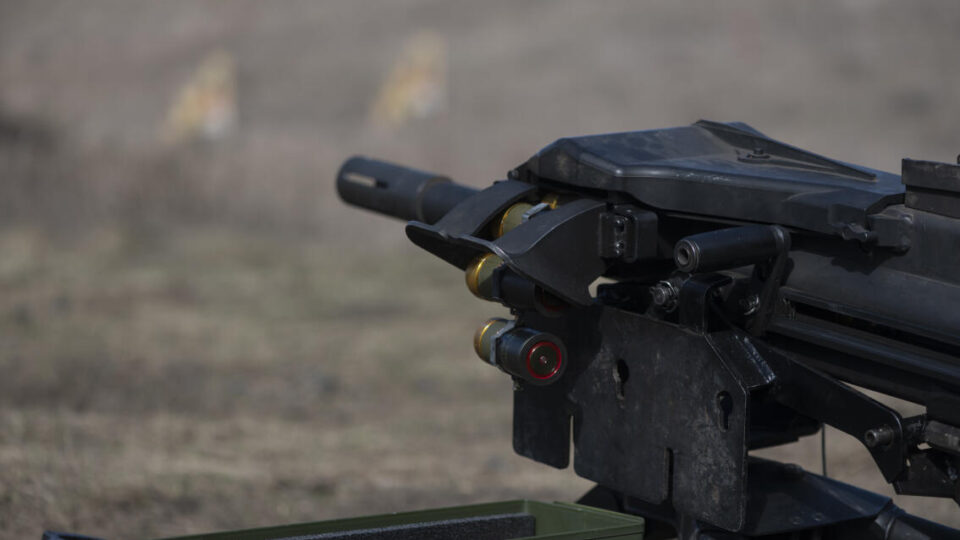
Fighting continues in the northern part of the city of Pokrovsk in the Pokrovsk direction. A mechanized assault was repelled there the day before.
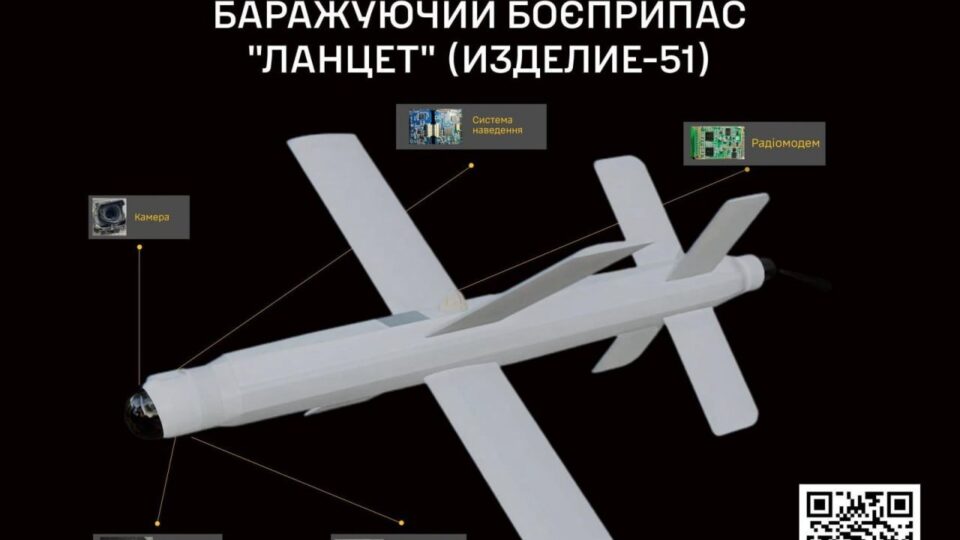
The Main Intelligence Directorate of the Ministry of Defense of Ukraine has published data on enterprises involved in the production of Russian loitering muniti

Another two-day round of negotiations between Ukraine and the United States concluded in Florida on March 22.
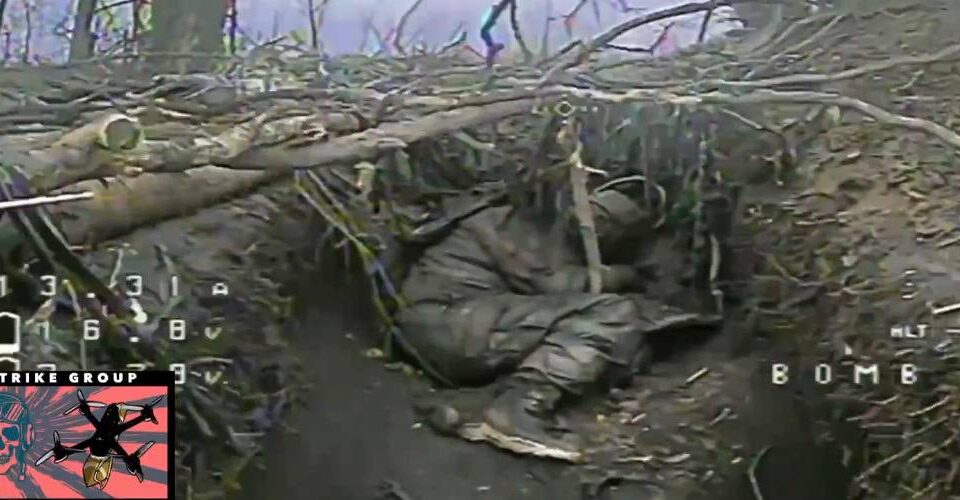
The enemy continues daily pressure and attempts to break through Ukrainian defenses in the Sloviansk direction.
Over the past day, units of the Unmanned Systems Forces struck/destroyed 1,078 enemy targets.
The international delegation, headed by Ana Lucía Bueno, ICRC Public Health Coordinator, and Sujit Panda, Head of the Physical Rehabilitation…