“We mowed down an unimaginable number”: the fiery steed of the Ukrainian army, the BTR-4E “Bucephalus,” charges into the New Year

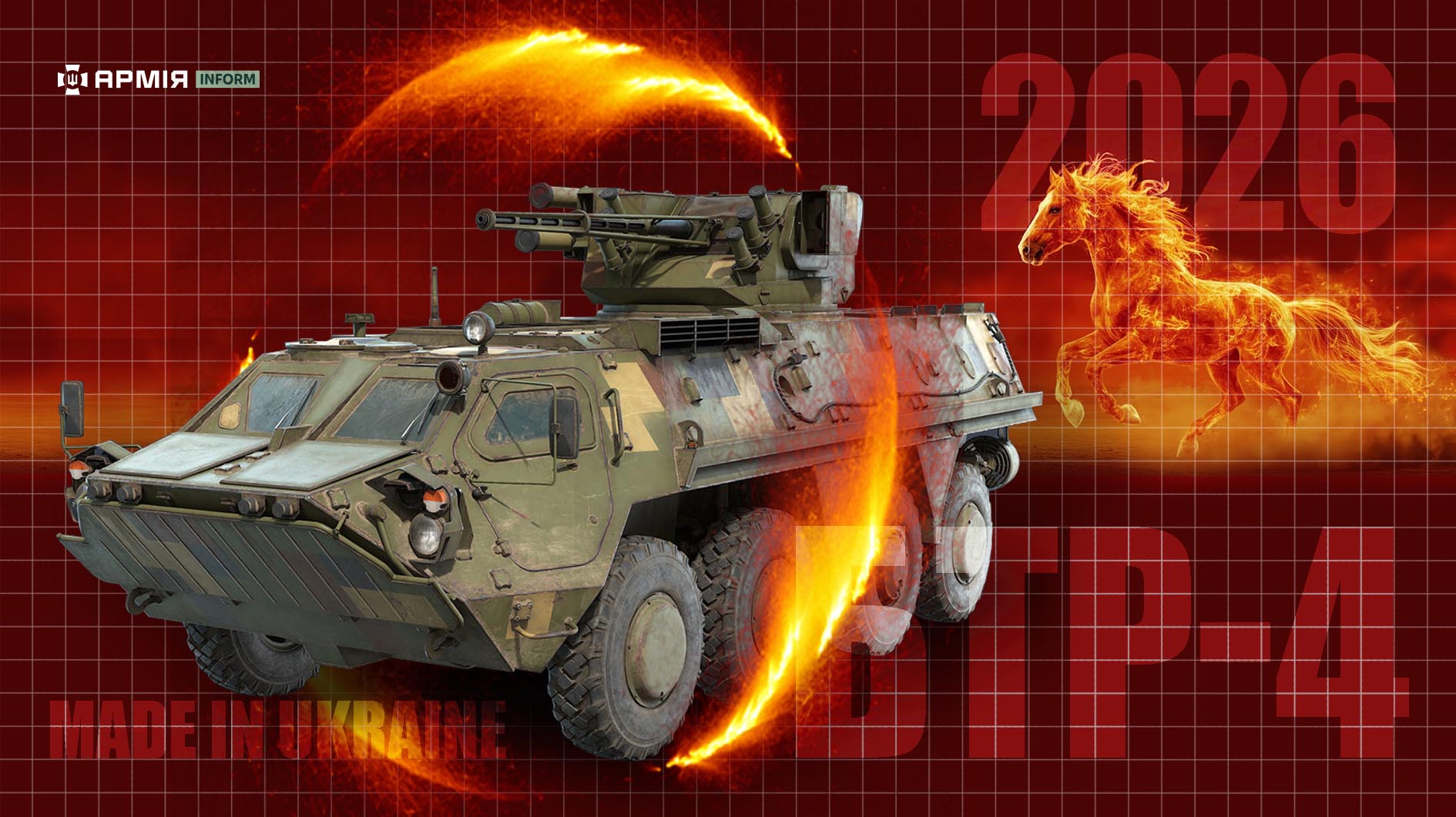
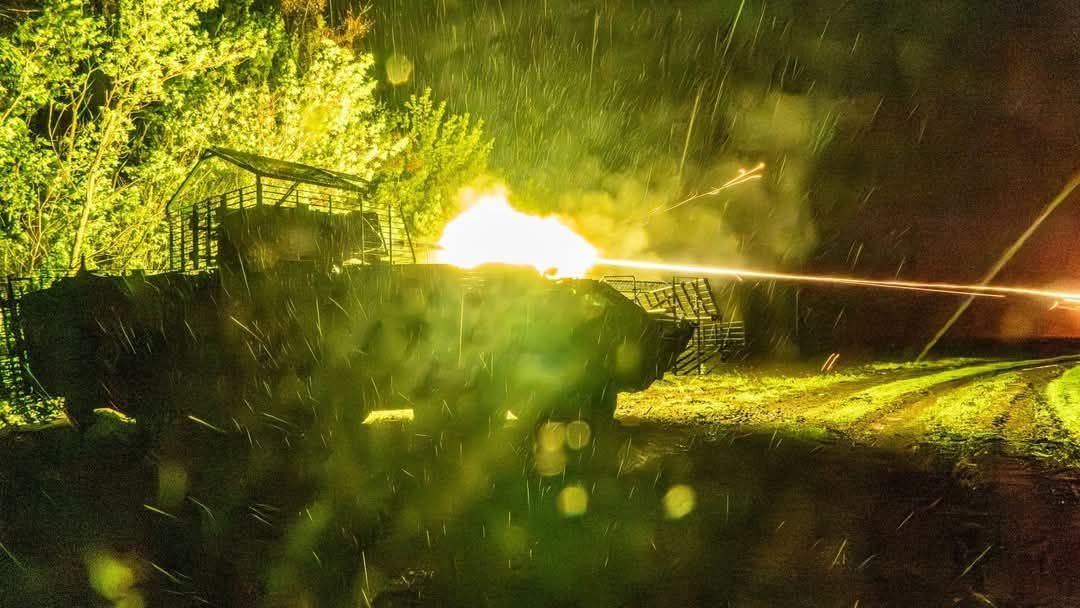
At the end of 2025, the crew of a Ukrainian BTR-4E armored personnel carrier from the 92nd Separate Assault Brigade named after Kosh Otaman Ivan Sirko destroyed a Russian infantry landing force in the Dnipropetrovsk region.
First, the brigade’s tankers destroyed an enemy MT-LB with two accurate shots from a T-64 turret gun, and then the armored personnel carrier bearing the famous ancient name “Bucephalus” eliminated the remaining infantrymen who had miraculously survived.
“We mowed down an unimaginable number”, one of the Ukrainian fighters emphasized while recounting this vivid episode of the BTR-4E “Bucephalus” combat operation.
Ahead of the New Year 2026 — symbolically patronized by the red fiery horse — ArmyInform recalls the most famous episodes of the combat service of the Ukrainian armored vehicle named after the favorite horse of the renowned ancient commander Alexander the Great.
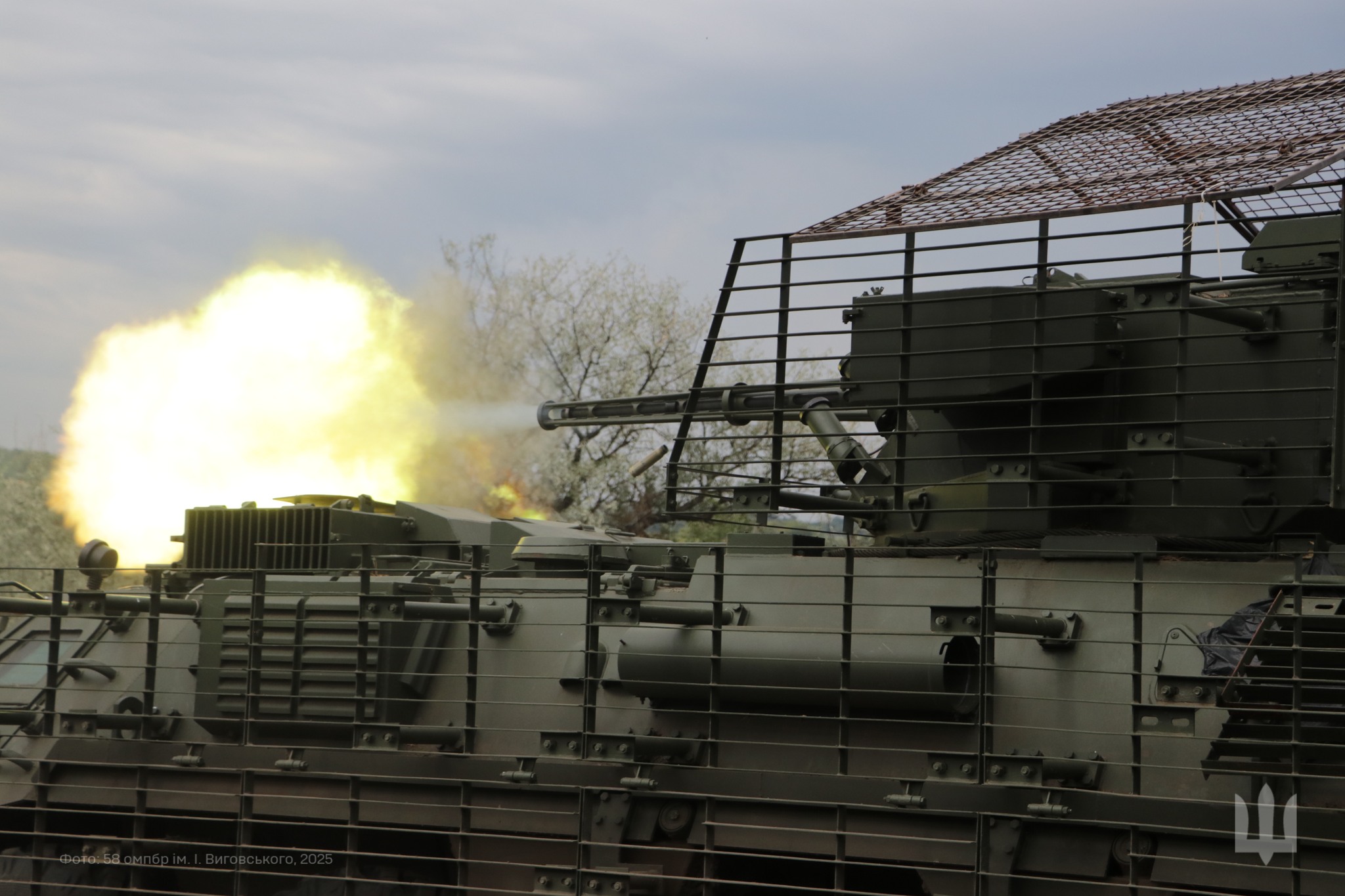
Checkpoint near Sloviansk: June 2014
At the beginning of the war, the National Guard of Ukraine received the new BTR-4E “Bucephalus”. As early as the summer of 2014, Ukrainian troops employed these armored personnel carriers in battles for the city of Sloviansk.
At that time, pro-Russian militants attempted to break through a Ukrainian checkpoint near the city, but thanks to the maneuverability and firepower of the “Bucephalus”, the enemy attack was repelled.
This was one of the first successful combat operations in which the latest Ukrainian armored personnel carrier played a key role, providing powerful fire support to the checkpoint’s defenders.
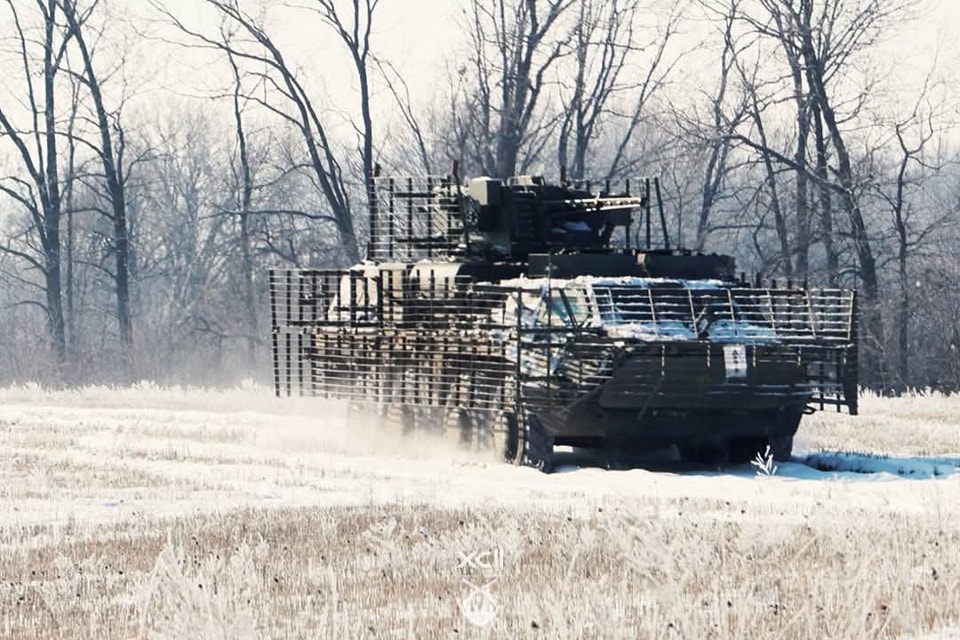
“Bandershtadt” versus a tank in Vuhlehirsk: January 2015
In the winter of 2015, the BTR-4E “Bucephalus” was actively used in combat operations in Donbas. One of the most illustrative episodes was the battle for Vuhlehirsk in late January 2015.
At that time, a National Guard BTR-4E with the informal name “Bandershtadt” took part in clearing the city. The direct urban engagement lasted about 15 minutes and was marked by high intensity.
A critical moment came when the Ukrainian APC, while maneuvering along one of the streets, found itself almost point-blank — approximately 30 meters — facing a Russian T-72 tank. Under such conditions, the 30-mm gun of the “Bucephalus” was insufficient for a frontal engagement with a tank.
Nevertheless, the BTR-4E crew managed to maneuver and wait for fire support — a Ukrainian T-64 opened fire at the moment when the turret of the enemy T-72 was already turning toward the APC.
The enemy tank was disabled, its crew abandoned the vehicle, and “Bandershtadt” continued its combat mission without damage.
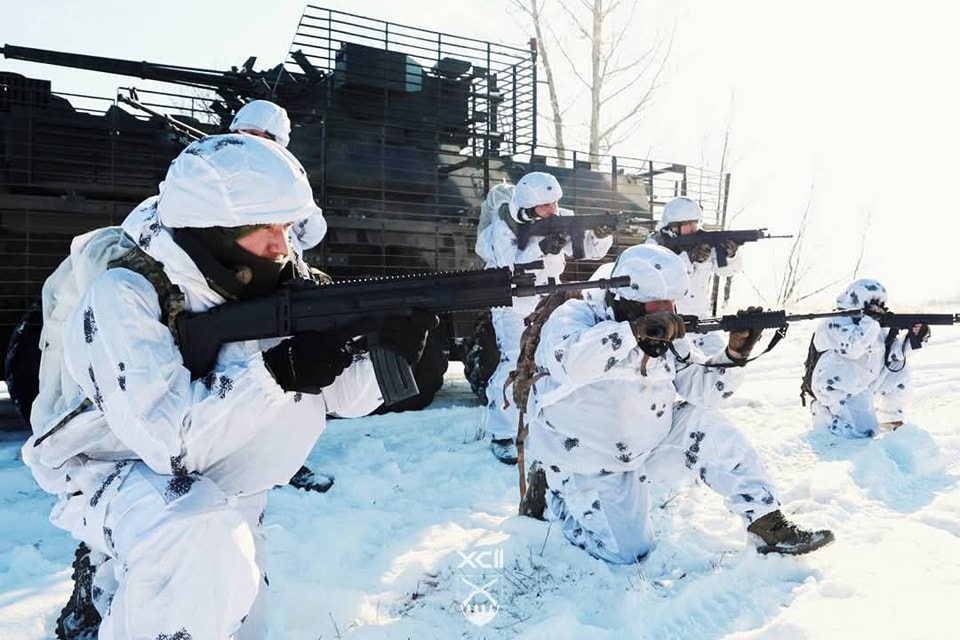
Kharkiv Ring Road: February 24, 2022
During the full-scale invasion, the “Bucephaluses” continued to play a prominent role in combat operations. The first battle for the BTR-4E took place on February 24, 2022, on the Kharkiv Ring Road near the Lypetske interchange toward the village of Tsyrkuny.
At around 11 a.m., it was the National Guard of Ukraine’s “Bucephalus” crews that engaged in a direct clash with the forward group of Russian troops. A column was formed to carry out the task, consisting of three BTR-4E “Bucephalus” vehicles, an aerial reconnaissance vehicle, and a “Cougar” command-and-staff vehicle.
The “Bucephaluses” were to provide fire support for Ukrainian tank units and cover operations toward Tsyrkuny. The column moved at high speed, as time was critical — the enemy was rapidly approaching the city.
At the Lypetske interchange, Ukrainian “Bucephaluses” unexpectedly encountered the enemy directly, as the latter was already on the outskirts of Kharkiv. Enemy heavy equipment was positioned at the intersection — a T-72 tank, BMPs, MT-LBs, and more.
The battle began instantly — the BTR-4Es approached the enemy at extremely close range, effectively “flying” straight into the checkpoint. One BTR-4E opened fire on the T-72 tank, while the others destroyed an enemy BMP.
Facing intense fire and suffering losses, Russian troops were forced to retreat along a forest belt. After the enemy’s withdrawal, units of the Armed Forces of Ukraine entered the engagement area, completed the clearing operation, and pushed back the remaining Russian forces.
The battle on the Kharkiv Ring Road near Tsyrkuny became one of the first confirmed examples of the BTR-4E “Bucephalus” being used in full-scale warfare. In the decisive hours for Kharkiv, these armored vehicles played a key role in thwarting the enemy’s attempt to quickly entrench itself on the city’s approaches.
“Bucephaluses” against Rosgvardia near Staryi Saltiv: February 25, 2022
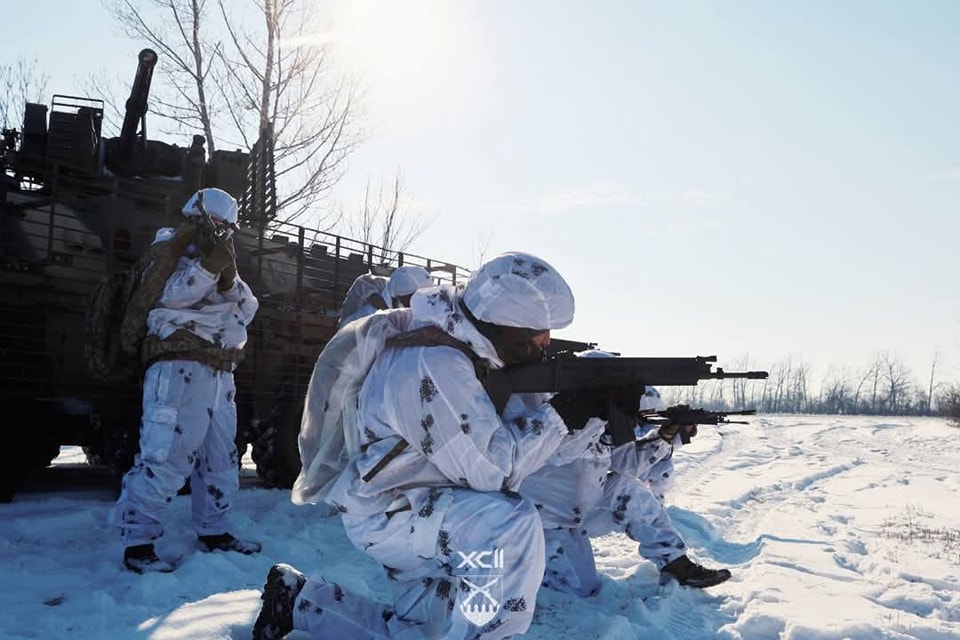
On the second day of the full-scale invasion, February 25, 2022, units of the 92nd Brigade operating on the Staryi Saltiv–Kharkiv axis found themselves in a critical situation. Among them was the 6th Mechanized Company, armed with modern Ukrainian BTR-4 “Bucephalus” armored personnel carriers.
During a breakthrough attempt, the column of “Bucephaluses” came under dense fire from tanks and other armored vehicles. In the first minutes of the battle, several Ukrainian vehicles were hit. Despite this, the BTR-4 crews continued advancing, as the armored vehicles demonstrated exceptional survivability and the ability to fight even under flanking fire.
Some of the “Bucephaluses” executed a bold maneuver — outflanking the enemy from the rear and opening fire with 30-mm guns and onboard ATGMs. The Rosgvardia column caught under fire from the Ukrainian armored vehicles was virtually burned to the ground.
As a result of the lightning-fast battle, the “Bucephaluses” destroyed about 25 units of enemy equipment, including armored vehicles, trucks, and even prisoner transport vans. The battle near Staryi Saltiv became a vivid example of the effective use of the BTR-4 in close combat.
Battle for School №. 134 in Kharkiv: February 27, 2022
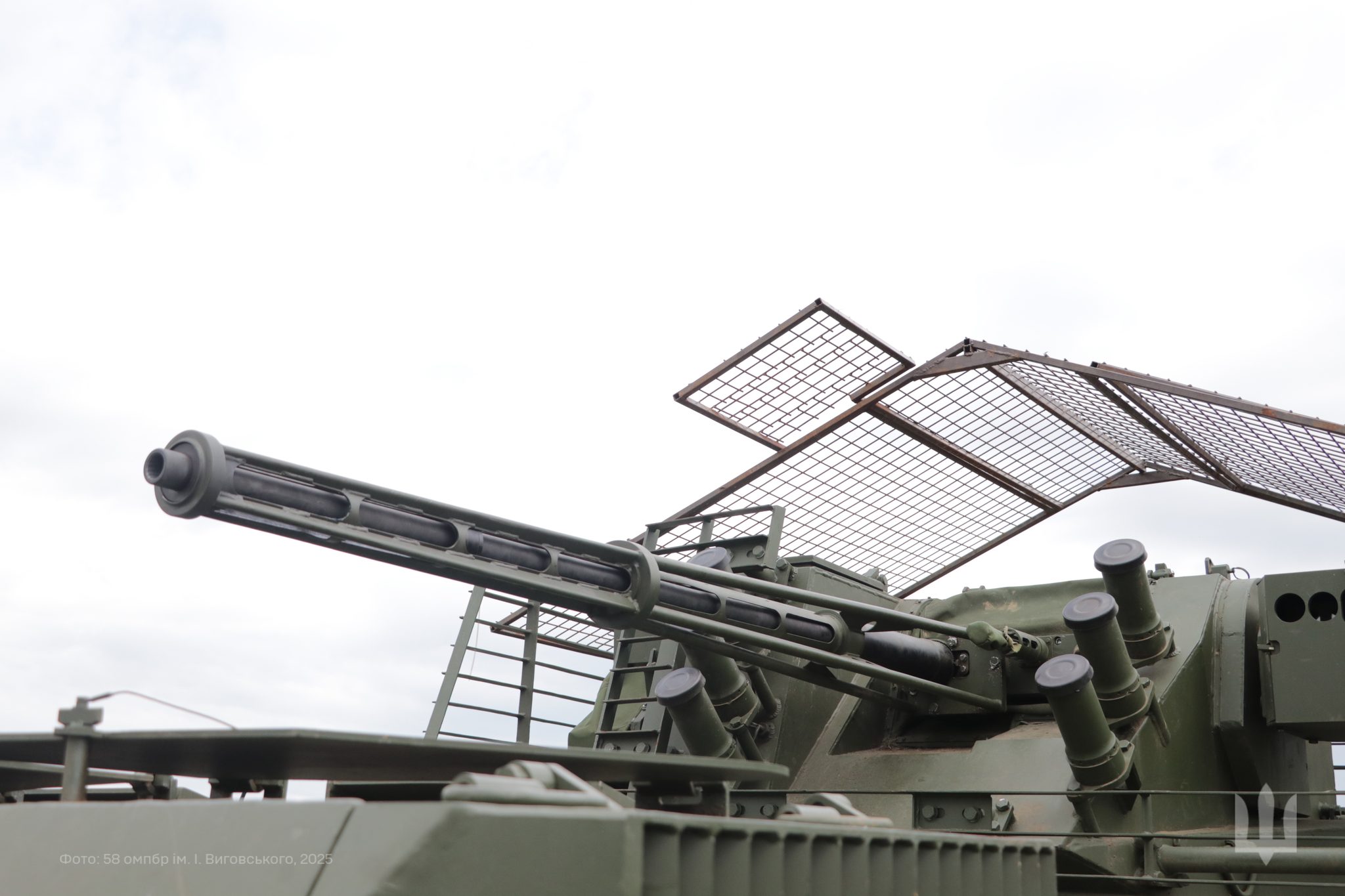
On February 27, 2022, a detachment of Russian special forces in Tigr armored vehicles penetrated the city and seized School №. 134 in Kharkiv, using it as a fortified position. The Defense Forces immediately surrounded the area and launched an operation to eliminate the enemy.
The battle lasted several hours in urban terrain. The enemy resisted stubbornly, firing heavy machine guns and grenade launchers directly from inside the school building. Available armored vehicles were used to assault the enemy position, including a Ukrainian BTR-4E from the 92nd Brigade.
Under fire, the APC attempted to approach the building while supporting the infantry. During several assault attempts, the enemy hit the Ukrainian BTR with an RPG grenade. As a result, the armored vehicle sustained critical damage and caught fire.
Although the BTR-4 was lost, its participation was not in vain — the “Bucephalus” drew enemy fire, covering the infantry. Subsequently, command decided to employ heavy weapons against the school to suppress enemy resistance and avoid further losses.
The “Bucephalus” battle in Mariupol: March 2022
During the heroic defense of Mariupol in the spring of 2022, Ukrainian defenders used limited armored assets against the enemy’s overwhelming forces. On March 13–14, 2022, a notable episode occurred on the western outskirts of Mariupol, when a single Ukrainian BTR-4E “Bucephalus” engaged in street combat against several units of Russian armored vehicles.
The battle was recorded by the combat module camera of the BTR, and the footage was later released by the Azov Regiment. The video shows how the “Bucephalus” crew first spotted a Russian T-72B3M tank in an alley and immediately opened fire with the 30-mm gun.
After several accurate hits, the tank caught fire and was neutralized. Having disabled the tank, the BTR-4 crew continued patrolling the block and soon detected another enemy armored vehicle — a BMP-1 or BRM-1K — behind which Russian infantry were taking cover.
From close range, the “Bucephalus” opened fire with its cannon and machine gun, destroying the vehicle and enemy personnel with several bursts. In this battle, a single BTR-4E disabled two Russian armored vehicles — a tank and an armored fighting vehicle.
Attack on enemy fortifications in Zaporizhzhia region: spring 2023
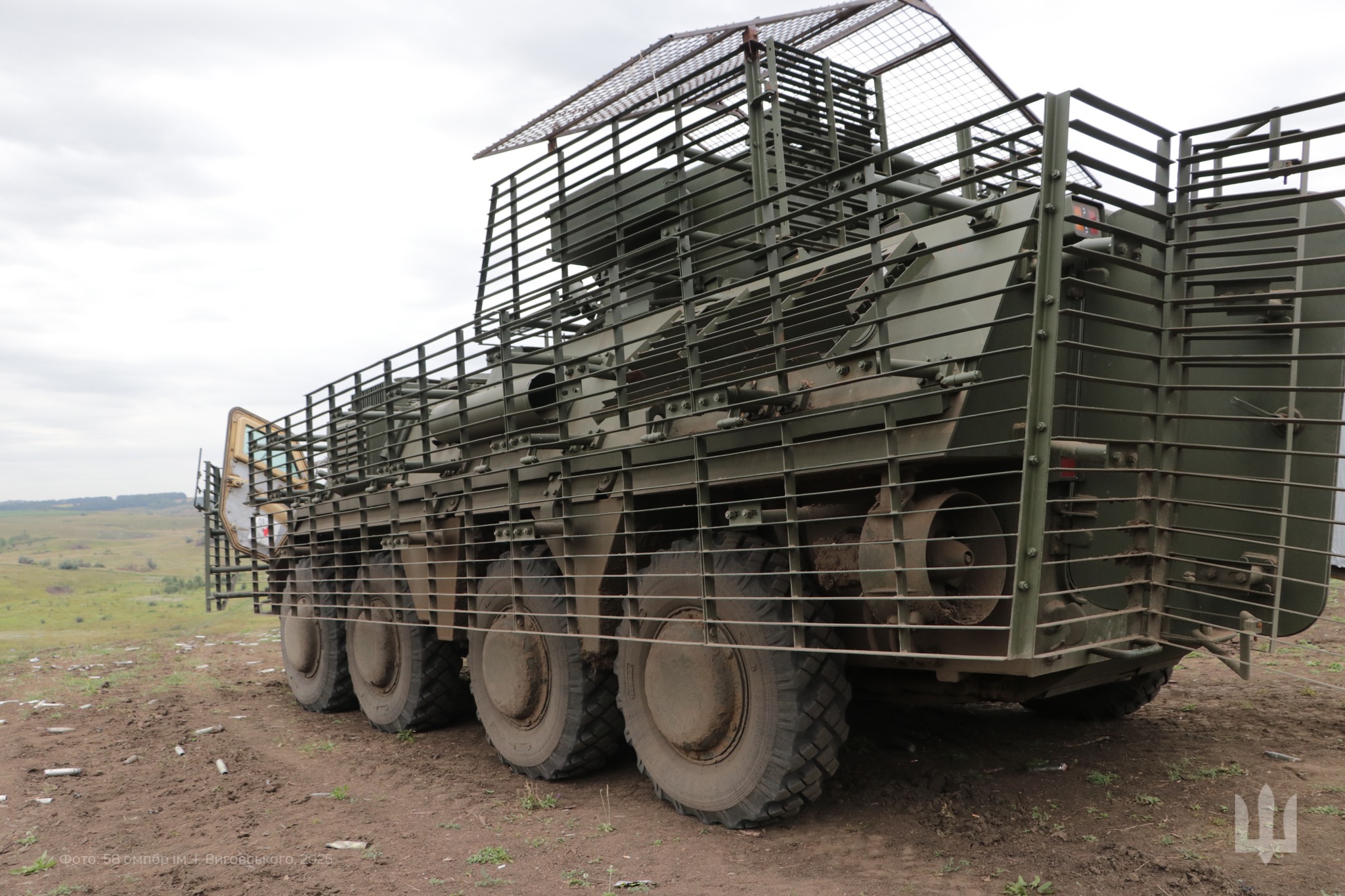
During fighting in the south in 2023, Ukrainian troops demonstrated effective use of the BTR-4E in assaulting enemy fortifications. One video released in spring 2023 captures a battle on the Zaporizhzhia axis, where a Ukrainian BTR-4 “Bucephalus” attacks fortified enemy positions.
The armored personnel carrier was employed as the primary means of infantry fire support. The BTR-4E burst into the fight, closing in on the enemy strongpoint to an optimal distance. From its position, the “Bucephalus” opened fire on the enemy fortifications with its 30-mm automatic cannon.
Under the dense fire of the BTR-4E, Russian occupiers were forced to abandon the forward line or were killed in their trenches. Thus, the “Bucephalus” suppressed the enemy’s defense with fire, allowing Ukrainian infantry to advance safely.
The episode demonstrated that, provided enemy anti-tank weapons are suppressed, the BTR-4E can effectively serve as an assault vehicle. This further strengthened the reputation of the “Bucephalus” as a reliable and formidable combat machine.
Defense of Selydove: autumn 2024
In the second half of 2024, the 15th National Guard Brigade “Kara-Dag” held the defense in the area of the city of Selydove in Donetsk region. Particularly fierce fighting took place for a local coal mine northeast of Selydove, control over which would have given the enemy a tactical advantage.
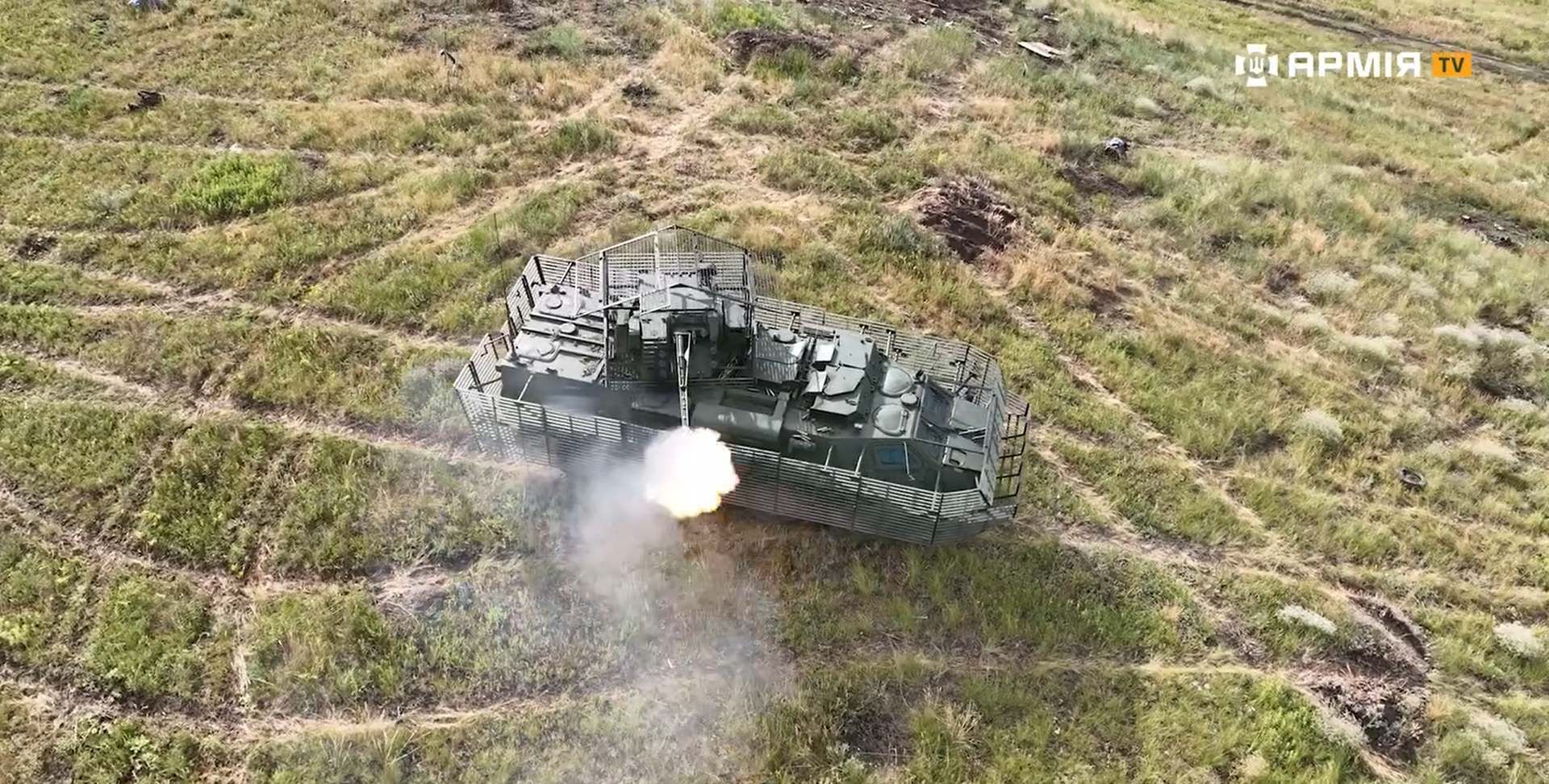
During one of the assaults in October, the Russians committed significant forces in an attempt to break through the Defense Forces’ positions. However, at a critical moment, Ukrainian armored vehicles entered the battle, including a BTR-4E from the “Kara-Dag” Brigade.
The “Bucephalus” executed a flanking maneuver and suddenly attacked an enemy group advancing toward the mine. The BTR-4E opened fire with its cannon and machine gun, covering our infantry and inflicting significant losses on the enemy.
This counterattack came as a complete surprise to the enemy, forcing them to retreat rapidly. As a result, the assault on the mine collapsed and the enemy abandoned their positions.
Thus, the “Bucephalus” once again proved itself an effective tool for rapid response to breakthroughs. With high mobility, it arrived at the right place in time and changed the course of the battle in our favor with its fire.
“Deadly tandem” near Pokrovsk: autumn 2025
In the autumn of 2025, a video filmed on the Pokrovsk axis showed how effective the tandem of the Ukrainian BTR-4E “Bucephalus” and a strike drone with drop munitions can be during the clearing of settlements of Russian occupiers by servicemen of the 92nd Brigade.
In this episode, the key role was played by the combination of a bomber drone and the BTR-4E “Bucephalus.” First, UAV operators dropped an explosive charge on a house where the enemy had taken cover. Just a few seconds later, the Ukrainian BTR-4E delivered the second strike.
The “Bucephalus” opened intense machine-gun fire on the building and the adjacent shelter where the enemy was located. The combination of the drone’s precision strike and the concentrated fire from the APC’s machine gun left the occupiers with no chance.
“The 2nd Assault Battalion of the 92nd Separate Assault Brigade is at work. A group of Russians was detected in the building — we acted in a coordinated manner: a drone drop on the shelter and intense machine-gun fire from armored vehicles. The enemy had no chance of survival,” Ukrainian defenders emphasized.
The clearing of the strongpoint on the Pokrovsk axis demonstrated just how effective an innovative approach to employing the BTR-4E “Bucephalus” in combination with unmanned aerial vehicles can be.
The BTR-4E “Bucephalus” has convincingly proven its effectiveness in numerous other combat episodes as well. Without any doubt, this fiery steed of the Ukrainian army will continue to confidently and effectively destroy Russian occupiers in the New Year 2026 too.