Ukraine and NATO Join Forces to Improve Battlefield Medical Care

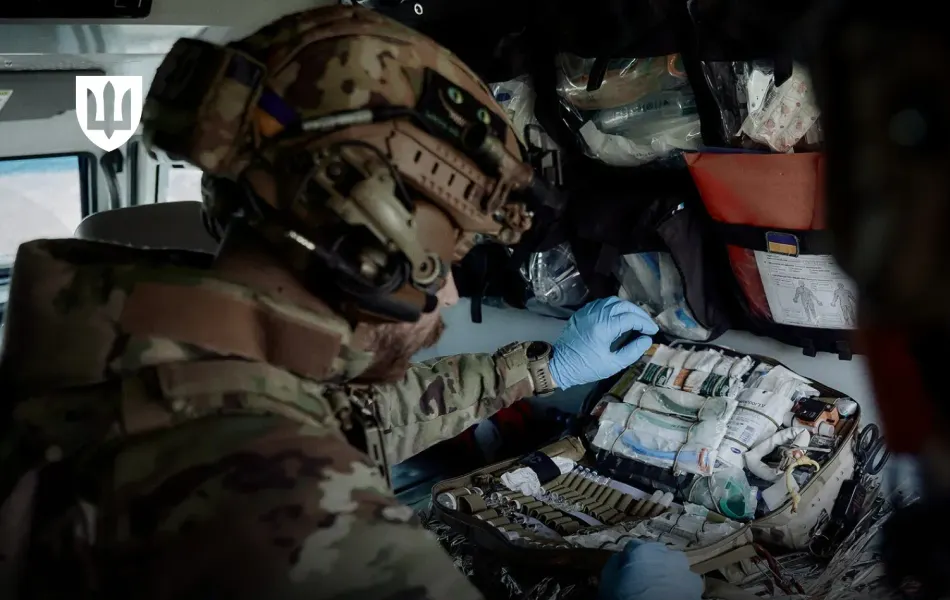
The NATO-Ukraine Joint Analysis, Training, and Education Center (JATEC), in cooperation with NATO’s Allied Command Transformation (ACT), has announced the 17th NATO Innovation Challenge on the topic: “Medical Support in Contested and Austere Operational Environments”.
This was reported by the Ministry of Defense of Ukraine.
The initiative aims to help Ukraine and NATO jointly develop effective solutions for frontline medical support, taking into account the realities of modern warfare. In particular, it focuses on providing prolonged field care and casualty evacuation within an 8-kilometer kill zone, where enemy reconnaissance constantly operates and drone and artillery strikes complicate evacuation efforts.
The JATEC team initiated the competition to identify practical solutions that can ensure the survival of the wounded and enable safe movement under constant enemy threat.
The key development areas include: practical concepts, systems, or integrated architectures for medical stabilization, concealment of movement, communications, and evacuation of the wounded in complex combat environments.
JATEC and NATO ACT invite defense companies from NATO member states and Ukraine, as well as academic institutions, to participate in the competition
The deadline for applications is November 16, 2025.
Finalists will be announced on November 21, and the public defense and demonstration of selected solutions will take place on December 5 in London.
Selected finalists will present their solutions before a panel of NATO and Ukrainian experts, national representatives, operational users, and observers.
Participation in the competition offers an opportunity to engage with NATO’s Allied Command Transformation Headquarters and JATEC, within a community focused on developing solutions to support NATO’s innovation process.
Registration for participation is available.
The Request for Innovation Participation (RFIP) from NATO’s Allied Command Transformation is available.
The previous NATO Innovation Challenge was dedicated to countering FPV drones using fiber-optic technology.