Her words sound like a refrain echoing across many corners of Ukraine — in Sumy, Lviv, Zaporizhzhia, and Geneva. Yes,…


Ukraine’s defense-industrial complex has undergone a large-scale transformation — from a state-centered model to a flexible ecosystem with hundreds of private companies, decentralized production, and direct feedback between the military and engineers.
This was reported on the website of the Ministry of Defense of Ukraine.
The information was announced by Deputy Minister of Defense of Ukraine Hanna Hvozdiar during the 8th German-Ukrainian Business Forum “Resilience in Action – Partnership in Development”, — held in Berlin.
As a result, Ukraine’s defense industry has grown 35-fold — from USD 1 billion in 2022 to USD 35 billion in 2025.
According to the Deputy Minister of Defense, this growth was achieved through systemic reforms, opening the market to private manufacturers, and harmonizing standards with NATO.
Hanna Hvozdiar emphasized that European and global security is based on close cooperation among allies, and that an effective response to Russian aggression is only possible through joint, proactive, and rapid decisions by defense industries.

She identified the development of air defense systems as one of the priority areas of international cooperation, particularly mass-produced and affordable solutions to counter Russian drones.
During the panel discussion “Transformation of the Defense Industry: From Wartime Needs to Long-Term European Security”, the Deputy Minister outlined the key results of the development of Ukraine’s defense-industrial complex.
According to her, the fastest growth was seen in the production of drones, robotic systems, electronic warfare systems, software solutions, as well as artillery systems, armored vehicles, missiles, and ammunition.
Hanna Hvozdiar also highlighted the importance of regulatory and procurement reforms, including simplified imports, the introduction of transparent electronic procurement, and the launch of a digital marketplace that allows military units to independently select and order the equipment they need.
She described the next stage of development as further localization of production and the creation of a special legal regime, Defence City, to support defense businesses in Ukraine.

The Ministry of Defense also emphasized that exporting defense products is viewed as a tool for utilizing surplus production capacity, provided that the needs of Ukraine’s Defense Forces are fully met.
Already today, Ukrainian companies can offer European partners unmanned and automated systems, counter-drone and electronic warfare solutions, as well as a wide range of dual-use products.
@armyinformcomua

As part of the systematic reduction of the military-economic potential of the Russian aggressor, on the night of December 24 units of the Defense Forces of Ukraine carried out successful strikes against several enemy targets.
Representatives of the NATO–Ukraine Joint Analysis, Training and Education Center (JATEC) took part in the final phase of the NATO exercise Loyal Dolos 2025 to assess the combat capabilities of an Alliance unit.
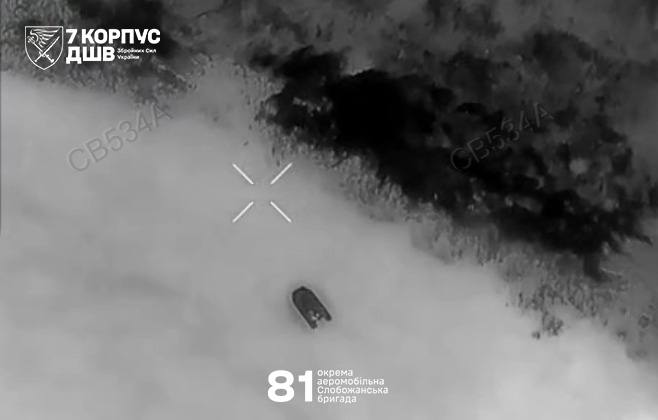
On the night of December 24, Russian troops attempted to cross the Siverskyi Donets River, but were stopped by Ukrainian airborne troops.
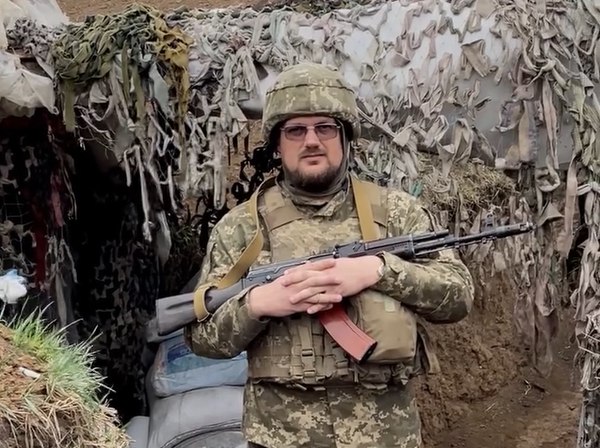
From a soldier to deputy commander of a mechanized battalion of the 41st Separate Mechanized Brigade — this is the combat path taken by serviceman Roman Savytskyi, call sign “Major”.
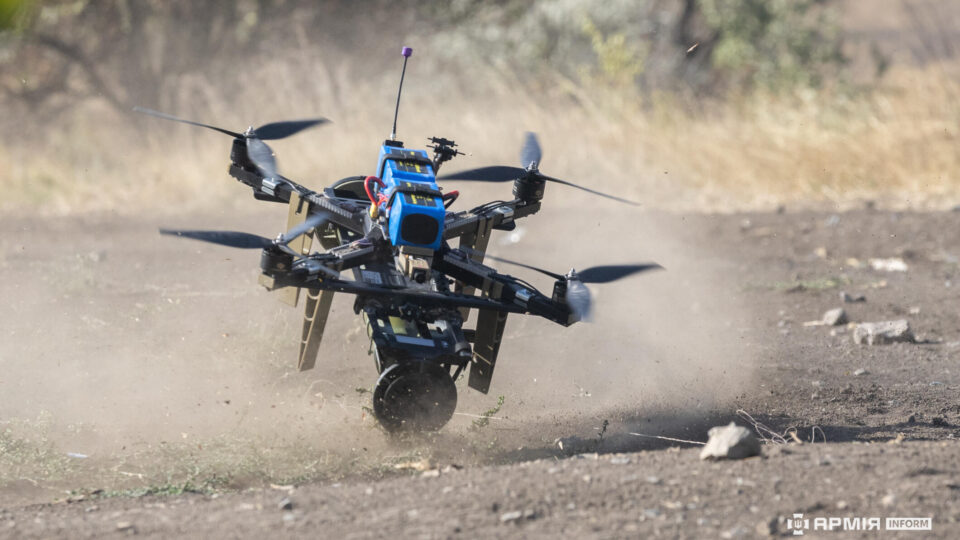
The 14th Separate Unmanned Aerial Systems (UAS) Regiment has been transformed into the 1st Separate Unmanned Systems Center — a unit that concentrates experience, innovation, and strategic thinking in the employment of unmanned systems.
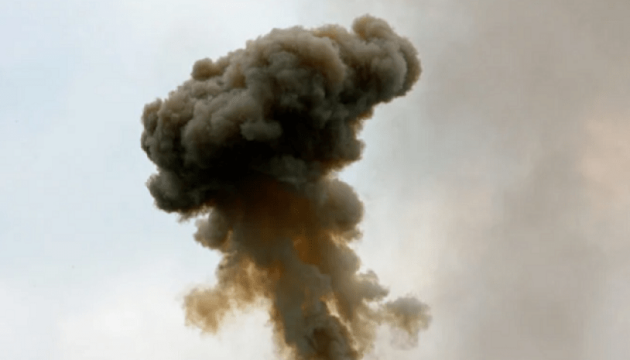
The enemy carried out a series of targeted strikes on a thermal power plant in the nearest suburb of Kharkiv. This led to a significant drop in voltage in the city, directly affecting heat supply and the operation of public transport.
Her words sound like a refrain echoing across many corners of Ukraine — in Sumy, Lviv, Zaporizhzhia, and Geneva. Yes,…