Hunt for russia’s “laser” aircraft A-60: aviation expert explains what exactly burned in Taganrog


The destruction of the Russian A-601A aircraft with an experimental laser system by Ukrainian drones has become a striking demonstration of how rapidly the nature of the air war is changing.
The incident highlighted vulnerabilities in Russia’s air-defense systems at critically important facilities and simultaneously showcased the capabilities of Ukrainian unmanned systems.
We discuss the real value of this episode, the tragicomic history of this aircraft, the technical nuances, and its impact on the further course of the confrontation with aviation expert, Candidate of Technical Sciences, and leading researcher at the State Aviation Museum of Ukraine, Valerii Romanenko.
— Mr. Valerii Dmytrovych, briefly, what made this aircraft unique? Or rather — what used to make it unique?
— The A-60 aircraft project is a kind of echo of the arms-race era. It was launched as a research flying laboratory for testing laser weapons that were later supposed to be placed into space and used to destroy NATO satellites with a powerful beam — more precisely, American satellites.
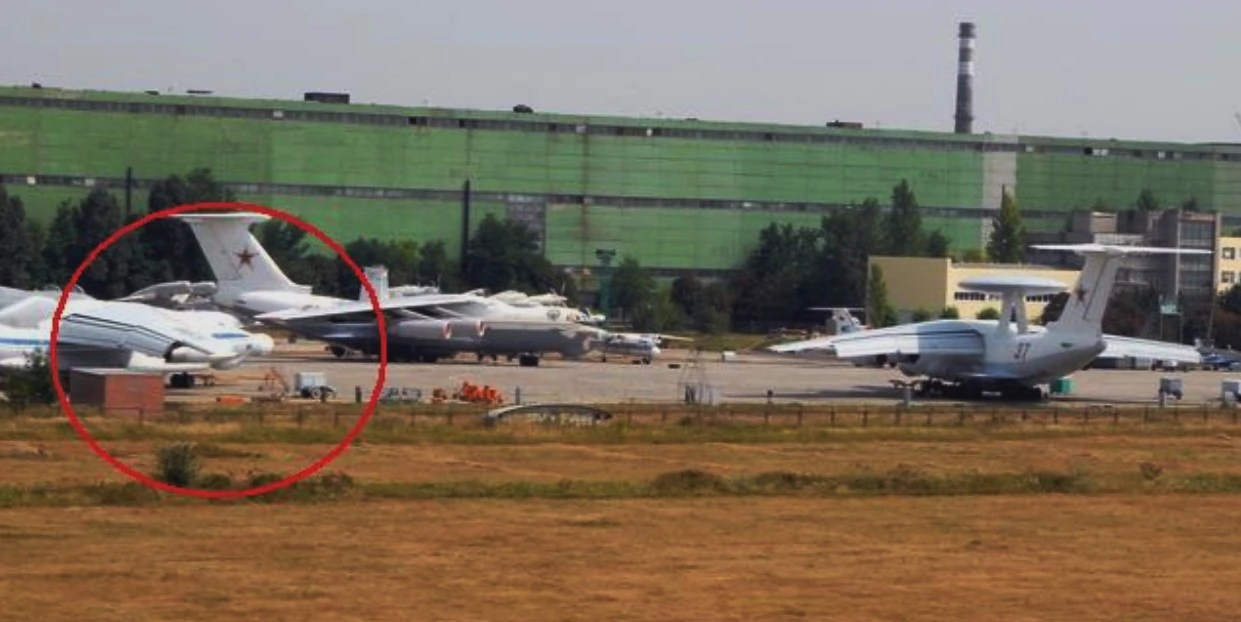
But the fate of this system turned out to be rather bleak. I’ll tell more about that below. As for this particular aircraft, I can say that it had long been “taking root in the ground” at the site of the Beriev Taganrog Aviation Scientific-Technical Complex (TANTK) — specifically, at the airfield known as “Taganrog-South”. That is exactly where our combat “bird-drones” pecked it apart.
— What is known about the history of this aircraft’s development?
— I’ll note right away: like most such narrowly specialized projects that were never scaled up, information about the “laser” aircraft is shrouded in secrecy. The data is quite fragmentary, and most details could be found either in eyewitness accounts or in occasional statements from Russian officials, who were not very talkative either.
In the mid-1970s, the military-political leadership of the former USSR tasked the Taganrog Machine-Building Plant named after Bulgarian communist Georgi Dimitrov with creating a special aviation complex needed to solve a number of important military-technical tasks related to national defense.
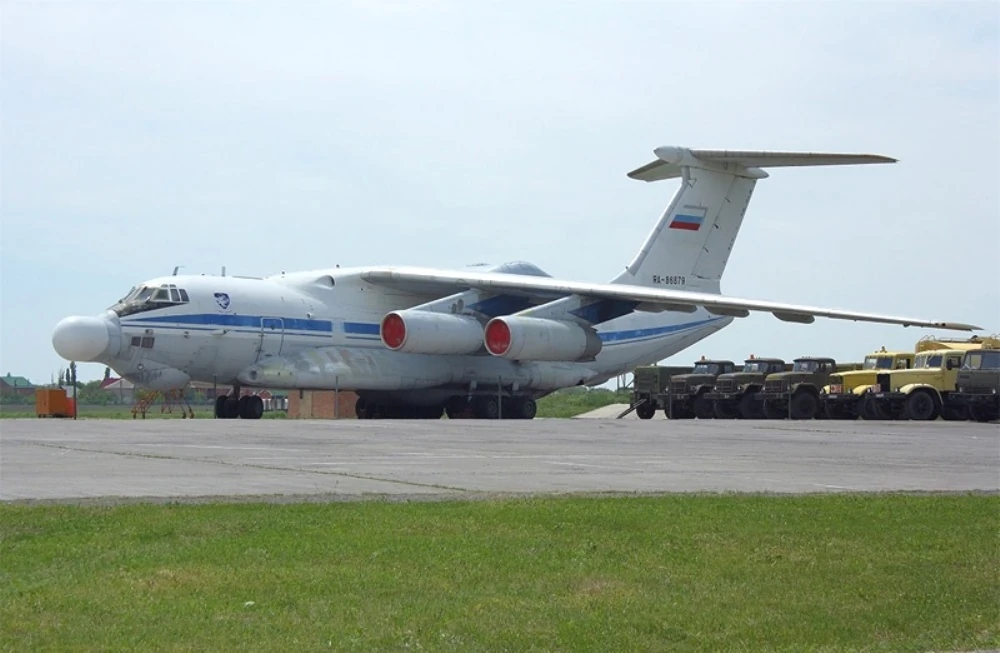
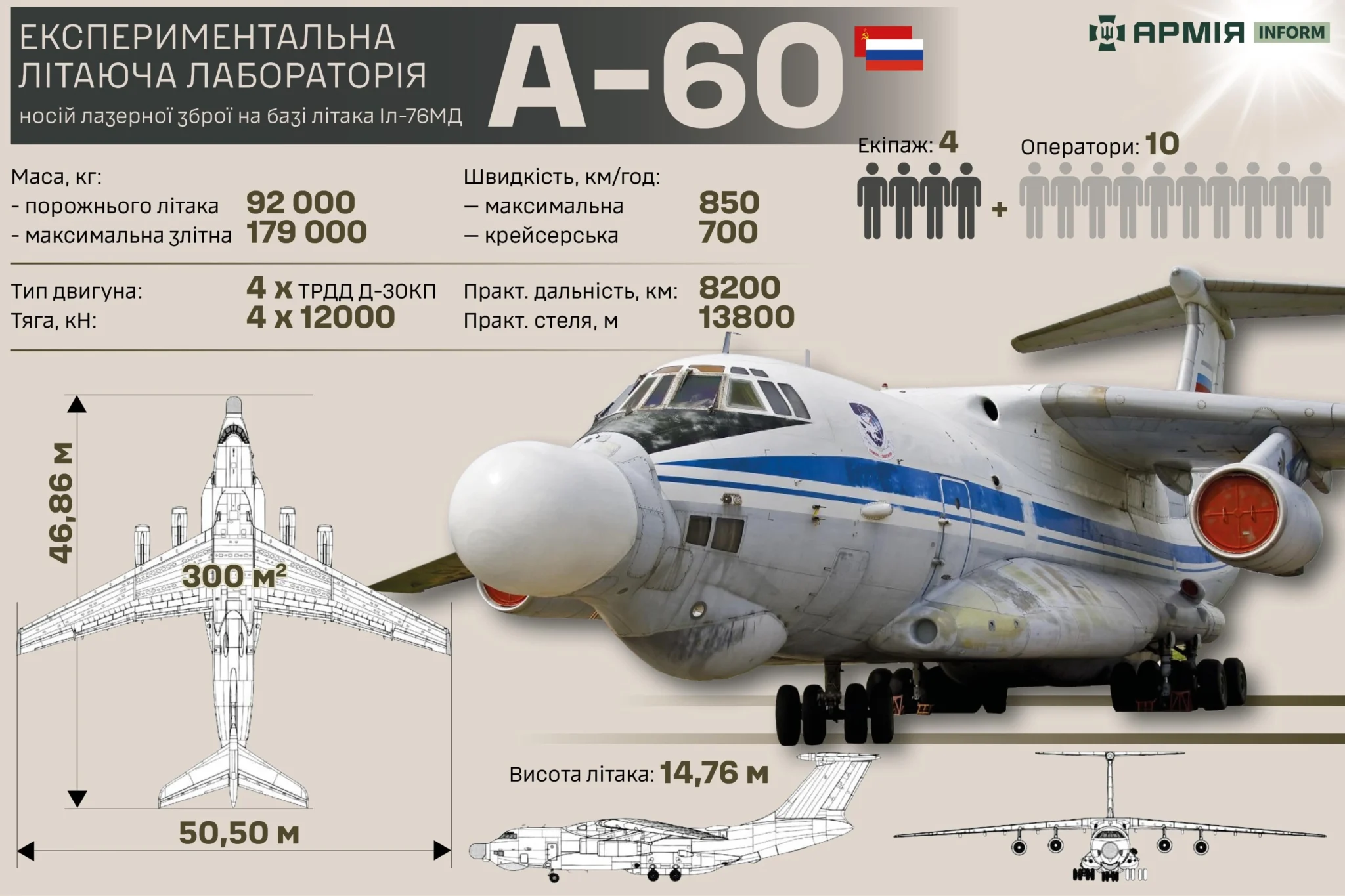
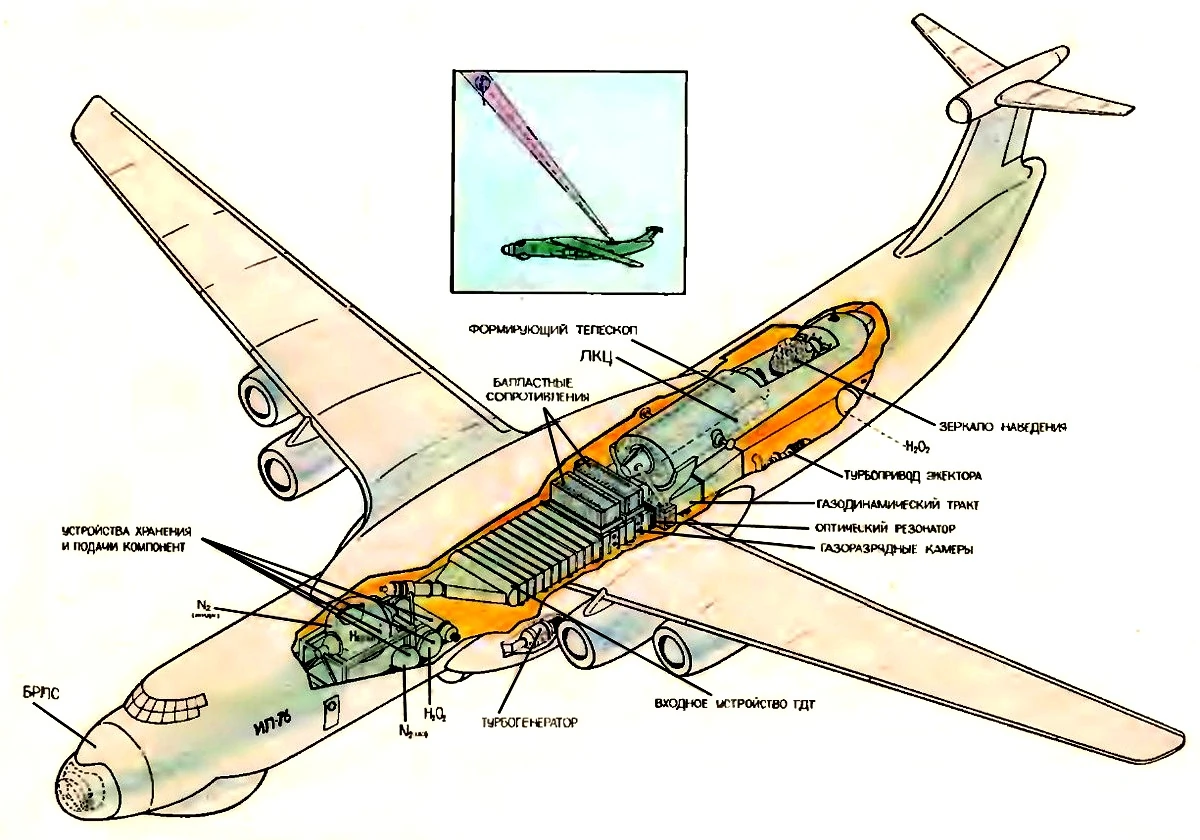
Since 1977, the Beriev Design Bureau has been developing a flying laboratory — the so-called “1A” product — to test the key technical solutions of the new specialized aviation complex. The aircraft housed a laser installation designed to study the propagation of beams in the upper layers of the atmosphere. Work on this project was carried out in broad cooperation with enterprises and scientific organizations across the country, but the main partner of the design bureau was the Almaz Central Design Bureau.
The idea seemed simple at first glance: to install an already developed and tested laser on a spacecraft to test it in space. The chosen system was a laser installation with a power of 1 MW (2–2.5 times more powerful than the maximum rating of the American equivalent), created by a branch of the Kurchatov Institute of Atomic Energy.
This gas-dynamic CO₂ laser was developed for installation on Il-76 transport aircraft. By 1983, it had already passed flight tests. But Soviet engineers and designers never moved beyond the initial experiments.
— What prevented further progress? Lack of scientific-technical capability or lack of funds?
— Both. And multiplied by simple negligence.
— Negligence in a highly classified project? That sounds strange…
— I’ll say more. Aviators have many superstitions — for example, some pilots forbid being photographed before a combat flight. And the A-60 story has its own mysticism. First, it is not known for certain how many such aircraft actually existed. Some sources claim three units were built. But it is known for sure that there were two — both with the same tail number: USSR-86879.
— How could that happen?
— Because the first aircraft — the Il-76MD flying laboratory USSR-86879 with a combat laser — burned down at the Chkalovsky base airfield near Moscow in 1989.
— So these “red roosters” (fires) constantly haunted the aircraft?
— In the first case, the story was almost comical. As described by authors of Russia’s official “Voyennoye Obozreniye,” yes, the aircraft burned. It had been fully fueled and prepared for morning work. Before dawn, technicians entered the aircraft to siphon off some alcohol for themselves, but because several systems were powered, a short circuit occurred and a fire started.
To avoid punishment, the technicians ran outside, shut and sealed the aircraft, and began fussing around trying to extinguish the fire from the outside. The arriving fire brigade did not have authorization to enter the classified object. While they waited for permission, flames burst outward, and the command was given: “Get away from the aircraft!” Seconds later, an explosion occurred, killing one person on the other side of the aircraft who had not heard the order.
And on August 29, 1991, a test-pilot crew flew the second flying laboratory — designated “1A2” — which also received the tail number USSR-86879. This aircraft housed a new version of the special complex, modified based on the results of the “1A” tests.
It is also worth noting that the aircraft destroyed in Taganrog on November 25 bore the registration number RA-86879. Russia simply replaced “USSR” with “RA” in the registration number and “covered” the clearly military (albeit experimental) aircraft with civilian registration.
— And how did the work continue afterwards?
— The way even the Russians themselves would describe it: “neither here nor there”. Haphazardly. Information about the testing was chaotic. On the other hand, if flights were being conducted actively, the aircraft would not have been sitting in a corner of the airfield waiting for a visit from our UAVs.
One question remains unanswered: where is the other similar aircraft — the supposed third unit, if it indeed existed? I can assume it is somewhere at an airbase in some “conditional” Akhtubinsk and is participating in tests. All the more so since in recent times the Russian leadership has again begun speaking about its readiness for a new stage of “Star Wars”.