Super Weapon for Special Operations Forces: U.S. Begins Developing a New Hypersonic Assault Rifle

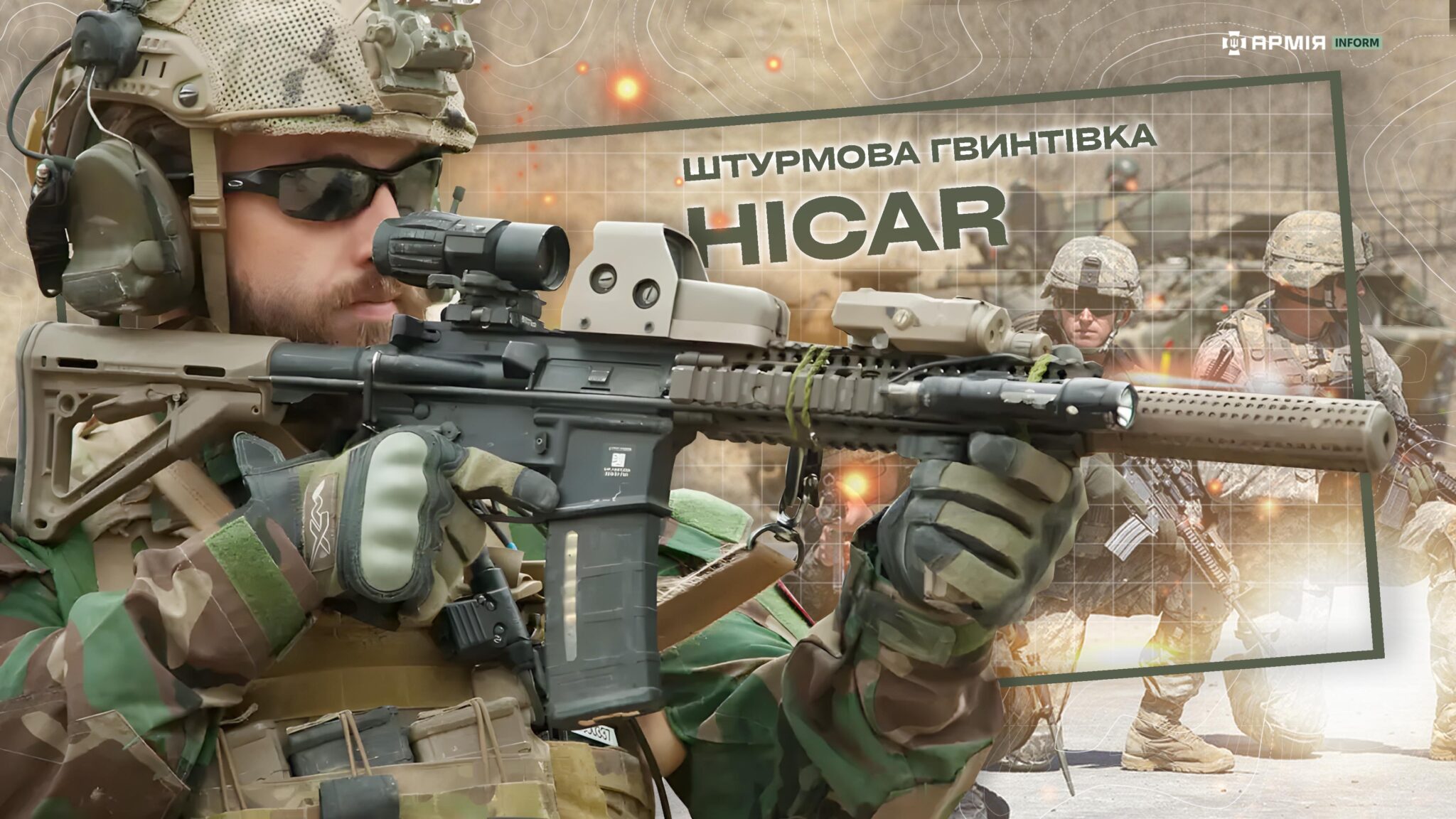
The U.S. Special Operations Command (USSOCOM) has launched a search for developers to design a new carbine that will replace the M4A1 URG-I.
The request was published on the U.S. government procurement portal SAM.gov. The primary requirement for the new weapon, designated the Hypervelocity Improved Carbine (HICAR), is the ability to effectively engage targets at ranges exceeding 600 meters.
The new carbine is expected to be compatible with both standard 5.56×45mm NATO ammunition and future hypervelocity rounds, while maintaining a high level of reliability and durability.
As The Defense News reports, citing requirements issued by the Pentagon, USSOCOM is carrying out the project in coordination with the U.S. Navy’s Naval Surface Warfare Center (NSWC) Crane to develop a next-generation individual weapon system designed to enhance the combat effectiveness of U.S. Special Operations Forces.
The initiative seeks to identify industry partners to develop a new carbine platform capable of significantly extending the effective range of the standard 5.56×45mm NATO weapon system while maintaining compatibility with existing operational equipment.
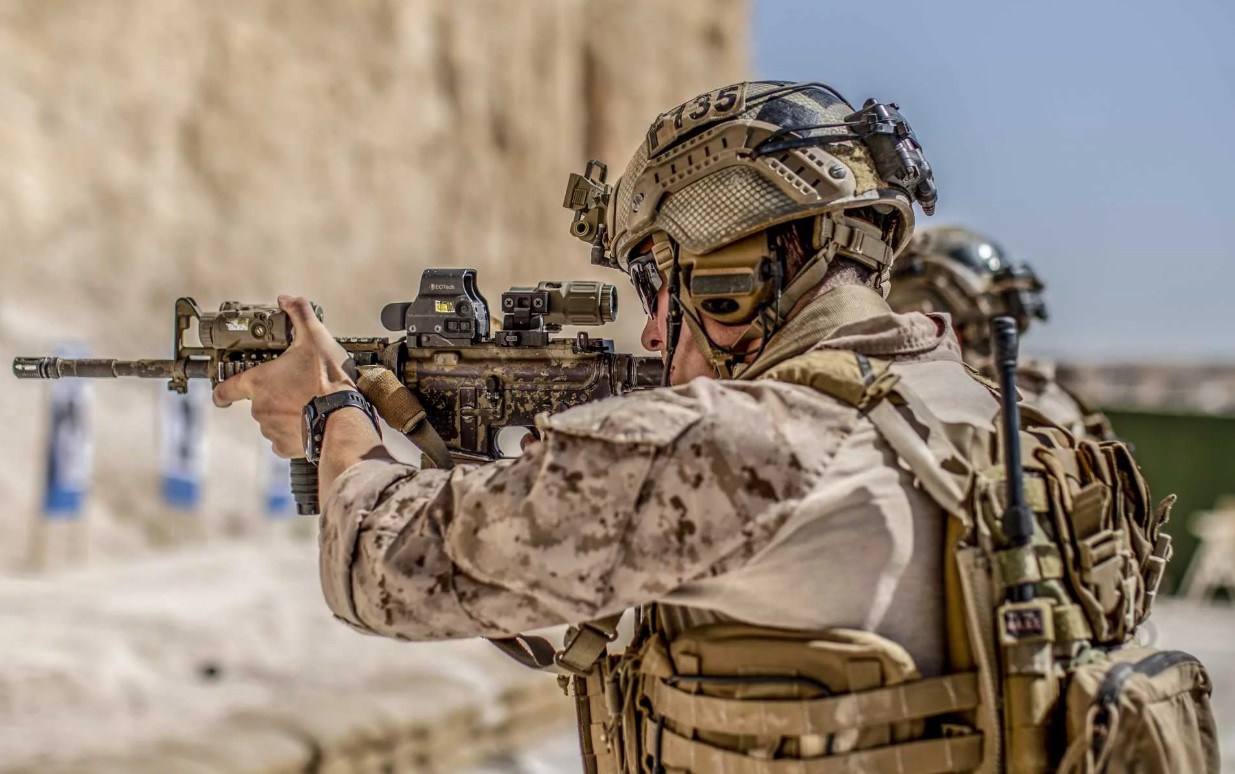
Photo: U.S. Marine Corps
The program aims to replace or upgrade the current M4A1 Upper Receiver Group – Improved (URG-I) while maintaining full compatibility with the existing M4A1 lower receiver assembly currently fielded by U.S. Special Operations Command (USSOCOM) units.
The primary objective of the U.S. military is to integrate advances in materials science, weapon durability, and ammunition performance into a technologically enhanced lightweight assault rifle capable of effectively engaging targets at ranges of 600 meters and beyond. This would double the recognized effective range of today’s standard 5.56×45mm NATO platforms from approximately 300 meters.
As researchers from the Belgian defense publication Army Recognition note, the new rifle must remain fully compatible with existing M4A1 lower receivers, STANAG magazines, SOCOM optics, suppressors, laser aiming devices, and other auxiliary equipment already in service.
Unlike the U.S. Army’s transition to the 6.8×51mm XM7, the HICAR program seeks to increase lethality by boosting projectile velocity while preserving the existing 5.56×45mm NATO logistics chain and the compact handling characteristics of 11–12-inch carbines optimized for close-quarters combat (CQB), vehicle operations, airborne missions, and maritime operations.
A central objective of the HICAR program is to ensure reliable operation with both existing 5.56mm NATO ammunition and next-generation hypervelocity 5.56mm rounds designed to deliver significantly enhanced ballistic performance.
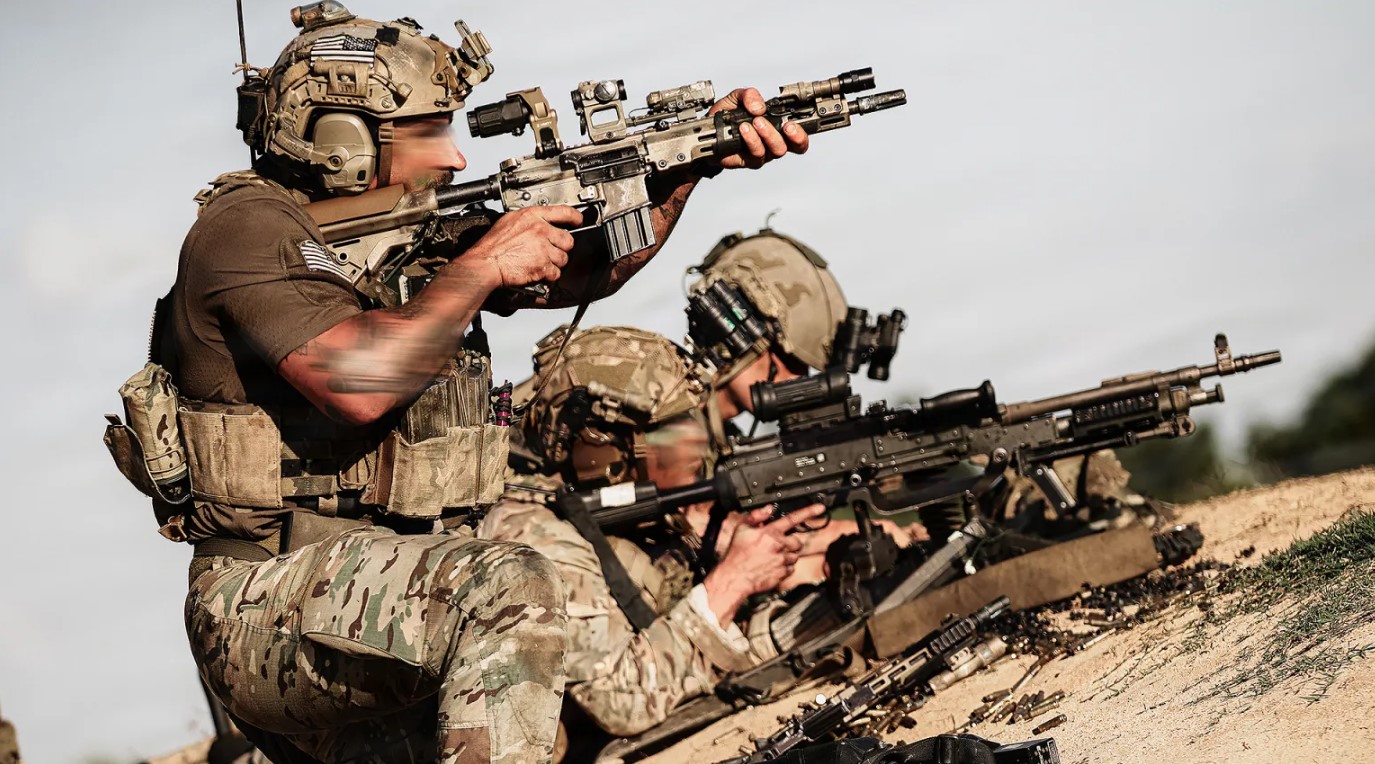
Photo: U.S. Army
The system must support reliable cycling and firing with standard U.S. military ammunition, including the M855A1 Enhanced Performance Round, the 77-grain Mk262 cartridge, and government-supplied M855A1+ hypervelocity ammunition loaded to chamber pressures of up to 82,000 psi (82 ksi). The rifle must also remain adaptable to future hypervelocity ammunition designs.
According to the program requirements, the hypervelocity ammunition is intended to enhance combat performance by extending the weapon’s effective range, improving terminal effects, and increasing penetration against body armor and reinforced barriers. The higher projectile velocity enables the ammunition to retain more energy over longer distances, delivering greater lethality and target engagement capability in long-range combat scenarios.
Because the M855A1+ ammunition generates significantly higher chamber pressures than conventional 5.56mm systems, USSOCOM is requiring substantial engineering improvements to the rifle’s gas system, bolt assembly, barrel, and materials to ensure long-term reliability and durability under sustained operational use.
U.S. Special Operations Command (USSOCOM) has established stringent technical requirements aimed at preserving the portability and ergonomics of a standard assault rifle while significantly enhancing its overall performance.
The HICAR system must be fully compatible with the M4A1 lower receiver without requiring any irreversible modifications—ideally, without any modifications at all. The weapon is required to feature an 11- to 12-inch barrel, measured from the bolt face to the muzzle, ensuring the compact maneuverability needed for special operations missions.
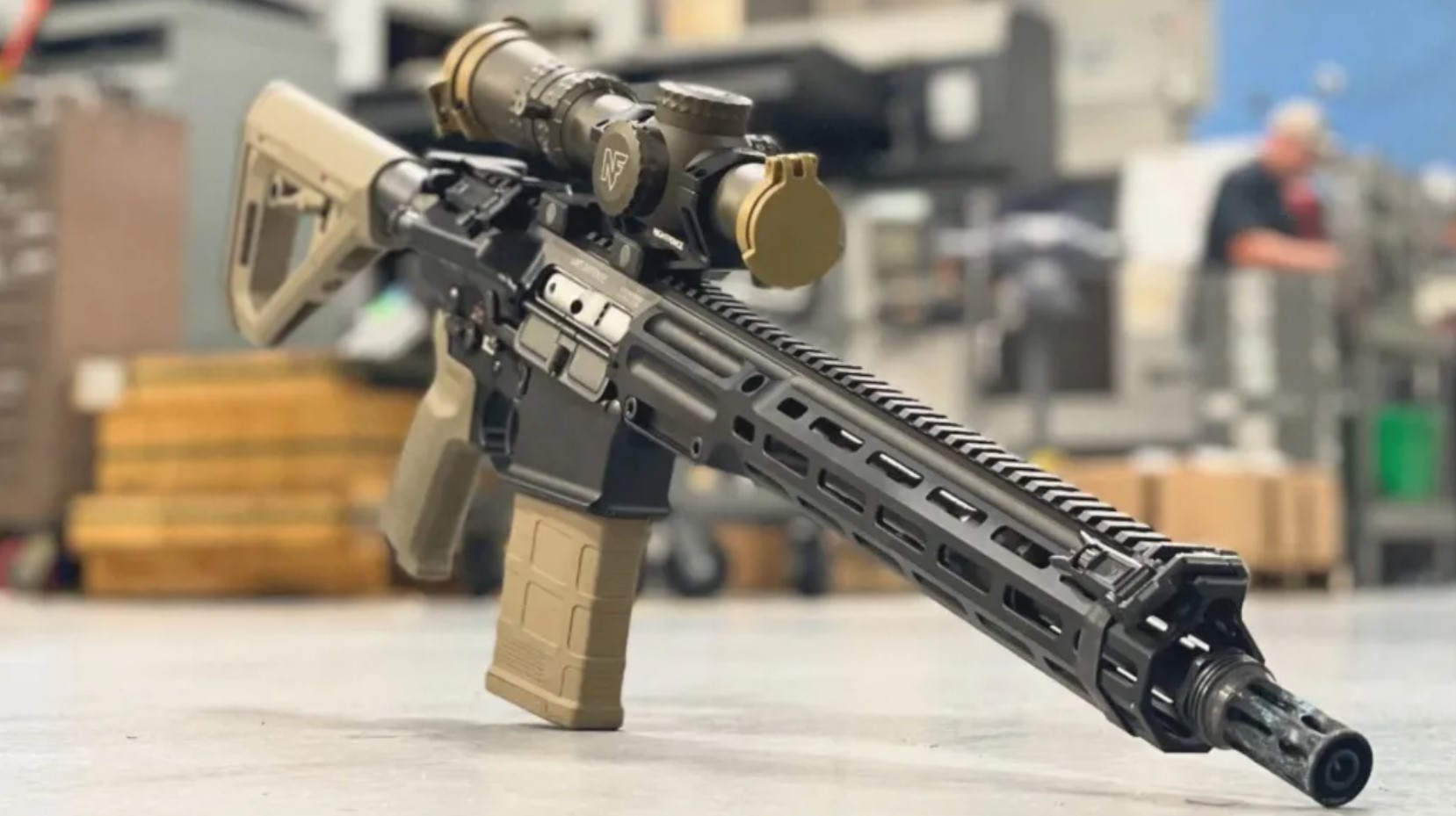
Photo: TWZ
The weapon must weigh less than 8 pounds (3.63 kg) unloaded, excluding ammunition and the suppressor, while the desired target weight is 6.5 pounds (2.95 kg). Its overall length, measured from the receiver extension to the muzzle device, must not exceed 31 inches, with an objective target length of 28 inches.
USSOCOM has also established demanding accuracy standards for the program. The weapon must deliver no worse than 1 Minute of Angle (1 MOA) accuracy when fired without a suppressor, while the desired performance target is 0.5 MOA.
Accuracy testing will include multiple 10-shot groups fired from individual rifles at a distance of 100 meters using Black Hills Mk262 Mod 1-C 77-grain ammunition. No individual shot group may exceed a 2.5 MOA extreme spread.
Additional system requirements include:
- Trigger pull of less than 5 pounds, with a desired target of under 3 pounds.
- Safe and semi-automatic fire modes as mandatory requirements, with fully automatic capability listed as an objective.
- A minimum 16-inch M1913 Picatinny rail at the 12 o’clock position for mounting optics and accessories.
- Compatibility with all current Visual Augmentation Systems (VAS) and Visual Augmentation System Weapon Accessories (VASWA) used by U.S. Special Operations Command.
- Recoil impulse lower than that of the 7.62×51mm NATO Mk17 rifle.
- Compatibility with Gen M3 PMAG magazines.
- M-LOK mounting slots in seven radial positions along the handguard.
- Ambidextrous controls—including the bolt release, charging handle, magazine release, and safety selector—as a desired objective.
- Protective shielding around the controls to reduce the risk of accidental activation during operations.
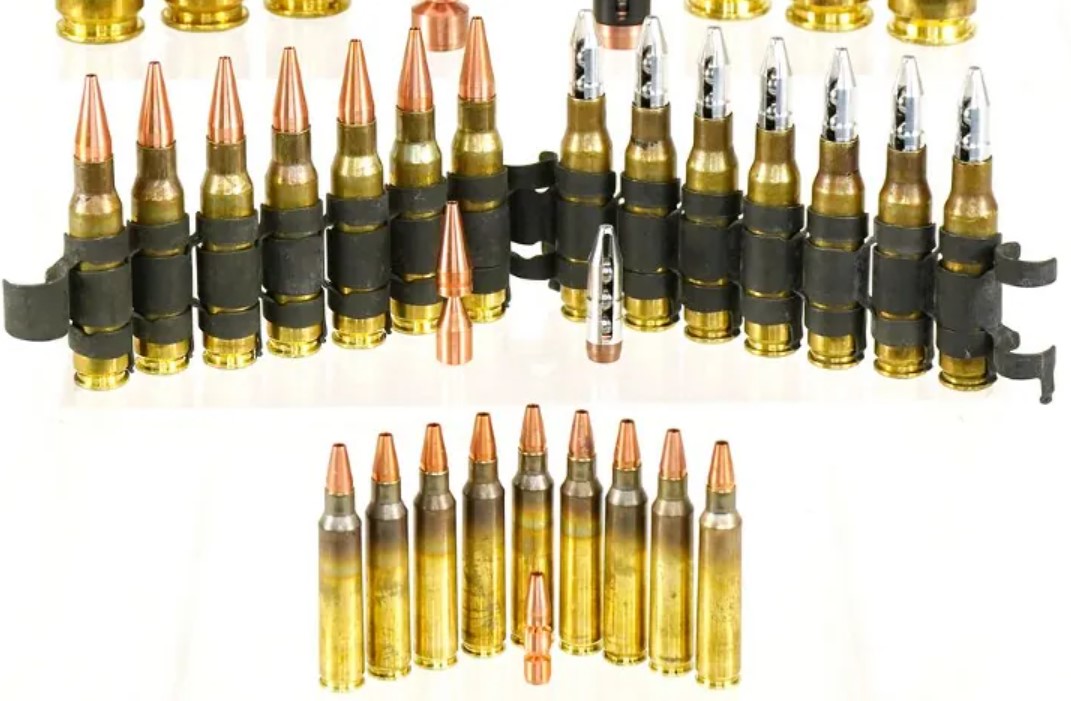
Photo: Naval Surface Warfare Center
The HICAR initiative is being developed alongside broader U.S. efforts to modernize small arms, with a particular focus on next-generation infantry weapons. While U.S. Special Operations Command (USSOCOM) aims to enhance the effectiveness of the 5.56mm platform for special operations missions, the U.S. Army is separately advancing the compact XM8 rifle, a lightweight derivative of the M7 chambered for the 6.8×51mm cartridge.
The U.S. Army received the first deliveries of Sig Sauer XM8 carbines in April 2026, with an early fielding to close combat formations expected to begin in October 2026.
However, HICAR remains a separate modernization program, focused specifically on enhancing the capabilities of U.S. Special Operations Forces by improving compatibility with hypervelocity 5.56mm ammunition, extending effective engagement range, increasing reliability, and maintaining seamless integration with existing M4A1 weapon systems.
How the M4A1 Assault Rifle Mechanism Works.
Video: Wapen Hub 111