“I’ll stay in the Army until Victory — or leave feet first”: The story of a paratrooper, combat engineer, and combat medic with the callsign “Tank”

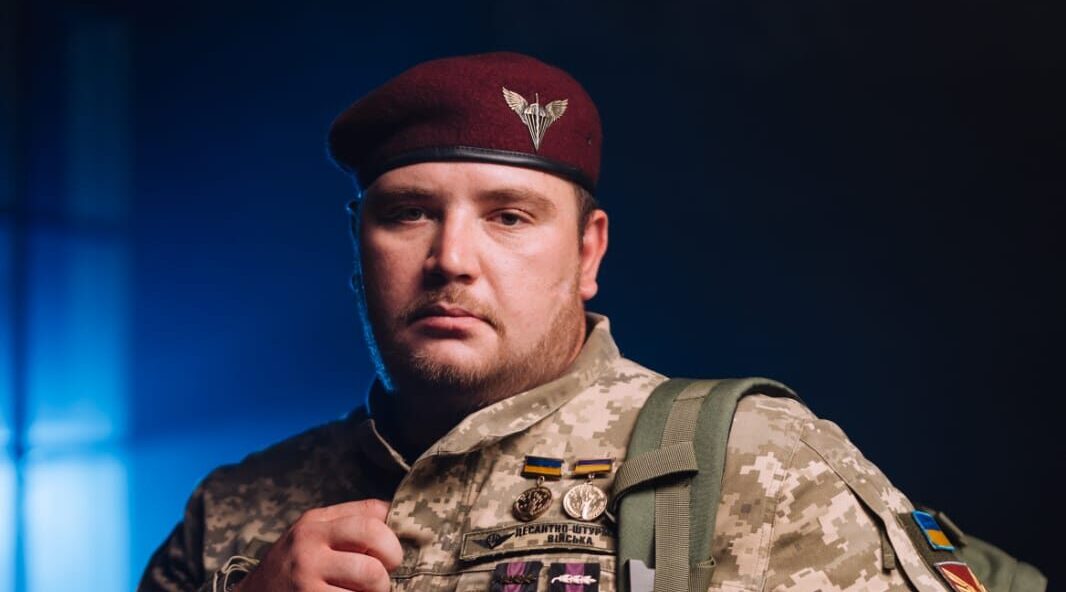
He survived Bakhmut, Soledar, and Kherson. He was buried under debris while entering the recently liberated city of Kherson.
He pulled wounded comrades to safety, only to later step on a mine himself and lose a leg. After the amputation, he returned to military service.
Petro’s callsign is “Tank”.
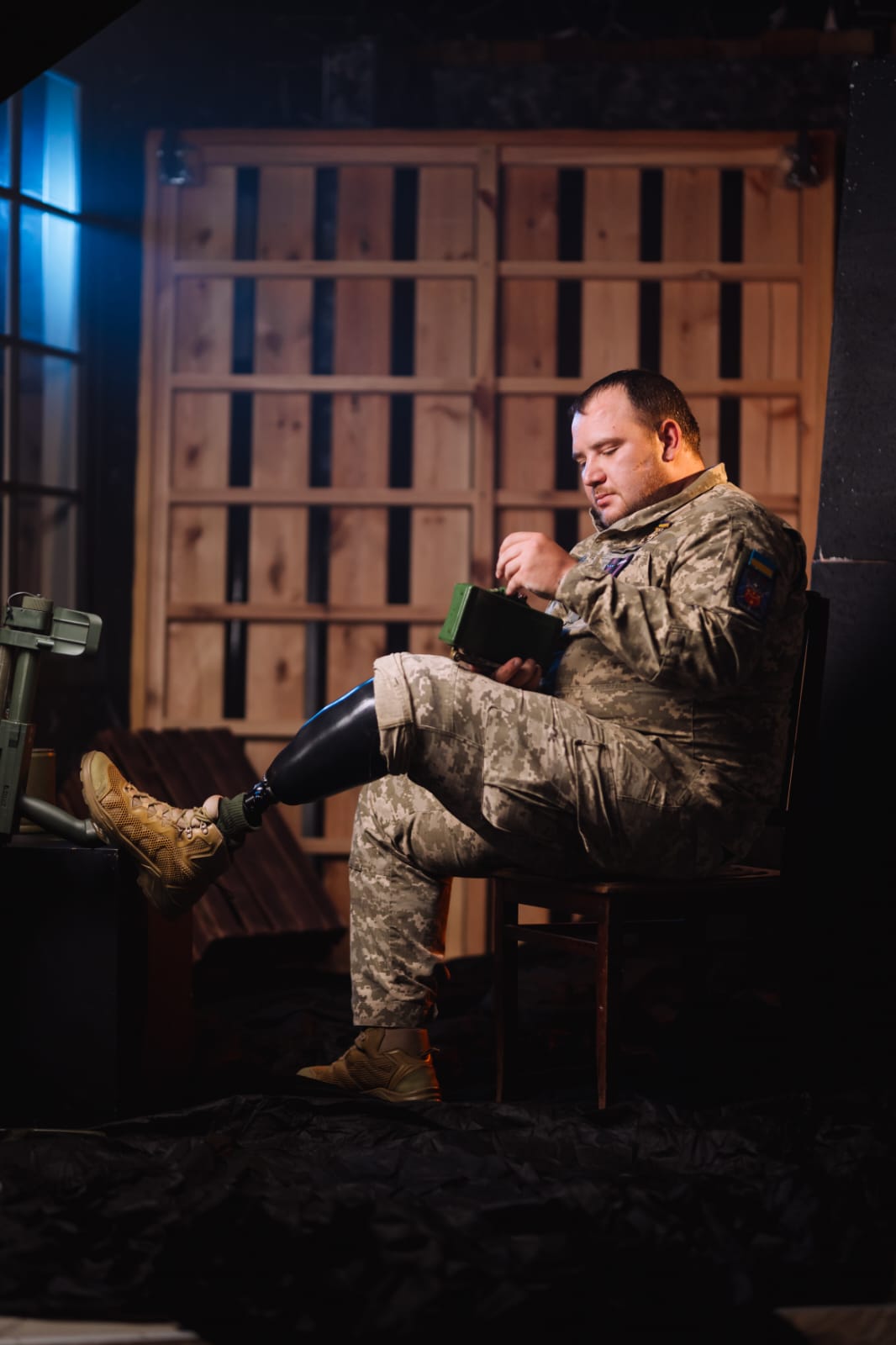
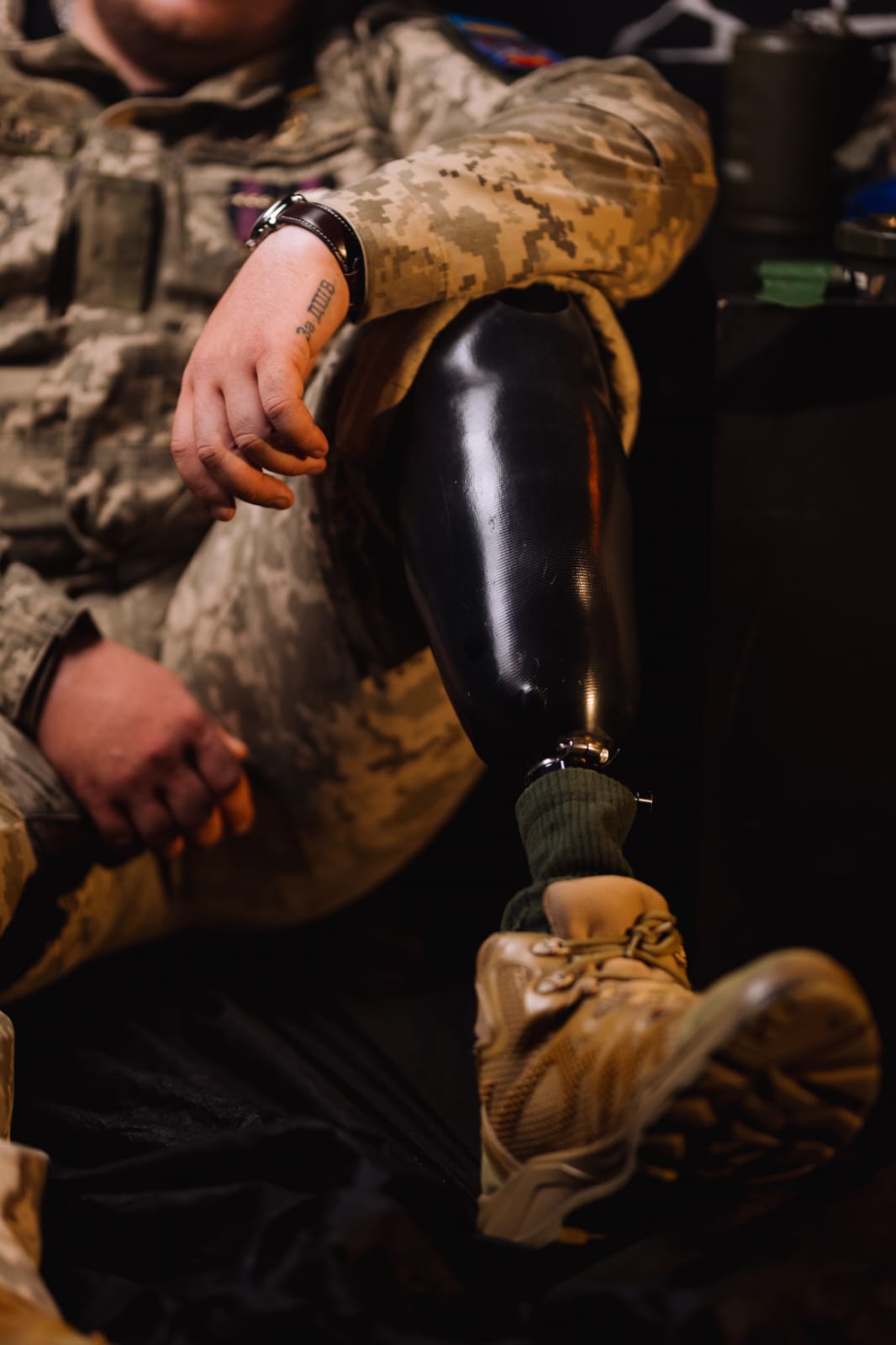
He jokes that he now has a “damaged track”, but it is made of titanium — and even better than before.
His story is not about pathos. It is about people who, after everything they have endured, still remain in the ranks.
“The recruitment center told me there were no vacancies”
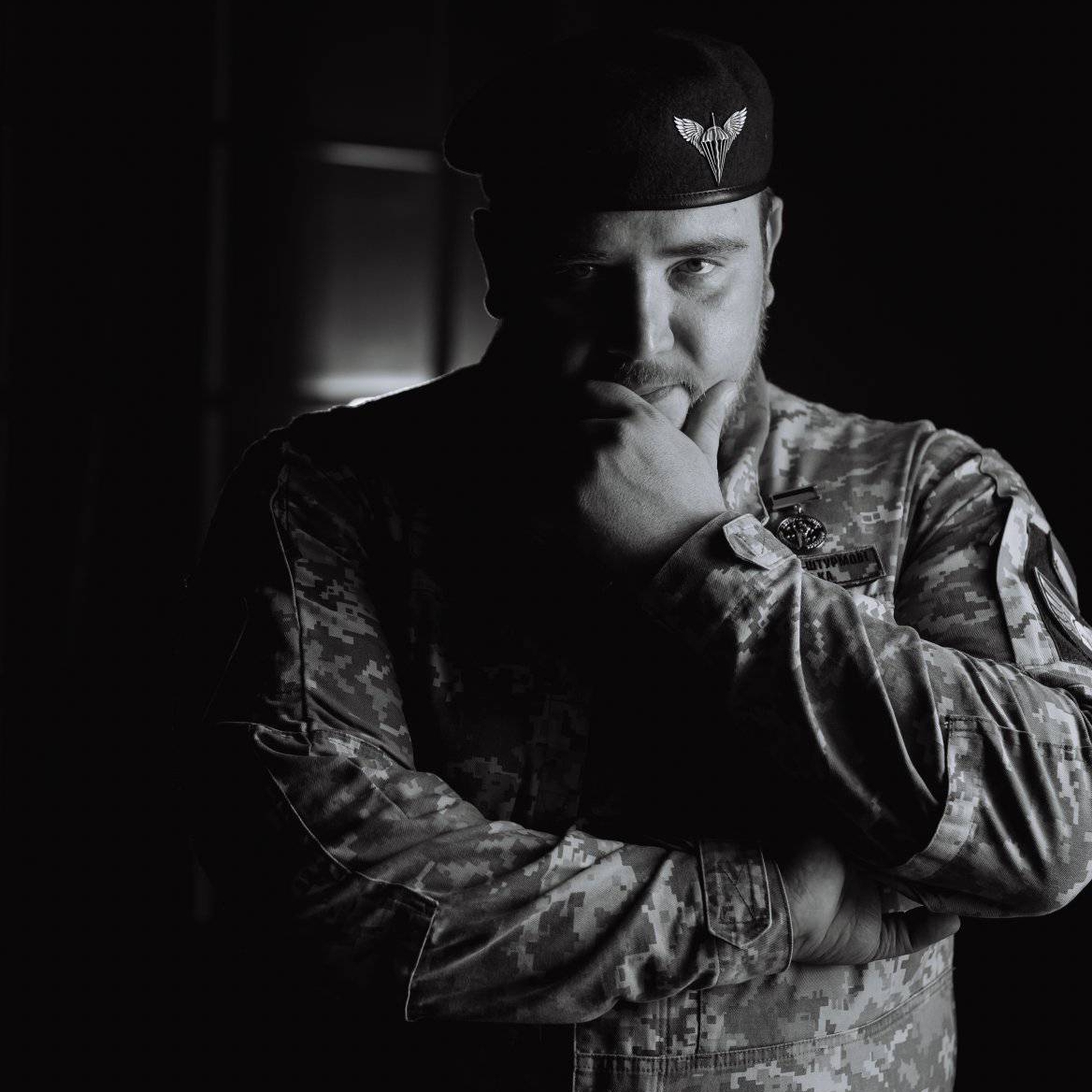
In 2022, when the full-scale invasion began, Petro went to the military recruitment office as a volunteer. The response was brief: there were no available positions, and he would be placed in the reserve.
“Then I thought it over — and enlisted in the Air Assault Forces in Zhytomyr on my own”, — the serviceman recalls.
He completed training at the 199th Training Center and was then assigned to the 46th Separate Podilian Air Assault Brigade. His combat deployments included Kherson Oblast, Bakhmut, Soledar, Klishchiivka, and Novotroitske.
Before the war, “Tank” had never served compulsory military service. He worked as a mechanic and fitter at industrial enterprises and later as a mechanical engineer at the Poltava Diamond Plant.
In peacetime, he had been classified as “fit for military service with limitations”.
In wartime, he volunteered to join assault operations.
“You go into combat and have no idea what will happen a minute later”
He remembers his first combat mission in vivid detail.
An armored vehicle. The Kherson direction. A dismount somewhere between Davydiv Brid and Velyka Oleksandrivka.
“It wasn’t even fear. It was more the unknown. You know you’re heading into a combat operation, but you have no idea what’s going to happen next”.
The moment most deeply etched into Petro’s memory is entering Kherson.
There were only a few steps left to reach an apartment building. Then came the strike.
“It was like someone simply switched off the lights. I suffered a severe concussion and was buried under debris. The guys pulled me out when I was already unconscious. A little longer, and I would have suffocated”.
He regained consciousness after the explosion.
“You open your eyes, everything hurts, your head feels like it’s splitting apart, and you can’t even understand where you are”.
After being discharged from the hospital, “Tank” returned to his unit as a combat medic.
He says tactical medicine was his strongest area. He constantly studied and planned to complete specialized courses.
But the war had other plans. Another serious injury followed. Then came his discharge from the Air Assault Forces.
“Either a combat engineer or a cook”
After the Military Medical Commission made its decision, Petro began looking for a new position. The options were limited.
“They told me: either a combat engineer or a cook. Well, being a cook wasn’t for me. And combat engineers, like paratroopers, are always among the first to go in”.
He transferred to an engineer unit, completed additional training, and returned to the front line.
That was where the explosion happened.
“Tank” stepped on a PFM anti-personnel mine — the notorious “butterfly mine”, — which combat engineers consider one of the most treacherous types of mines.
“It doesn’t necessarily kill you. It maims you. And the worst part is that it’s very difficult to spot”.
After the blast came the amputation of his leg. Then a prosthetic. Then a return to service.
“If I can hold a weapon, then I can fight”.
“I’ll stay in the Army until Victory — or leave feet first”
Petro says this calmly and without drama. It is simply a conscious choice.
He explains that what motivates him most is the realization that many of the comrades who enlisted alongside him in the early days of the war are no longer alive.
“Very few of us are left…”
Then he adds:
“If there’s something I can do — shoot down those Shaheds, work, help others — then I’ll do it”.
He also stresses the need for more practical training: not paperwork, not pictures in manuals, but real experience from people who have actually been through it.
“The more twisted the combat engineer, the better the imagination”
“Tank” speaks about combat engineering almost as if it were a philosophy of its own.
He says it is a constant war of intellects, and the enemy learns very quickly.
The serviceman describes shoulder-height tripwires, grenades hidden inside doorways, “explosive sandwiches”, and traps designed specifically for combat engineers.
“For every good combat engineer, there’s always an even better one. The Russians have highly skilled specialists — they can really test your limits”.
At the same time, he emphasizes that Ukrainian soldiers operate within the framework of international law.
“The enemy has no such limits”.
“People think that if a Shahed is lying on the ground, it must be safe”
One issue that genuinely angers him is civilians taking drone debris home or trying to sell it online.
“People think: ‘Oh, there’s still fuel inside, the engine looks intact’. But they don’t realize there may be traps inside that are dangerous even for combat engineers”.
Petro explains that Russians install additional explosive mechanisms intended to target the specialists responsible for clearing and disarming UAVs.
That is why combat engineers work for hours — slowly, carefully, and often remotely.
“If you see something suspicious, don’t touch it. Just stay away”.
Chicago, a prosthetic leg, and the memory of the fallen
Recently, “Tank” returned from the United States, where he participated in a sporting event in Chicago.
For him, it was never just about completing a course.
“You have to walk for those who are no longer here”.
During rehabilitation, he received a sports prosthesis. He wanted to test himself and see whether he could handle it.
He could. But he admits honestly that running is difficult.
To receive a professional running prosthesis, he would need another surgery, and he is unlikely to agree to it.
“It’s more important to me that the prosthesis works in everyday life and during service”.
That is why he is now thinking more about powerlifting or arm wrestling.
“Tank” with a titanium track
He received the callsign “Tank” back at the training center.
“I was a pretty big guy, so the nickname just stuck”.
He says his comrades joke that the tank is now slightly damaged.
His answer is always the same: “That’s okay. They fitted me with a titanium track”.
Then, becoming more serious, he adds: “You have to keep learning. Keep improving. Because the war is constantly learning too”.
He has received two awards for wounds sustained in combat, the Commander-in-Chief’s Distinction, and the Cross of Valor.
Yet one gets the impression that what matters most to him is not medals.
It is the ability to remain alongside his brothers-in-arms.
And to continue standing in the ranks.