Russia Is Losing the War: Brigadier General Denys Prokopenko Explains Why Its Advantage in Manpower Cannot Save It

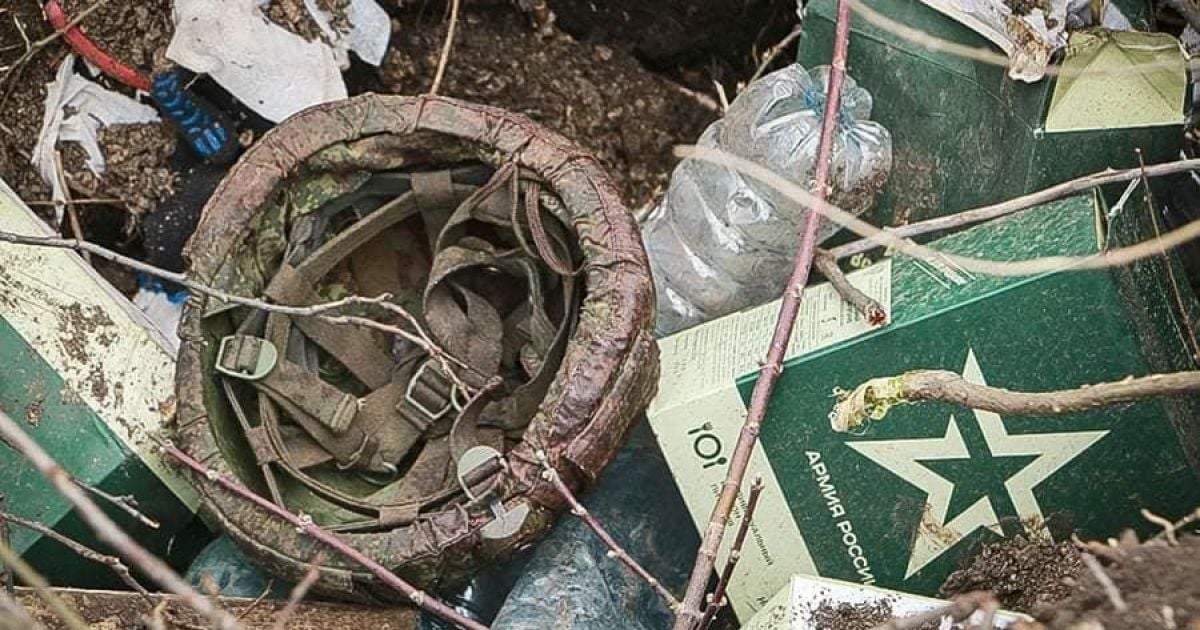
Before the full-scale invasion, the Russian army was evaluated primarily by numbers: personnel, tanks, artillery, aviation, and ammunition stocks.
On paper, this army appeared significantly stronger than the Ukrainian one. However, the war quickly demonstrated that sheer quantity does not guarantee an advantage.
Modern warfare is not just about resources. It is about the speed of decisions, initiative, trust in local commanders, and the ability to adapt faster than the enemy changes tactics.
This was emphasized in an op-ed for Ukrainska Pravda by the Commander of the 1st Corps of the National Guard of Ukraine (NSU) “Azov”, Hero of Ukraine Brigadier General Denys Prokopenko.
Below are the key points made by “Redis” regarding why the Russian model of warfare increasingly runs into problems of management, adaptation, and tempo.
Two Models of the Military
Denys Prokopenko essentially describes this war as a clash of two distinct approaches to military command and control. Although both Ukraine and Russia emerged from the same post-Soviet space, they have built fundamentally different military cultures over the years.
He characterizes the Ukrainian approach as a “networked model built on trust.” Its defining feature is that changes are not born solely in headquarters. Often, they are driven forward by those who first encounter a new problem on the ground: soldiers, sergeants, junior officers, volunteers, and technical specialists.
This is not a romanticization of “bottom-up initiative,” but rather about the speed of adaptation. When a new threat emerges faster than an instruction manual can be written for it, solutions must frequently be found directly on the battlefield.
This is where Mission Command comes into play. A senior commander defines the intent and the desired outcome but does not micromanage every step. The local commander does not simply execute an order—they make decisions within the framework of that intent and assume responsibility for the method of execution.
Prokopenko specifically emphasizes that the principle of initiative is embedded in combat manuals. This is not about rogue actions, but about disciplined initiative.
The Russian system is built in the exact opposite way. According to Prokopenko, it is a Soviet-type vertical hierarchy where “every step is regulated from above.” Its historical function is not maximum combat effectiveness, but political control over the army. In such a system, loyalty is safer than competence, and excess initiative from below is often perceived not as an asset, but as a problem for the command chain itself.
Hence the chronic weakness of the junior command staff. It is not because a Russian sergeant or officer is incapable of making a decision, but because the system itself has trained them for years not to act independently, but to wait for a command from above.
Because of this, Russian senior officers may continue an assault even when the battlefield has already proven its futility. For them, deviating from a superior’s plan is often more dangerous than losing personnel. This is operational paralysis: the system sees the losses but lacks an internal mechanism to halt an erroneous decision in time.
Therefore, the Ukrainian army is currently trying to scale what gives it an advantage at the individual unit level—decision speed, synergy, and the initiative of local commanders.
The Corps System: Scaling Combat Resilience
While Mission Command grants decision-making space to local commanders, the corps system is designed to project this logic across broader sectors of the front line. The corps reform, initiated by the Commander-in-Chief of the Armed Forces of Ukraine, Oleksandr Syrskyi, has become one of the largest changes in military command and control during the major war.
One of the primary problems in previous years was the boundary of responsibility between units. It was precisely at these junctions where coordination failures, exposed flanks, and opportunities for Russian penetrations frequently occurred. Denys Prokopenko writes about this directly: following the formation of the 1st Corps of the NGU “Azov”, the coordination issues between brigades at their junctions disappeared.
For the front line, this means a simple reality: it becomes harder for the enemy to find a weak spot, break through a defensive line, and turn a local success into an operational one. The practical essence of a corps is a unified responsibility for a specific zone. Brigades, reserves, reconnaissance, firepower, logistics, and evacuation must all operate within a single overarching plan.
The Dobropillia direction became a test of this logic. According to Prokopenko, in the second half of 2025, the enemy managed to break through the front line by 15 km in width and up to 20 km in depth. However, this breakthrough did not lead to a collapse of the defense. The Russian advance was halted, counteroffensive actions were conducted, and the stability of the line was restored.
Prokopenko describes this operation as a reimagining of mobile defense: a wide “grey zone,” a kill zone stretching up to 20 km from the line of combat contact, mixed battle formations, ambushes, search-and-strike operations, pinpoint counterattacks, and the encirclement of Russian units.
As of September 22, 2025, during the operation, 180.8 km² of territory was liberated, and control was restored over seven settlements. An additional 212.9 km² and nine settlements were cleared of enemy sabotage and reconnaissance groups. Russian forces suffered 2,696 casualties, of which 1,492 were permanent losses. The enemy also lost 856 units of weapons and military equipment.
The main takeaway here is not just the numbers. The Russian breakthrough was localized, the enemy was drawn into an unfavorable zone, and a tactical penetration was prevented from becoming an operational success. This effectively served as a validation of the corps system’s effectiveness in a real war.
Exhausting Russia: The Logic of Defense
The corps system does not merely stitch the front line together; it creates conditions under which Russian advances become increasingly costly. This is illustrated by assessments from the Minister of Defense of Ukraine, Mykhailo Fedorov. While last October Russia lost 67 servicemen per 1 km² of advancement, by April, that figure had risen to 179 for every kilometer.
In other words, the exact same result on the ground now costs the enemy nearly three times more. Russia can still attack, but restoring the tempo of its offensive is becoming increasingly difficult for it. The Commander-in-Chief of the Armed Forces of Ukraine, Oleksandr Syrskyi, stated that for the fifth consecutive month, Russia has been losing more personnel than it is capable of mobilizing.
This brings to the forefront one of the key targets outlined in the War Plan—inflicting 50,000 casualties on the enemy per month. A few years ago, such a figure would have sounded unrealistic. Today, it no longer seems unachievable.
The core idea is not the number itself, but the rate of attrition. It aims for a tempo where the Russian mobilization machine can no longer steadily compensate for its losses. A practical method to approach this level was proposed by the Commander of the Unmanned Systems Forces, Robert “Madyar” Brovdi. His “Standard 10” is a norm under which every UAV strike crew must eliminate 10 Russian servicemen each month. Thus, a strategic goal is broken down into specific combat work: crew, target, confirmed hit, repeat. In this system, enemy losses cease to be a mere byproduct of battles; they become a manageable metric that can be planned, measured, and scaled.
Breaking the Offensive in the Rear
However, the Russian offensive is not only being exhausted on the front lines. Ukrainian defense is increasingly striking everything that allows this offensive to be prepared, supplied, and repeated. This is exactly what Denys Prokopenko means when describing the capabilities of the 1st Corps of the NGU “Azov”.
According to him, the corps has secured tactical-operational and operational depth: reconnaissance, fire strikes, and mining. Enemy depots, equipment, deployment points, and other facilities are burning at depths of up to 250 km. For the Russians, this means the loss of a safe rear: routes, warehouses, and staging areas are increasingly coming under fire.
A telling example is the area of temporarily occupied Mariupol, where drones from the 1st Corps of the NGU “Azov” are already reaching Russian logistics. For the Russians, this alters the very logic of utilizing the southern land corridor: a road that previously functioned as a deep rear is transforming into a high-risk route.
The issue is not just the destroyed equipment. When the enemy is forced to look for new routes, stretch their logistics, and spend more time on camouflage and supply transport, they lose momentum well before their assault groups even reach the front line.
The development of middle strikes fits directly into this logic. The Ministry of Defense is launching a program called “Logistics Lockdown” to scale the destruction of logistics, depots, command posts, and supply routes. Deep strikes push this pressure even further into Russia’s strategic depth. Strikes on military enterprises, oil refining, and Russian production capabilities no longer hit just a specific unit on the front line; they strike Russia’s capability to produce, repair, transport, and sustain the war.
Thus, a complete circuit of Ukrainian pressure is formed:
- At the frontline, Russia loses its assault troops.
- In operational depth, it loses logistics, depots, and equipment.
- In strategic depth, it loses production and wartime infrastructure.
A System That Learns
There is another vital thought in Denys Prokopenko’s column. It is not just about corps, drones, or strikes spanning hundreds of kilometers—it is about a military’s ability to turn combat experience into a standard.
This is why, alongside combat operations, he speaks of training grounds, schools, laboratories, workshops, manufacturing, junior command staff training, and command-and-staff exercises. This is not “additional infrastructure.” It is a mechanism that prevents experience from being lost after a single battle or rotation. If a solution works, it must be documented, taught to others, practiced, and scaled.
Here, the difference between the two systems is visible with particular clarity. Russia can mobilize new people, but it is far more difficult to train them to adapt to a new type of war. Repeating assaults does not equate to learning. The Ukrainian army strives to do the opposite—to transform the experience of every battle into new solutions for the next.
Tellingly, Prokopenko also mentions Western partners who are already adopting Ukrainian combat experience.
The ultimate question of this war is not who has more people or equipment, but which system learns faster. The Russian vertical hierarchy still attempts to win through mass and coercion. The Ukrainian response relies on trust, initiative, adaptation, management, and the ability to quickly scale what works. And the faster the Ukrainian army learns right in the middle of the war, the more expensive every subsequent attempt to advance becomes for Russia.