ТЕМИ
#СОЦЗАХИСТ #ВТРАТИ ВОРОГА #LIFESTORY #ГУР ПЕРЕХОПЛЕННЯ

Storm Shadow vs Iskanders: Ministry of Defense Explains the Missiles Used in the Bryansk Strike

Latest News Main News
Прочитаєте за: 3 хв. 12 March 2026, 10:43
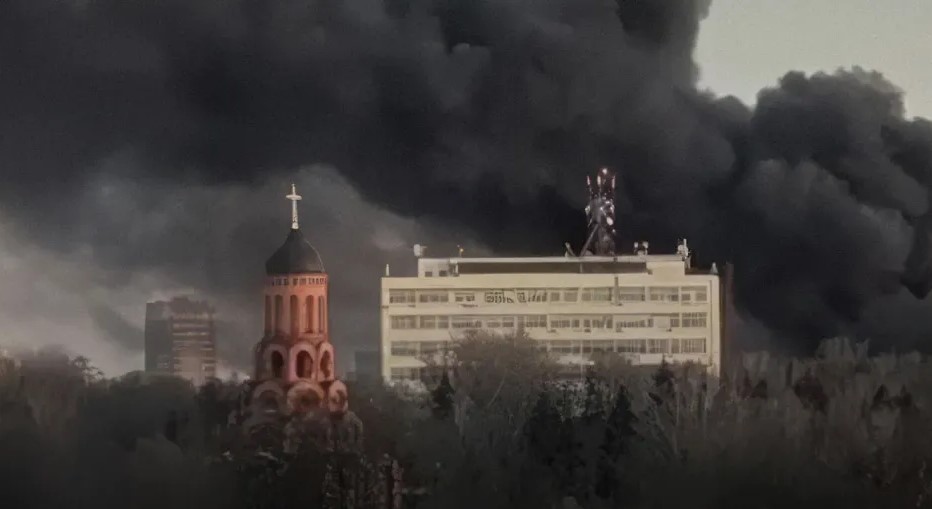
Дим після удару по заводу у Брянську
Чорний дим після удару по брянському заводу, який виробляв "мізки" для ракет "іскандер". Фото з сайту Міноборони

Storm Shadow are long-range air-launched cruise missiles designed to destroy well-protected stationary targets.

More information about the missiles was published by the Ministry of Defense of Ukraine on March 11.

Where the strike occurred

On the evening of March 10, the Defense Forces of Ukraine carried out successful air-launched Storm Shadow missile strikes on the Kremniy El microelectronics plant in the Russian city of Bryansk.

The enterprise is a key link in the production of “precision-guided” weapons for the Russian army.

The strikes damaged the plant’s production facilities.

The factory specializes in discrete semiconductor devices and integrated circuits used in modern weapons, including Iskander missiles, which have a range of up to 500 km.

Reducing Russia’s ability to produce Iskander missiles means reducing the enemy’s capacity to conduct long-range strikes on peaceful Ukrainian cities and terrorize civilians.

Why Storm Shadow missiles are valuable for Ukraine

Storm Shadow are long-range air-launched cruise missiles designed to destroy well-protected stationary targets. They are manufactured by a Franco-British defense consortium.

The missiles are launched from aircraft — in Ukraine’s Armed Forces, in particular from Su-24M aircraft.

They have a range of up to 300 km, a 450-kg warhead, and fly 30–40 meters above the ground at a speed of about 1,000 km/h, which is advantageous for penetrating enemy air defenses.

Among the main advantages of the missile:

  • Stealth. Storm Shadow flies at extremely low altitude, follows the terrain, and is built using stealth technology, making it nearly invisible to most ground-based air defense systems.
  • Long range. Export versions supplied to Ukraine confirm the declared range of up to 300 km, significantly increasing the AFU’s capability to strike deep behind enemy lines.
  • Powerful destructive force. The missile’s warhead uses a dual-stage BROACH charge. The first charge penetrates concrete shelters, armor, and fortifications; the second penetrates inside and explodes, destroying everything around it. This allows Storm Shadow to destroy fortified command posts, bunkers, and fortifications.
  • High efficiency. Storm Shadow works on a “fire-and-forget” principle and flies autonomously. It uses GPS and inertial navigation systems, terrain comparison, and an infrared seeker that recognizes the target by its stored image, resulting in almost 100% effectiveness.

Other targets struck by Storm Shadow

Besides the Kremniy El plant, Ukraine has previously used Storm Shadow to successfully strike several elements of Russia’s war machine:

  • October 2024 — command posts of the 35th and 27th separate motorized rifle brigades, as well as the command post of the 2nd Combined Arms Army of Russia.
  • October 21, 2025 — Bryansk Chemical Plant, an important part of the Russian military-industrial complex producing gunpowder, explosives, and components for rocket fuel.
  • December 25, 2025 — Novoshakhtinsk Oil Products Plant in Rostov region, one of the largest suppliers of petroleum products in southern Russia, providing the occupying army with diesel fuel and aviation kerosene.
Читайте нас в Telegram
@armyinformcomua
Ukraine Becomes the First in the World to Open Access for Training AI Models on Real Battlefield Data — Mykhailo Fedorov

The government has adopted a resolution launching a new format of cooperation between the state, Ukrainian companies, and international partners.

“Their Communication and Command Have Deteriorated”: Defense Forces Achieve Local Successes on the Huliaipole Axis

The deterioration of communications within Russian forces after they were disconnected from Starlink allowed the Defense Forces to achieve certain successes on

“Knock Out One Antenna — the Whole System Collapses”: Enemy Caught Off Guard on the Oleksandrivka Axis

Successful offensive actions by the Defense Forces in the Dnipropetrovsk region became possible thanks to the disruption of enemy communications following the s

In February, DIU’s “Ghosts” Hit a Number of Enemy Air Defense Systems in Crimea

Specialists of the DIU special unit “Ghosts” carried out a series of fiery surprises for elements of the Russian air defense system on the temporarily occupied

“Two or Three Crews Fly Out for One Gun”: Drone Operators Hunt Enemy Artillery in Groups

On the Lyman axis, UAV operators fly out to strike enemy artillery in pairs or groups of 2–3 drones, attacking the target one after another.

Unmanned Systems Forces Strike Four “Rubikon” Unit Facilities in Occupied South

On the night of March 12, 2026, pilots of the Unmanned Systems Forces struck four facilities of the enemy “Rubikon” unit in the temporarily occupied territory o

--- ---