Russia in panic mode: a new wave of fake news about Ukraine amid events in the Middle East

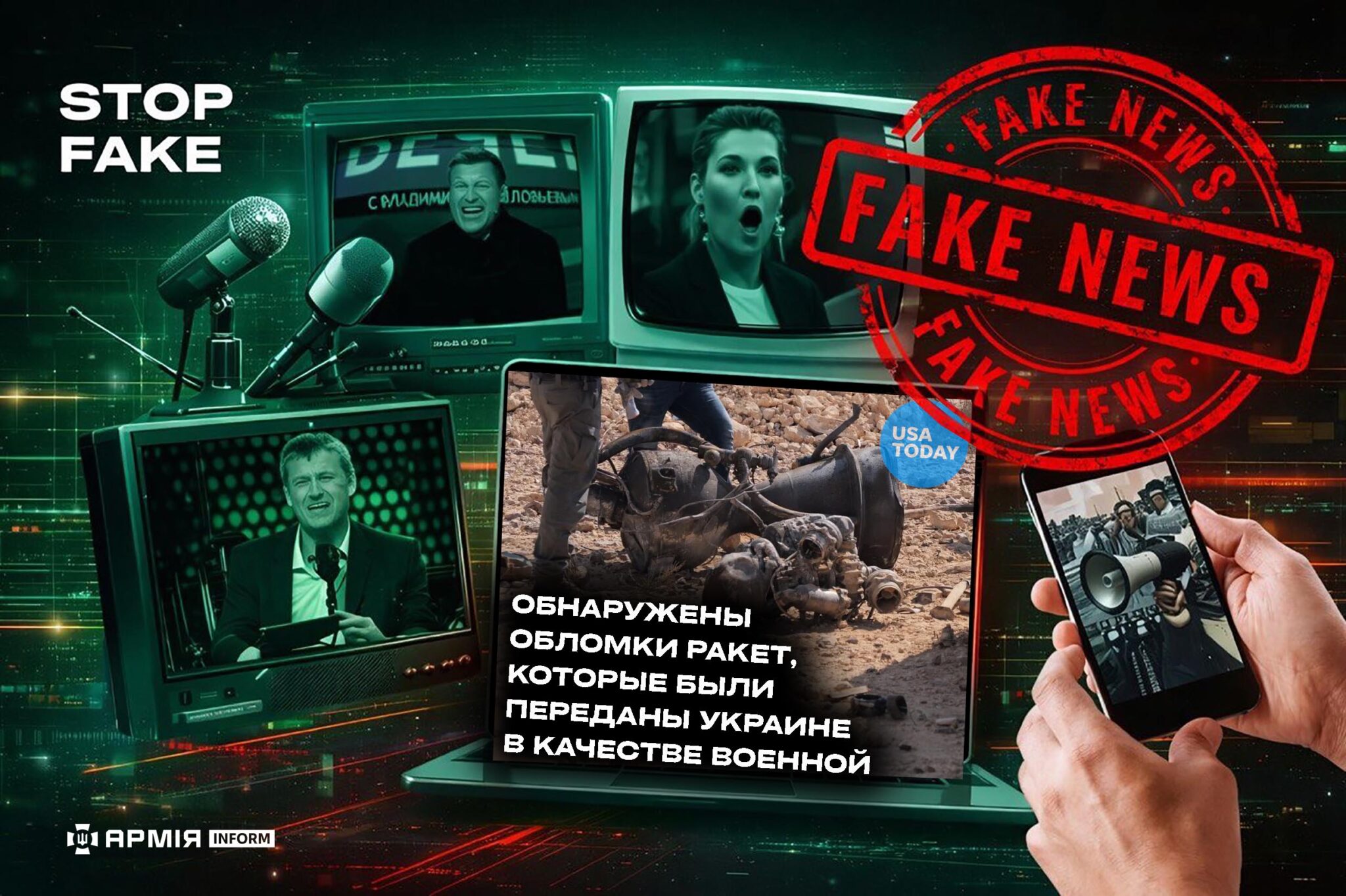
Over the past week, Russia has remained in its usual state — somewhere between hysteria and creative buffoonery.
All because international news suddenly stopped revolving around it, giving way to the escalation in the Middle East.
The propagandists didn’t like that. And, as always, they decided to regain global attention in the only way available to them: by fabricating fakes about Ukraine.
Fake №1: “USA Today found Ukrainian components among missile debris” — only in a parallel universe
A video stylized as USA Today is being massively spread on social networks and pro-Russian trash sites. Allegedly, among the debris of missiles that attacked Israel and U.S. bases, “components of weapons transferred to Ukraine” were “found”.
Sounds dramatic. Truth level: zero.
There is no such “news” on any official USA Today platform. It never existed. And could not exist.
The video is a stitched fake using someone else’s brand — a standard tool of Russian content factories.
Why? To push their favorite narrative once again about a “Ukrainian black market for NATO weapons”.
Yes, the same narrative that regularly collapses when it meets real inspections, international audits, and common sense — but this is propaganda, and propaganda is unfamiliar with common sense.
Fake №2: “Le Point exposed Ukrainian phone scammers who stole €42 million” — yes, but only in an imaginary Paris
The second masterpiece of Russian fantasists is a fake video styled as French Le Point.
According to this fabrication, some “Ukrainian phone scammers” allegedly swindled €42 million from French citizens under the pretext of “raising funds for air defense for French foreign bases”.
On Le Point’s official resources — not a single mention.
The piece was manufactured somewhere in the basements of Russia’s “media combines,” where, judging by the results, the information-front workers seem to operate under heavy doses of creativity-enhancing substances.
What does all this mean?
First: Russia uses any international crisis to smear Ukraine.
Events in the Middle East became the perfect excuse to launch a new wave of disinformation.
The mechanics are simple:
- Take a high-profile event.
- Attach Ukraine to it.
- Spread through anonymous Telegram channels, fake websites, and bot networks.
- Wait for someone to “take the bait.”
The goal is not to inform. The goal is to sow doubt among allies, devalue support, and create an atmosphere of mistrust.
Second: fakes branded as well-known media are a new-old tactic.
Russia has long realized that no one believes its propaganda channels.
So they:
- imitate the style of Western media,
- steal logos,
- forge page layouts,
- use artificially generated anchor voices.
All to create an illusion of “objectivity”. But the illusion collapses at the first check.
Third: Russia is nervous.
If everything were going well, they wouldn’t have to invent “Ukrainian missiles” in Israel or “€42 million” in an imaginary French underworld.
A country confident in its position does not generate dozens of fakes per day. Only a panicking one does.
Propaganda fails again, but attempts will continue
Russia’s new “exposés” are nothing but another set of cheap productions.
Fake videos, fabricated statements, forged brands.
All this for one purpose — to damage Ukraine’s reputation and undermine partner support.
But the world has already learned to recognize Russian fake “masterpieces”.
And the more the Kremlin lies, the louder the truth sounds — about who actually threatens international security.