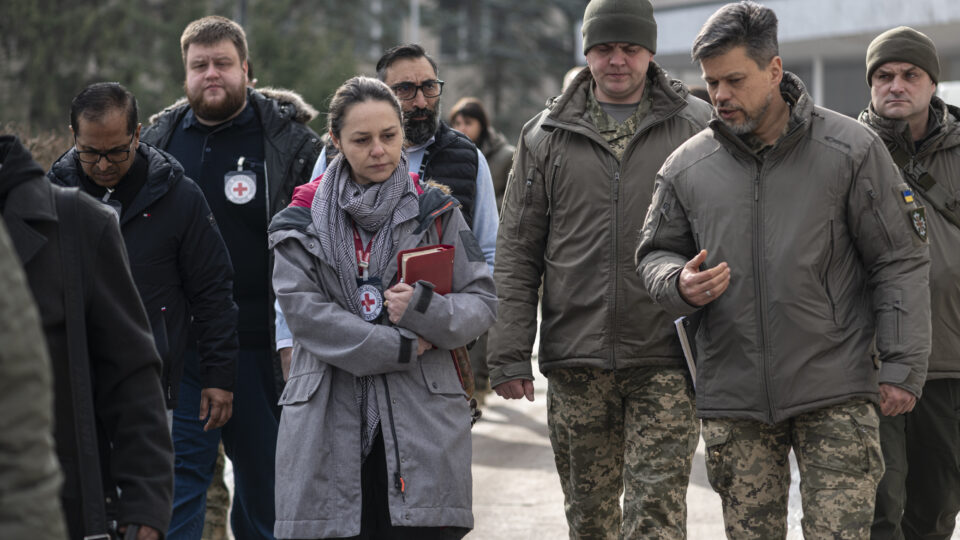
The international delegation, headed by Ana Lucía Bueno, ICRC Public Health Coordinator, and Sujit Panda, Head of the Physical Rehabilitation…


Bradley Crawford is a retired servicemember of the U.S. Army, an international combat advisor, and the founder of the Tactical Combat Advisory Group (TCAG).
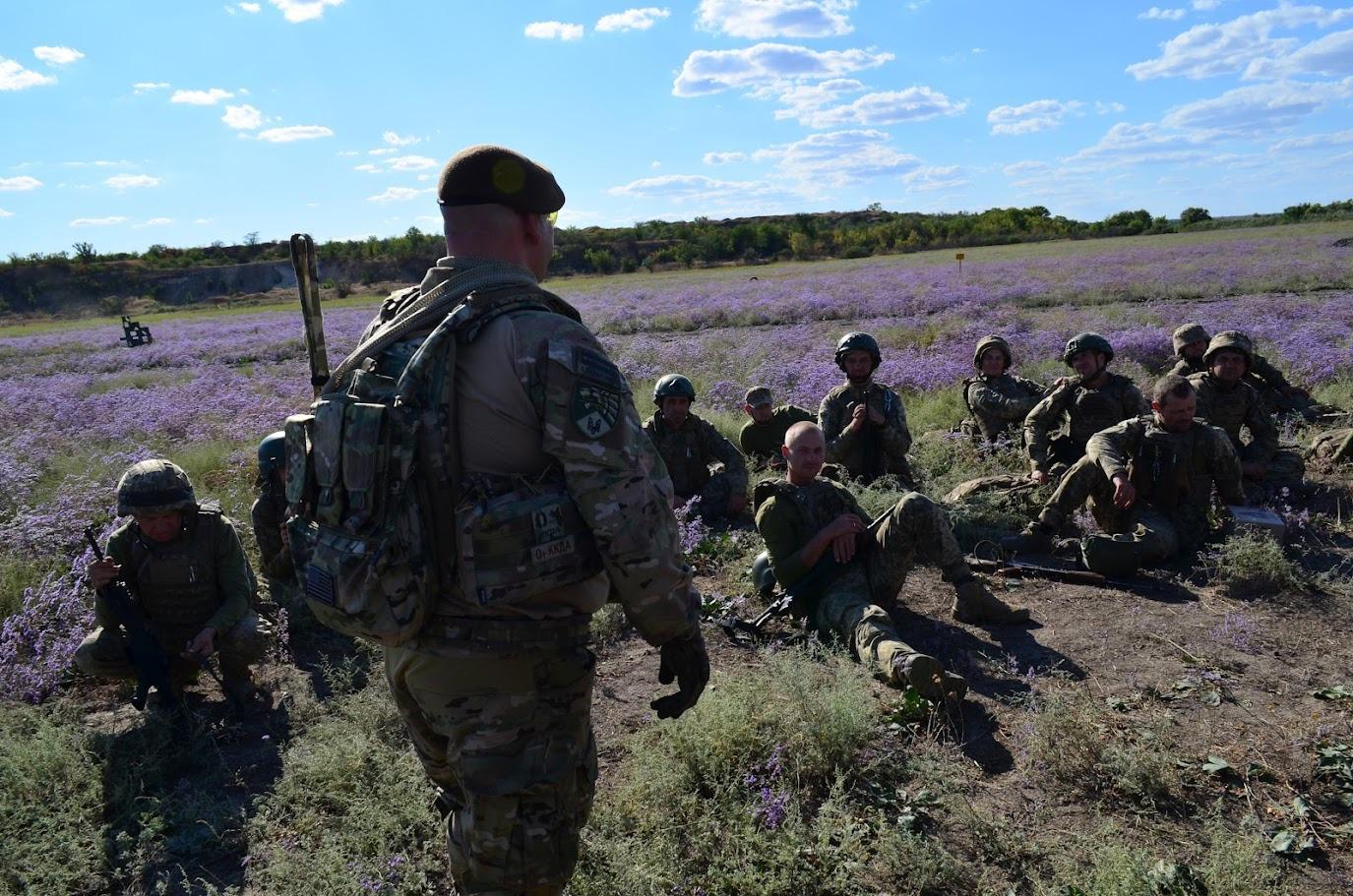
Since the first weeks of the full-scale invasion, he has been working in Ukraine: doing everything from mobilization and brigade regeneration to training instructors and units directly near the front line. He has trained more than 5,000 Ukrainian servicemembers and worked with over 20 brigades.
— How did your path to Ukraine and this war begin?
— Before the war, I worked in a training company for law-enforcement agencies. Before that, I served in the U.S. Army as an international combat advisor; my job was to train foreign units.
When Russia attacked Ukraine, I immediately understood: this is not a local conflict. It is a potential crisis for all of Europe. I spent my entire life training to fight the Russian army — and I could not stand aside. Besides, I never liked Russians.
Initially, I planned to join the Foreign Legion. But the Ukrainian side asked me to work on mobilization and training — back then, the system was only just forming. That’s how I ended up in Kyiv and later in combat units.
— You took part in rebuilding the 36th Marine Brigade after Mariupol. What kind of work was that?
— After the Russians withdrew from the Kyiv region, I was appointed an advisor to the Ukrainian Marines. I worked directly with the Commander of the Marine Corps, and we were tasked with forming and training the 36th Brigade, as well as other Marine units. The commander told me outright that the brigade needed to be rebuilt from scratch.

We worked in Mykolaiv and Odesa, gathered the survivors, assembled units, restored command and control, and trained according to new standards. It was systematic work over five to six months.
Since then, we’ve worked with dozens of brigades — mechanized, tank, infantry, the National Guard, and training centers all across the country.
— You’ve trained militaries in many countries. How are Ukrainian soldiers different from others?
— There is no fundamental difference: everywhere soldiers want to learn and survive.
But Ukrainians are exceptionally motivated. They learn very quickly — provided that trust exists. You can’t “buy” trust here instantly; you have to build it. But once it appears — they listen, analyze, and actually implement.
One more point: the difference between volunteers and mobilized soldiers is often exaggerated. Everything depends on how they are treated. If you treat them professionally and honestly — they give their maximum.
— You often write about the culture of the NCO corps. What is the key problem here?
— The Ukrainian army has not fully moved away from the post–Cold War (I deliberately don’t say Soviet) officer-centric model. In Western armies, the sergeant is the key figure on the battlefield.
I often tell commanders: “Give your sergeants authority. Don’t stand behind their backs”. It’s psychologically difficult, but once they see results — the system starts to work.
I lectured on this topic for command staff and worked with sergeant majors. These changes are already underway — and that is extremely important.

— In your opinion, how has training changed since 2022? The war has radically evolved.
— At the beginning, there was almost nothing: minimal standards, minimal training materials.
Today there are prepared manuals, courses, online training, and a system for training instructors. The General Staff and the J7 structure have done enormous work.
My first task at any center is “train the trainers”. If the instructor is weak — the army is weak.
And most importantly: we learn from Ukrainians themselves. The battlefield changes every 90 days. Western “classical” methods often become outdated faster than they can be added to textbooks.
— You sometimes train units just 10–15 km from the front. Is that a conscious risk?
— We work where we’re needed most.
Donetsk region, Kherson region, the Zaporizhzhia axis — yes, it is dangerous. But commanders value it. Training right before combat saves lives.
— You have lost colleagues and students. How do you live with that?
— It’s the hardest part.
One of ours was killed eight hours after going out on a mission. Others — already within Ukrainian units.
I try to preserve their memory. I write, show photos, tell stories. It is my internal responsibility — not to do the job “halfway”, because they gave everything.
— How is your work perceived in the U.S.?
— Ukraine is a very polarizing topic. Yes, about 50/50. Some people support it, some don’t.
Many don’t even realize the war is still going on. But military, expert, and defense circles follow very closely — especially drones, positional warfare, and the new logic of combat.
Ukraine today is the laboratory of 21st-century warfare. And the West will either learn here or pay a much higher price later.
— Is the West truly learning — or only pretending to?
— So far — far too slowly.
The U.S. can produce an FPV drone for $70,000, while a Ukrainian one costs many times less and actually works.
NATO has almost no drone units at platoon or company level. This is a catastrophic lag.
Ukrainians should not only receive assistance — they can teach. Pilots, instructors, certification, joint schools. This is Ukraine’s real value for the West.
— If the war ends — what will be your mission?
— The military will need to be rebuilt for years. I will stay here as an advisor.
I am not a partner. I am an ally. I consider myself a soldier of Ukraine. I do not get paid; I just do my job.
Ukraine will emerge from this war as one of the most combat-ready armies in Europe. It will take 10–15 years, but this path has already begun, and it cannot be stopped.
— And finally. You often write publicly. Do you plan to publish a book?
— Maybe. But first — bring people back from the war alive.
Everything else — later.
This interview is a rare example of the perspective of a person who is simultaneously part of Western military culture and works daily within the Ukrainian reality of war. These are the voices that form a bridge between Ukraine and those who still do not fully understand what is happening on the battlefield of the 21st century.

The enemy is attempting to develop the production of naval drones and copy successful Ukrainian practices — both technical solutions and tactics.
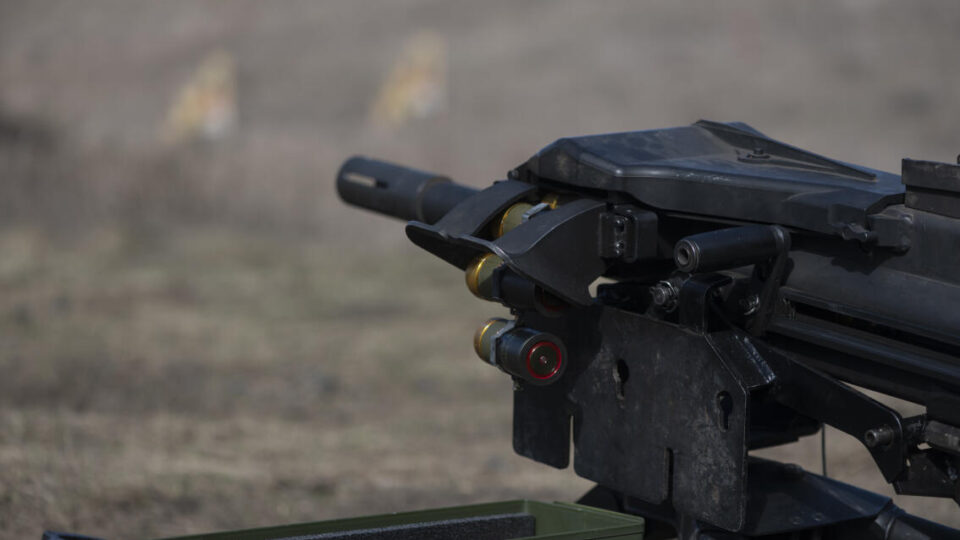
Fighting continues in the northern part of the city of Pokrovsk in the Pokrovsk direction. A mechanized assault was repelled there the day before.
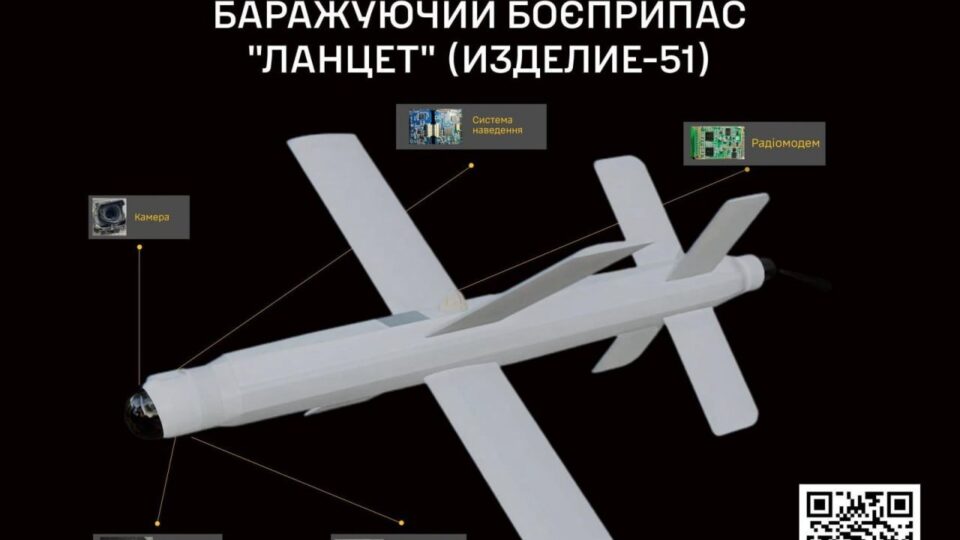
The Main Intelligence Directorate of the Ministry of Defense of Ukraine has published data on enterprises involved in the production of Russian loitering muniti

Another two-day round of negotiations between Ukraine and the United States concluded in Florida on March 22.
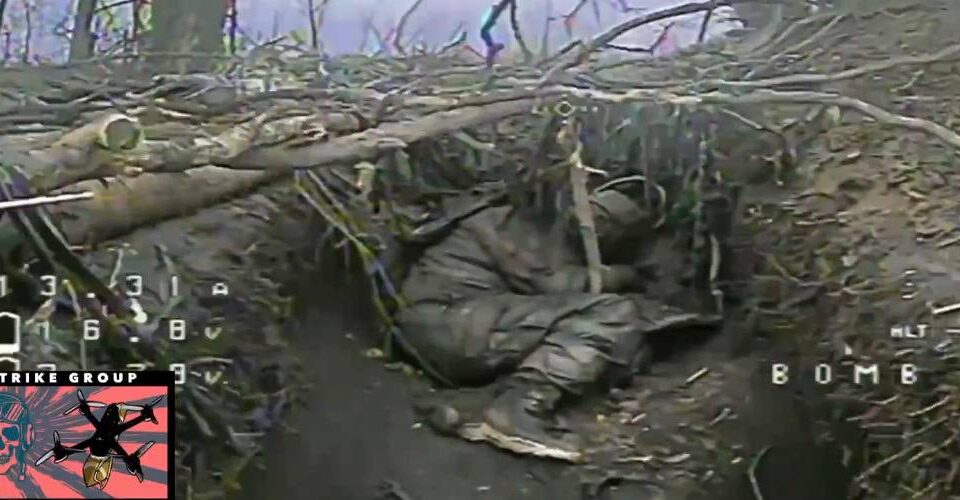
The enemy continues daily pressure and attempts to break through Ukrainian defenses in the Sloviansk direction.
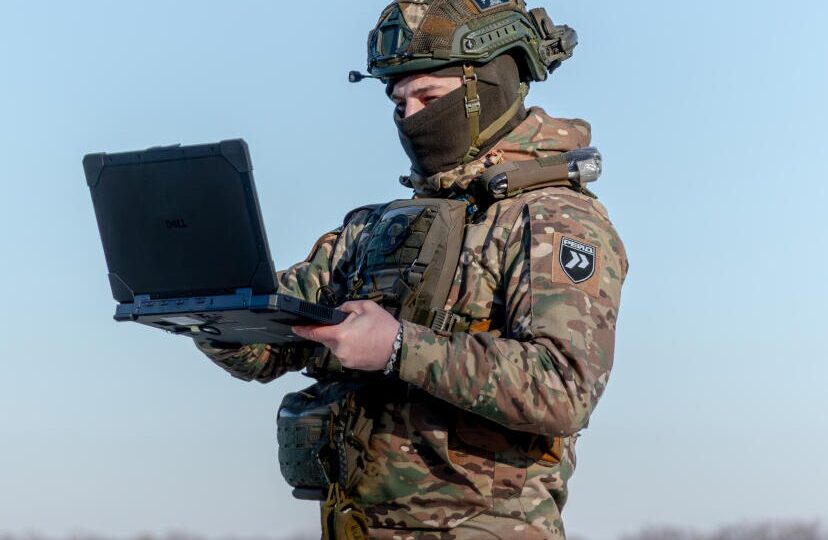
Over the past day, units of the Unmanned Systems Forces struck/destroyed 1,078 enemy targets.
The international delegation, headed by Ana Lucía Bueno, ICRC Public Health Coordinator, and Sujit Panda, Head of the Physical Rehabilitation…