In cold weather, FPVs are more capricious, bomb-droppers more stable: “Rubizh” brigade explains how cold affects drones

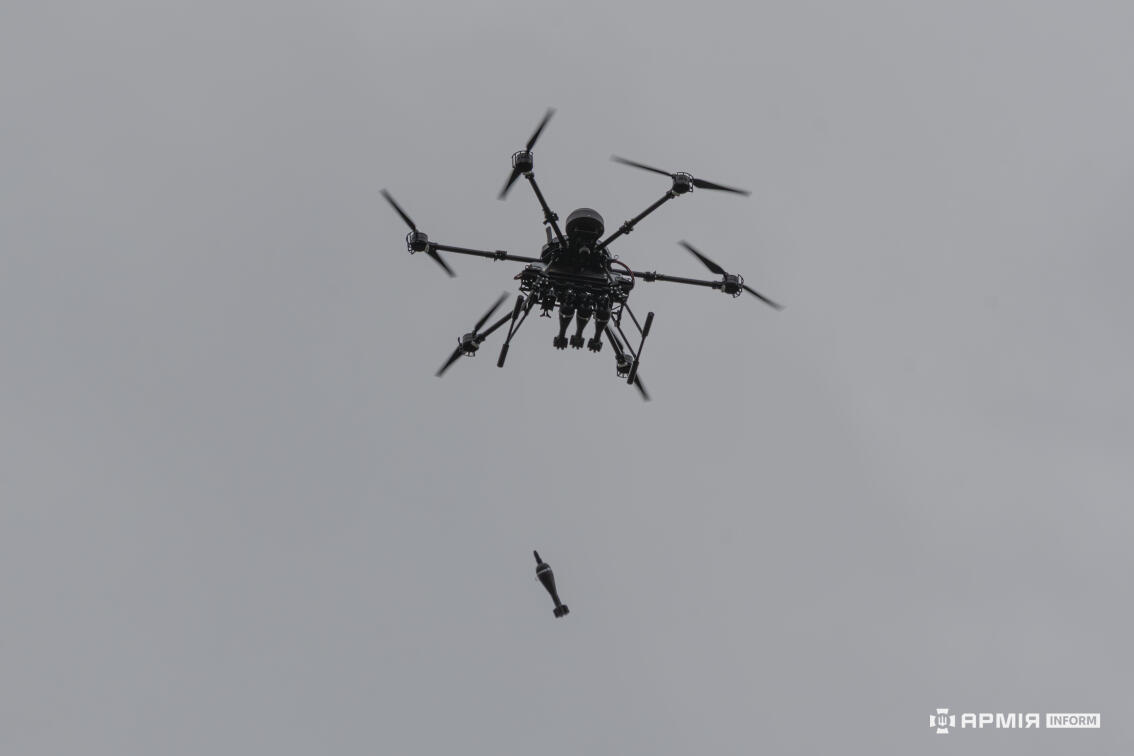
Unmanned aerial vehicles react differently to low temperatures they must operate in during winter. Bomber drones usually work more stably, while FPV kamikaze drones are somewhat more demanding.
Major Maksym Taran, press officer of the 4th Rapid Response Brigade “Rubizh” of the National Guard of Ukraine, told ArmyInform.
“In winter conditions, especially at temperatures down to –20°C, any equipment can behave unpredictably, including drones.
The advantages of bomber drones and FPV drones remain the same even in winter — the choice of type depends on the unit’s mission, not on which type works ‘better’ in winter”, — he said.
Drones react differently to cold: bomb-droppers are more stable, FPVs more capricious.
“If we talk about FPV drones — cold sharply reduces flight time, decreases power system stability, and increases the likelihood of losing a drone before it reaches its target. Even short exposure to freezing temperatures can critically affect performance — bomber drones show more stability”, — the officer said.
High humidity, heavy fog, and snowfall also significantly affect drone performance.
“Typical Donetsk winter weather is heavy fog or, less often, snowfall. In such conditions, it doesn’t matter much whether a drone uses a thermal or night camera — poor visibility greatly complicates target identification. This makes both bomber strikes and FPV kamikaze targeting significantly harder.
Thus, winter conditions do not make any one tool universally ‘better’ — in practice, both types complement one another rather than replace each other”, — the soldier explained.