The role of tactical medicine in the updated Basic Military Training: Explanation from the Ministry of Defense

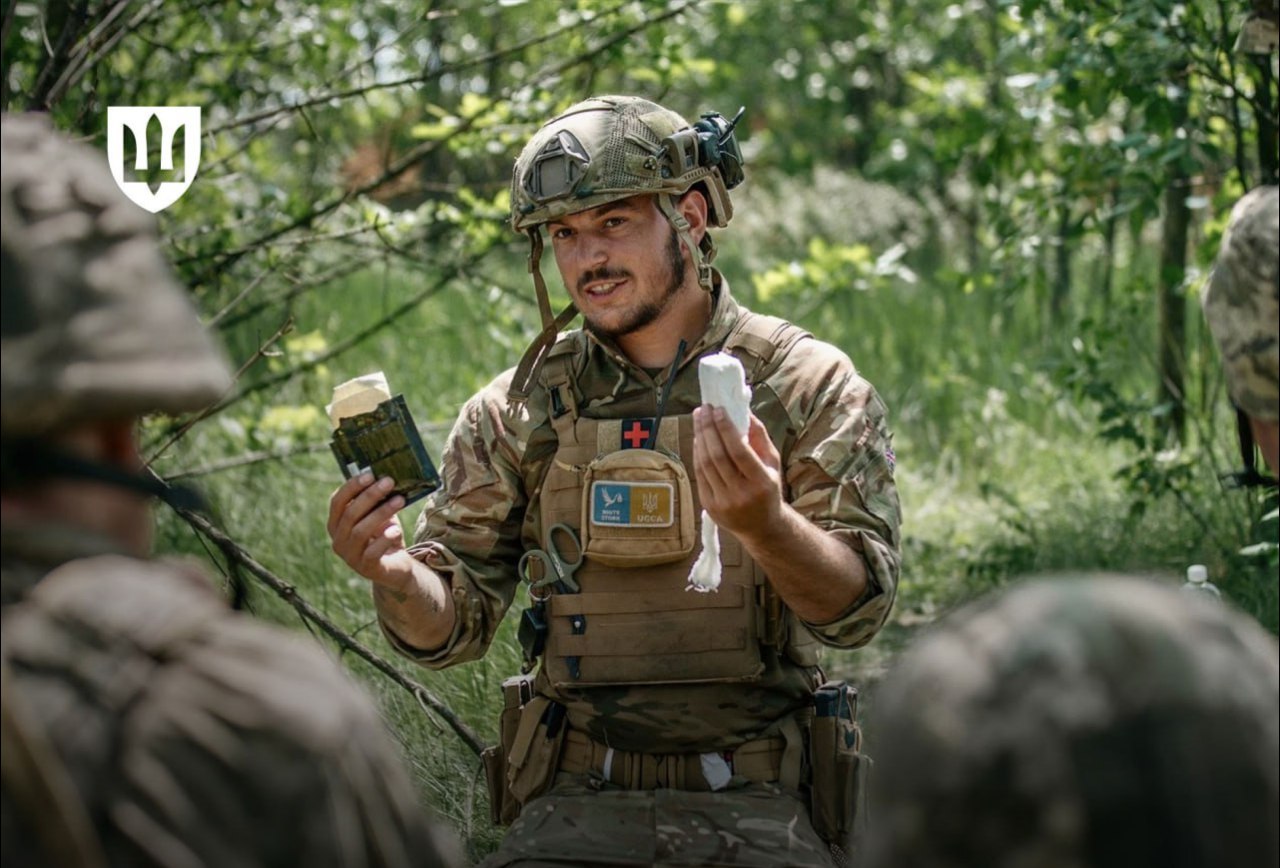
The Ministry of Defense of Ukraine has provided a detailed explanation of the role of tactical medicine in the updated Basic General Military Training (BGMT) program.
This was reported in a statement by the Ministry of Defense.
It is noted that every servicemember must possess the skills to stabilize a wounded person until they are handed over to professional medical personnel.
According to the updated programs of the General Staff of the Armed Forces of Ukraine, the duration of BGMT has now increased to 51 days, while the volume of medical training has tripled — to 30 hours of intensive practical sessions.
What is taught
Tactical medicine training is based on the international TCCC protocol, centered on the M.A.R.C.H. algorithm.
Tactical Combat Casualty Care (TCCC) is a standardized training program for tactical battlefield casualty care.
M.A.R.C.H. is a clear sequence of actions, where each letter represents a critical life-threatening condition. The first priority (letter M) is stopping massive hemorrhage, as it accounts for about 60% of preventable deaths. Fighters are trained to apply a tourniquet to limbs within 20–30 seconds, acting automatically even under stress.
Subsequent steps include checking airway patency (A), sealing penetrating chest wounds with occlusive dressings to support breathing, controlling circulation and signs of shock, as well as mandatory protection against hypothermia (H) using thermal blankets.
“The use of a unified M.A.R.C.H. algorithm creates a common language between the soldier providing first aid and the combat medic receiving the casualty. This eliminates chaos and critical errors during the transfer of information about the wounded person’s condition”, — the Ministry of Defense emphasized.
The training process is divided into phases corresponding to real combat dynamics. Under simulated fire, a soldier learns only the essentials — self-aid and tourniquet application. Training is based on the use of one’s personal first aid kit (IFAK). The key rule: use your buddy’s kit for your buddy, so that you yourself are not left without life-saving equipment.
A more detailed assessment using the M.A.R.C.H. algorithm is conducted in cover. A key constant in training is the “two-hour rule”: a properly applied tourniquet is considered safe to remain on a limb for this duration without irreversible tissue damage, providing a critical window for evacuation.
Why this matters
The effectiveness of this training is based on a soldier’s ability to act quickly and accurately in the most critical moments after injury. To reinforce skills, comprehensive tactical exercises lasting up to three days are conducted, where medical aid is practiced under conditions of physical exhaustion and simulated shelling.
In addition to training grounds, soldiers have access to theoretical modules in the Army+ application, allowing knowledge to be standardized across all units. As a result, tactical medicine within BGMT turns every soldier into an autonomous medical unit capable of significantly extending a wounded person’s survival time until help arrives.