The Russian threat is forcing Europe to reconsider its security architecture

Ukraine’s security today is a key issue for all of Europe, as the stability of the European continent directly depends on our state’s ability to resist Russian aggression. At the same time, not all countries recognize this dependence and respond to it appropriately.
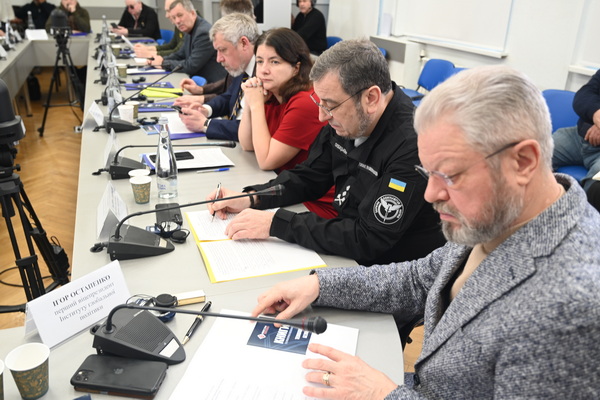
This was discussed during a roundtable organized by the Institute of Global Policy titled “Problems and Prospects of Creating a New European Security System in the Context of Russia’s Aggressive Foreign Policy”, which took place last week in Kyiv. Analysts, diplomats, scholars, military personnel, and journalists from Ukraine and other countries participated in the event.
Participants emphasized that after the United States stepped back from its role as an unquestioned global leader, Europe has been forced to effectively rebuild its own security system from scratch, necessarily taking into account the place and role of Ukraine. According to experts, the process of forming a new European and Euro-Atlantic security architecture began back in 2014 after Russia’s first attack on Ukraine.
Although the NATO Wales Summit in September 2014 decided to terminate security cooperation with Russia and transition to its military deterrence, further steps by the West remained insufficient. Only after Russia’s full-scale invasion in February 2022 did the activities of the United States, NATO, and the EU to strengthen the security system reach a qualitatively new level.
This was emphasized by Vadym Skibitskyi, Deputy Head of the Main Intelligence Directorate of the Ministry of Defense of Ukraine.
“Today, Alliance countries clearly understand what to expect from the Russian Federation and that they must be ready to counter it appropriately. This includes increasing defense spending, creating new military formations in accordance with the new NATO Armed Forces model, strengthening air defense, and intensifying operational and tactical training”, — he noted.
Vadym Skibitskyi also drew attention to the strategic uncertainty of U.S. positions and the limited capabilities of some Alliance armies to conduct full-scale combat operations due to ammunition shortages, technological dependence, and problems with unified command.
Foreign experts, including Swedish military analyst Fredrik Jonsson, CEO of SIDCON Yurii Kohut, and Secretary General of the North Eurasian Solidarity Alliance (NESA) Magomed Toriev, pointed out that Russia is interested in a fragmented Europe without a unified security policy and joint defense forces.
Among the key problems of European security, they named strategic uncertainty in the United States, insufficient defense capabilities of European states, and the fragmentation of initiatives within the EU and NATO, which often duplicate each other and lose effectiveness.
According to the participants of the roundtable, the model of joint European armed forces remains undefined, there is no unified command, and institutional reforms have not been completed, which significantly reduces the ability to respond quickly to threats.
Special attention was paid to the information dimension. The founder of the Vesna charitable foundation, Mykola Pasko, emphasized serious problems in the field of counter-propaganda.
“In the media dimension, we are critically losing this war to Europe. The Russian aggressor has already effectively captured the European information space”, — he noted.
Oleh Aleksandrov, Head of the Foreign Policy Department of the National Institute for Strategic Studies, emphasized that despite different approaches among the countries participating in the so-called Coalition of the Willing, NATO remains the only real guarantee of European security. At the same time, he noted that not all Europeans perceive the threat from Russia in the same way.
“Such people need to be convinced: when taking care of Europe’s security, it is first and foremost necessary to take care of Ukraine’s security. Europe and Ukraine are one”, — the expert stressed.
Professor Fergad Turanly of the National University of Kyiv-Mohyla Academy proposed considering an expanded model of regional security — the Baltic–Black Sea–Caspian military alliance “DUGA” as a possible additional or alternative defense format for countries in the region.
A representative of the Ministry of Foreign Affairs of Ukraine, Illia Kvas, drew attention to the need to analyze the propaganda activities of Russia, Belarus, and CSTO countries, in particular the so-called “Belarus defense plan”, — which is directly related to European security.
Summing up, President of the Institute of Global Policy Oleh Bereziuk reported that all reports and recommendations of the roundtable will be published in Ukrainian and English and will become available for use by structures responsible for security issues.