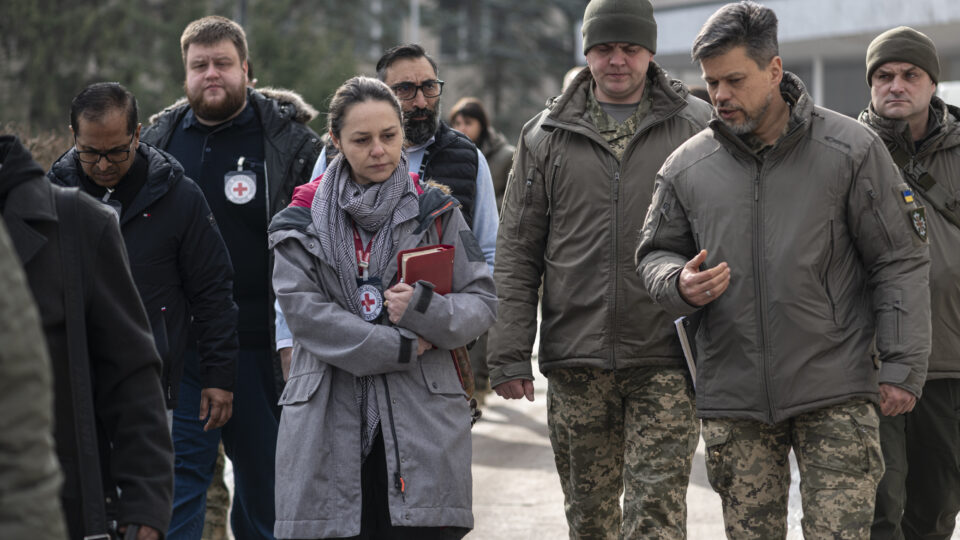
The international delegation, headed by Ana Lucía Bueno, ICRC Public Health Coordinator, and Sujit Panda, Head of the Physical Rehabilitation…

The technology of digital twins is no longer just a component of civilian engineering — today it is confidently entering the defense sphere, transforming approaches to planning, command, and analysis of combat operations.
Real-time-updated models of terrain, equipment, and entire operations allow commanders to assess risks, forecast developments, and make decisions significantly faster than the enemy. Ukraine is taking certain steps to integrate such solutions into its own battle-management systems, while the world’s armies are making them a strategic priority.
We discuss how digital twins work, what opportunities they open for military formations, and what the next stage of their development will be with Bohdan Dolintse, an expert in armament development and advanced technologies.
A digital twin is a virtual copy of a physical object, process, or system that uses real-time sensor data for accurate modeling. This technology makes it possible to analyze, test, and optimize performance, identify problems, predict outcomes, and make the best decisions in various fields.

— Mr. Bohdan, what is a “digital twin” in a military context, and how does it differ from classical models and simulators?
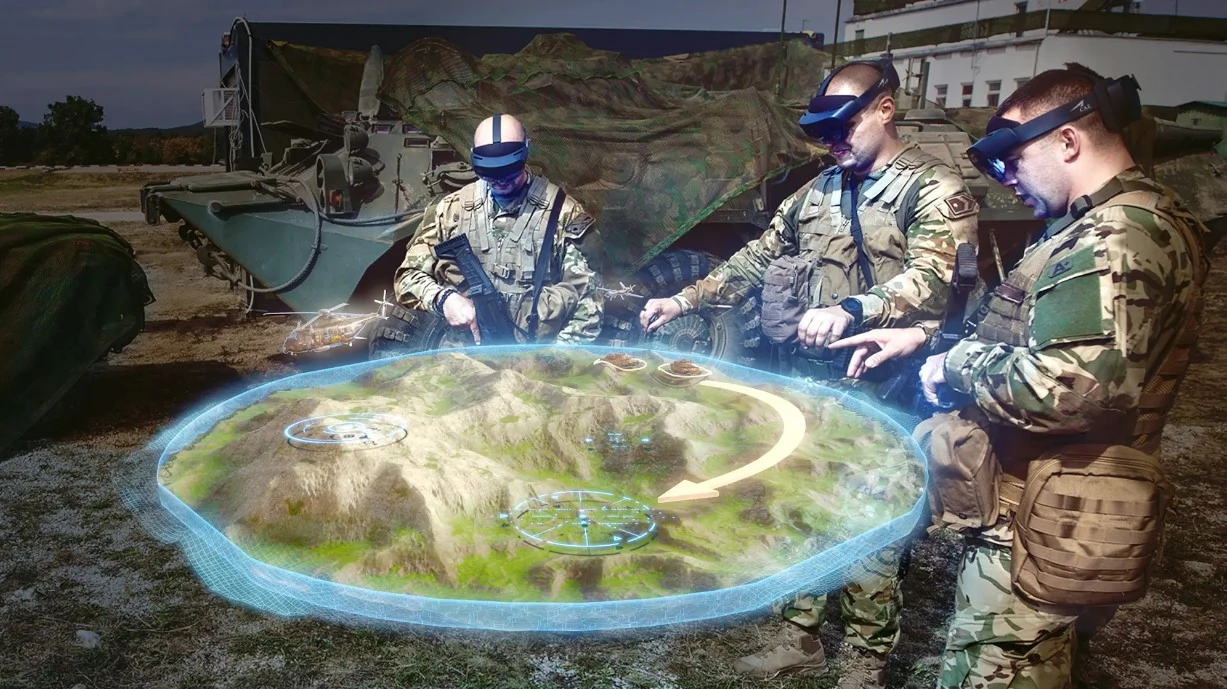
— When we talk about the technology of so-called digital twins, it’s not just about a model, formula, or simulator that helps you imitate a certain situation. Here we’re talking about a full-scale digital ecosystem which, if not entirely, then with very high accuracy reproduces all the properties, characteristics, and functions of internal and external processes of a real system, object, or organization.
This may apply both to individual physical entities — a mobile platform, an engine, or a building — and to entire systems, such as the activity of a military unit: a platoon, a company, a brigade, etc.
A system of digital twins is not an isolated model. It is an ecosystem with internal and external information exchange. It enables real-time receiving, transferring, or sharing data on various elements or indicators that can be collected directly from the battlefield.
Or, during testing or operation of a system, certain indicators can be collected directly from its sensors, ensuring the link between the physical system’s states and its digital twin model. This, in turn, allows the military involved to receive analytics, forecasting, and the ability to run scenarios — both online and almost in real time — of possible developments on the battlefield.
— And how widely is this technology already used in modern armies?
— A bit of history. The technology of digital twins initially became widely used in various scientific and industrial fields. Digital twins of physical systems were created first — for example, nuclear reactors, jet aircraft, or civilian rockets.
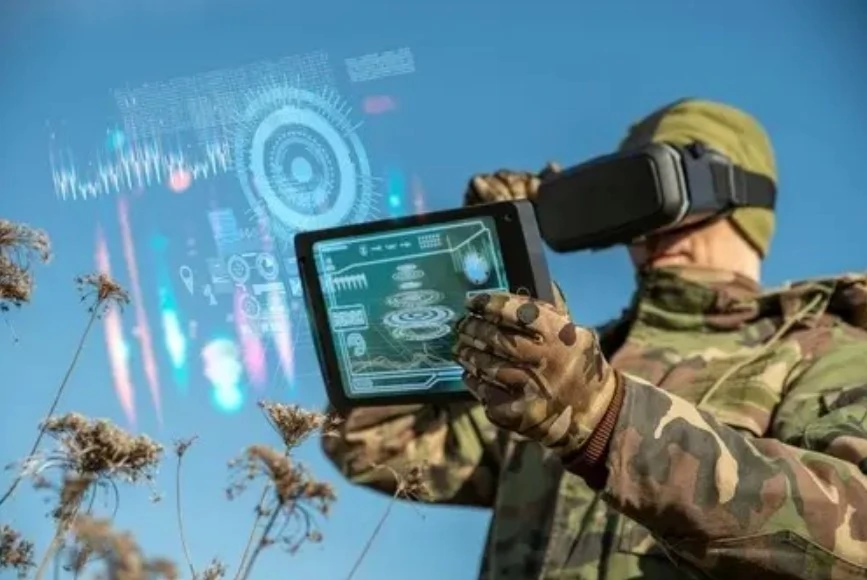
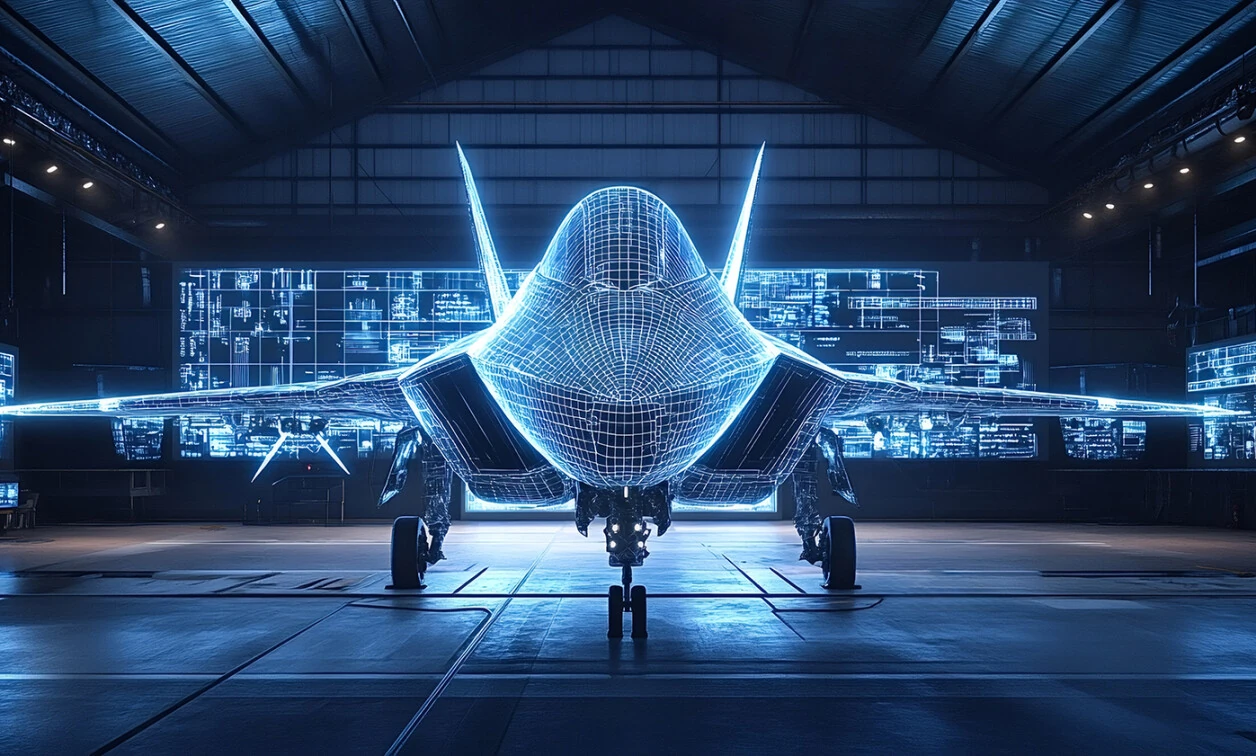
They continue to expand in use — and now it’s no longer about individual objects but entire systems. This includes the defense sector. One can create digital twins of an aircraft, a tank, or a naval vessel. Next come so-called operational or synthetic battle environments, which make it possible to model parts of the real battlefield.
As for countries with experience using such systems, it is known today that a number of states employ elements of these systems or full digital-twin ecosystems. These include the United States, the United Kingdom, other NATO countries, and Israel — at least those known to use these technologies in defense and security sectors. And the level of their use is becoming increasingly detailed.
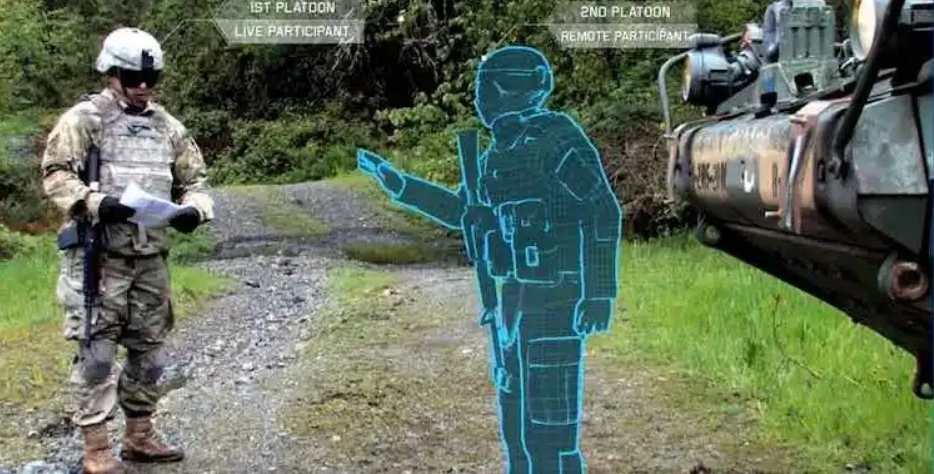
If originally the task was to visualize engines or areas of a battlefield at the level of a division or brigade, now these programs are employed at ever more granular levels and can model digital twins of individual platoons or even a single soldier. This makes it possible to forecast the success or potential problems of an operation and introduce real-time adjustments based on data from the battlefield.
— And regarding Ukraine: at what stage is this direction developing here? Are there already examples of this technology being used in the Defense Forces’ units?
— There is no official information on the use of such systems. With high probability, they may be at an early stage of development.
However, we can see that the solutions currently being developed or implemented by the Ukrainian defense industry and relevant startups do allow, with high probability, the modeling or creation of synthetic systems.
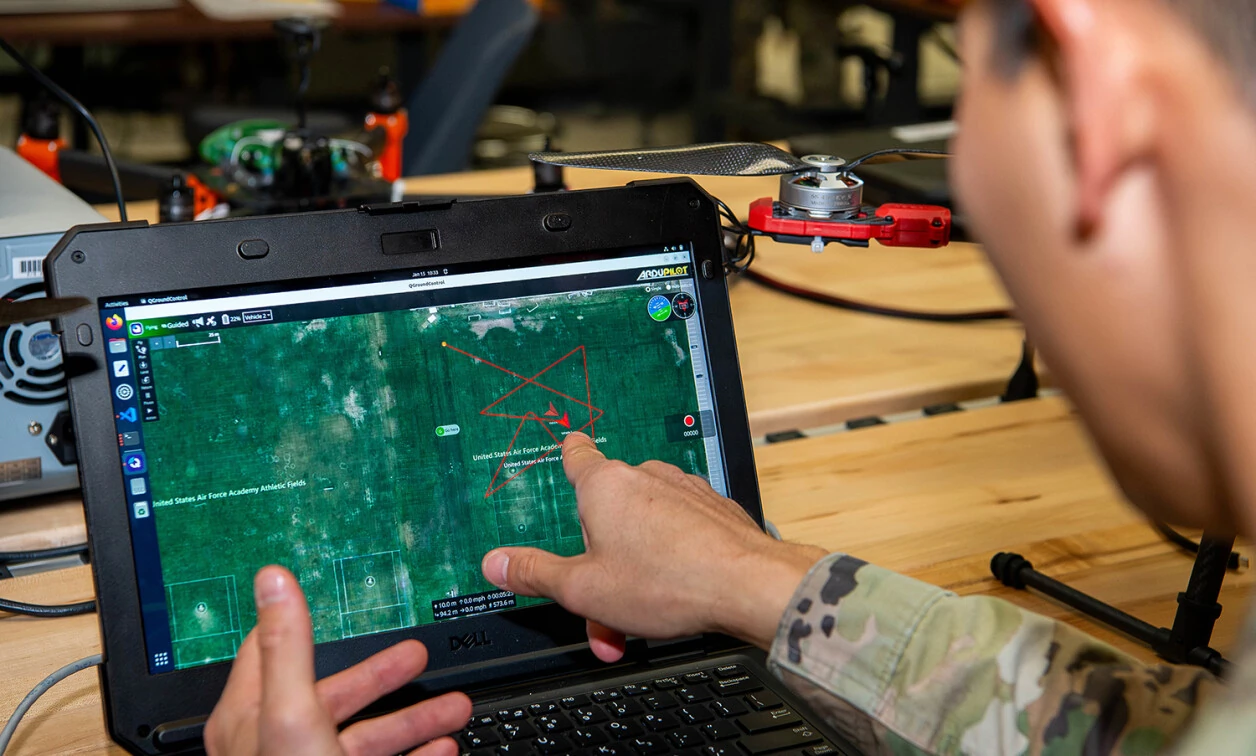
Speaking of digital twin technologies, one must ensure a large software ecosystem to build them. This includes personnel training, creating databases on which to train and carry out predictive modeling of certain situations.
The second component is the connection with external information sources — various sensors or subsystems capable of collecting real-time data and integrating it into a single environment for computation and scenario modeling.
At the same time, it is important to note that Ukraine has already created a number of modern information systems for the battlefield — such as Delta, Kropyva, and several others. They can become a powerful foundation for developing such systems.
— And what exactly do these programs consist of? What data is key for forming a digital twin of an operational area or an entire operation?
— Primarily, such programs rely on the actual characteristics and properties of the object in question. These include physical properties, organizational structures, the decision-making capabilities of the system, as well as understanding the methodology by which such decisions are made and implemented.
Another key component concerns the need for or the use of digital twins. The crucial factor here is ensuring appropriate data-exchange channels that allow real-time information flow both from the battlefield and other sources — possibly satellites, information systems, internet resources, etc.
A digital twin is also an effective tool when the battlefield situation changes. It can update instantly based on enemy actions and suggest scenarios using the data it has collected from available sources in the area of defense or offense.
This is not a mere digital simulation offering two or three strategy options. It is essentially a living system that continuously updates based on received data, and users themselves can propose certain actions and see with high probability how they will affect real systems in actual conditions.
— How “realistic” can a digital twin be? Is it possible to achieve accurate real-time reflection of battlefield dynamics?
— Current approaches and methodologies for creating digital twins today allow for 90–95% accuracy of data, if not 100%.
In some characteristics or certain approaches, the accuracy can even be full, because the model incorporates the existing constraints, requirements, and procedural methodologies used by organizational systems — when it comes to military formations — or by physical systems, when we’re talking about aircraft, ships, etc.
— What scenarios can a digital twin model — maneuvers, logistics, artillery operations, loss risks, enemy reaction?
— Practically all of these scenarios can be analyzed using digital-twin technology. These include maneuvers, route planning, collision probabilities, potential bottlenecks causing increased losses for one side or reduced losses for one’s own troops.
This involves evaluating the probabilities of damage or destruction of systems or equipment, risks for personnel, and more. With enough detail, these systems can even forecast not only the number of casualties but also their characteristics — the number of killed or wounded, the severity of injuries.
It can help predict the amount of medical supplies needed for certain units to save the wounded.
Additionally, digital twins allow modeling enemy reactions using agent-based modeling and game-theory approaches and assessing both the most likely and less likely behaviors or decisions of the enemy.
They also allow scenario analysis — meaning you can set initial conditions and outline a scenario. The system then provides possible outcomes of what will happen under each scenario. This enables commanders, even before the battle, to choose the strategy most likely to maximize damage to the enemy and minimize losses to their own forces.
— How much can such models influence commanders’ decisions in real operations?
— Speaking about real operations, at a high level — at the level of headquarters — Western countries, the United States and NATO partners already use such models to make various decisions both during the planning of combat operations and to adjust decisions directly during battle.
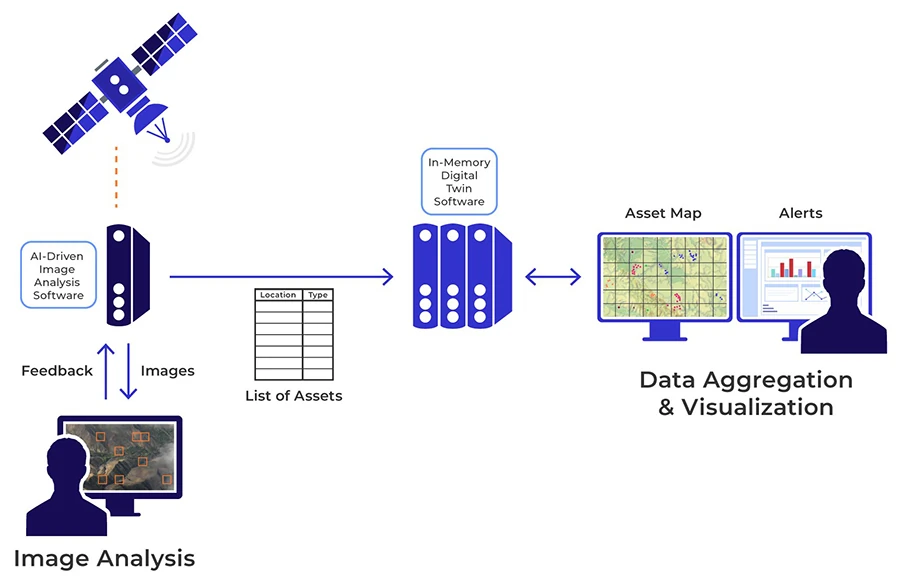
Satellite images and AI-based image analysis can be integrated with digital-twin software to create real-time operational awareness for commanders. Visualization militaryembedded.jpg
At the same time, we must understand that these platforms are primarily built on probabilistic forecasts. And if the enemy can act unpredictably or deliberately act irrationally, then under such conditions the accuracy of forecasting may be significantly lower. And this must absolutely be taken into account.
— In your opinion, can a digital twin become the core of fully autonomous decision-support systems for commanders?
— As of today, the existing digital twins have shown themselves quite well in so-called rational systems. This concerns certain physical mechanisms, objects, and so on. And with a high probability, for making certain decisions during their modeling, they have — if not a 100% — then a very, very high efficiency in application.
If we are talking about the use of such systems or adopting them for relevant combat tasks, especially in so-called human organizations, then such systems may contain a certain share of unpredictability or irrationality. And it can significantly reduce the predictive effectiveness of the models.
However, in large configurations such deviations, as a rule, at the scale of the entire system still allow for obtaining sufficiently high qualitative forecasting indicators. This contributes to the fact that these systems, even under conditions of a significant share of irrationality, can be applied and can provide a considerable amount of useful information for decision-making directly by commanders on the battlefield.
— And do you think that in the future excessive trust in machine modeling could create risks of errors in commanders’ real decisions?
— It should be noted that a number of open questions remain. Primarily ethical and those regarding responsibility. Even when digital twins of various systems are used, the responsibility for the final decision remains with the commanders, and this may lead to a certain conservatism.
This means that even in situations when systems provide sufficiently accurate forecasts, the final word will always remain with a human. And this will lead to a decrease in the level of trust and use of such platforms — although they demonstrate increasing accuracy in modeling.
— In your opinion, which specific combat tasks could benefit the most from the implementation of digital twins right now?
— Considering the very high accuracy of technical and technological forecasting, the use of digital-twin systems is highly desirable and effective precisely during mission planning involving equipment. That is — for example, aircraft, tanks and ships.
Another direction I would highlight is the ability to compare assessments of the opposing side’s capabilities — specifically, the development of scenarios that would lead to maximally effective engagement of enemy forces and equipment.
While at the same time using tactics and strategies that would minimize or completely eliminate the possibility of the enemy damaging or destroying one’s own assets and forces. And again, this concerns aircraft, tanks, ships, ground robotic systems, UAVs, and so on.
In addition, some automated, unmanned systems may potentially be controlled in the future by such systems based on digital twins. That is, several different scenarios of using a particular piece of equipment can be simulated at any given moment directly in the headquarters. And then a refined plan of action or behavior scenario will be transmitted to the unmanned system performing the mission in automatic mode.
This means that even in situations when systems provide sufficiently accurate forecasts, the final word will always remain with a human. And this will lead to a decrease in the level of trust and use of such platforms — although they demonstrate increasing accuracy in modeling.
— In your opinion, which specific combat tasks could benefit the most from the implementation of digital twins right now?
— Considering the very high accuracy of technical and technological forecasting, the use of digital-twin systems is highly desirable and effective precisely during mission planning involving equipment. That is — for example, aircraft, tanks and ships.
Another direction I would highlight is the ability to compare assessments of the opposing side’s capabilities — specifically, the development of scenarios that would lead to maximally effective engagement of enemy forces and equipment.
While at the same time using tactics and strategies that would minimize or completely eliminate the possibility of the enemy damaging or destroying one’s own assets and forces. And again, this concerns aircraft, tanks, ships, ground robotic systems, UAVs, and so on.
In addition, some automated, unmanned systems may potentially be controlled in the future by such systems based on digital twins. That is, several different scenarios of using a particular piece of equipment can be simulated at any given moment directly in the headquarters. And then a refined plan of action or behavior scenario will be transmitted to the unmanned system performing the mission in automatic mode.
— And finally, a question to you as a forecaster, so to speak. Can we expect these digital twins to become a standard headquarters tool in the coming years?
— Digital-twin systems have already become an integral part of large industrial facilities. And they allow optimizing the operation and efficiency of enterprises. After all, the cost of construction, and then reconstruction or correction of mistakes during the creation of a specific facility can amount to tens of millions of dollars.
Such digital twins make it possible to optimize the system before the facility is built in concrete or metal. And thus reduce the path and costs of companies directly involved in creating industrial objects.
Regarding military applications, here in a similar way we can talk about creating corresponding objects of defense infrastructure. Along with this, it is also the possibility of optimizing various units considering the equipment available to them.
Therefore, the implementation of digital twins in military systems is much closer than it may seem at first glance. And the experience already accumulated in the commercial sector can be very quickly scaled and adapted for current military purposes.

The enemy is attempting to develop the production of naval drones and copy successful Ukrainian practices — both technical solutions and tactics.
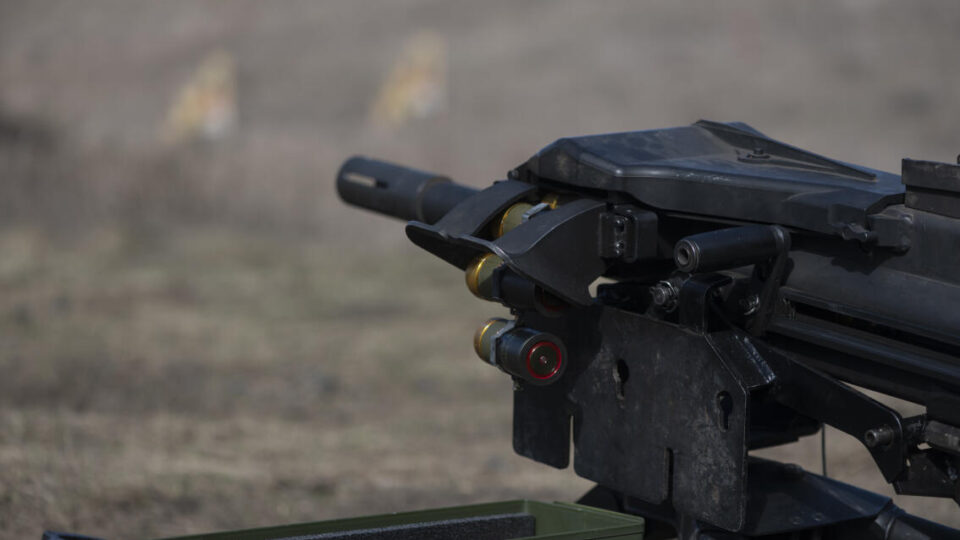
Fighting continues in the northern part of the city of Pokrovsk in the Pokrovsk direction. A mechanized assault was repelled there the day before.
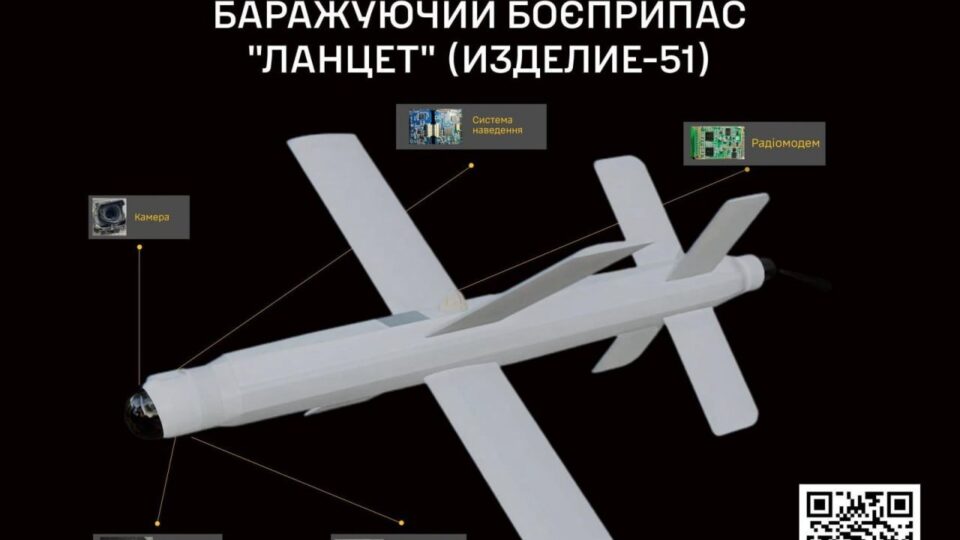
The Main Intelligence Directorate of the Ministry of Defense of Ukraine has published data on enterprises involved in the production of Russian loitering muniti

Another two-day round of negotiations between Ukraine and the United States concluded in Florida on March 22.
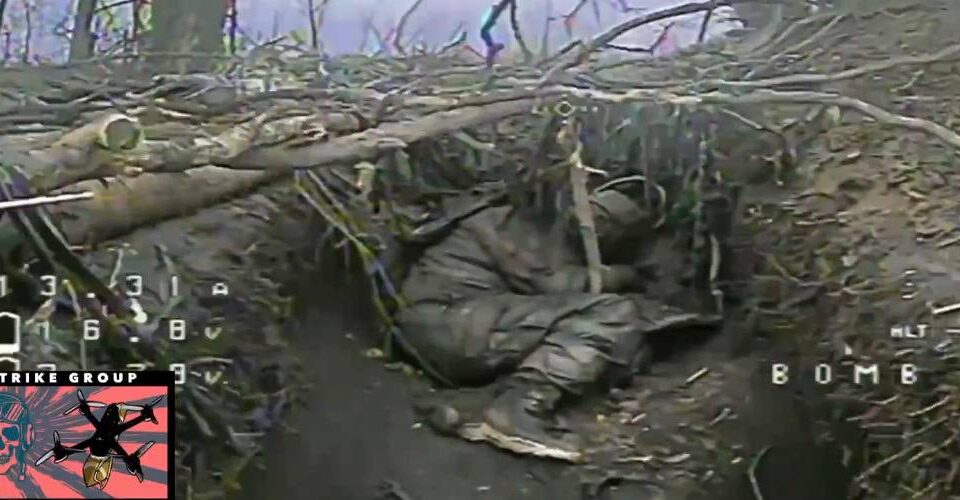
The enemy continues daily pressure and attempts to break through Ukrainian defenses in the Sloviansk direction.
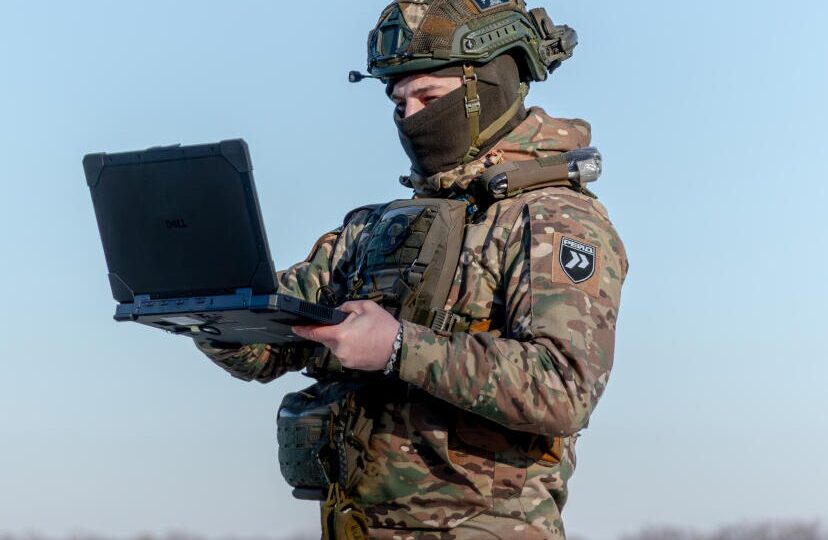
Over the past day, units of the Unmanned Systems Forces struck/destroyed 1,078 enemy targets.
The international delegation, headed by Ana Lucía Bueno, ICRC Public Health Coordinator, and Sujit Panda, Head of the Physical Rehabilitation…