
The international delegation, headed by Ana Lucía Bueno, ICRC Public Health Coordinator, and Sujit Panda, Head of the Physical Rehabilitation…

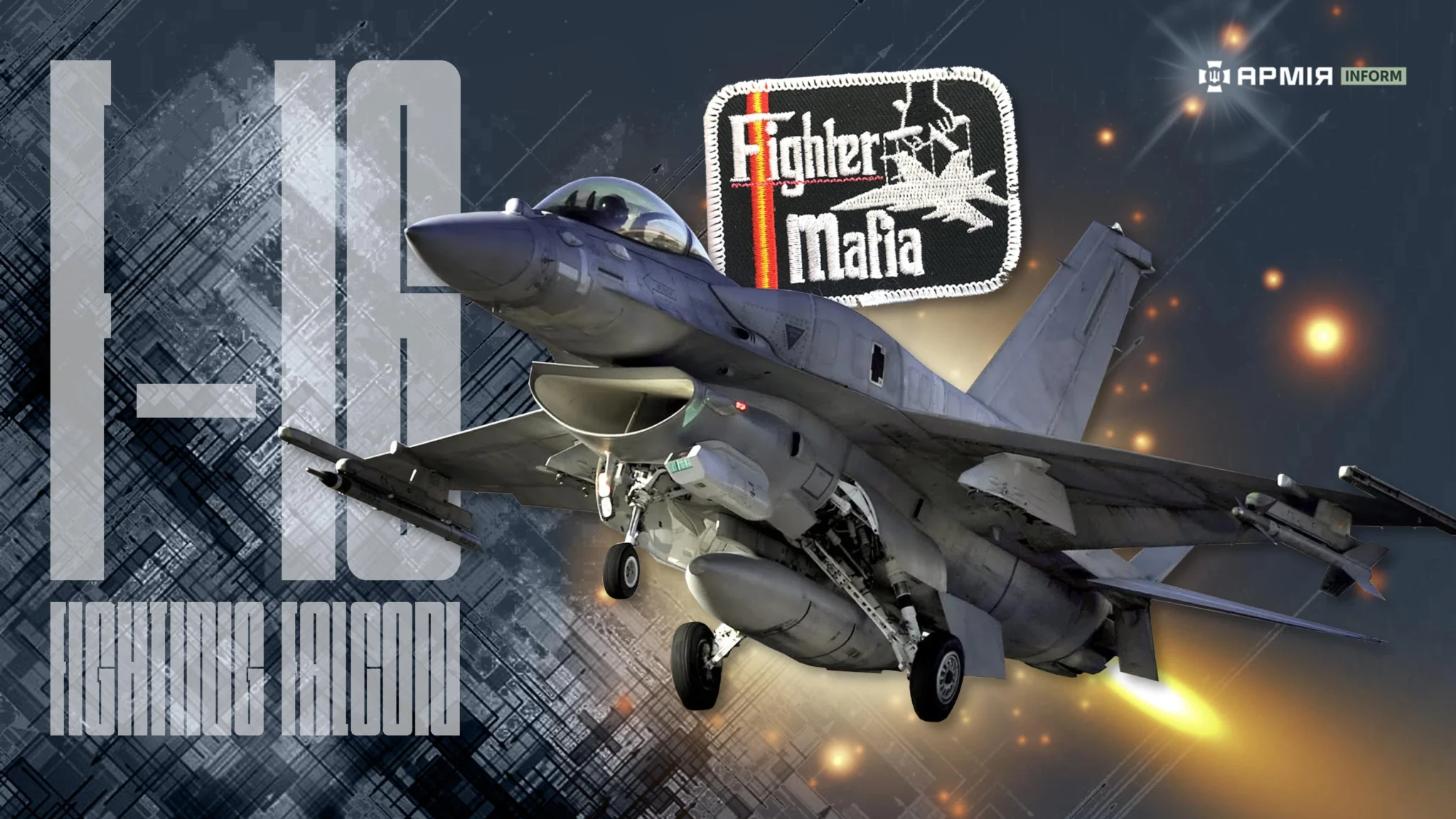
The F-16 Fighting Falcon project was born in defiance of the system. This revolutionary multirole fighter entered service thanks to the Fighter Mafia, which lobbied for the project and overcame resistance from conservative generals.
A small group of officers and analysts challenged the dominant doctrine of heavy aircraft and proved that the future of aerial combat lay in agile, fast, and relatively inexpensive machines.
ArmyInform tells the story of how the F-16 project and the famous Fighter Mafia came to be.
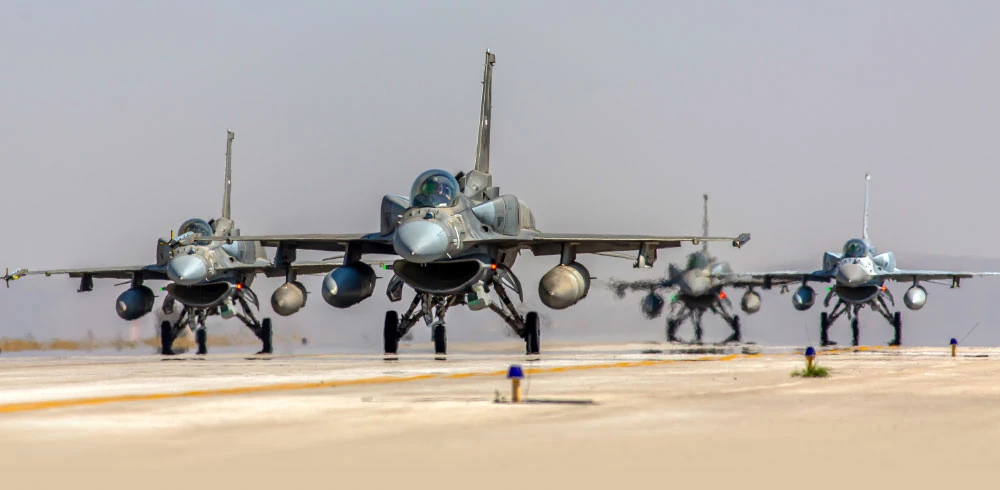
The Vietnam War became a serious test for the U.S. Air Force. In particular, its outcomes revealed that American heavyweight interceptors such as the F-4 Phantom were ineffective in close-range air combat.
These aircraft were heavy, extremely fast, and designed primarily to fire missiles from long distances. They lacked a cannon and were not intended for maneuvering dogfights.
Given the experience of the Vietnam War, already in the 1960s a group of officers and analysts — including veterans of classic dogfights — concluded that the armed forces needed a fundamentally different type of combat aircraft.
It had to be a lighter, simpler, and more maneuverable machine with a better thrust-to-weight ratio and capable of performing so-called dogfighting — close-range maneuvering air combat.
In a dogfight, the enemy can be seen with the naked eye, and the primary weapons are maneuverability, a cannon, and short-range heat-seeking missiles. Combat occurs at very short distances — from hundreds of meters to a few kilometers.
During such engagements, aircraft constantly perform steep maneuvers, trying to get on the opponent’s tail. Pilots have to fight for airspeed, altitude, and angle of attack, while enduring significant G-forces of 6–9 g.
Bright — though at times somewhat exaggerated — examples of dogfighting can be seen in the famous Hollywood films Top Gun and Top Gun: Maverick starring Tom Cruise.
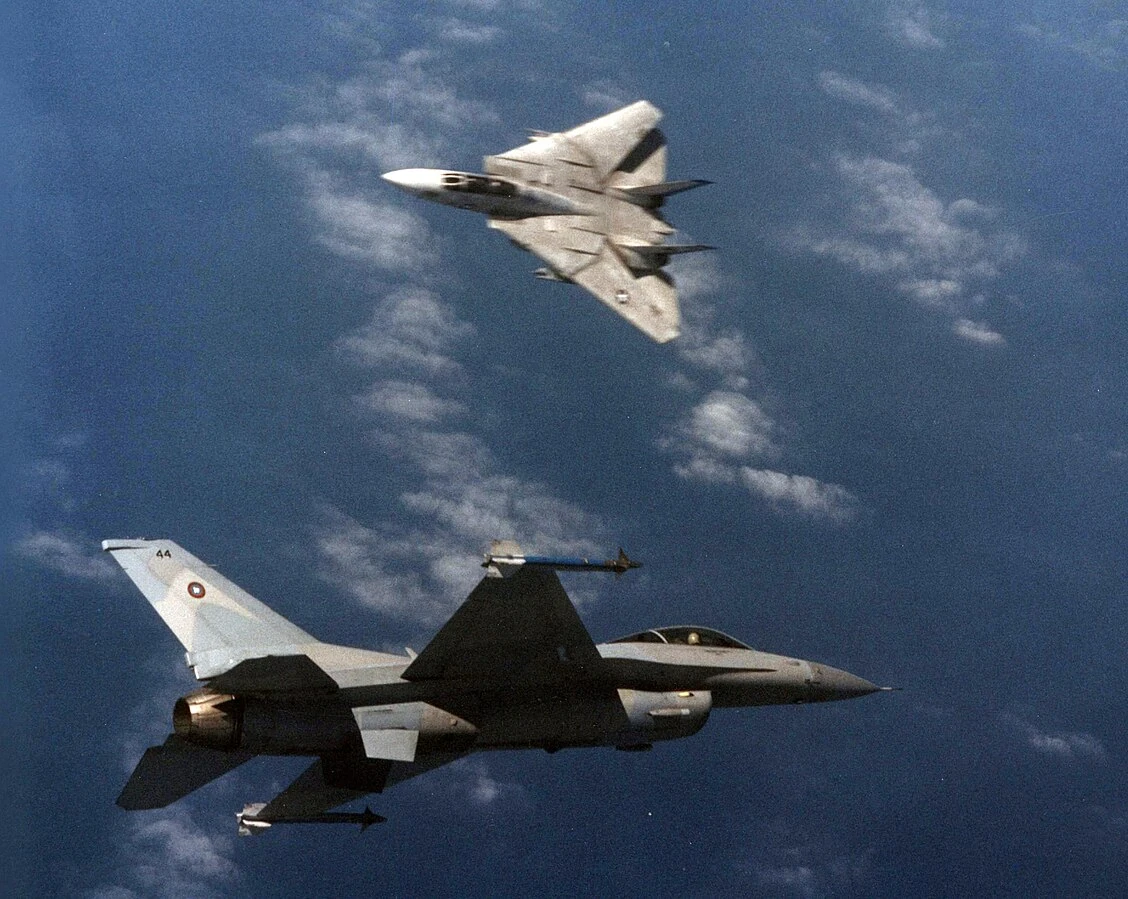
A group of combat officers and aviation experts who supported the creation of a light, maneuverable dogfight aircraft prepared a report arguing for the need to develop a next-generation fighter.
It called for a return to the old dogfighting doctrines — high maneuverability, excellent cockpit visibility, and a weapons suite suitable for both close-range and medium-range combat.
Over time, this idea gave rise to an informal group of American military analysts, officers, and engineers who began to systematically promote the concept of creating a light, agile, and inexpensive fighter capable of dominating in close-range air combat and adopting it into the U.S. Air Force.
These specialists later became known as the Lightweight Fighter Mafia — a name that can be translated literally or explained as “the Mafia of advocates for creating a lightweight fighter”.
In the 1960s–1970s they became active — and ultimately successful — lobbyists of their concept. The “mafiosi” consistently criticized supporters of overly large, electronics-laden aircraft and promoted the ideas of high thrust-to-weight ratio, minimal weight, energy-maneuverability, and structural simplicity.
Ultimately, the ideas of the Lightweight Fighter Mafia formed the basis of the Lightweight Fighter program and directly influenced the emergence of the F-16 Fighting Falcon.
The Theory of Energy-Maneuverability
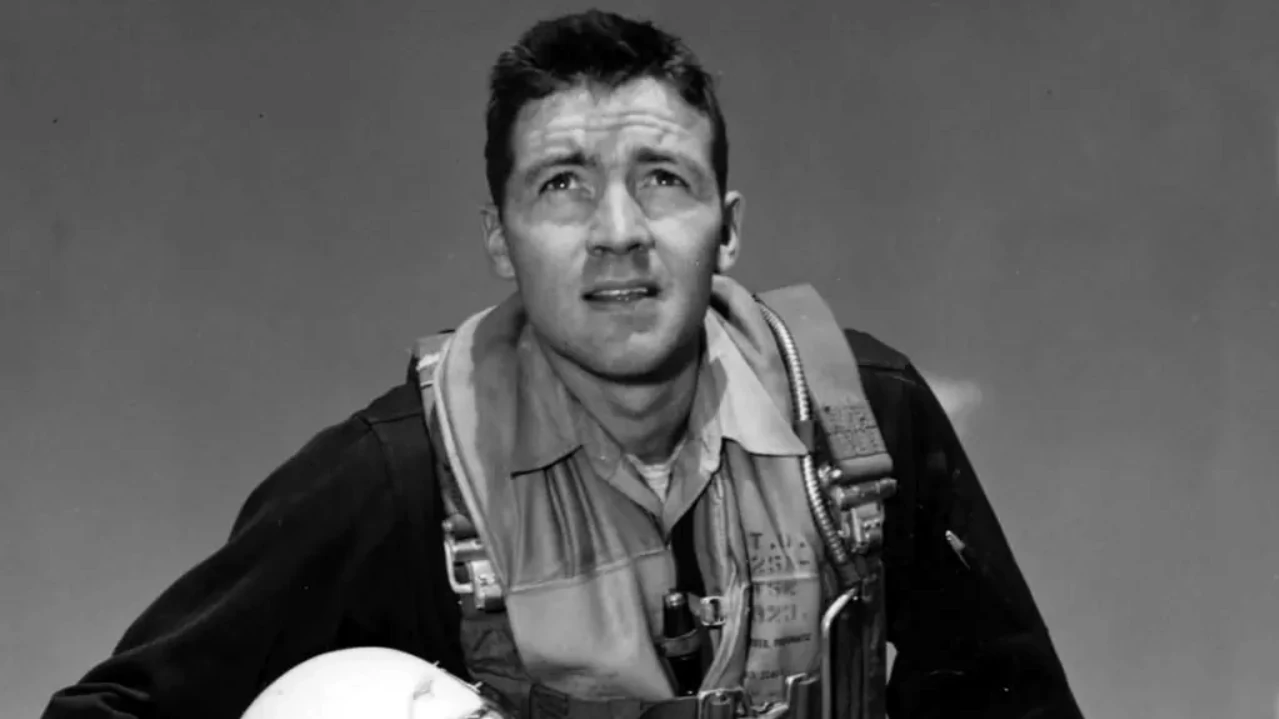
One of the leading figures of the Lightweight Fighter Mafia was Colonel John Richard Boyd, a former pilot of the subsonic North American F-86 Sabre frontline fighter during the 1950–1953 Korean War.
In the 1960s John Boyd, together with mathematician Thomas C. Christie, developed the energy-maneuverability (EM) theory, which analyzed aircraft performance through the lens of kinetic and potential energy.
This theory allowed fighters to be compared accurately by their ability to change speed and altitude during maneuvers, whereas traditional methods based on maximum speed and wing area provided only rough estimates of maneuverability.
The new approach, visualized through EM diagrams, gave pilots and designers a common “language” to describe air combat in the terms of physics. By the late 1960s this methodology influenced the formulation of requirements for new fighters, including the F-15 and F-16.
The “Lightweight Fighter Mafia” Code
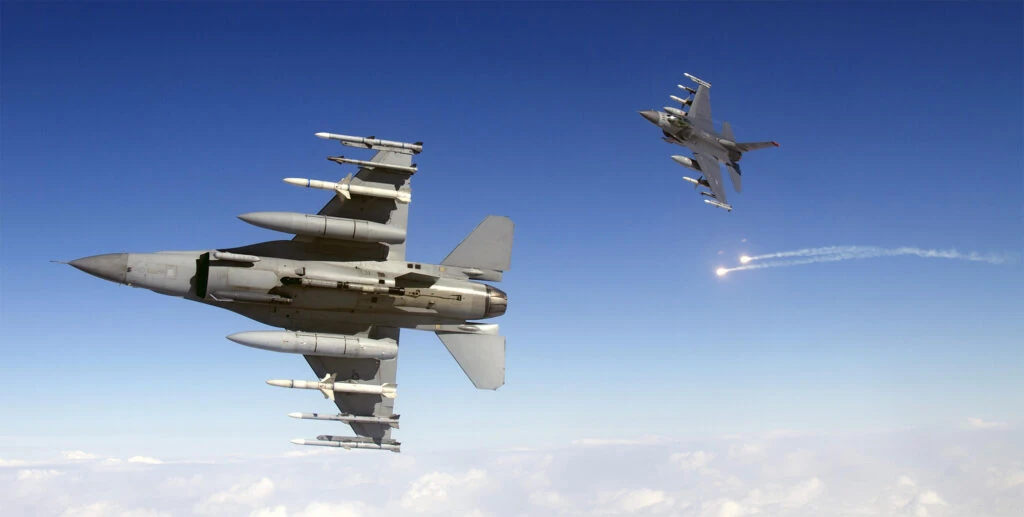
The core idea of the Lightweight Fighter Mafia was to create an extremely maneuverable lightweight aircraft with excess thrust. It had to be easy to control and heavily armed for close-range combat.
The relatively low weight combined with high thrust was intended to allow steep climbs and sharp turns. For this reason, the target weight of the project was around 9 tons (20,000 pounds) — nearly half that of the F-15.
Lower weight also meant reduced cost and easier scaling of production and deployment, especially under limited resources.
The Mafia invoked successful examples of the North American P-51 Mustang and North American F-86 Sabre — fighters with excellent performance at low and medium air combat speeds.
They insisted on a thrust-to-weight ratio close to 1:1 at full combat load and a large wing area for rapid energy maneuvering. Another requirement was maximum systems simplicity with minimal complex electronics.
Conversely, weapons for close combat had to be extremely powerful. The aircraft had to have a cannon and heat-seeking air-to-air missiles such as the AIM-9 Sidewinder.
The group also emphasized new technologies — particularly fly-by-wire (FBW) flight control systems, which could remove traditional aerodynamic limitations. The F-16 used a complex triply-redundant FBW system, which allowed the aircraft to be intentionally aerodynamically unstable.
This approach dramatically increased maneuverability — the aircraft essentially “wanted” to pitch up or down, and only rapid computer corrections kept it controllable.
The design also included a pilot seat reclined at approximately 30° to help the pilot withstand up to 9 g, and a clear “bubble” canopy for improved visibility.

Despite resistance from the top brass, who favored the “heavy F-15,” the ideas of the Lightweight Fighter Mafia gained support within the U.S. Department of Defense.
In 1971 the Lightweight Fighter (LWF) program was announced for an aircraft weighing about 20,000 pounds — roughly half the weight of the F-15.
Several design bureaus joined the competition — Boeing, General Dynamics, Northrop, LTV, and Rockwell. In late 1974 a fly-off was held between two finalists: the single-engine General Dynamics YF-16 and the twin-engine Northrop YF-17.
The competition was won by the YF-16 from General Dynamics, which embodied to the fullest the concept of a highly maneuverable lightweight multirole fighter with powerful close-range weapons envisioned by the Lightweight Fighter Mafia.
Some changes were later made to the production F-16 Fighting Falcon. A multifunction radar for strike missions and additional avionics were added, increasing the aircraft’s weight.
This was done despite resistance from the “godfathers” of the project, who opposed any weight increase that could reduce maneuverability.
Extra “kilograms” and “complex systems” were contrary to the Mafia’s ideals — yet technological advancement required further improvements, which inevitably added weight.
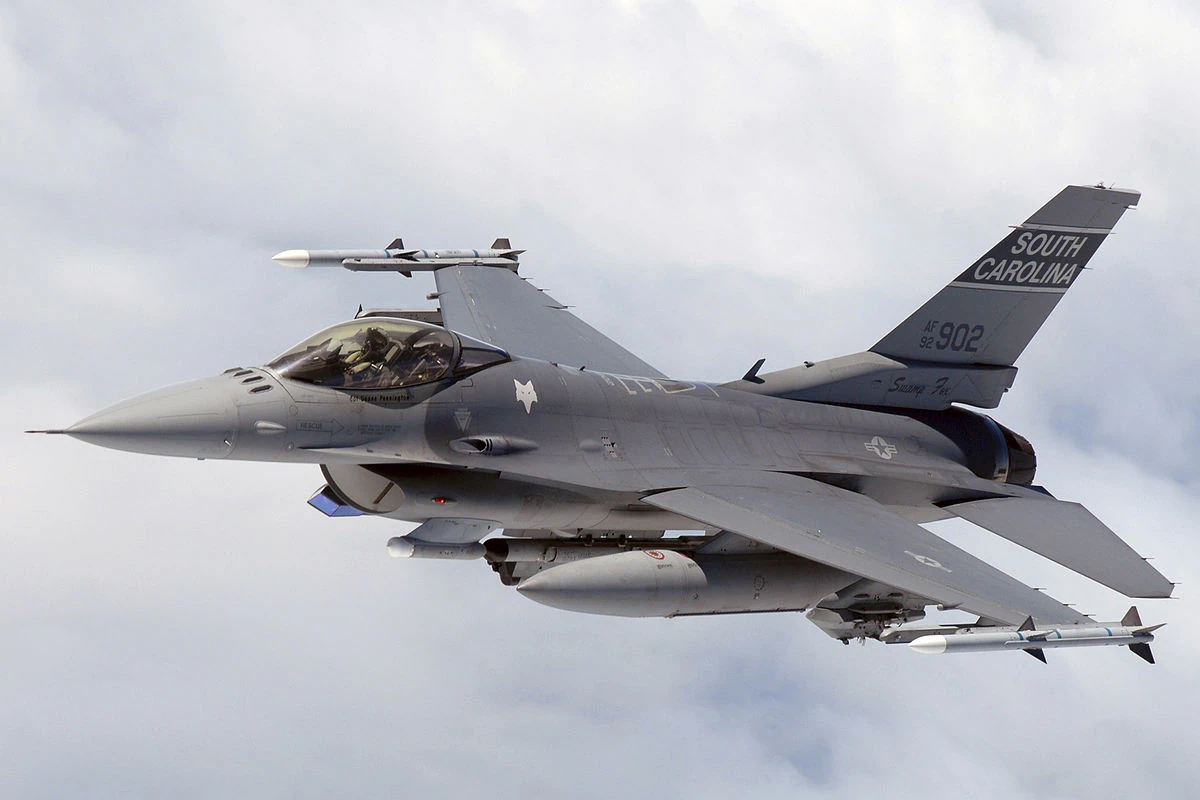
The ideas of the Lightweight Fighter Mafia were realized not only in the design of the F-16 but also reshaped approaches to combat aviation. The new F-16 Fighting Falcon became one of the most mass-produced fighters in the world — with over 4,600 aircraft built over 50 years.
Today the F-16 fleet makes up about 40% of all U.S. Air Force fighters, confirming the viability of the fast and relatively inexpensive fighter concept.
The Fighter Mafia’s philosophy resonated in other countries as well. For example, the Eurofighter and Gripen programs also incorporate “lightweight” air combat concepts, and the idea of pairing expensive “heavy” fighters with numerous “light” ones has proven successful.
Many military analysts acknowledge that the Lightweight Fighter Mafia helped overcome the shortsightedness of 1950s–1960s Air Force leadership by refocusing attention on fighter maneuverability and pilot survivability.
At the same time, the group’s most radical proposals — including eliminating strike capabilities entirely and creating a “pure” single-engine fighter without excess equipment — face criticism, as modern combat realities require versatility.
In any case, the Lightweight Fighter Mafia achieved complete success. It was thanks to them that the F-16 Fighting Falcon emerged — an aircraft that became the most mass-produced fourth-generation fighter and changed the balance of power in the sky.

The enemy is attempting to develop the production of naval drones and copy successful Ukrainian practices — both technical solutions and tactics.
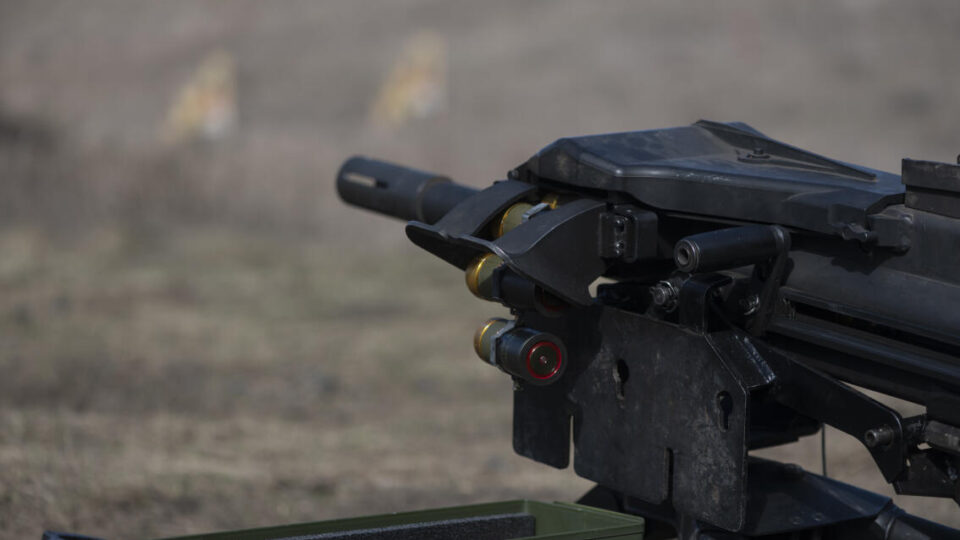
Fighting continues in the northern part of the city of Pokrovsk in the Pokrovsk direction. A mechanized assault was repelled there the day before.
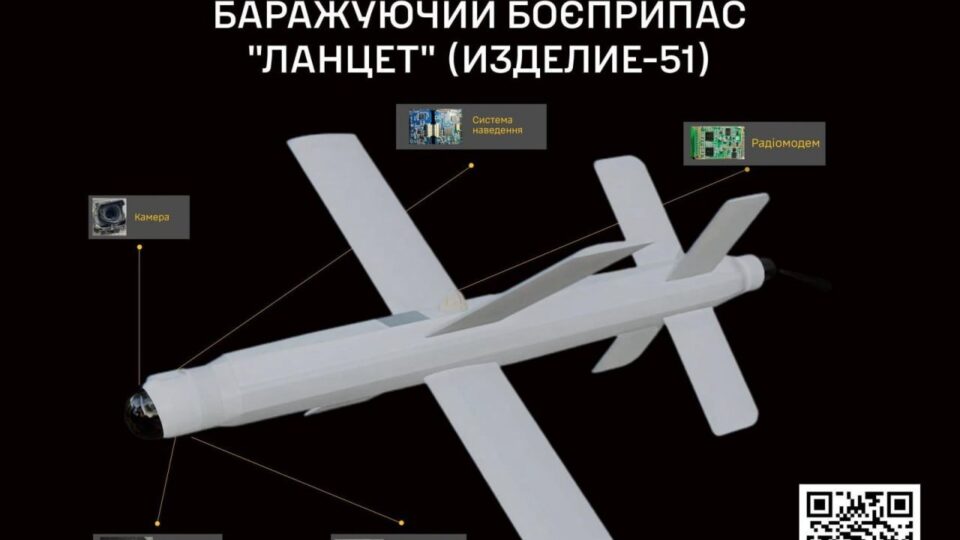
The Main Intelligence Directorate of the Ministry of Defense of Ukraine has published data on enterprises involved in the production of Russian loitering muniti

Another two-day round of negotiations between Ukraine and the United States concluded in Florida on March 22.

The enemy continues daily pressure and attempts to break through Ukrainian defenses in the Sloviansk direction.
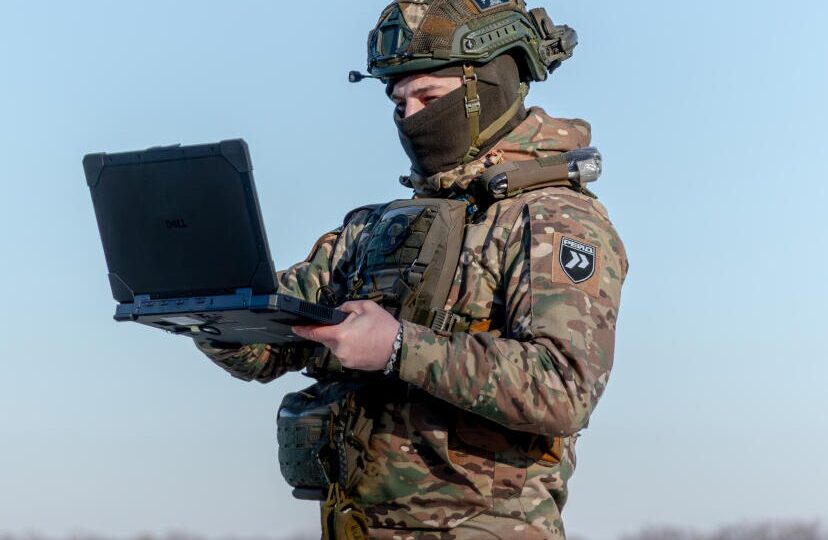
Over the past day, units of the Unmanned Systems Forces struck/destroyed 1,078 enemy targets.
The international delegation, headed by Ana Lucía Bueno, ICRC Public Health Coordinator, and Sujit Panda, Head of the Physical Rehabilitation…