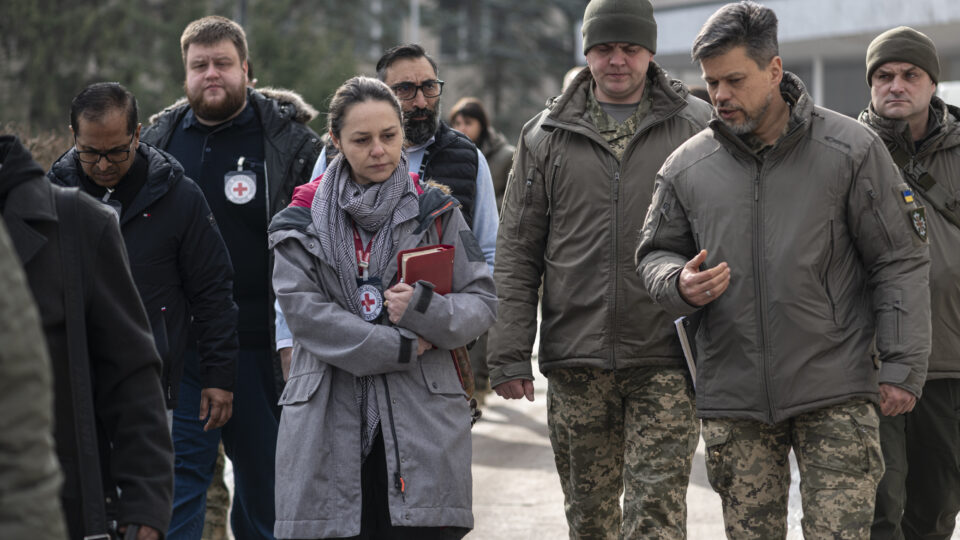
The international delegation, headed by Ana Lucía Bueno, ICRC Public Health Coordinator, and Sujit Panda, Head of the Physical Rehabilitation…

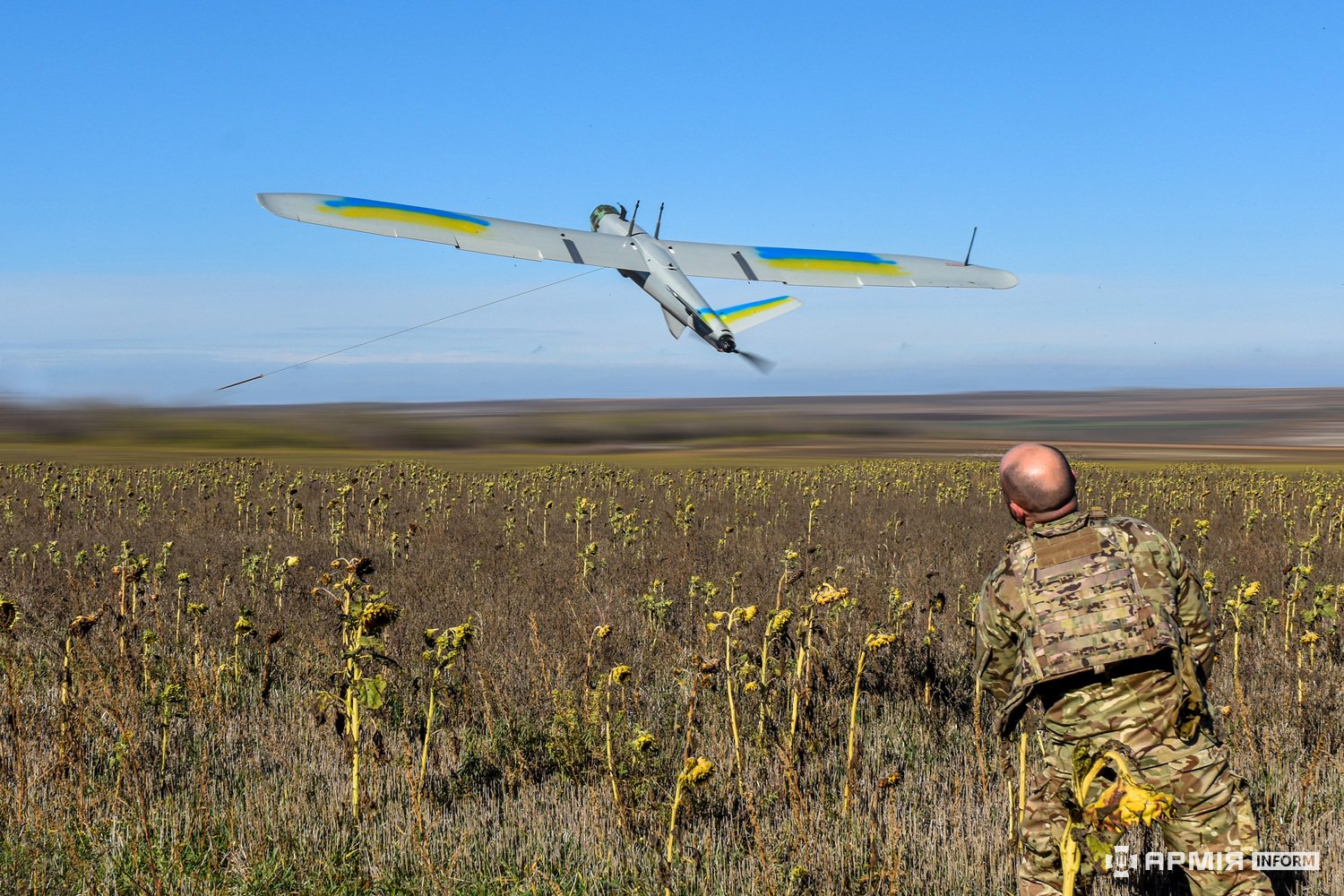
How the fighters of the 2nd Battalion of Unmanned Systems Inquisition of the 59th Separate Assault Brigade named after Yakiv Handziuk of the Unmanned Systems Forces strike the enemy with Bulava strike UAVs and scout his rear with Leleka UAVs.
This is from a report by an ArmyInform correspondent.
We leave Dnipro at dawn to reach on time the point among the fields indicated by the pilots. On the way, we put on body armor and helmets, as we will be entering an area already within the reach of enemy drones.
We stop at a gas station to grab some coffee, as there will be no working gas stations further ahead.
Suddenly, shooting begins: mobile fire groups in the nearby tree lines open fire on a “Shahed” that attempted, in broad daylight and at low altitude, to break through somewhere toward Pavlohrad. Instinctively, you look around to see where to run if the enemy UAV starts to dive, but it keeps flying, seemingly unaware of the heavy machine-gun fire.
It passes over us and begins to move away — it seems it has slipped through — when someone shouts “Hit!”
Everyone turns and sees a dark cloud in the sky. Ten seconds later, the sound of the explosion reaches us. It didn’t make it.
We continue on our way. Civilian traffic becomes scarce, checkpoints are covered with camouflage nets. We leave the highway and drive down a road surrounded by fields. Lots of unharvested sunflower — probably because bringing expensive harvesters here is too risky. We see a burned-out van on the roadside, then a pickup truck.
We drive fast, and all oncoming cars do the same. In these places, it’s better to keep speed — and stay alert.
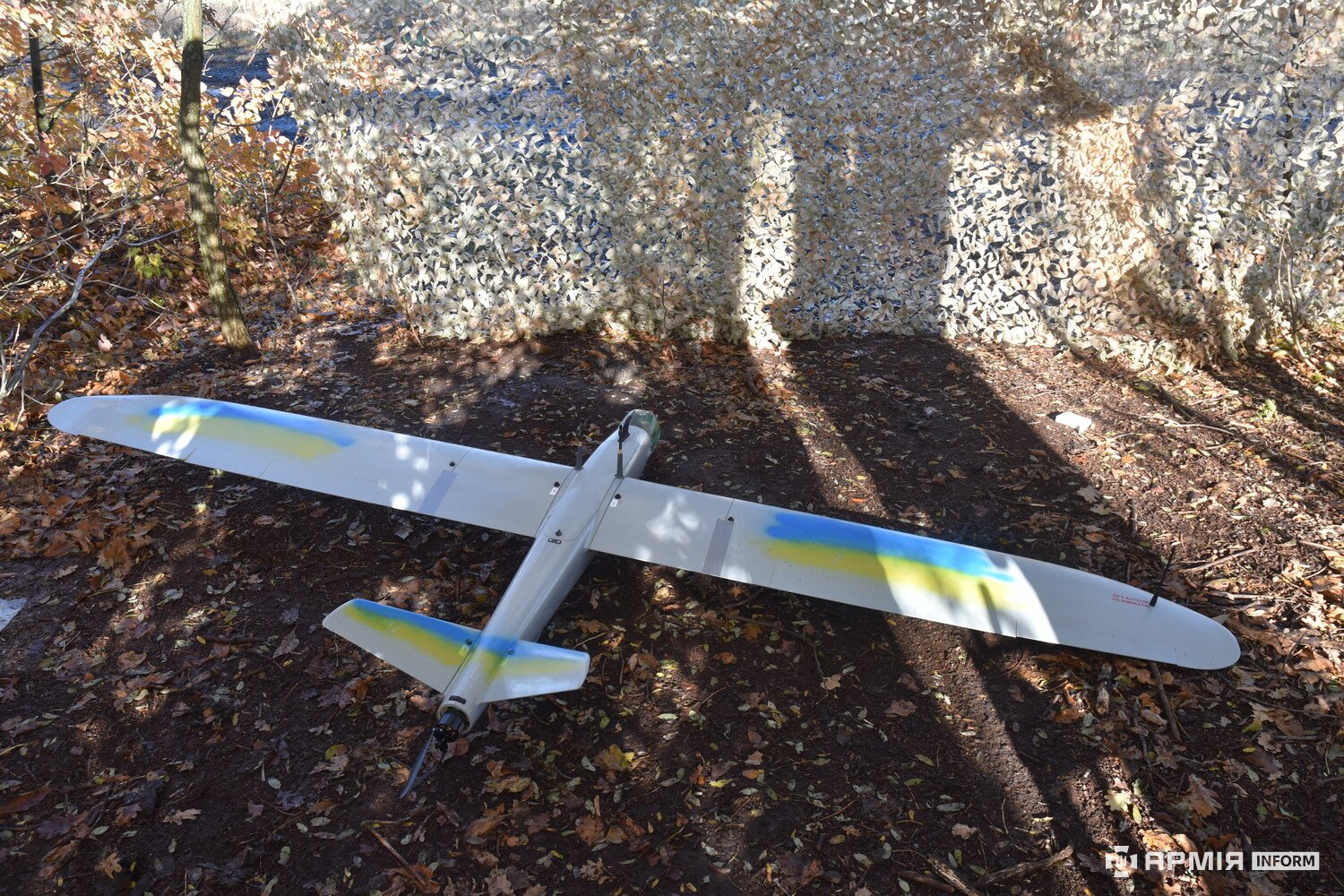
Our vehicle pulls into one of the specially prepared hiding spots. We unload and begin walking along the tree line.
In the steppe, these narrow strips of trees are almost the only place to hide — and they’re usually quite “populated”. We see trenches and fighters from various units among the bushes and trees.
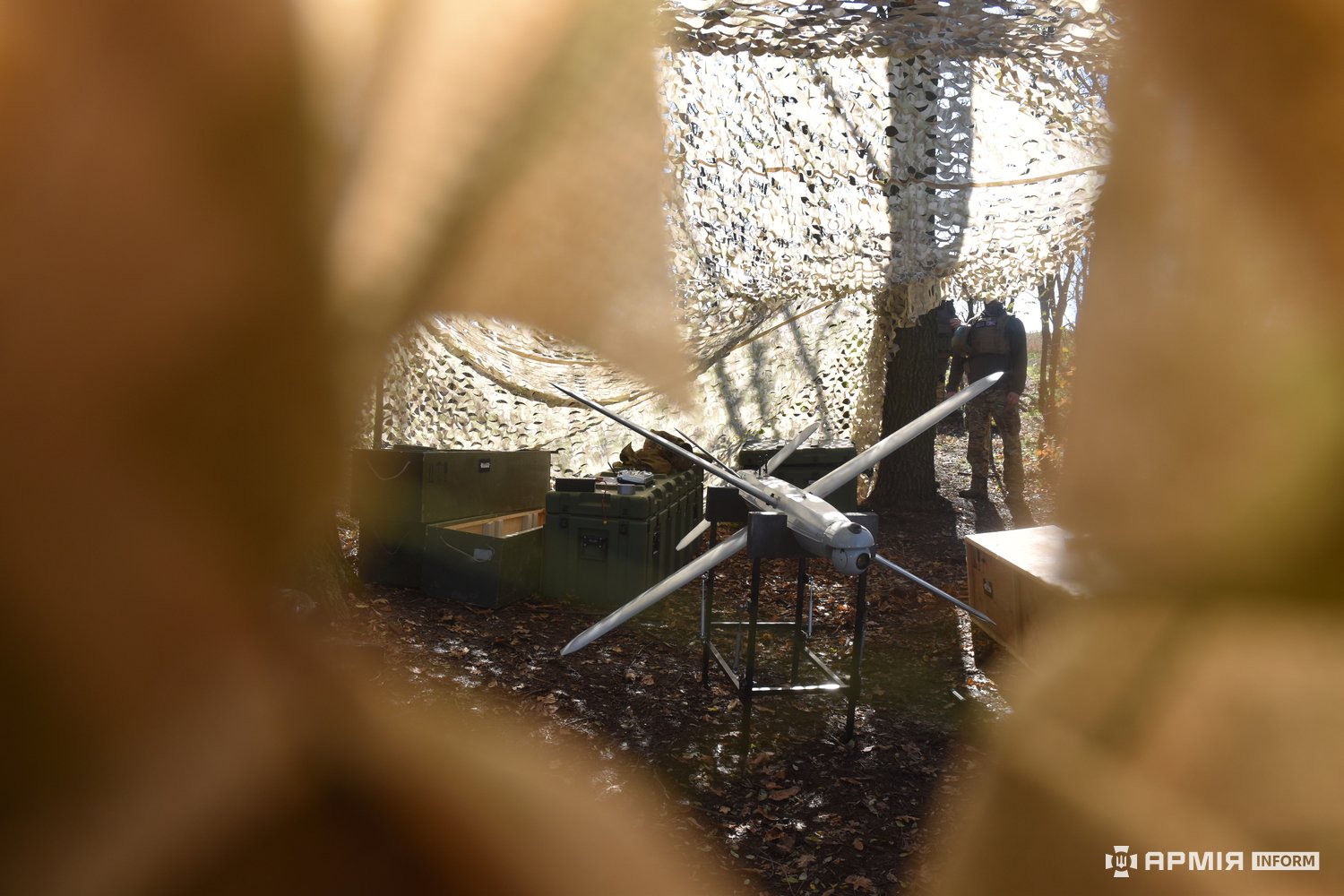
After some time, we reach the spot. We see large UAV crates covered with camo netting. Pilots come out to meet us. There are six of them. They are on a 24-hour rotation in a dugout perfectly hidden among the trees — so well-camouflaged that even up close you might miss the entrance.
“Right now we’re preparing to launch Leleka, and once it reaches the area of operation, we’ll launch Bulava”, — one of the pilots explains.
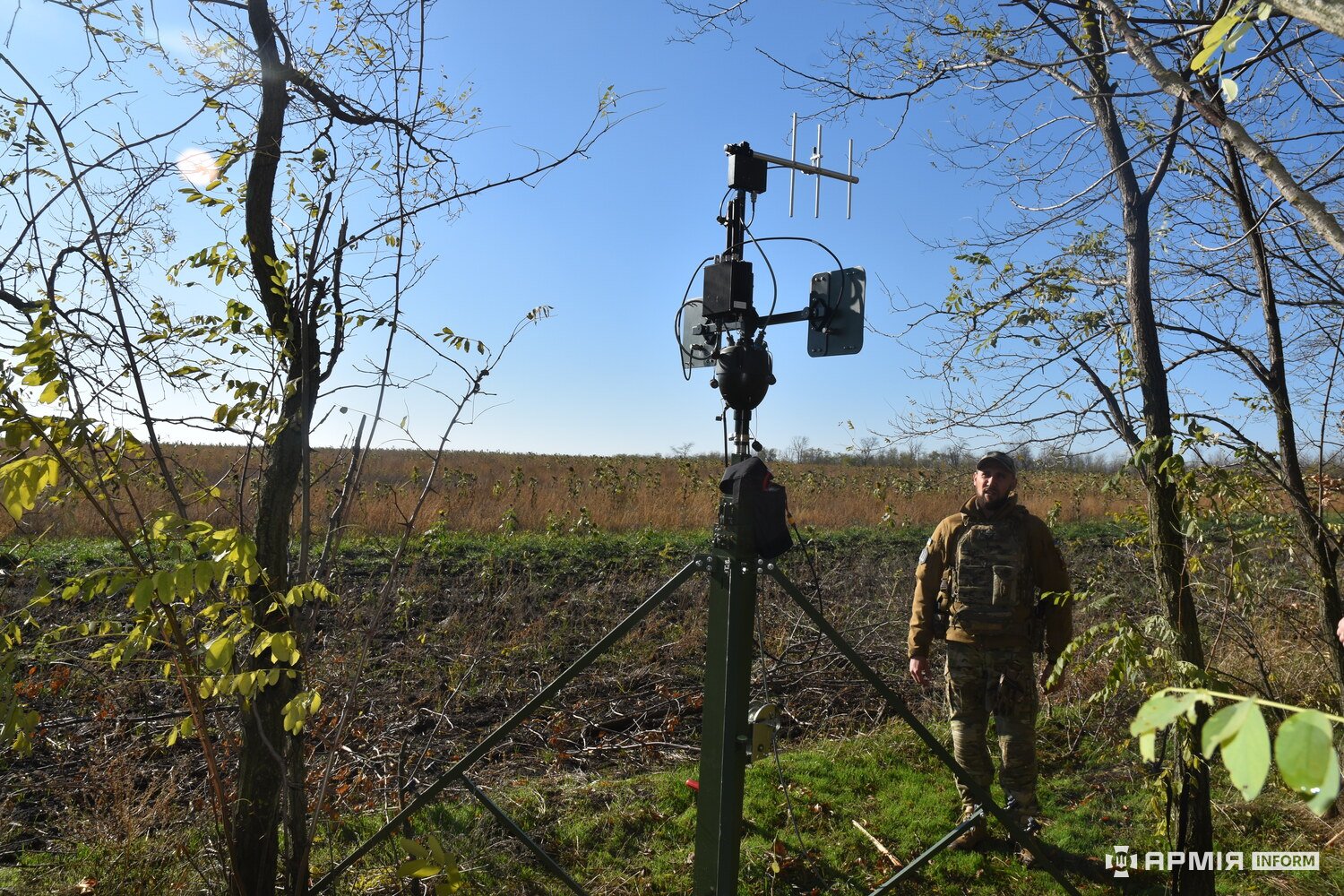
His comrades set up an antenna at the edge of the tree line — this will control Leleka. They assemble it quickly, mount it on a tripod, then raise it on a telescopic mast about six meters high.
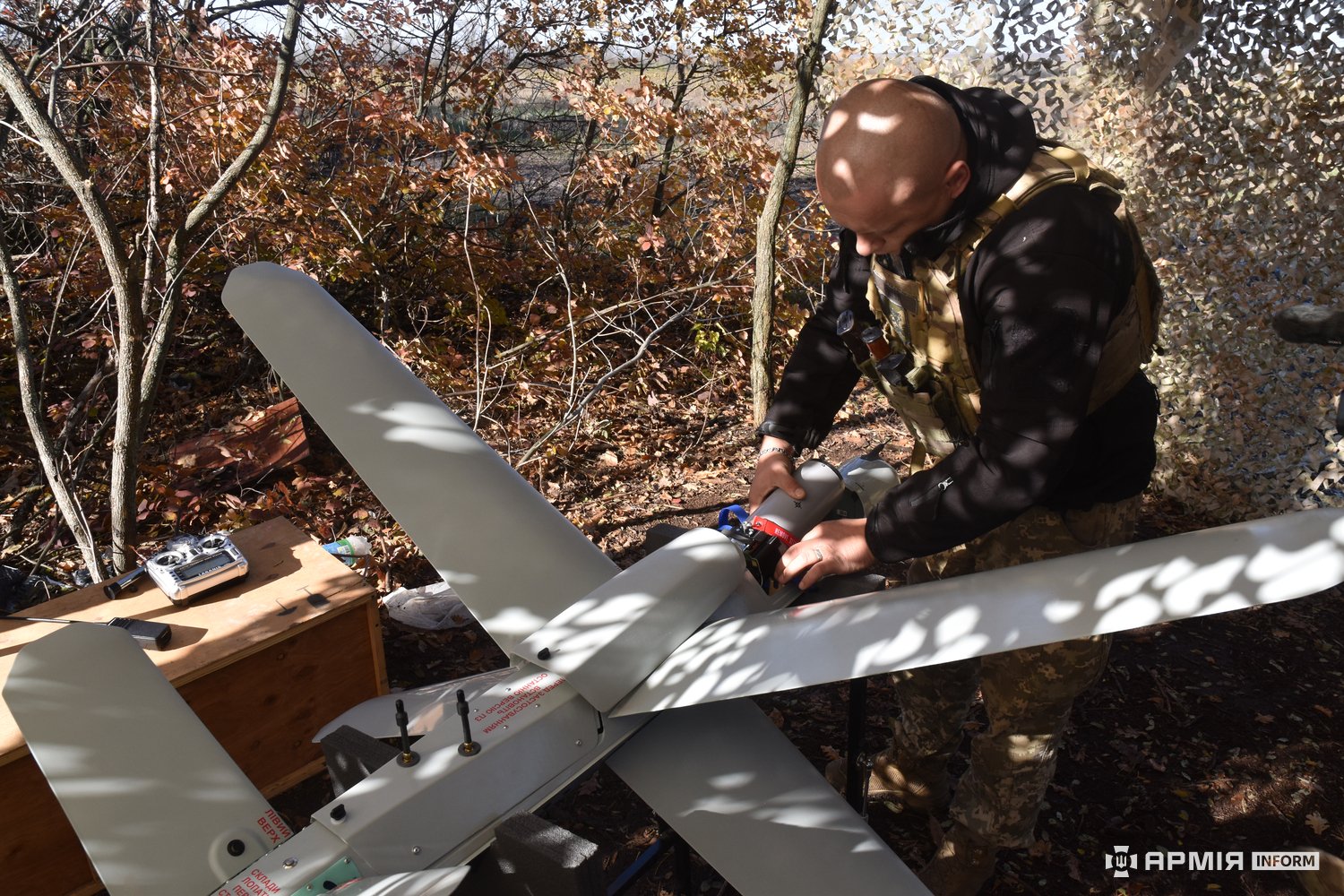
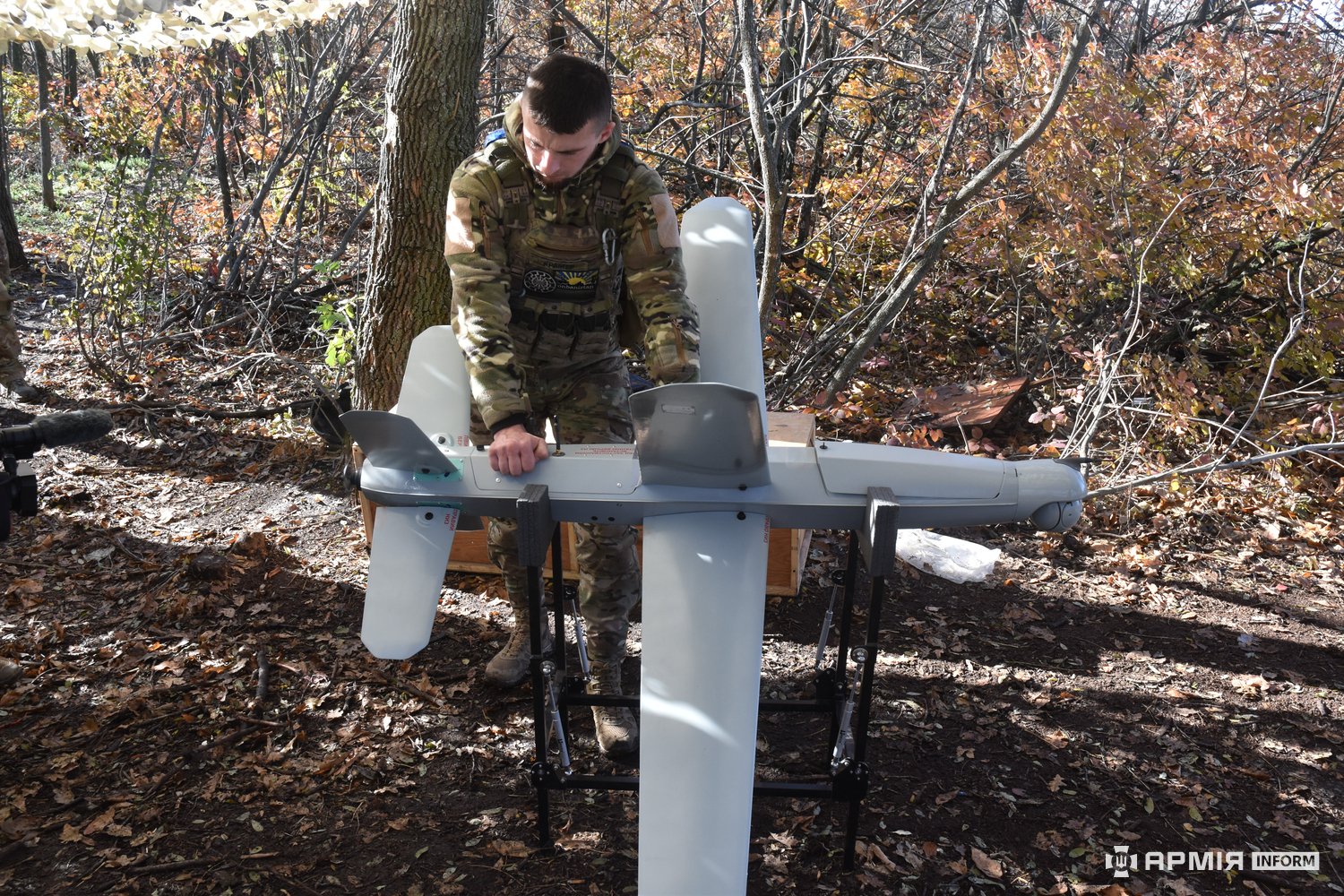
Meanwhile, the UAV itself is being assembled.
Somewhere high above, another “Shahed” buzzes. The guys ignore it. Then we hear a strange noise. The pilots say it was a KAB gliding bomb. The enemy gladly drops KABs if they detect our pilots’ hideouts — but not this time.
We go down into the dugout where the pilots’ command post is set up: a plasma screen, laptops, makeshift wooden tables, and comfortable chairs — some meant for gaming.
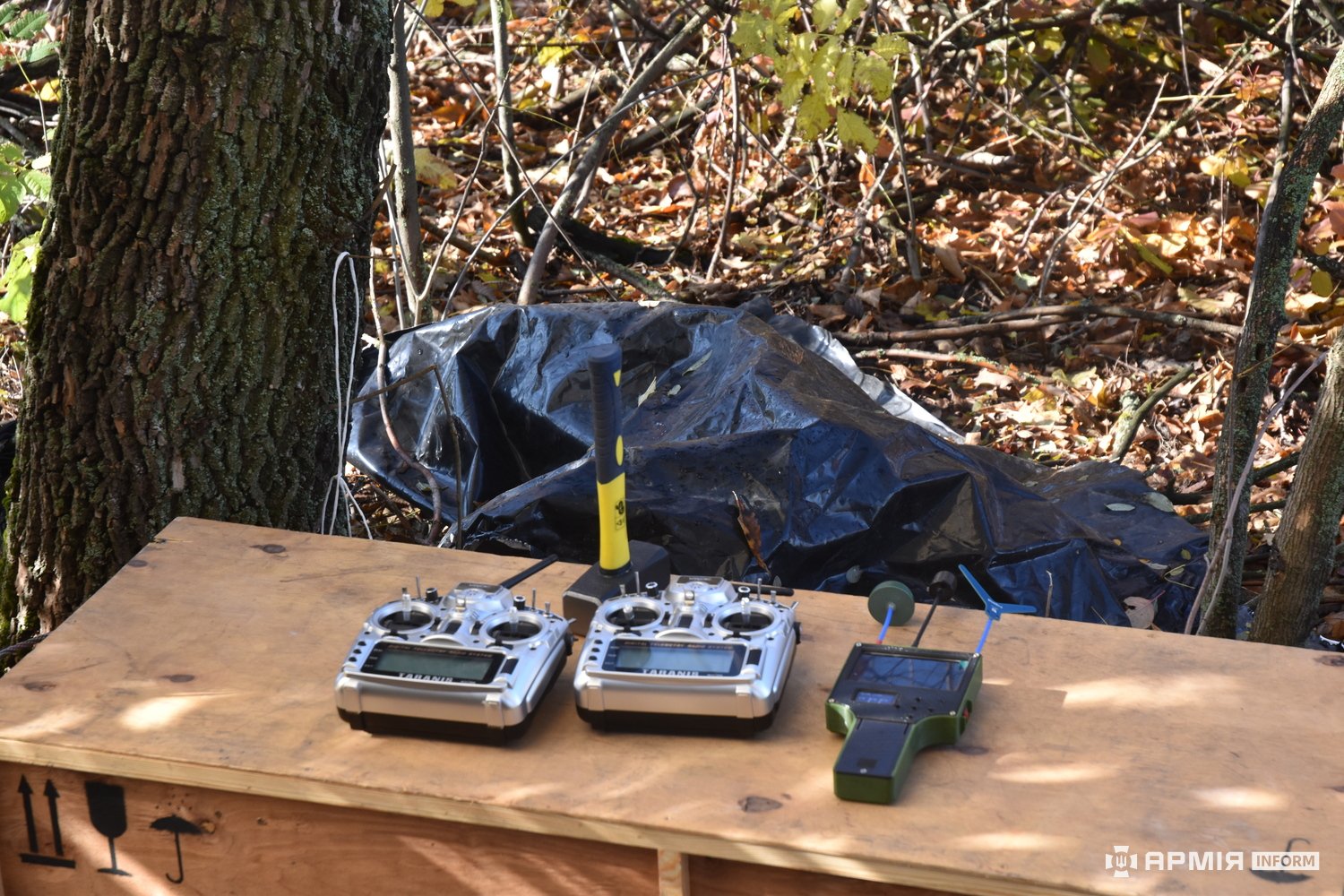
Above us, the pilots check all Leleka’s systems, measure the battery voltage — they affectionately call it “the batka”. Over the radio, they report that “the wing” is ready. The order to launch comes in.
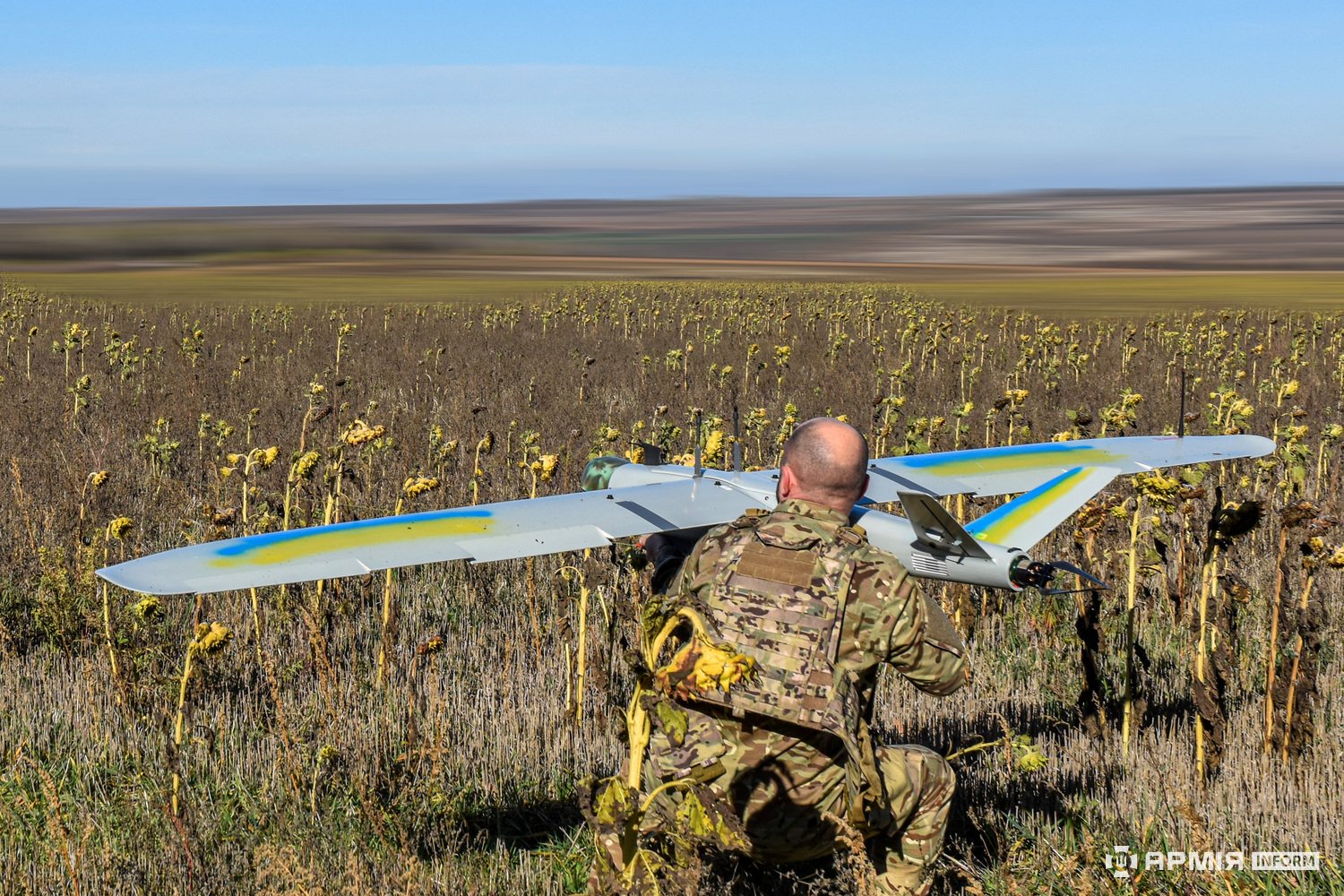
A soldier carries Leleka into the field. A rubber bungee cord is staked to the ground; the drone is attached to it. The soldier steps back toward the tree line, the cord stretches tight, the engine starts, the rear propeller spins up. A pilot stands nearby with the controller, ready to take command.
“Launch!”
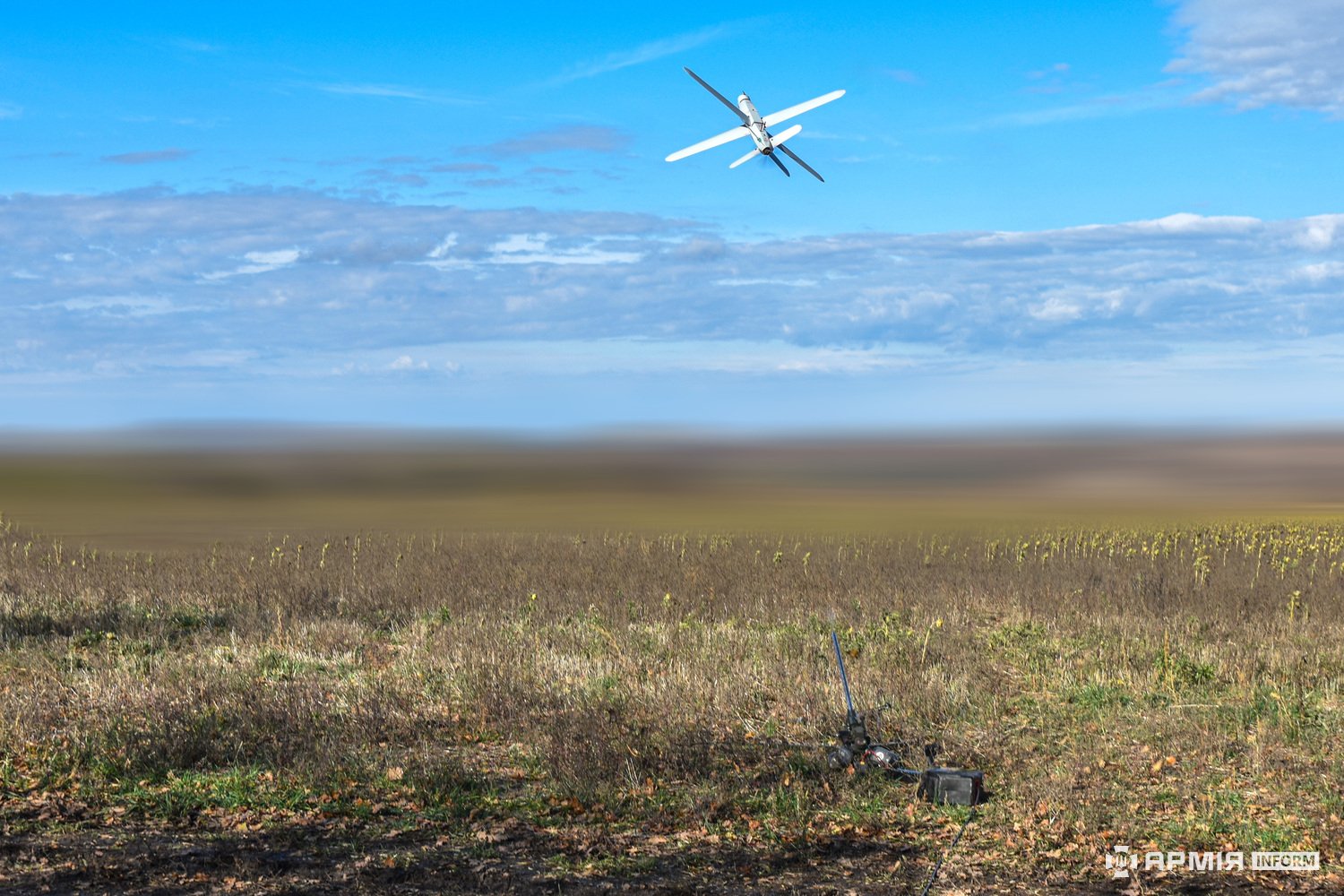
The soldier releases the drone. The tensioned cord accelerates it, and it takes off into the sky, quickly climbing toward the frontline.
Leleka flies along a preset route, checking areas where enemy movement was previously detected.
Priority targets: enemy air-defense systems — SAM systems and radar stations.
Leleka reaches the first possible target and begins circling to capture detailed footage.
But almost immediately the video feed is blocked — enemy electronic warfare has kicked in. The pilots try climbing higher but soon lose control entirely as EW jams the command link.
But this isn’t a problem for Leleka: in such cases it simply returns home until it leaves the EW zone.
Soon control is restored, and the UAV heads to a new potential target.
Pilots are warned where a Russian Pantsir might be stationed — very dangerous for reconnaissance UAVs — and where Russian interceptor drones were spotted. These areas must be avoided; the occupiers actively hunt Lelekas.
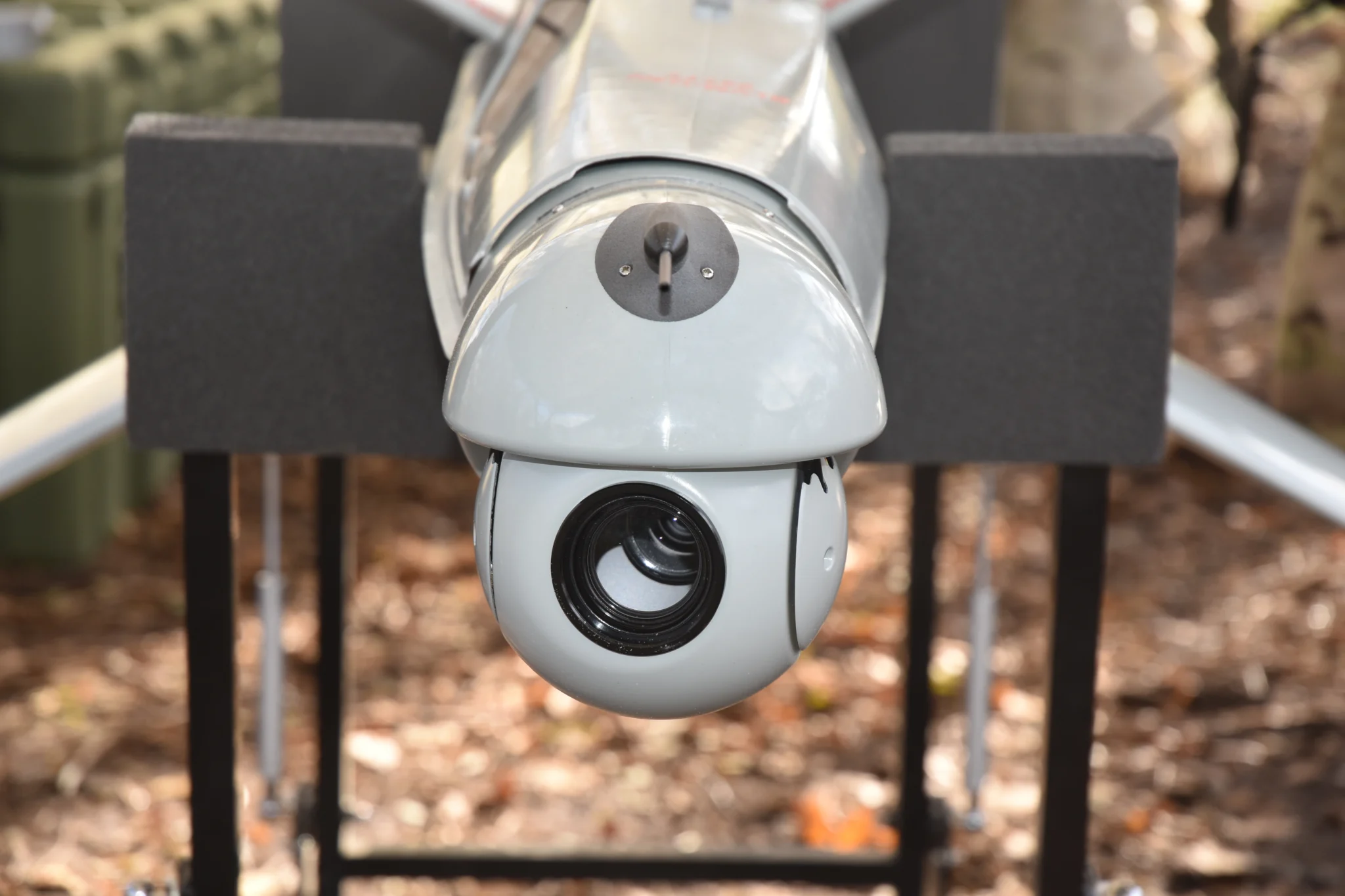
A message arrives: a Russian Buk SAM system has been spotted nearby. This is dangerous for Leleka but a perfect target for Bulava.
The pilots are ordered to prepare the strike drone for launch.
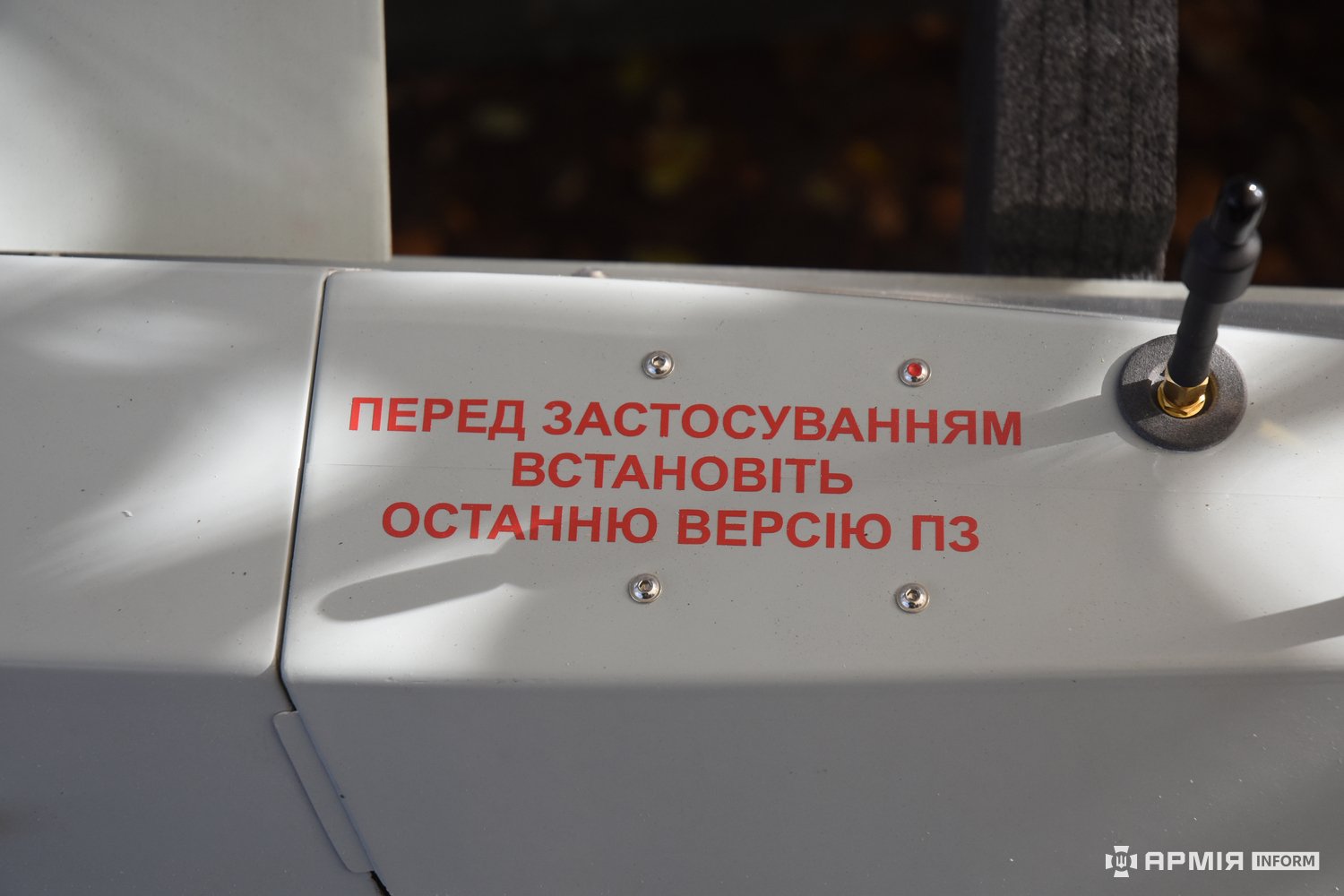
Bulava is quickly assembled, updates begin loading — the manufacturer improves the system constantly, so updates come almost daily.
After that, the pilots test the engine and flight-control system.
Leleka has two wings; Bulava has four — making it highly maneuverable.
One pilot prepares the 3.5 kg warhead. A tank protected by a “mangal” cage is hard to destroy with it, but a SAM system can be heavily damaged or even destroyed if its ammo detonates.
When Bulava is ready, they bring out the catapult and compressed-gas cylinder. The gas provides the initial thrust.
A strong crosswind is blowing, but there’s no time to wait — Bulava is launched.
It veers to the side but then stabilizes, gains altitude, and heads toward the frontline.
Barely has Bulava taken off when the Russian Buk — apparently alerted by Leleka — turns off its radar and disappears.
Leleka searches for it, circling, trying to look under trees and bushes, spotting traces of tracks.
Several times it seems the Buk has been found, but each time it turns out to be something else.
Emotions run high — real hunting is underway.
But in this war, the hunter can become the hunted.
A warning arrives: a Russian Zala reconnaissance UAV is in the sky — it may guide strike drones to the area.
The catapult is quickly removed, pilots hide in the dugout and wait it out.
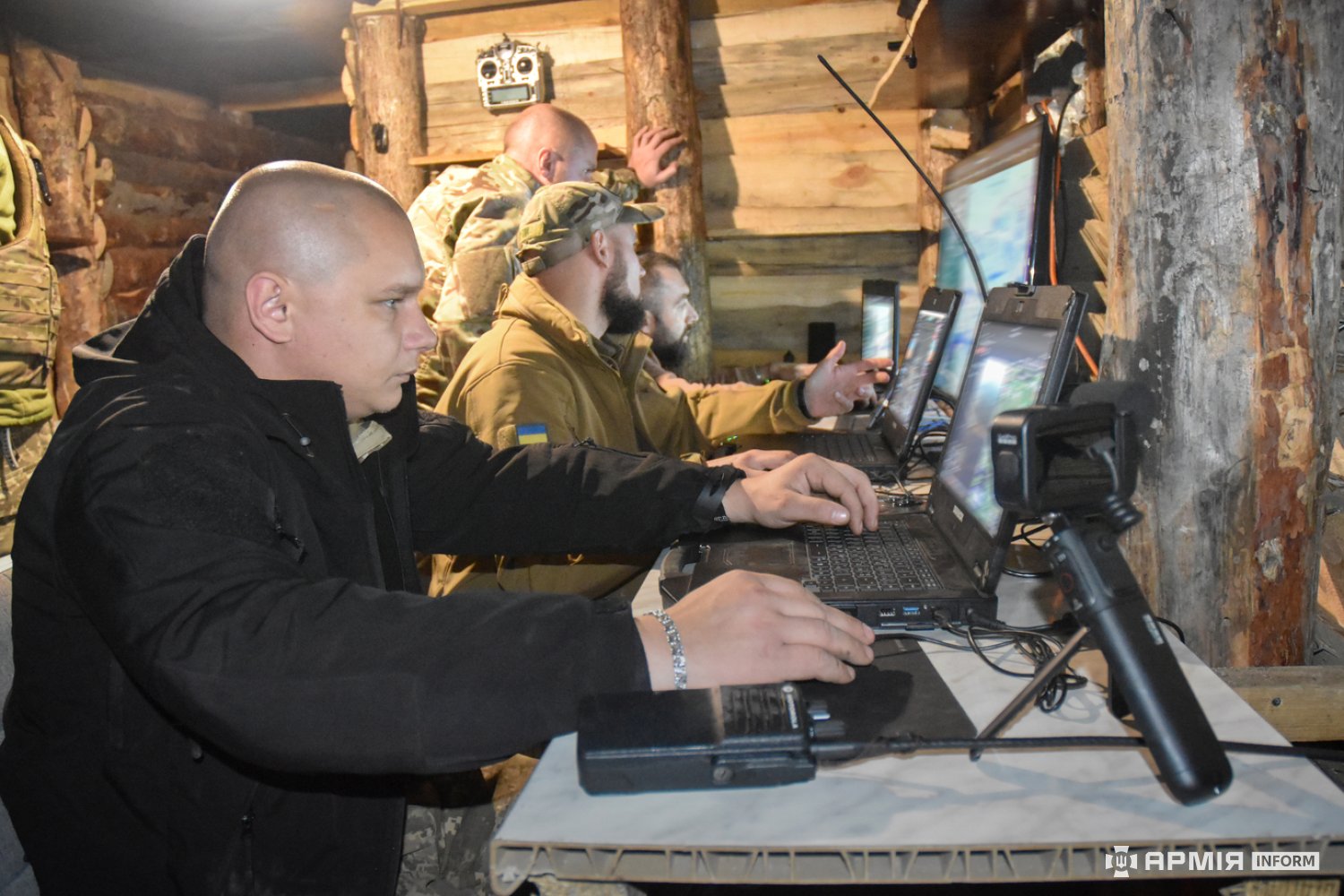
Meanwhile, Leleka keeps searching.
It’s difficult — enemy EW interferes, and strong winds drain the battery. After half an hour of searching, it becomes clear that the Buk is too well hidden. But Bulava is already approaching — and it cannot return. It needs some target.
Leleka begins looking for an alternative.
A self-propelled gun would do, but none is visible.
Finally, movement is spotted on the road. At first it seems to be a truck — Bulava is directed there — but then the pilots realize it’s a combine harvester.
In the Sumy region, where I’m from, enemy drones hunt agricultural machinery and buses. But what the occupiers allow themselves, the Ukrainian defenders do not — so the search continues.
Strong winds keep draining Bulava’s battery — every minute counts.
At last, they spot a tarped military truck, possibly carrying ammunition. Bulava heads toward it.
The attack is complicated by wind and high tree lines along the road, preventing a side strike.
The pilots are nervous — the battery is dropping fast. They decide to strike head-on — no time for maneuvers.
Bulava begins to dive — and just before impact, its video feed cuts out.
But Leleka’s camera shows the explosion: Bulava missed by a few meters, detonating in front of the truck.
The vehicle rolls a short distance and then stops. No one exits the cabin — the pilots assume the driver was hit.
This is not enough, so they begin preparing a second Bulava.
Leleka continues flying deep into enemy territory, capturing detailed imagery with its powerful camera.
But the wind strengthens, and even Leleka struggles to return. The pilots decide not to launch the second Bulava.
Still, the hunt is not over. The fighters hope the wind will calm in the evening so they can launch a Bulava with a night-vision camera — enemy logistics comes alive at night, presenting valuable targets.
We wish the guys success and head back.
On the way back, we visit the battalion’s senior sergeant, Oleksandr, who took part in the operation.
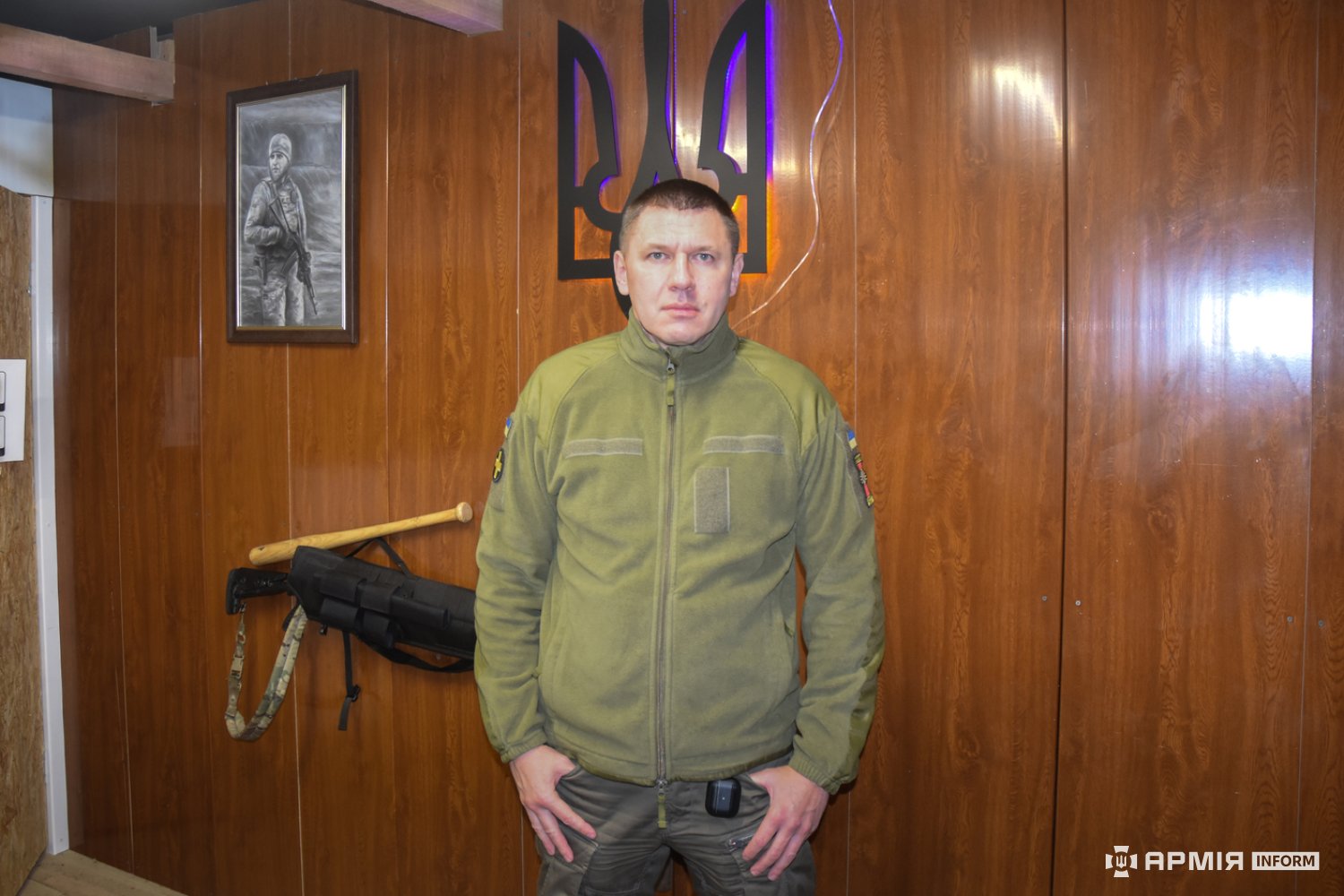
“This is already the second crew in our battalion working with Bulava. And so far, the reviews of this UAV are excellent. We fly it over 70 kilometers — and that’s not the limit. New versions can fly over 100 kilometers.
Our priority targets are enemy air-defense systems. But the enemy now hides them very carefully, so finding them is difficult. That’s why we must prepare secondary targets — less interesting, but still meaningful.
This is the job: if not on the first try, then on the second, third, fifth — but we get what we need.
Bulava’s huge advantage is its maneuverability. Even during terminal guidance, you can adjust its approach and slightly change its trajectory.
It’s not very efficient to use Bulava against tanks — we have other strike systems for that”.

The enemy is attempting to develop the production of naval drones and copy successful Ukrainian practices — both technical solutions and tactics.
Fighting continues in the northern part of the city of Pokrovsk in the Pokrovsk direction. A mechanized assault was repelled there the day before.
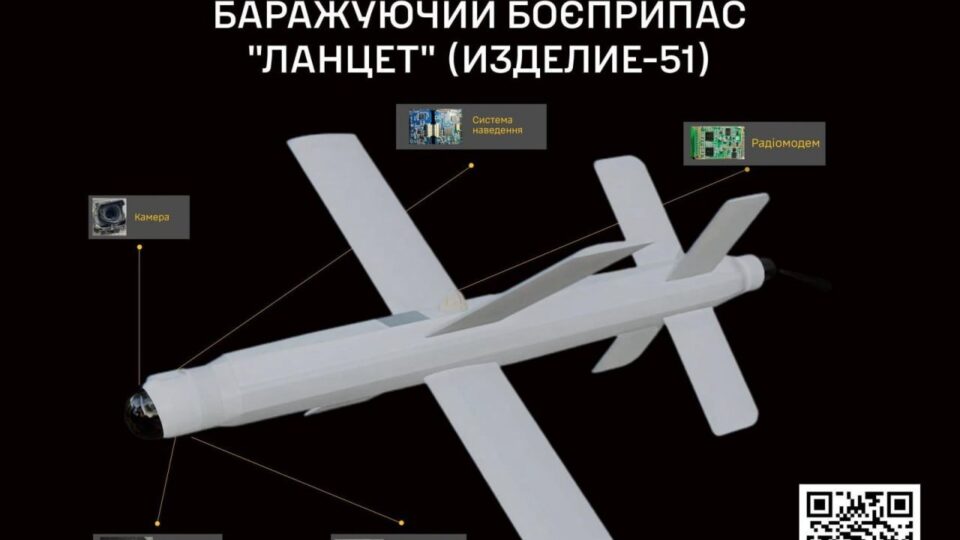
The Main Intelligence Directorate of the Ministry of Defense of Ukraine has published data on enterprises involved in the production of Russian loitering muniti

Another two-day round of negotiations between Ukraine and the United States concluded in Florida on March 22.
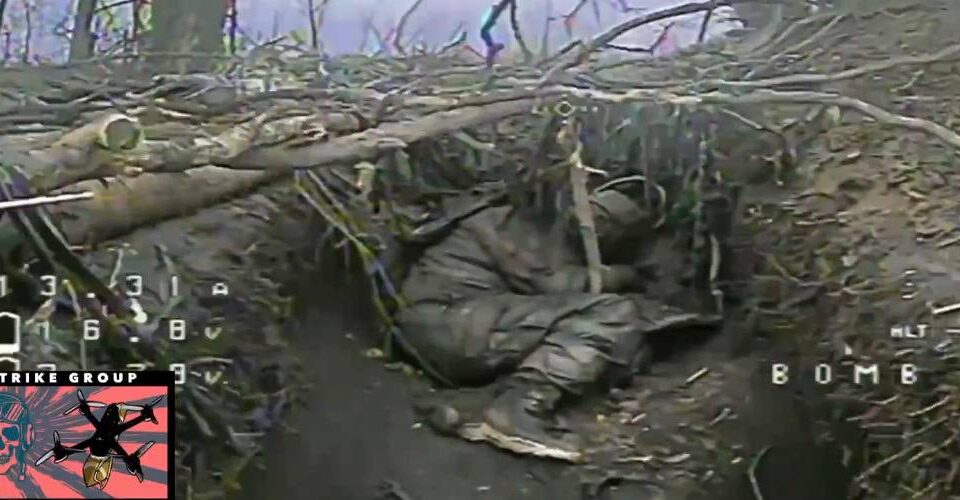
The enemy continues daily pressure and attempts to break through Ukrainian defenses in the Sloviansk direction.
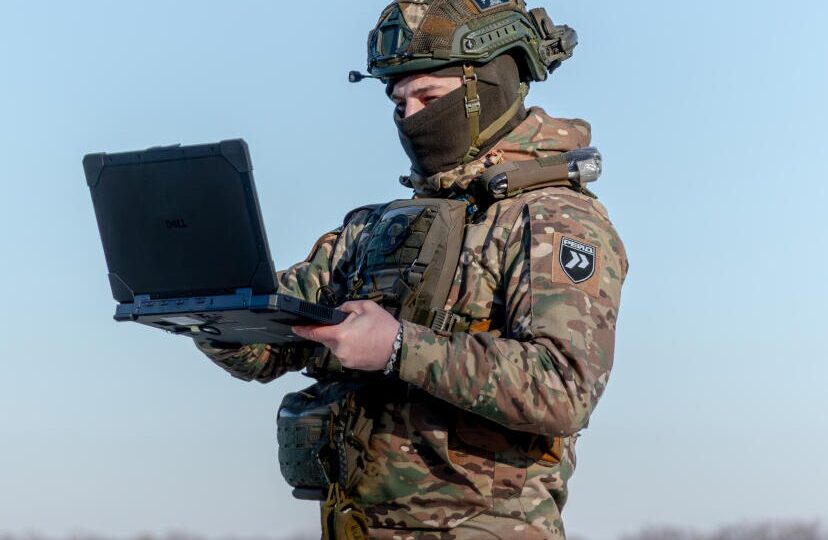
Over the past day, units of the Unmanned Systems Forces struck/destroyed 1,078 enemy targets.
The international delegation, headed by Ana Lucía Bueno, ICRC Public Health Coordinator, and Sujit Panda, Head of the Physical Rehabilitation…