The international delegation, headed by Ana Lucía Bueno, ICRC Public Health Coordinator, and Sujit Panda, Head of the Physical Rehabilitation…


War always gives rise to technology. But in Ukraine, it does so not according to the rules of the last century, but according to its own accelerated procedure. Here, a machine does not go through long cycles of approvals and does not wait its turn in modernization plans. It appears where there was risk yesterday and operates where a human being should no longer be.
This is how the Ukrainian school of ground robotics was formed — restrained, practical, and entirely frontline-focused. It is not a “presentation element” or an attribute of technological fashion. It is a tool used where a human can still perform a task — but the cost is already too high.
The essence of the change lies in the division of roles: humans make decisions, machines carry out what they are capable of doing. It is precisely at this seemingly invisible point of shift that one of the deepest transformations of modern warfare occurs.
Ukrainian robotization does not have a single school, canon, or fixed set of dogmas. Its doctrine is tactical expediency. Its method is speed. Its purpose is to remove from humans the risk that has no right to fall on living bodies.

The pace at which Ukraine is deploying ground robotic complexes resembles an accelerated frame of evolution — where technologies develop not over centuries, not over years, but over cycles of combat engagements. Processes that take other armies months or years in approvals, testing, and certifications happen here within a single season of war.
Data from the Ministry of Defense breaks conventional expectations: in July alone, eight new UGV models were introduced to the military, forty since the beginning of the year, and sixty last year. At the start of the large-scale invasion, there were almost fifty times fewer such codifications.
This is not just growth. It is a change in the biology of the military: its reflexes, nervous system, and adaptation speed.
Such acceleration did not arise spontaneously. Ukraine built a system that eliminated the problem which has paralyzed most armies of the world for decades: the slow, cumbersome, and often fruitless path from development to the frontline.
The first pivotal element of the system is DOT-Chain Defence, a digital weapons marketplace that has transformed equipment procurement from a bureaucratic procedure into an almost direct channel between unit and manufacturer. What previously hung in limbo for months now reaches the frontline within weeks or even days. UGVs became a product not of industrial inertia but of the living needs of the army.
The second element is the “Iron Polygon”. This is not a polygon in the traditional sense, but rather a pressure chamber where equipment is tested for durability at the pace of real combat. Over 550 tests per year, and not a single compromise. A machine either withstands frontline conditions or returns for refinement. This filter eliminates all excess — “promising” prototypes and presentation innovations that look good in laboratories but disappear after the first outing under fire.
The third pillar is training people. In November, the Ministry of Defense certified the first seven private UGV operator schools, effectively opening a new military profession. The state will fund the training of thousands of specialists — transforming robotization from an exotic specialization into a regular personnel flow. In times when the frontline changes weekly, the scarcest resource is no longer hardware but humans capable of controlling it.
As a result, Ukraine obtained an ecosystem that operates in combat as naturally as artillery, engineer groups, or aerial reconnaissance.
They have become part of the war staff — as indispensable as drones once became.
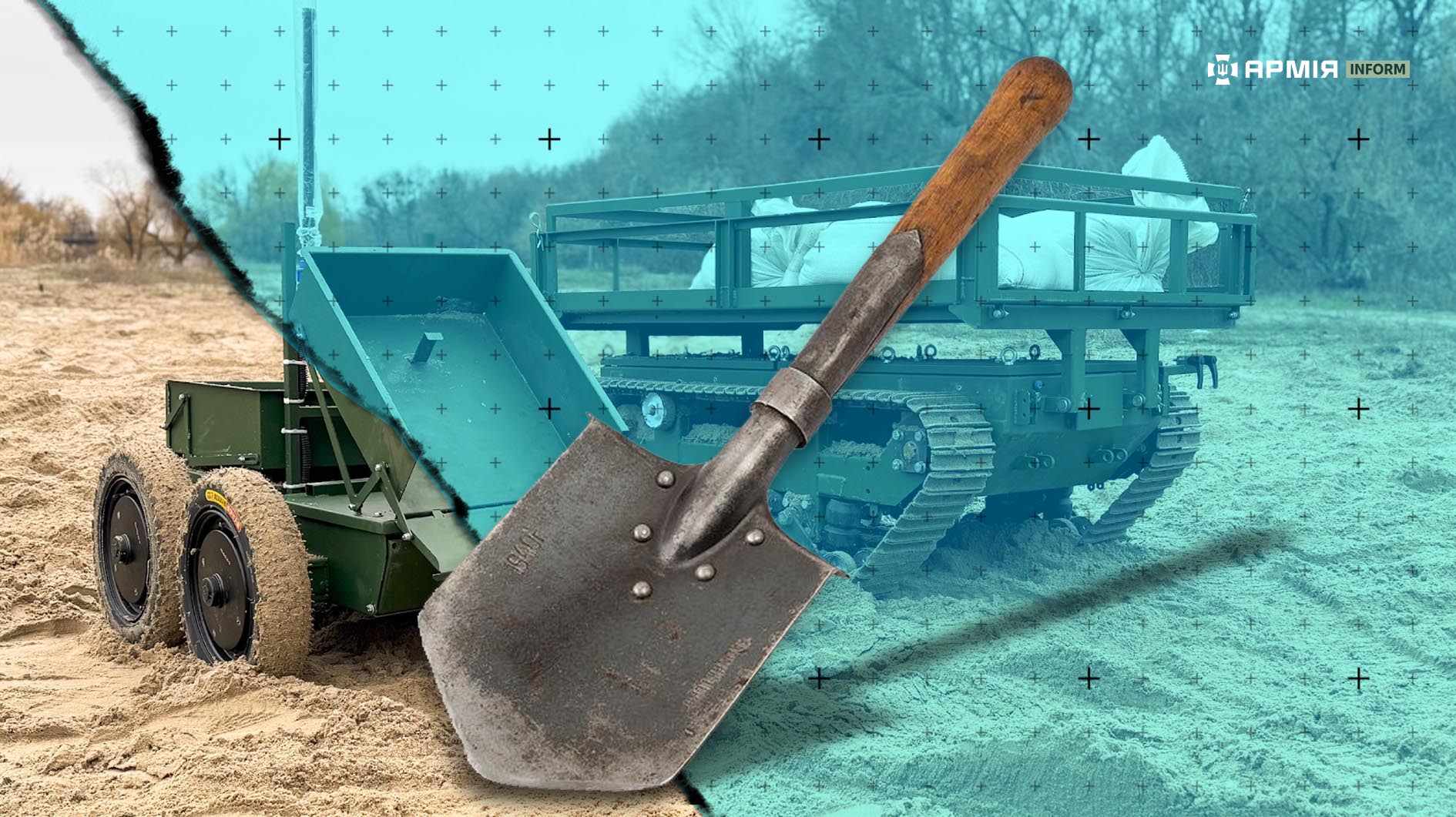
Ukrainian robotization did not emerge from technological breakthroughs — it emerged from a culture that for decades relied on things without names or elaborate descriptions. On objects that always work: in the cold, under fire, in trenches, where there is no room for elegant solutions. The simplest symbol of this culture is the entrenching tool.
A tool that was never part of a myth but always part of survival.
The shovel does not create emotions or convey a sense of power. It promises nothing superfluous. Its value lies in honesty: it does exactly what it was designed to do, and it does it reliably. This simple philosophy of the tool became the foundation on which the first ground robots in Ukraine grew.
They did not wait for a technological revolution to rethink combat tasks. They began automating them with the same practical straightforwardness with which trenches had been dug and tools selected for decades according to the principle: “Will it hold or not?” The first platforms were neither “demonstrations of capabilities” nor statements about the future. They were a continuation of the usual logic: if a task can be performed by a mechanism — it should be performed by a mechanism.
It is this culture that gave Ukraine a natural start in UGV development. Machines appeared where minimal tools had previously worked and received their first roles there. Not due to “vision,” but through the habit of trusting a tool with tasks it can perform better than a human.
Ukrainian UGVs were not initially designed as multifunctional machines — but the frontline made them so. In one month, a platform can go through several roles in succession: from traction to medical, from engineering to strike. Its form is determined not by drawings but by terrain, tactics, and the specific needs of the unit.
This is the cultural shift: a robot in Ukraine is not a “class of equipment” but a tool that evolves with the war.
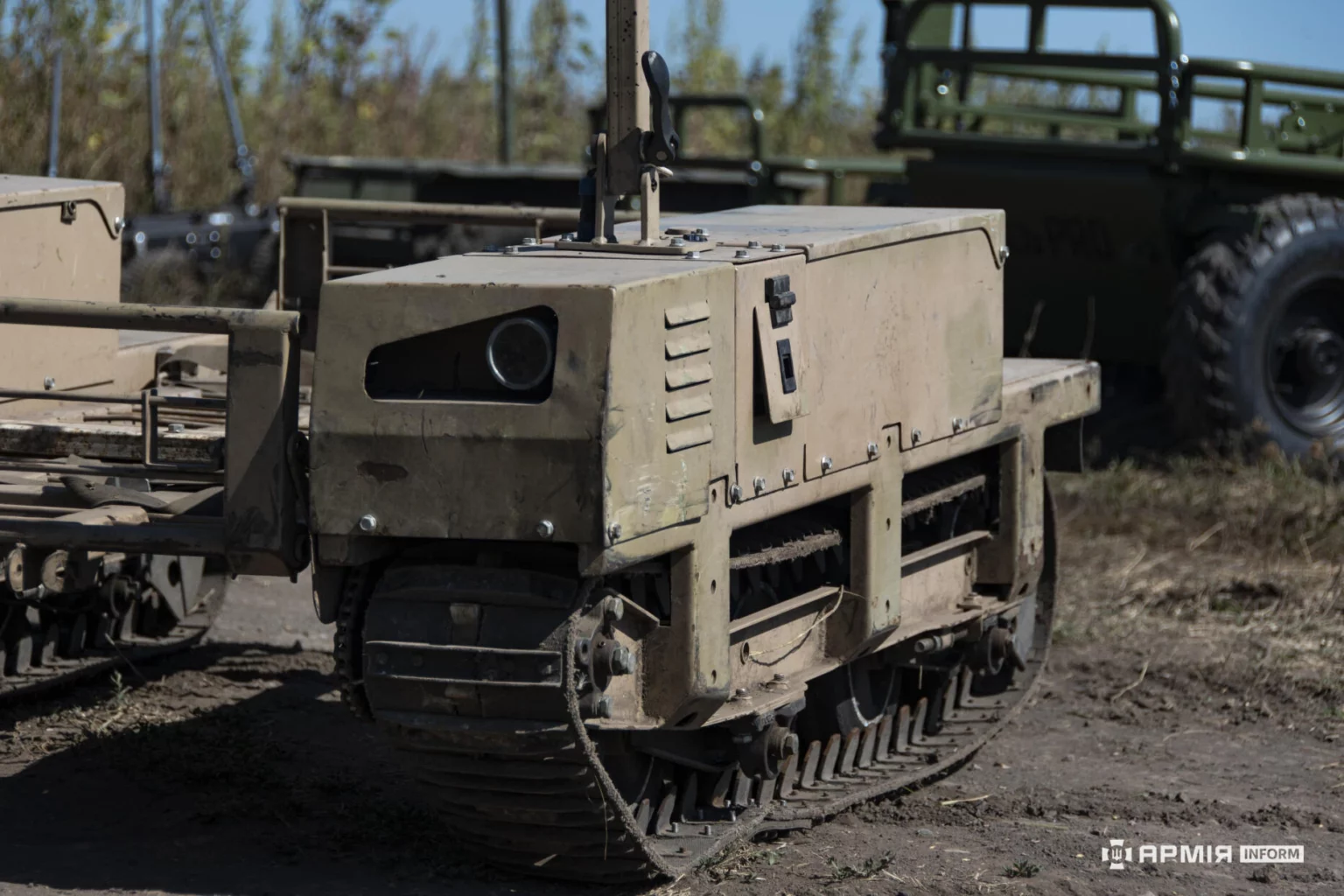
The first life of a ground robot seems the simplest. It is a life without dramatic frames and without the narratives that usually go viral in war. But this is where it all begins: when a machine takes on work that a human body performs at the cost of resources, pain, or fatigue.
Traction power is not a technical term, but a frontline feeling.
In thirty-degree heat or deep snow, on broken fields or in planting corridors, where a backpack suddenly weighs twice as much and ammunition seems impossible to carry even for a minute, the robot becomes a quiet, reliable force that saves energy where war itself takes it away.
In the 91st Separate Anti-Tank Battalion, this looks almost mundane: a small robot “Tanchik” follows the group, taking on tasks no one notices in after-action reports — boxes of food, water, charged batteries, sometimes entrenching tools. Yet it is precisely this “mundanity” that changes the tempo of combat work. When a human does not have to carry everything that ensures survival, they conserve energy for what truly matters.
Similarly, logistics works in the 33rd Brigade: their “Termit” covered over 300 kilometers and transported more than 2.5 tons of cargo — a route that once required daily work of an entire team. Alongside it operates DODGER — compact, low, armored, capable of delivering a quarter-ton under fire while remaining invisible even in open areas.
This transition is easy to underestimate because it is almost imperceptible.
But it is precisely this that determines how the army will move tomorrow: with preserved endurance, better tempo, and greater freedom of maneuver.
The first life of a UGV is not about shiny technology, but about a simple yet fundamental rule of modern warfare: the robot removes from the soldier’s shoulders what exhausts them fastest — physically and tactically.

Evacuation under fire has always been one of the most dangerous forms of combat work. There is no right moment, no safe minute, no guarantees. Humans must enter a space where every move in the open is a risk that cannot be reduced to zero.
Ukraine became the first country where this dilemma began to be solved by a machine.
Initially, UGVs were created as simple cargo platforms. But evacuation forced them to evolve quickly, without theoretical pauses. Armored compartments, reinforced communications, stability under EW, speed — which became not a characteristic but a chance. Evacuation turned the robot into a combat participant, taking on not kilograms but responsibility.
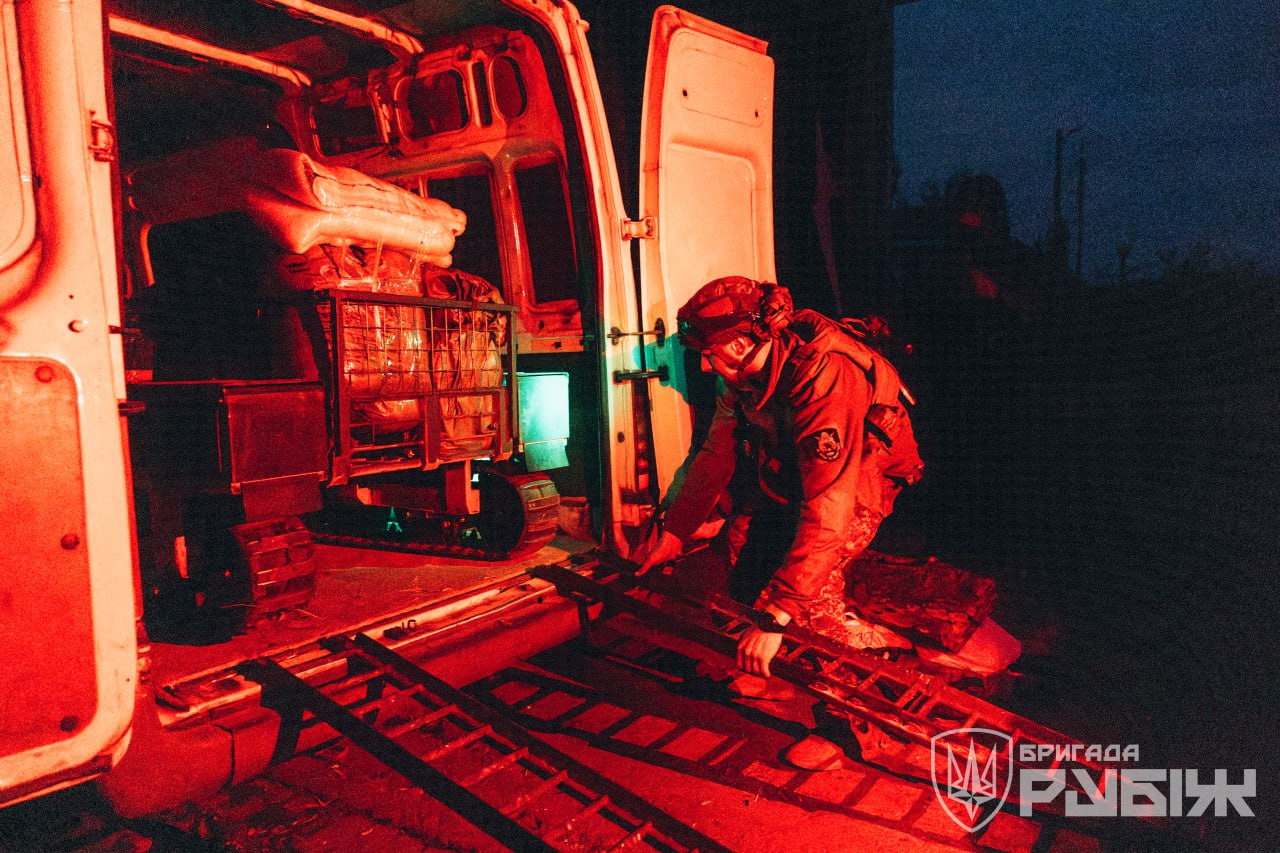
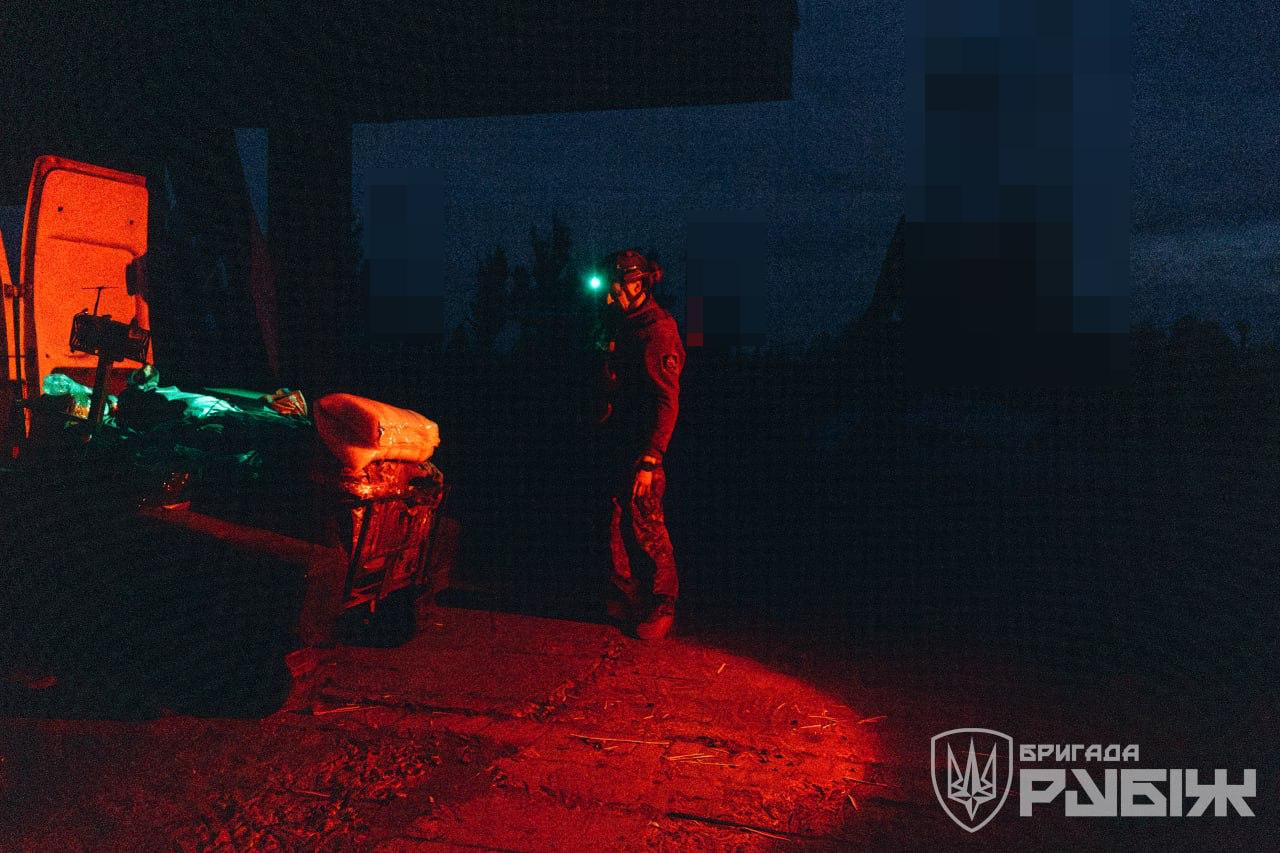
In Kharkiv region, the “Khartiia” unit received one of the riskiest evacuation tasks: three wounded in a kill zone, one in critical condition. Approaches are monitored by drones, there are no shelters, lines of fire are pre-sighted. Any human evacuation team would have become a target before reaching the soldiers.
Therefore, the robot went ahead — not because it was safer, but because it was the only way.
The route for the UGV was built differently than for humans: according to terrain, FPV trajectories, and predicted lines of fire. The machine entered the danger zone, evacuated the wounded, and returned. The soldiers themselves admit: “A human wouldn’t have made it”.
The first medical battalion faced a textbook-like challenge: two “heavy” casualties at different points, both lying down, both requiring immediate evacuation.
On paper, this was a clearly defined task. On the ground — 21 kilometers of open terrain, turned into a shadowless space by Russian drones.
The solution was precise: conduct two missions in succession.
During the first mission, the robot moved smoothly. During the second, it took a hit from an FPV drone on its armored capsule: the explosion screamed in metal, but the soldier inside remained unharmed. The machine did not stop. In the end, it covered 84 kilometers in almost seven hours, with an average speed of 14 km/h and a maximum of about 40.
Both soldiers survived.
The cost — a damaged body that continued to move.
Operation “Vohnyk”: speed as the best body armor
A few weeks later, the battalion operated in a sector where the horizon was open like a palm, and nearly every meter was covered by drones. The entire route was 68 kilometers — a stretch that a person would long have called “too risky”.
The first evacuation failed: an enemy FPV targeted the machine four kilometers from the goal.
The repeated mission became a microcosm of the war itself: four drones attacked, and none reached their target. Accelerating to 72 km/h, the robot solved the task in the only possible way in such a space: with speed that outpaced the enemy strike.
The operation lasted over three hours — and ended as every operation should: the wounded returned alive.
The essence of the second life is simple: the machine goes where a human no longer can.
Third life — the machine that changes the landscape
Engineering work has always been the part of war where a human comes closest to death. Minefields, mined clearings, lines between two flanks that appear empty but actually consist of dozens of traps — this is a territory where every step is a guess. And where every mistake can be a verdict.
Ground robots went there instead of humans for the first time.
That is why the “Third Life” is neither heroic nor spectacular, but perhaps one of the most important. It is the stage where the machine assumes the role of a sapper: a person who enters the dark space to make it safe for others.
8th Special Operations Regiment: the corridor between two flanks
In the North Slobozhanshchyna direction, the 8th Special Operations Regiment received a task to check a sector between two flanks where there were no positions of adjacent units. Effectively — reconnaissance and clearing a territory that could conceal anything: from small enemy groups to tripwires and mine traps.
Special forces discovered the passage was mined — and instead of a sapper team, a robot with a mine-clearing trawl went ahead.
It traversed a route that would have been deadly for a human: removed threats, leveled the passage, and opened the way for the assault group. Ukrainian soldiers entered the settlement, cleared it — and did so without losses.
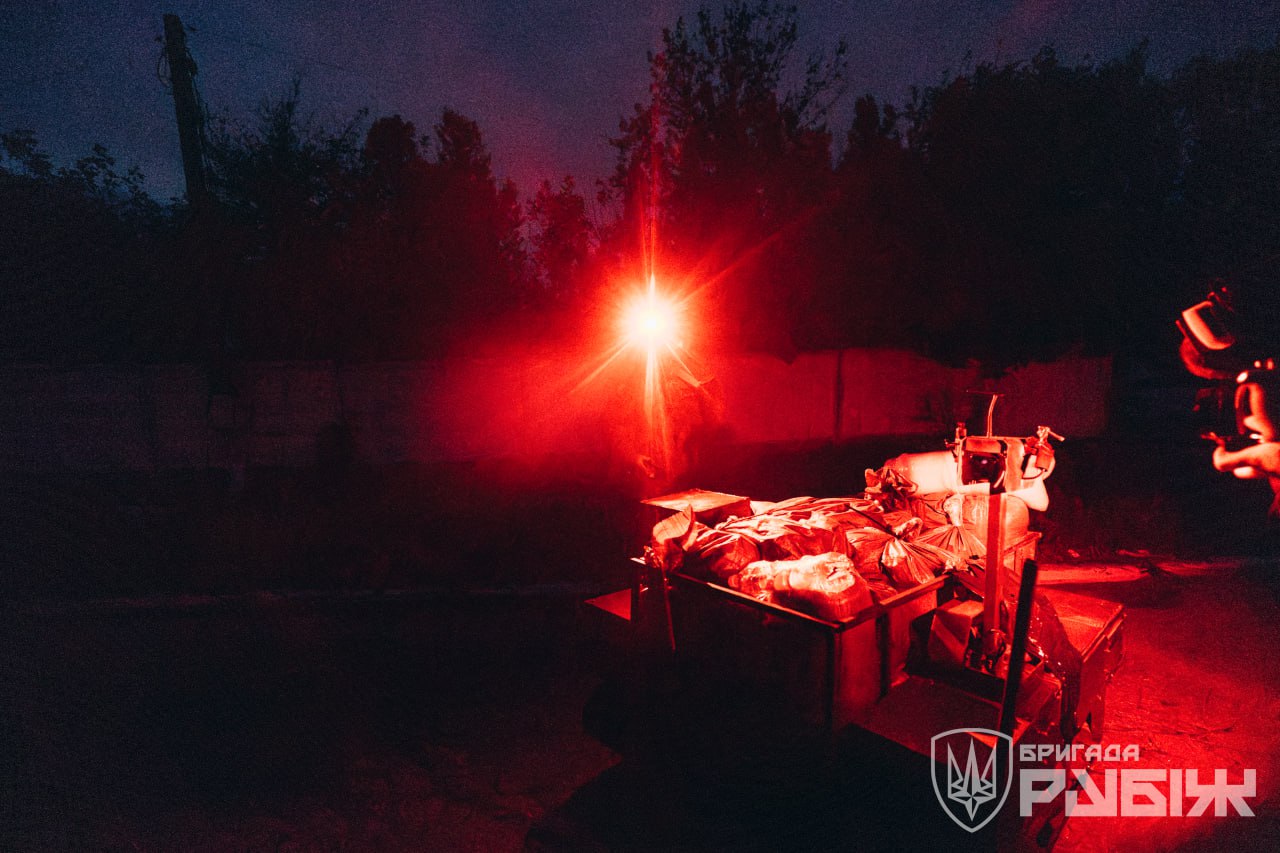

Invisible work that changes the front
Engineering tasks for UGVs multiply monthly. They clear trenches, approaches, and plantings. They remove dangerous munitions. They recover equipment that humans cannot. They install “hedgehog” coils under fire, where every second in the open is too high a price for a person. They conduct controlled mining in areas the enemy tries to bypass.
These tasks do not appear in reports. But without them, advances would have no open lanes, defenses no protected lines, and equipment no conditions to operate.
Third life — about efficiency and opportunity
Here, a ground robot does not perform tasks instead of a human. It does what allows a human to continue fighting.
In this life, the robot does not change tactics — it changes the accessibility of the fight: it opens a path where there was none.
Fourth life — the machine that fires
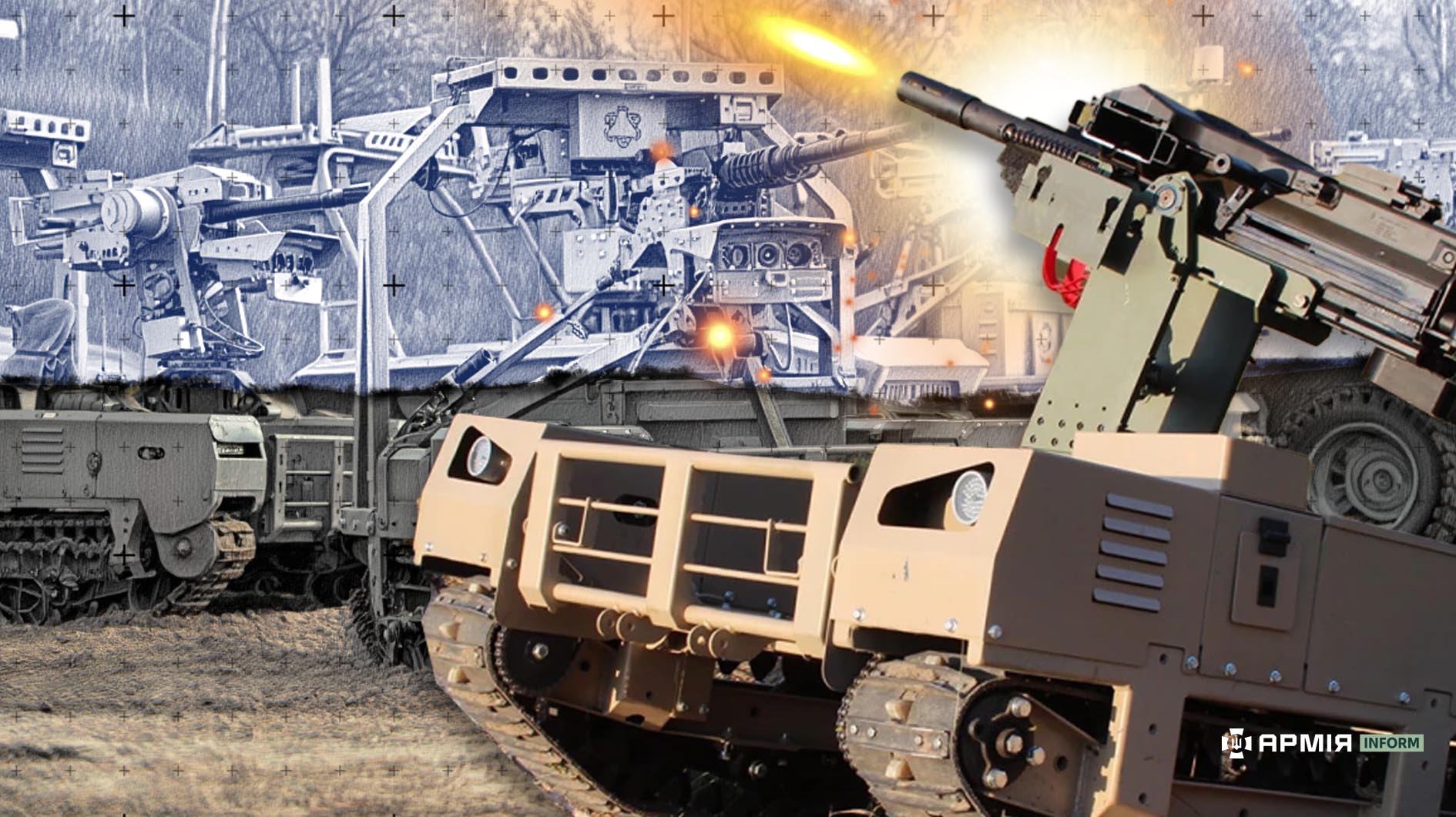
When a robot can go where a human faces the fog of death; when it can stay under drones longer than a soldier; when its movement is unreadable — the natural question arises: can it not only observe and endure but also shoot?
On the Ukrainian front, the answer to this question has long been a fact.
Ground robots are no longer just carriers, evacuators, or sappers.
They have become participants in combat.
“K-2”: precision destruction without human risk
In the 20th Security Forces Brigade, this transition was quiet and invisible — that is usually how real change occurs.
Operators moved the platform to a group of Russian soldiers and detonated the planted charge.
One occupier was killed, another wounded.
No Ukrainian soldier approached the dangerous distance.
This combat routine will one day be considered normal, but now it is only emerging.
“Kholodny Yar”: the machine gun that operates where infantry cannot
Another case — in the “Kholodny Yar” brigade.
A machine with a machine-gun module took up a position where no soldier could approach: too exposed, too targeted, too long to remain still under sight.
The robot fired short bursts, controlling the sector, halting advancement, doing what an infantryman would have had to do at the cost of personal vulnerability.
It was no longer an assistant — it became the shooter.
Remote strikes: when the charge weighs more than the body
Such platforms are used where FPVs lack power or range: when several dozen kilograms of explosives need to be delivered to a fortified position, a crossing destroyed, or an entrance to a dugout demolished.

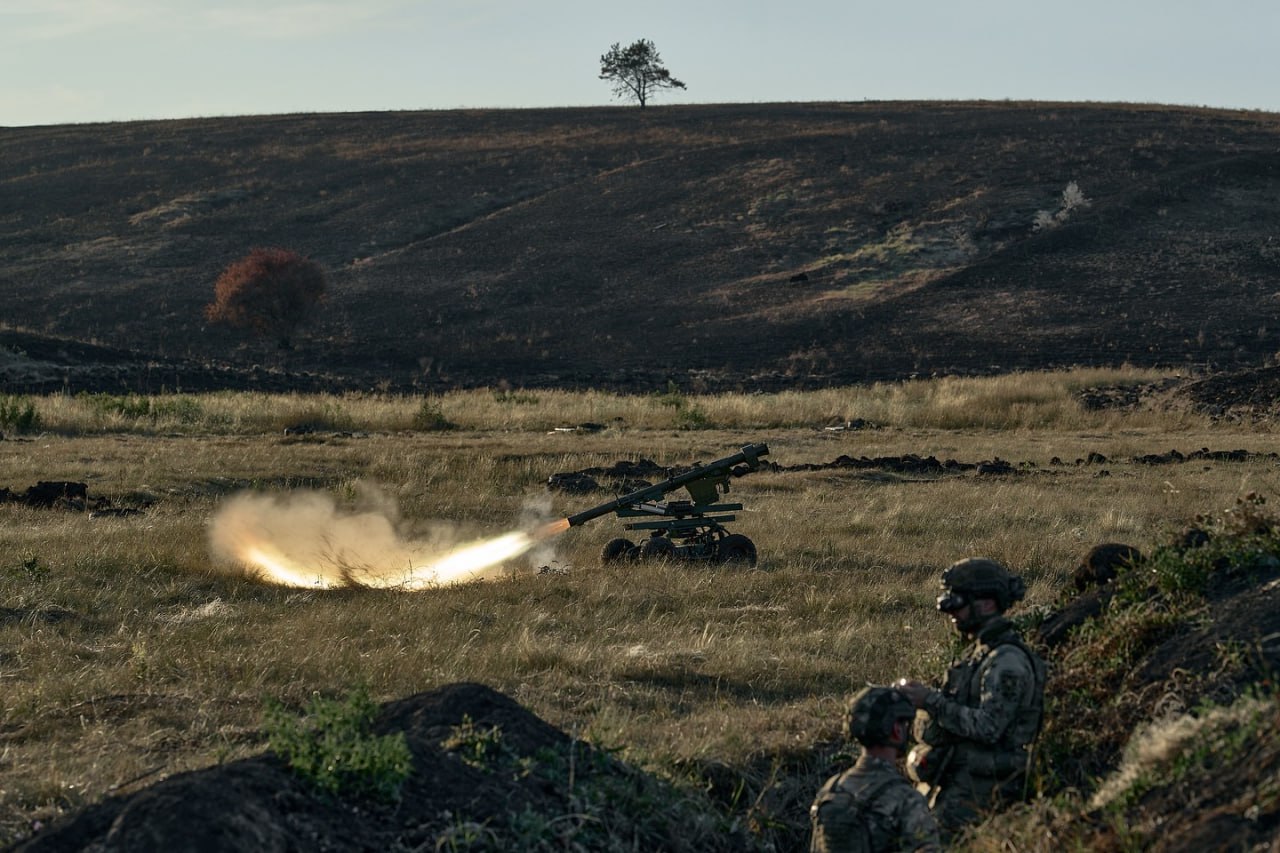
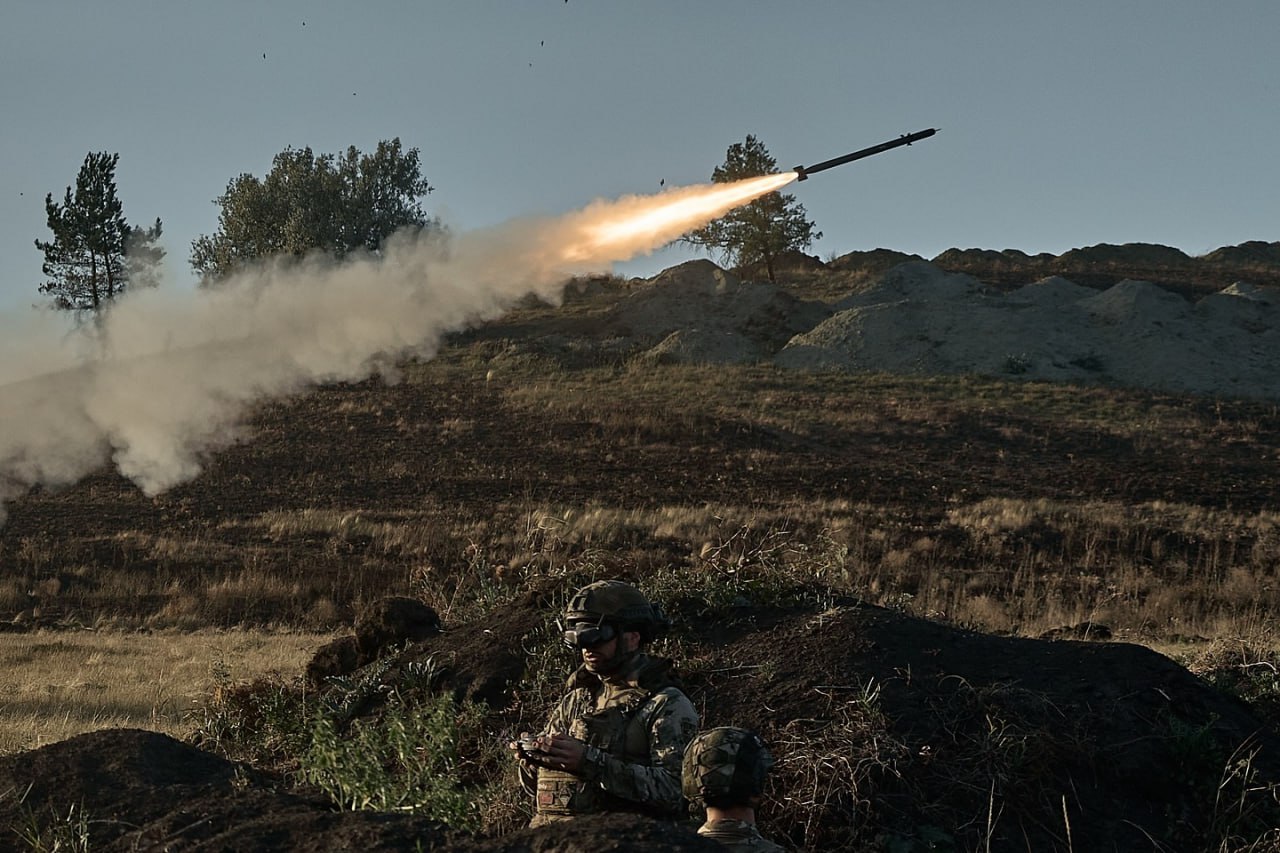
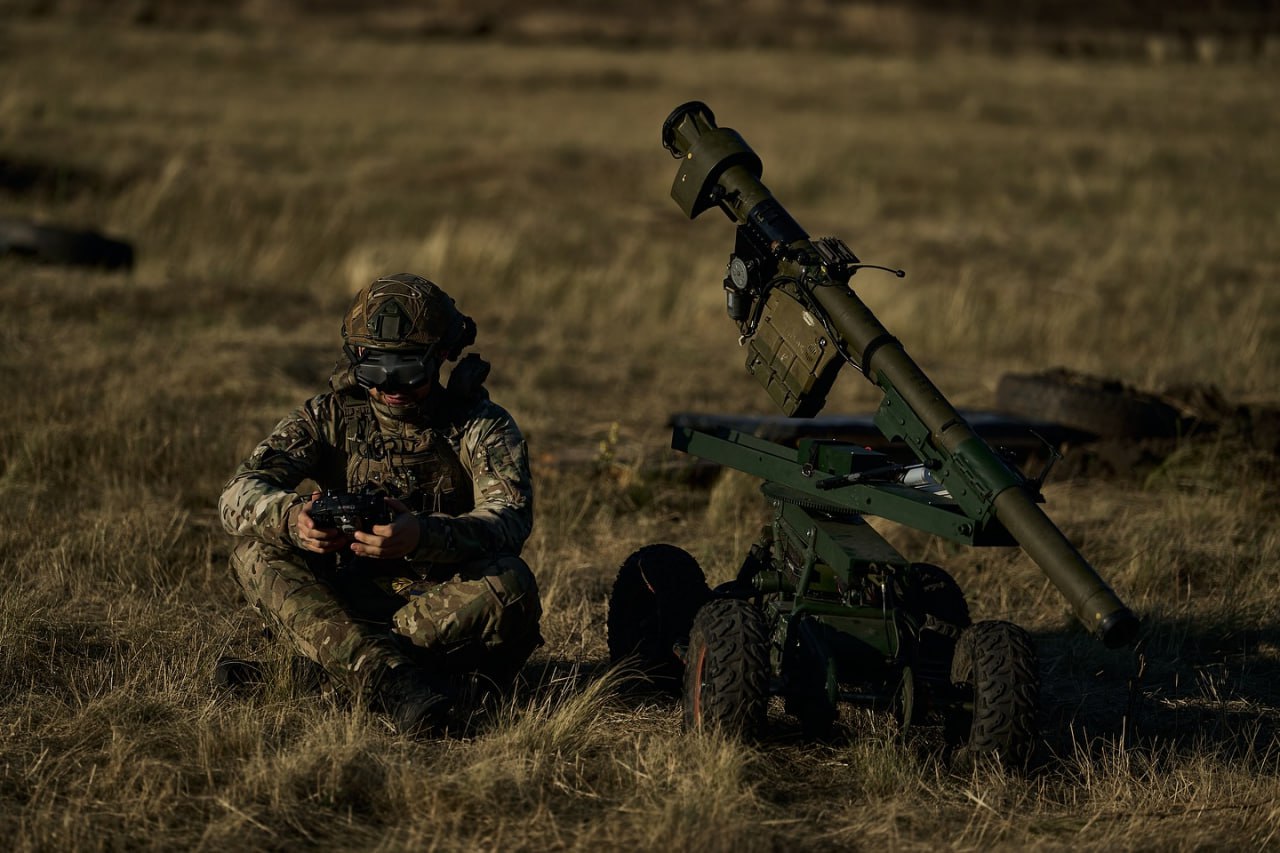
Simultaneously, a new category emerged — mobile robotic air defense
Thus, in the 28th Brigade appeared “Prometheus” — the world’s first full air defense system based on a ground robot. This is not a concept or lab model, but a real machine that shoots down aerial targets where stationary air defense would last only minutes.
93rd Brigade: reconnaissance without drones, in the fog
In “Kholodny Yar”, a UGV worked for the first time as a deep scout in complete absence of aerial visibility.
Fog deprived aerial reconnaissance of observation opportunities, but the robot, hidden under trees on a Russian position, saw vehicle movement before anyone else. It transmitted the data to operators, and these coordinates revealed the full picture for the drones.
FPVs entered the action using precise coordinates — and the column was destroyed before it reached the attack line.
Fourth life — not the evolution of technology, but of responsibility.
The problem of quantity and specificity: what the future still lacks
The four lives of ground robots — logistic, evacuation, engineering, and combat — show how the nature of war changes when machines take on risks humans used to bear. But there is one detail running through all these stories: this future is still insufficient.
The Ukrainian front is not a single space but a mosaic of different combat environments:
No universal robot can cover the entire front.
Yet no direction can wait.

That is why the difference between what Ukraine already has and what it needs is not measured in “number of machines” — it is measured by the scale of a war that expands faster than any industry. Units that have already integrated UGVs into daily operations show results, but these results are only fragments of what the front could become when there are enough machines for systematic rather than ad hoc use.
Ukraine is already moving in this direction: it proposes to partners to deploy joint production, create platform lines to NATO standards, adapt models for specific terrain types and combat characteristics. These are not local experiments or startups, but the potential foundation of a new industry — one capable of supplying the front not by dozens, but by hundreds of systems annually.
The need for robots does not diminish — it grows with the speed of the war itself.
That is why what we see today is not the final form but its first iteration.
The first proof that ground robots can not only expand army capabilities but also change the very architecture of combat.
Two philosophies of war: when technology serves humans — and when humans serve technology
Ground robots enter war without emotions or intentions.
Yet their appearance exposes what has long been hidden in the trenches by chaos and the fog of war:
the price each army is willing to pay for human life — and what it deems acceptable for technology.
In this sense, a robot is not just a combat participant.
It is a test. Not of innovation, but of a value system.
Ukrainian formula of choice: iron dies, human does not
In Ukrainian units, there is an unspoken agreement between humans and machines, created by war: if technology can take the hit — it must.
That is why robots are not merely “used” here. They are deployed like fuel, tourniquets, or armor: without hesitation, if it gives a chance to save a living person.
This was most vividly demonstrated in the operation called “HVER”, which became part of frontline memory.
At a position captured by Russians, a wounded soldier lay for thirty-three days — with a tourniquet, unable to move, under constant fire.
Seven times ground robots went to him. Six times they were lost.
Some were blown up by mines.
Others burned by FPVs.
Some were shot at point-blank.
Four were machines from other units — given voluntarily, without needing explanation.
The seventh robot reached him.
With a punctured wheel, dented body, and traces of explosions and drone attacks.
It traveled 64 kilometers, reached the position, and evacuated the wounded soldier.
The soldier survived.
There is no pathos in this story.
Just one very clear statement: for the Ukrainian army, a soldier’s life is not a resource, but the reason technology exists.
russian logic: when a soldier is expendable
In the Toretsk direction, soldiers of the 100th Brigade observed a scene clearly showing Russian logic in using technology.
Ahead moves the Russian infantryman — effectively a human shield.
Behind him — their UGV, which he “leads”.
And further behind, at a distance of several dozen meters, is the operator, keeping the machine in view, because otherwise, he cannot control it.
There is nothing accidental in this arrangement: first goes the one who must take the mine explosion or FPV strike. The machine is in the center, as the thing that must be preserved. The operator — behind, away from risk.
When the explosion occurred, the result was as the scheme intended:
the infantryman died,
the robot remained intact,
the operator survived only because he stood further from the epicenter.
This is not a tactical error or a strange episode.
It is a scale of priorities by which this army values its people.
These two approaches — two civilizations of war
One places technology between the soldier and death.
The other places the soldier between technology and death.
One loses machines to save people.
The other loses people to save machines.
And although both sides may have similar tools, the same machine functions in these armies as two different weapons — because it operates within different value systems.
What matters more than iron
In war, it always seems that technology is the answer.
But technology never answers on its own. It only exposes what the army already has inside: culture, instincts, values, rhythms.
Ukrainian ground robots have become the most accurate mirror of this front. Not because they are high-tech — many were born in garages, assembled from accessible parts, refined between shelling. What matters is not that. What matters is how they operate and for whom.
The four lives of UGVs — logistic, evacuation, engineering, and combat — are not four separate roles. They are four answers to the same question: what part of the danger can and should the machine take on instead of a human?
In the Ukrainian answer, there is no pathos.
It sounds simply: “as much as possible.”
This is visible in every episode: when a robot pulls batteries from under drones; when it goes after a wounded person where evacuation teams once died; when it passes a minefield; when it enters combat, allowing the soldier to remain alive.
Russia gives a different answer. And it is visible too: when a soldier goes ahead of the robot to take the hit for it; when equipment is considered more valuable than the one who operates it. This is not a question of technology, budget, or speed — it is a question of what place life holds in a system that sends people to battle.
And this defines the future far more accurately than the number of platforms, speed, or armor thickness. Technology will change — that is its nature. But what remains is the reason these machines were created: the way to think about humans in war.
It is this — not the iron — that makes Ukraine the vanguard of ground robotics.
It is this that shapes an era in which the machine takes on risk, not life.
And it is this that will determine who owns tomorrow’s battlefield.

The enemy is attempting to develop the production of naval drones and copy successful Ukrainian practices — both technical solutions and tactics.
Fighting continues in the northern part of the city of Pokrovsk in the Pokrovsk direction. A mechanized assault was repelled there the day before.
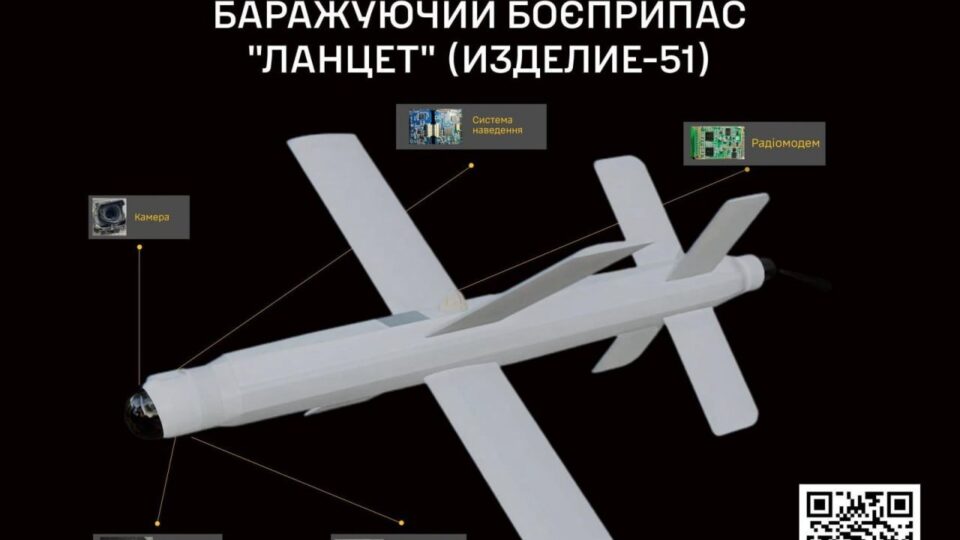
The Main Intelligence Directorate of the Ministry of Defense of Ukraine has published data on enterprises involved in the production of Russian loitering muniti

Another two-day round of negotiations between Ukraine and the United States concluded in Florida on March 22.
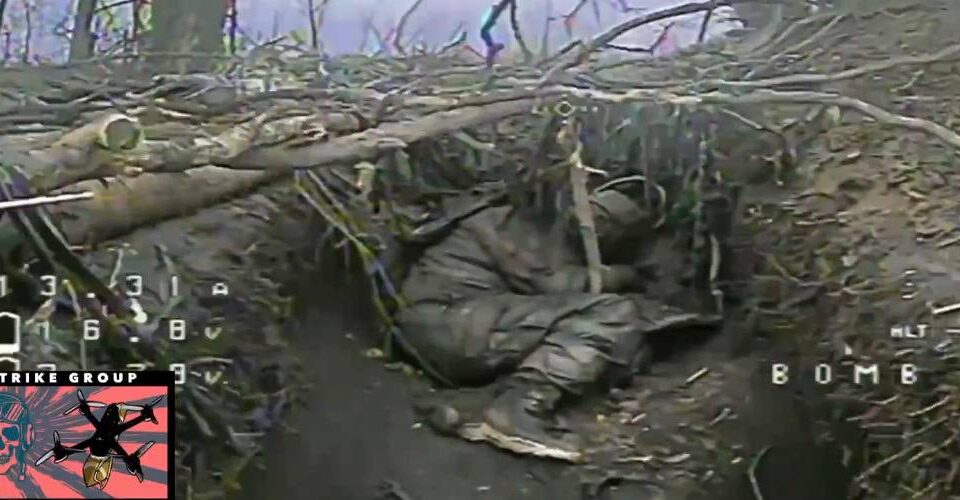
The enemy continues daily pressure and attempts to break through Ukrainian defenses in the Sloviansk direction.
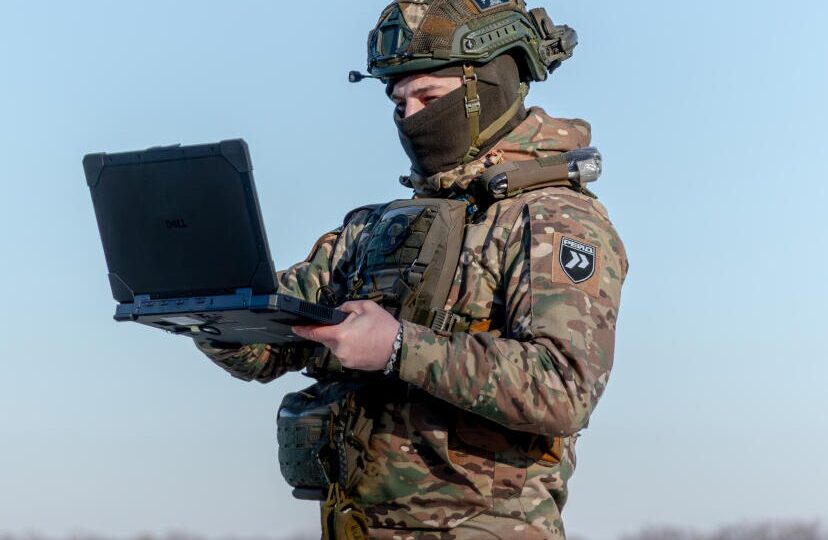
Over the past day, units of the Unmanned Systems Forces struck/destroyed 1,078 enemy targets.
The international delegation, headed by Ana Lucía Bueno, ICRC Public Health Coordinator, and Sujit Panda, Head of the Physical Rehabilitation…