Two hundred combat missions: the story of a Mi-8 pilot who entered the war as the youngest Army Aviator in the Armed Forces of Ukraine

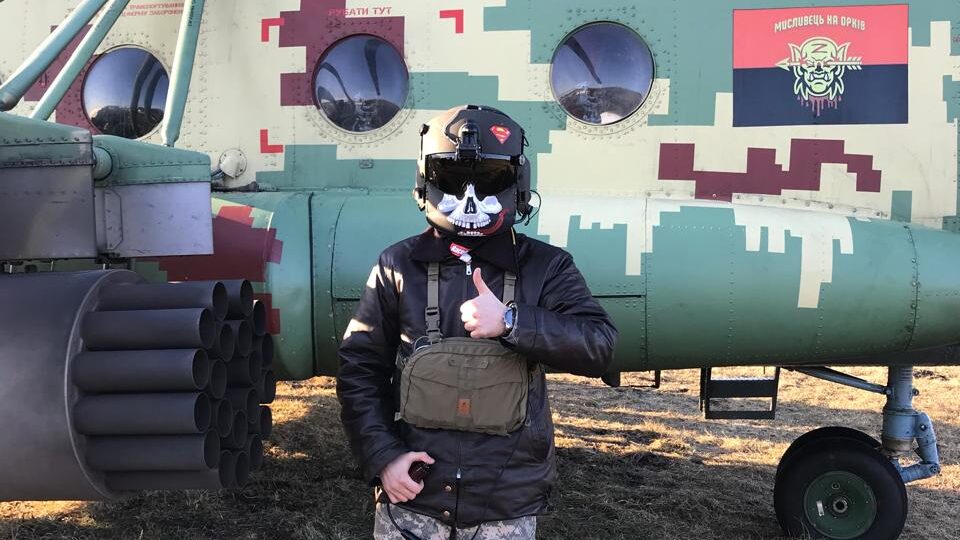
A Mi-8 helicopter pilot spoke about striking a Russian command post, operating under the threat of enemy MANPADS, and conducting evacuations under fire.
The story was published by the Air Force of the Armed Forces of Ukraine.
Taras (for security reasons, the hero’s name has been changed) met with the interviewer in Vinnytsia, in a small café.
Behind the pilot are not just a few combat sorties, but dozens of successful operations carried out under enemy fire.
His first combat mission — and right away, a precise strike on enemy positions.
It happened in the Kherson region, near the Antonivskyi Bridge. He was only 21 then — at that time, the youngest combat pilot in the Air Force!
“There’s nothing we haven’t been through”, — Taras says, listing casually: MANPADS, FPV drones, deep raids, strikes on command posts.
But he remembers the first strike most vividly.
“On paper, it all sounded simple”, — Taras recalls. — “Under the Antonivskyi Bridge, the enemy had boats camouflaged in hollows beneath the supports. We had to destroy them — along with the enemy personnel nearby”.
In reality, it was far more complicated: verifying coordinates, identifying landmarks, marking altitude change points on the map, and preparing a backup plan in case of jamming or GPS loss.
“There was fear”, — he admits. — “But only until I sat in the cockpit. After that — cold focus and work”.
The helicopter flies low over the water. In the cockpit — short, crisp exchanges.
As they approach the target, every action is measured in seconds. Taras handles navigation, guiding the commander onto the course.
A single degree of deviation — and you’re off by hundreds of meters on the ground.
A short command. Launch. A trail in the sky. Seconds later — an explosion, black smoke. Fuel burns, boats go up in flames.

On the ground — brief confirmation from friendly units: “Hit”. On board — a wave of restrained relief.
That first flight gave him confidence. But the second one reminded him that, in war, confidence is never absolute.
The target was a grain elevator on the left bank of the Dnipro — an industrial area where the enemy had a firing point equipped with MANPADS.
“We’ve got video”, — Taras says. — “A man on the roof raises the tube, presses the trigger. Seconds later — our rockets hit him”.
When the enemy missile locked onto their aircraft, the crew reacted almost instinctively.
A flash, a short “Launch!”, flares, a sharp maneuver. The Mi-8 dives — the missile veers off, hitting a decoy and exploding behind them.
“That saved us”, — Taras says calmly, without emotion.
From the ground footage, everything looks coldly precise: movement — reaction — strike.
But up there, every action happens within a split second.
Hours later, intelligence sent a photo: the same Russian soldier, the day before the strike, standing by the elevator pipe, smiling at the camera.
“A post for memory”, — Taras says. — “He never took another photo”.
After that flight, he says, everything changed. It didn’t get easier — it just brought understanding.
You’re no longer just a pilot — you’re part of a team on which lives on the ground depend.
Then came dozens of new sorties: strikes on equipment, supporting offensives, aeromedical evacuations.
When talking about evacuations, Taras’s tone changes completely:
“We arrive at a designated point close to the front line, power down — and ambulances pull up one after another. Some of the wounded are in critical condition: some without legs, some without arms, some with shattered spines… We take off as smoothly and carefully as possible.
Once, marines from the 35th Brigade exchanged patches with us right by the helicopter — we’re from the 35th too. A sign of mutual support”.
There were also operations of another scale.
One of them — a strike on an enemy command post with S-13 rockets.
To deliver the rockets to the required distance, the crew flew dangerously close — at the very limit of the helicopter’s capabilities.
The result was tangible for the enemy: one command post destroyed.
According to intelligence, both a colonel and a general were there.
After the strike, Russian media published their obituaries.
“Later, in Russian chats, they complained about the increased activity of our helicopters. That means they felt it!” — Taras says.
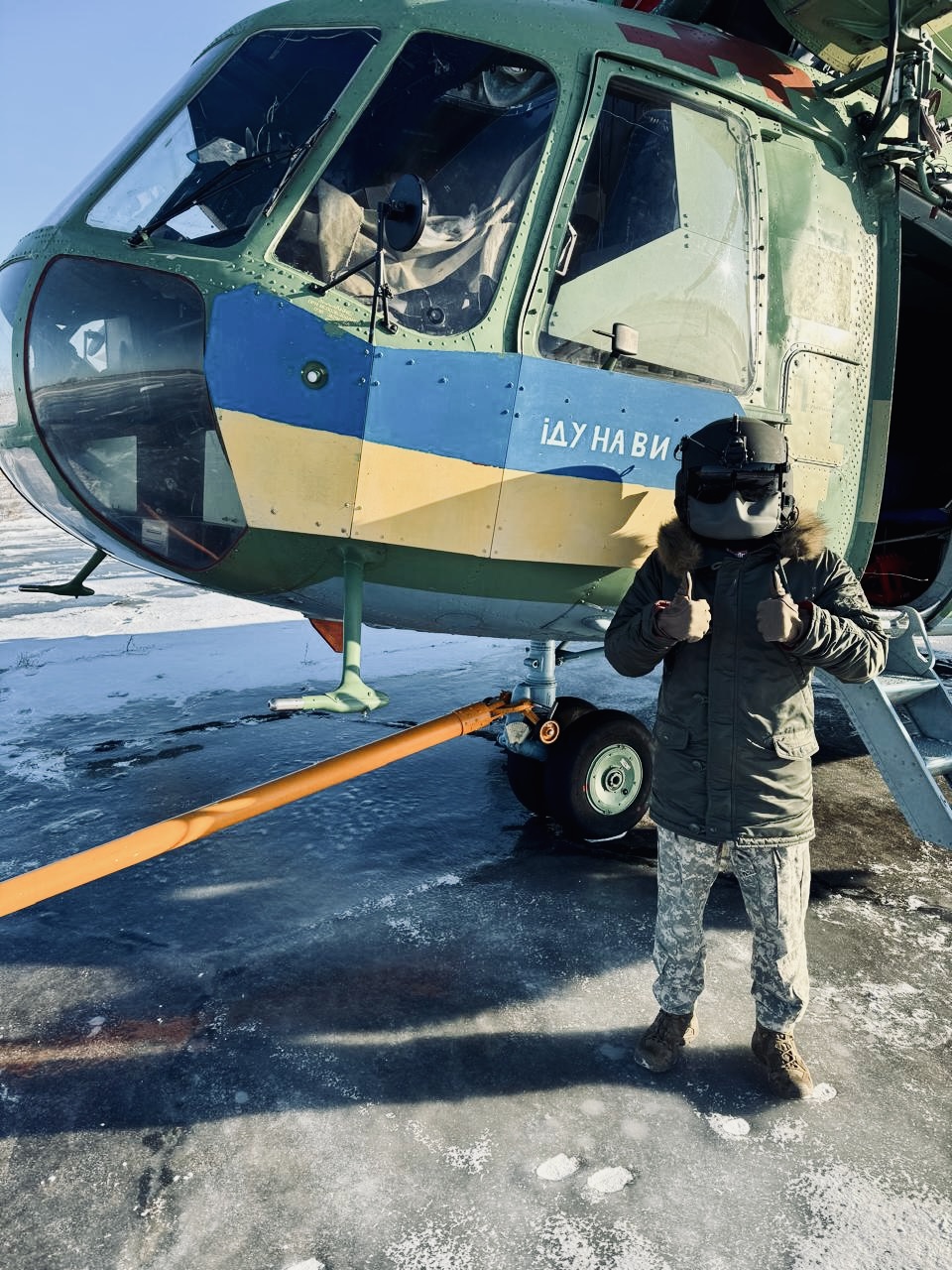
He explains: the main threats to helicopters are MANPADS and drones.
MANPADS — that’s a matter of seconds. You see a flash, shout “Launch!”, immediately deploy flares, maneuver, descend, change course.
“When a MANPADS fires at you — you have at most three seconds not to become a target”, — the pilot says.
But drones are a different story. They appear where you least expect them.
FPV drones can “hover” along the route or catch them head-on.
“You can barely see them”, — Taras explains. — “The monitor looks clear, and seconds later — one’s right next to the cockpit”.
Sometimes, they have to abort a mission and make another run to avoid losing the machine and the crew.
At the end of the conversation, Taras smiles, looks at his cup of coffee, and sums up:
“Never once have I regretted it. I’ve got the best job”.
We leave the café. A helicopter rumbles in the sky.
“Nazar”, — he says with a light smile. — “Finally, someone younger joined the brigade. I’ve waited long enough to have someone to pass the experience to”.
Taras looks up, listens to the sound of the rotors, and stays silent.
He knows that in just a few hours, that sound will once again be his work.