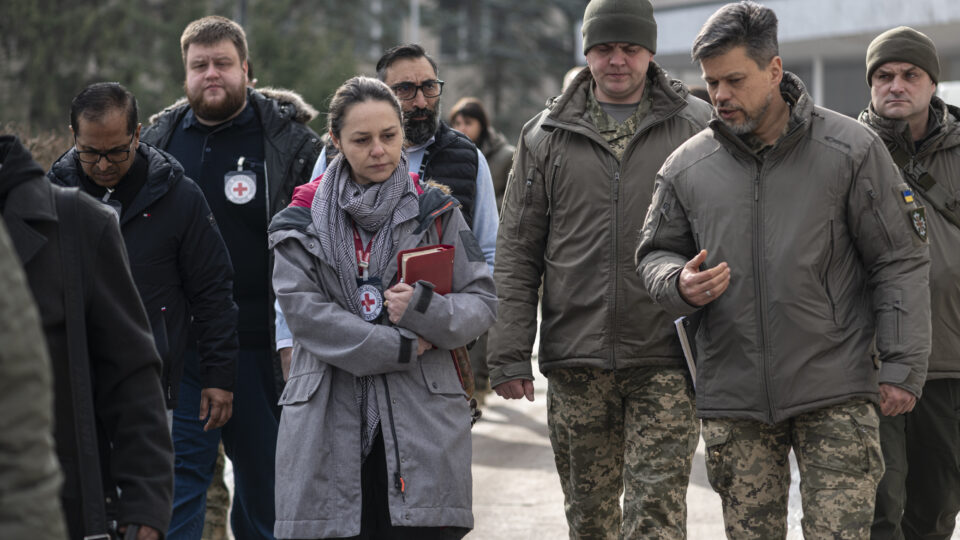
The international delegation, headed by Ana Lucía Bueno, ICRC Public Health Coordinator, and Sujit Panda, Head of the Physical Rehabilitation…

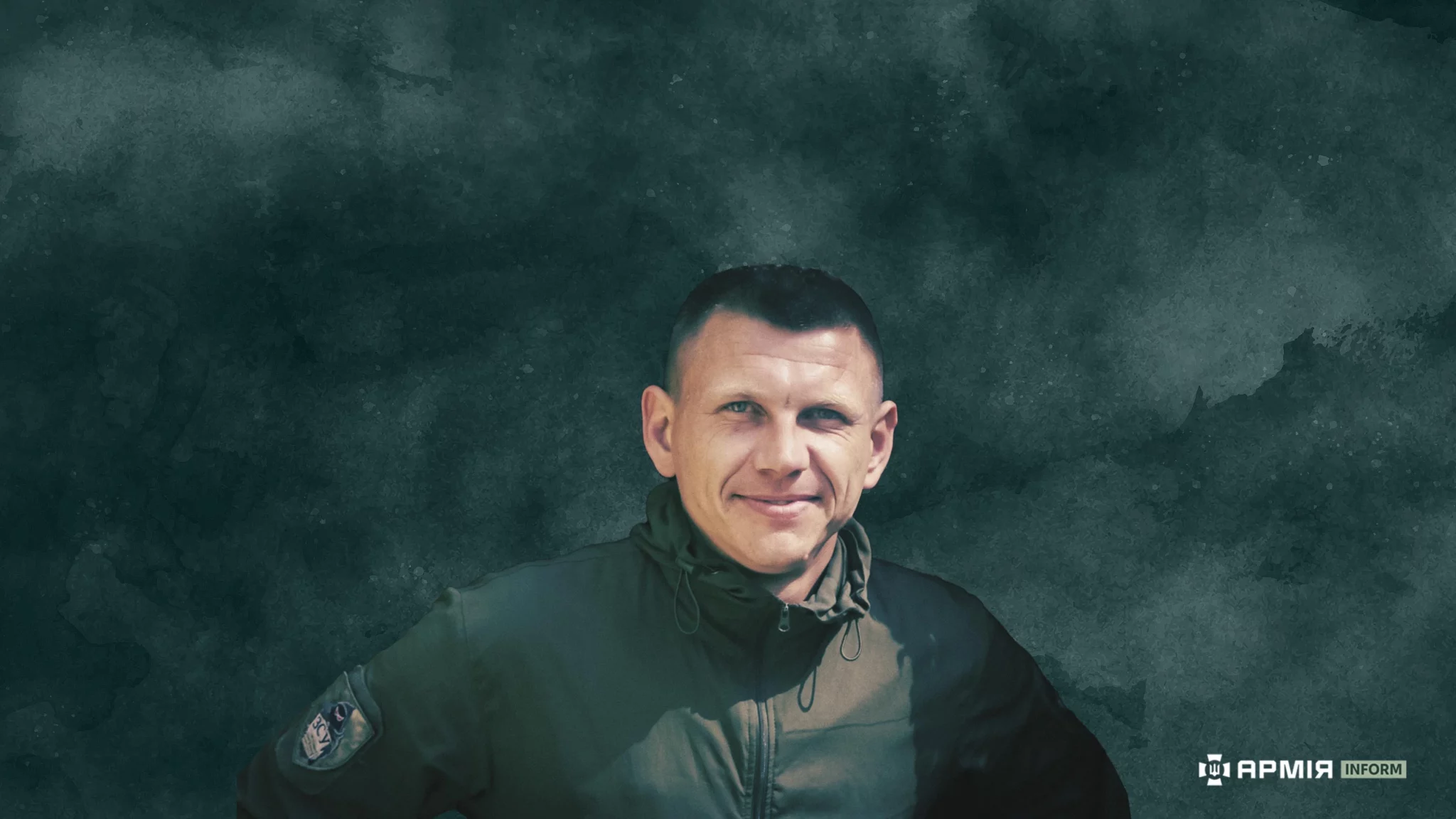
Oleksandr, with the callsign “Tyson” is the first sergeant of a company in the 4th Separate Heavy Mechanized Brigade.
He received this callsign from his company commander at the very beginning of his service in the 72nd Separate Mechanized Brigade back in 2016. That commander was the late, unfortunately, Hero of Ukraine Andriy Verhoglyad. As Oleksandr himself says: “He gave me this callsign, so to speak, for certain merits. Let’s not go into details for which exactly”.
It was there, in the 72nd Brigade, that “Tyson” also met the full-scale invasion. He fought near Kyiv from the very first days of the Russian assault. Now he serves in the 4th Separate Heavy Mechanized Brigade.
Before the army, Oleksandr studied to become a gas-electric welder of reinforced concrete power networks, but, as he says, “I didn’t like it” and so he joined the army. He started as a private, then gradually rose through the ranks and became a platoon’s first sergeant.
After training, his unit was sent to the Avdiivka industrial zone (“promka”). There he and his brothers-in-arms held the line for a year and a month in the hangars at the positions “Shchyt” (“Shield”) and “Tyshyna” (“Silence”), well remembered by everyone who was there. As Oleksandr recalls: “It was hot there, especially when Russian tanks started tearing the positions apart. What stuck in my memory was that they — both then and now — die, and they don’t even know what they are dying for”.
Oleksandr pauses for a few seconds, then suddenly smiles.
“You know how, when you watch some old war movie? Back then they would run into the attack shouting ‘hurrah’ — rifle at the waist, bayonet forward, and charging at the enemy. It was the same when we captured ‘Almaz’, when Andriy Kizylo was killed. At one of those moments, they tried to storm us and just started running out into the field — not a small group, about 70 men, two platoons. And they charged ‘hurrah’-style, just running forward. That was one of those moments when I personally felt what it’s like when they come at you in huge numbers. But nothing terrible — we met them with machine guns, then mortars once they hit the ground, covered them, and those who survived crawled back”.
The large-scale war for Oleksandr, as for his brothers from the 72nd Brigade, began with the defense of Kyiv. They held the line for a month and a half, and then went on the counteroffensive against the enemy: Chernihiv, Sumy, Kharkiv.
Heavy fighting near Kharkiv, losses near Kozacha Lopan…
Then, under certain circumstances, he transferred to the 4th Tank Brigade.
“And after that, it turned out even better — I was assigned to the 2nd Rifle Battalion under Karat. I knew that here people are treated decently, the commander is good, young. He treats people not as a boss, but as a person first of all. And a good commander. That’s how I ended up here. Now I serve here, and honestly, I don’t regret it”.
He talks about his duties with a smile:
“My duties include organizing and ensuring that the soldiers and sergeants carry out their service properly. That is, more senior functions, since I am the company’s first sergeant. That’s written in my job description. I train my personnel, supervise them, and handle any everyday issues. So I’m like — mom, dad, brother, relative, just someone to talk to or cry to. I have to endure all their antics. I need to know how to approach each person, how to assign a task, how to motivate them… It’s a lot, a lot of work”.
He reluctantly talks about his combat experience, but he did share one story about rescuing a wounded brother-in-arms — because it was truly extraordinary.
A Russian-launched FPV drone hit one of the fighters. Seconds before impact, he saw it and managed to shield himself with his rifle. The explosion tore apart his leg and riddled his body with shrapnel, but the fighter survived.
He applied a tourniquet on himself and lay in the forest strip for three days, since evacuation was impossible. At that time, Oleksandr was acting as the battalion’s first sergeant. He took the company commander and the EW squad leader with him, and the three of them went.
As Oleksandr recounts: “You walk about 50 meters, and you need to hide, because drones are already hanging over you. If you run — well, maybe 100 meters at most. We moved through forest strips… In total, we walked about nine kilometers. In the end, his leg was amputated, but still, he survived — you could say he was born in a shirt”.
Summing up the meeting, Oleksandr says:
“In our unit, you can approach any commander. You know that if you have some problem or question, you can come, explain, and they’ll say: ‘Let’s help you solve it.’ You can’t say everything is perfect with us. There are problems. It’s just that there are people who solve them, and there are those who are considered people but, in fact, are not”.

The enemy is attempting to develop the production of naval drones and copy successful Ukrainian practices — both technical solutions and tactics.
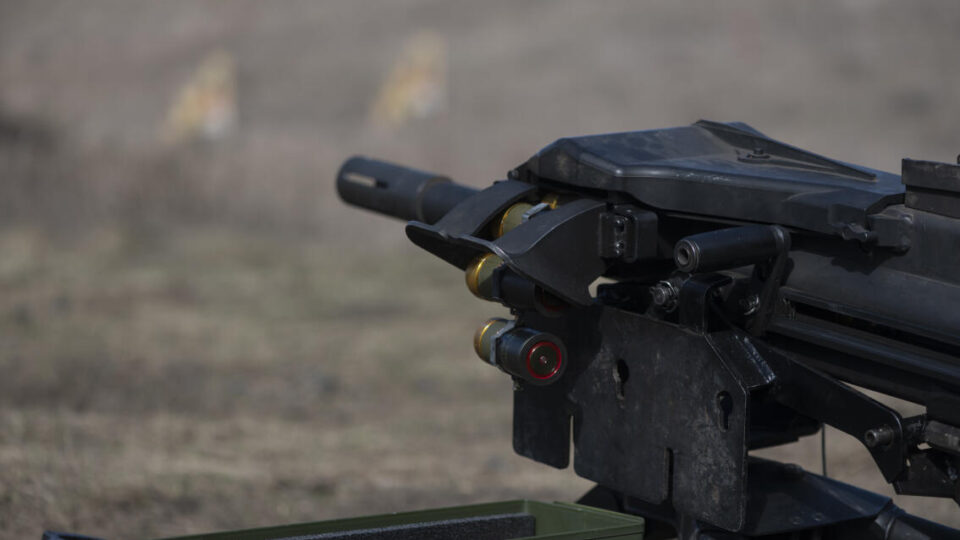
Fighting continues in the northern part of the city of Pokrovsk in the Pokrovsk direction. A mechanized assault was repelled there the day before.
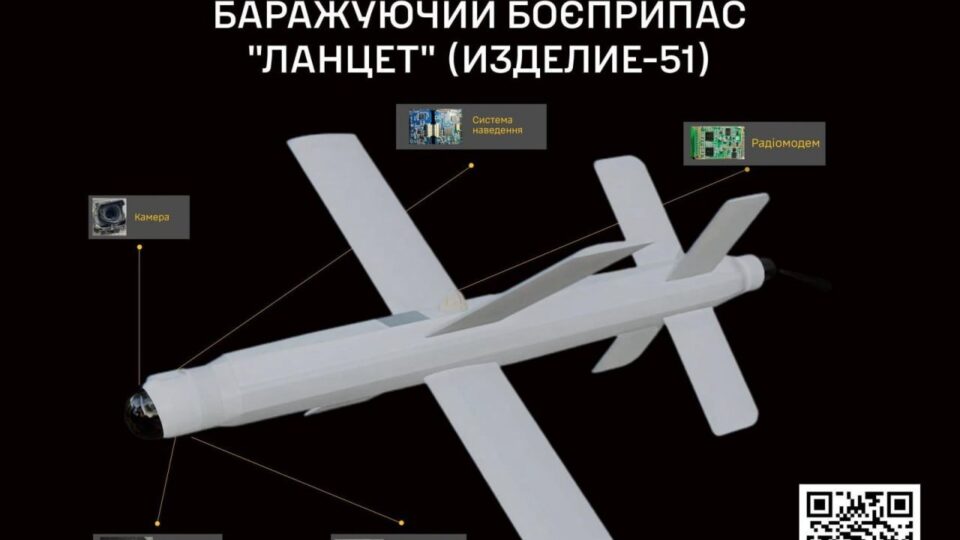
The Main Intelligence Directorate of the Ministry of Defense of Ukraine has published data on enterprises involved in the production of Russian loitering muniti

Another two-day round of negotiations between Ukraine and the United States concluded in Florida on March 22.
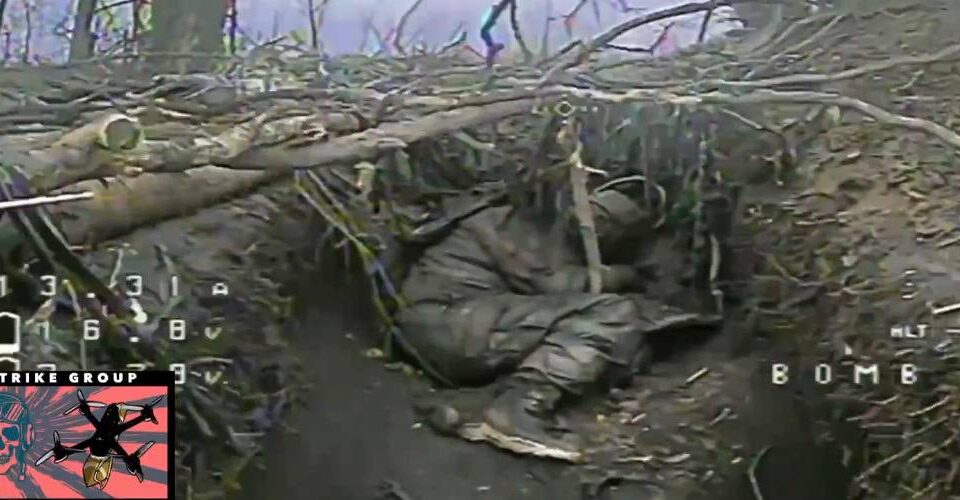
The enemy continues daily pressure and attempts to break through Ukrainian defenses in the Sloviansk direction.
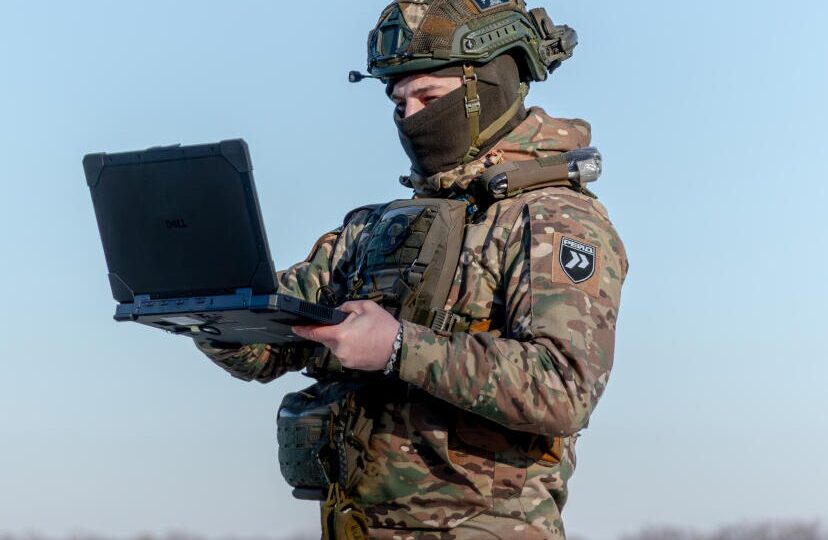
Over the past day, units of the Unmanned Systems Forces struck/destroyed 1,078 enemy targets.
The international delegation, headed by Ana Lucía Bueno, ICRC Public Health Coordinator, and Sujit Panda, Head of the Physical Rehabilitation…