
The international delegation, headed by Ana Lucía Bueno, ICRC Public Health Coordinator, and Sujit Panda, Head of the Physical Rehabilitation…

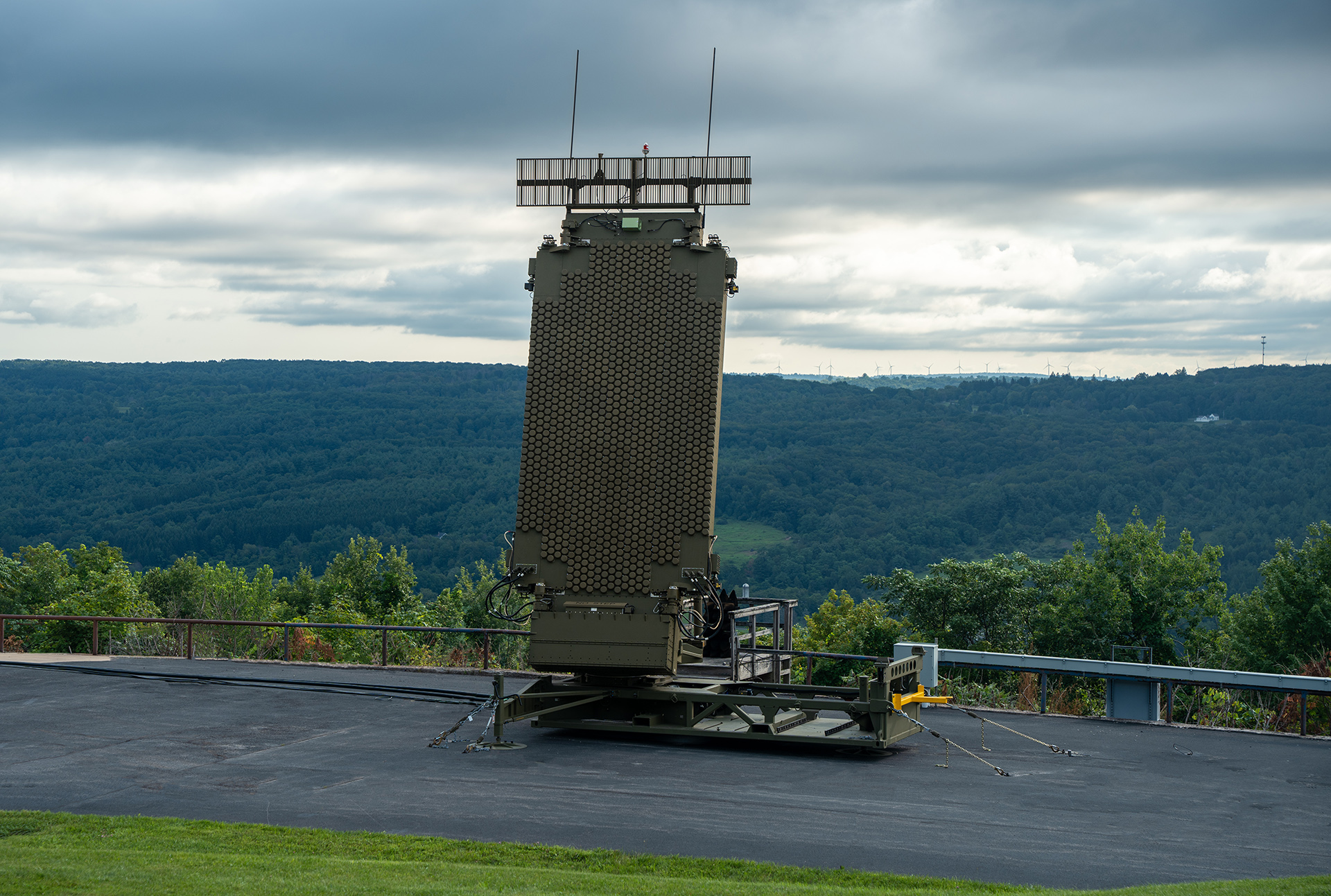
Sweden became the third country to adopt the fifth-generation Lockheed Martin TPY-4 American radar station complex.
As emphasized in the official statement of the American manufacturer, published on its portal, Lockheed has committed to deliver the first TPY-4 radar systems in 2027 to support the national defense needs of the Swedish Air Force, ArmyInform reports.
“The TPY-4 radar system is a state-of-the-art phased array radar that provides unmatched air surveillance capabilities, including real-time detection and tracking of aerial targets. This gives forces an advantage over any adversary and enables them to carry out their mission safely,” the equipment manufacturers stated.
Meanwhile, defense technology market researchers from the Army Recognition (AR) site provided a detailed description of this high-tech device. The TPY-4 radar was developed with a fully digital software-defined architecture, enabling it to adapt to new threats while operating in congested and complex electromagnetic environments.

Its solid-state active electronically scanned array (AESA) ensures high reliability, rapid beam agility, and detection of fast-moving targets such as cruise missiles, stealth aircraft, and drones at long ranges. With real-time tracking and classification features, it greatly enhances the effectiveness of command-and-control decisions during critical moments.
Sweden’s choice also highlights the radar’s modular open-systems design, which enables seamless integration into both national and NATO integrated air and missile defense networks. This compatibility is crucial for joint operations and reflects Sweden’s expanded defense cooperation following its accession to NATO.
“The TPY-4 will serve as a key factor in regional security, supporting shared situational awareness and coordinated responses among allied air defense systems,” AR experts emphasized.

According to the publication, the TPY-4 radar stands out with several key features that enhance its operational relevance in today’s multidomain battlespace. Its AESA technology provides continuous 360° coverage with high accuracy and low latency, detecting threats at greater distances and with higher resolution than many outdated radars.
The radar’s advanced beamforming capabilities allow it to simultaneously track hundreds of aerial targets, including low-radar-cross-section threats, while maintaining high resilience to jamming and electronic warfare attacks. Additionally, its digital server allows for software updates and algorithm improvements without hardware modification, enabling the system to evolve with mission requirements over time.
In terms of key technical specifications, the TPY-4 can detect and track aerial targets at ranges exceeding 500 km, depending on the size of the object and its flight altitude. It offers detection capabilities from very low altitudes, below 30 m above ground level (AGL), to high-altitude targets operating at over 30,000 m above mean sea level (AMSL), covering the full vertical battlespace from terrain-following cruise missiles to near-space surveillance platforms.

The radar provides full azimuth surveillance with automatic target recognition and classification, enabling accurate distinction between high-speed jets, helicopters, UAVs, and missile trajectories. Its high refresh rate and wide elevation scan ensure uninterrupted monitoring of the airspace under any weather and electronic warfare conditions.
In combat scenarios, the TPY-4 effectively operates either as a primary long-range early warning radar or as a high-level node within the Integrated Air and Missile Defense (IAMD) network. It can deliver precise tracking data to surface-to-air missile systems and air defense command centers, ensuring coordinated real-time threat neutralization.
However, not all defense market analysts share Army Recognition’s high assessment. Experts from the Ukrainian Defense Express portal point out that Sweden primarily selected a strategic radar that will expand surveillance capabilities but will be less mobile. Thus, additional lower-tier systems will be required to improve air defense effectiveness, particularly under threat conditions where greater mobility is essential.
“In terms of competitors in Europe, the TPY-4 surpasses them in strategic range, altitude coverage, and adaptive electronic countermeasures. In contrast, the Thales Ground Master 400 Alpha offers significantly greater mobility, while Sweden’s Saab Giraffe 4A provides multifunctionality at shorter ranges,” Defense Express noted.
TPY-4: Multi-Mission Radar for Next-Generation Threats. Video: Lockheed Martin

The enemy is attempting to develop the production of naval drones and copy successful Ukrainian practices — both technical solutions and tactics.
Fighting continues in the northern part of the city of Pokrovsk in the Pokrovsk direction. A mechanized assault was repelled there the day before.
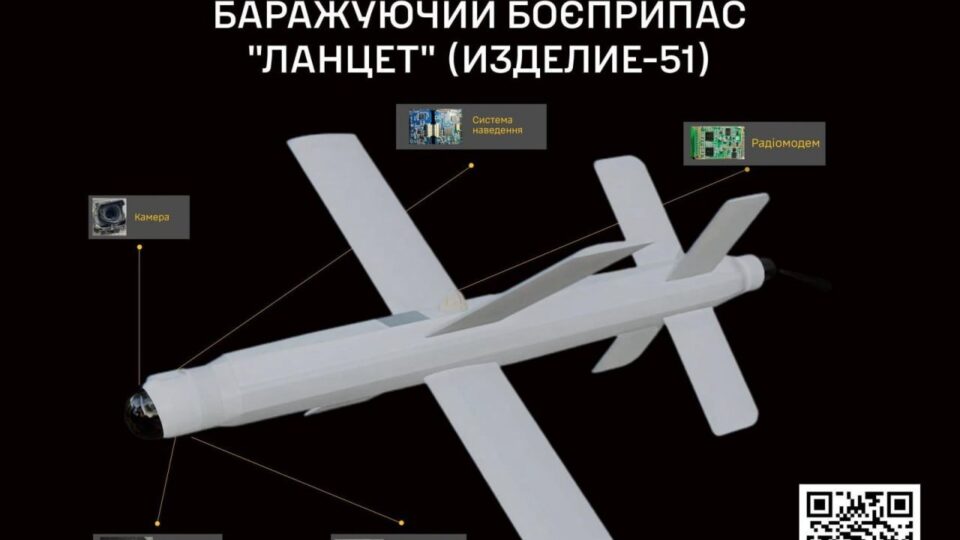
The Main Intelligence Directorate of the Ministry of Defense of Ukraine has published data on enterprises involved in the production of Russian loitering muniti

Another two-day round of negotiations between Ukraine and the United States concluded in Florida on March 22.
The enemy continues daily pressure and attempts to break through Ukrainian defenses in the Sloviansk direction.
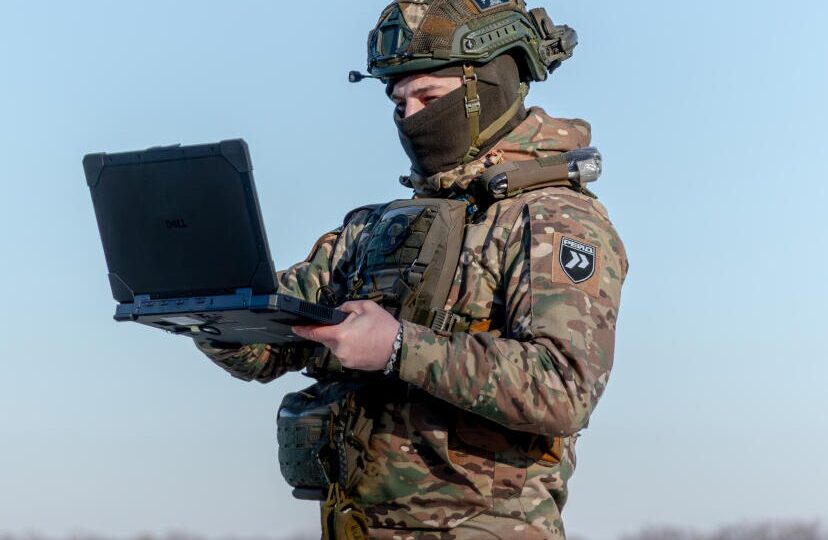
Over the past day, units of the Unmanned Systems Forces struck/destroyed 1,078 enemy targets.
The international delegation, headed by Ana Lucía Bueno, ICRC Public Health Coordinator, and Sujit Panda, Head of the Physical Rehabilitation…