First, the brigade’s tankers destroyed an enemy MT-LB with two accurate shots from a T-64 turret gun, and then the…


The MAUL ground robotic system for evacuating the wounded is an innovative development of the 1st Separate Medical Battalion.
This well-protected wheeled drone with an internal combustion engine makes it possible to evacuate wounded personnel from the front line as efficiently as possible and with minimal risk.
Why is MAUL more reliable in its “tailless” modification, and should we expect a “tailed” version?
How resilient is this drone, and at what distance does it maintain controllability?
Why does this very agile ground robotic system burst off the line and “love” being pushed to maximum speed?
Servicemembers of the unmanned systems company of the 1st Separate Medical Battalion spoke about these and other features of using the specialized MAUL ground robotic system for evacuating the wounded from the front line.
Need for Speed: A bet on speed
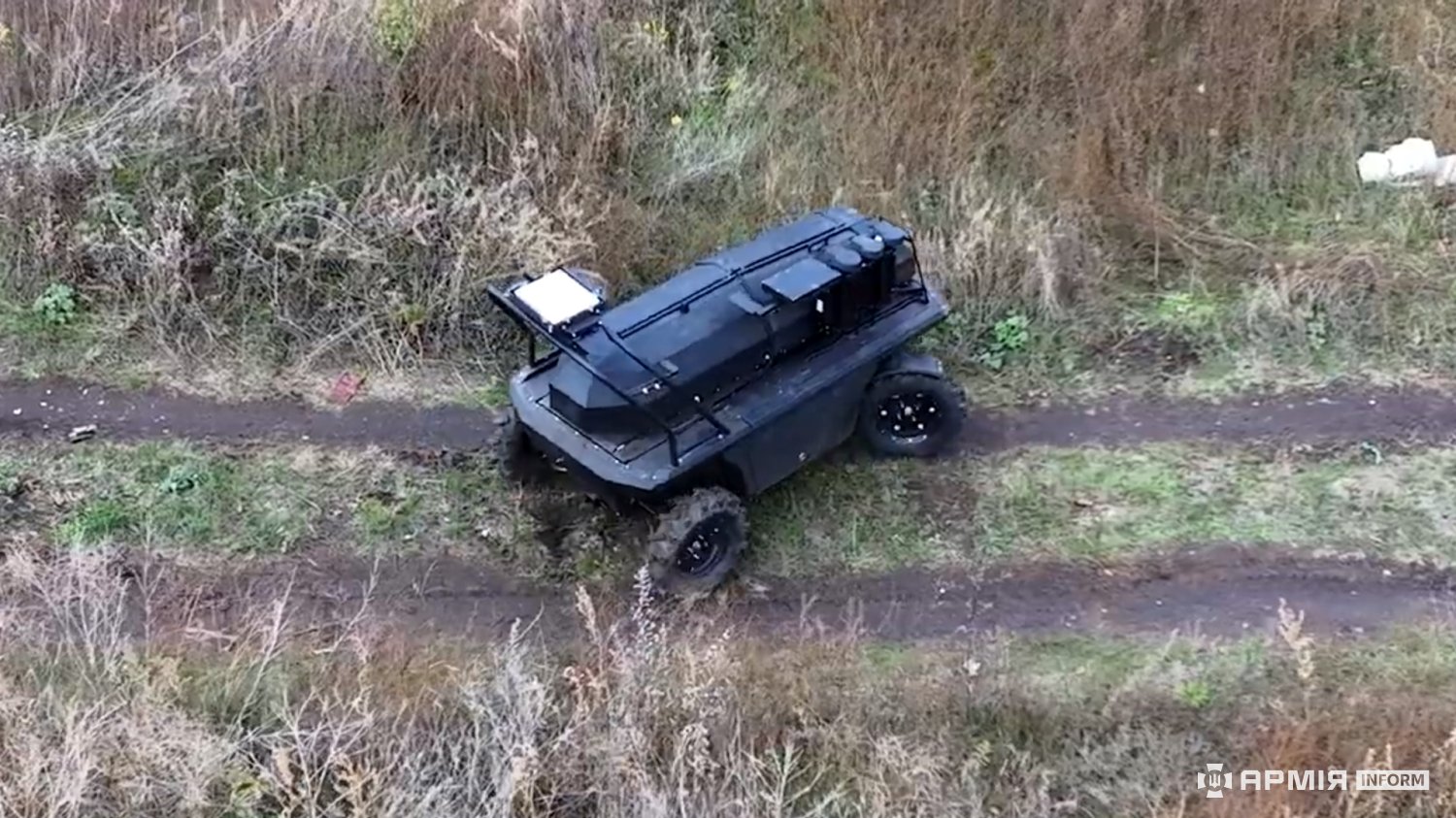
The MAUL wheeled ground drone with an internal combustion engine is an innovative development of the 1st Separate Medical Battalion. Built on the basis of an ATV, it has a number of advantages over tracked ground robotic systems and wheeled counterparts with electric propulsion.
“It is built on the basis of an ATV with an internal combustion engine, which has a significant advantage over electric ones because it can reach higher speeds”, — says Nataliia, an engineer of the unmanned systems company of the 1st Separate Medical Battalion.
The speed of movement of a ground robotic system determines not only how quickly a wounded person can be evacuated, but also the drone’s protection from enemy munitions, especially FPV kamikaze drones, since a slower target is easier to hit even for less experienced pilots.
“This idea came from our battalion commander because he placed emphasis on speed. Existing solutions with electric engines did not allow us to reach the required speed. As far as I know, an electric ground robotic system can be accelerated to a maximum of 35 km/h, while this drone can travel at 70 km/h with good communications”, — the servicemember says.
Anti-Freeze power unit: on the advantages of an internal combustion engine
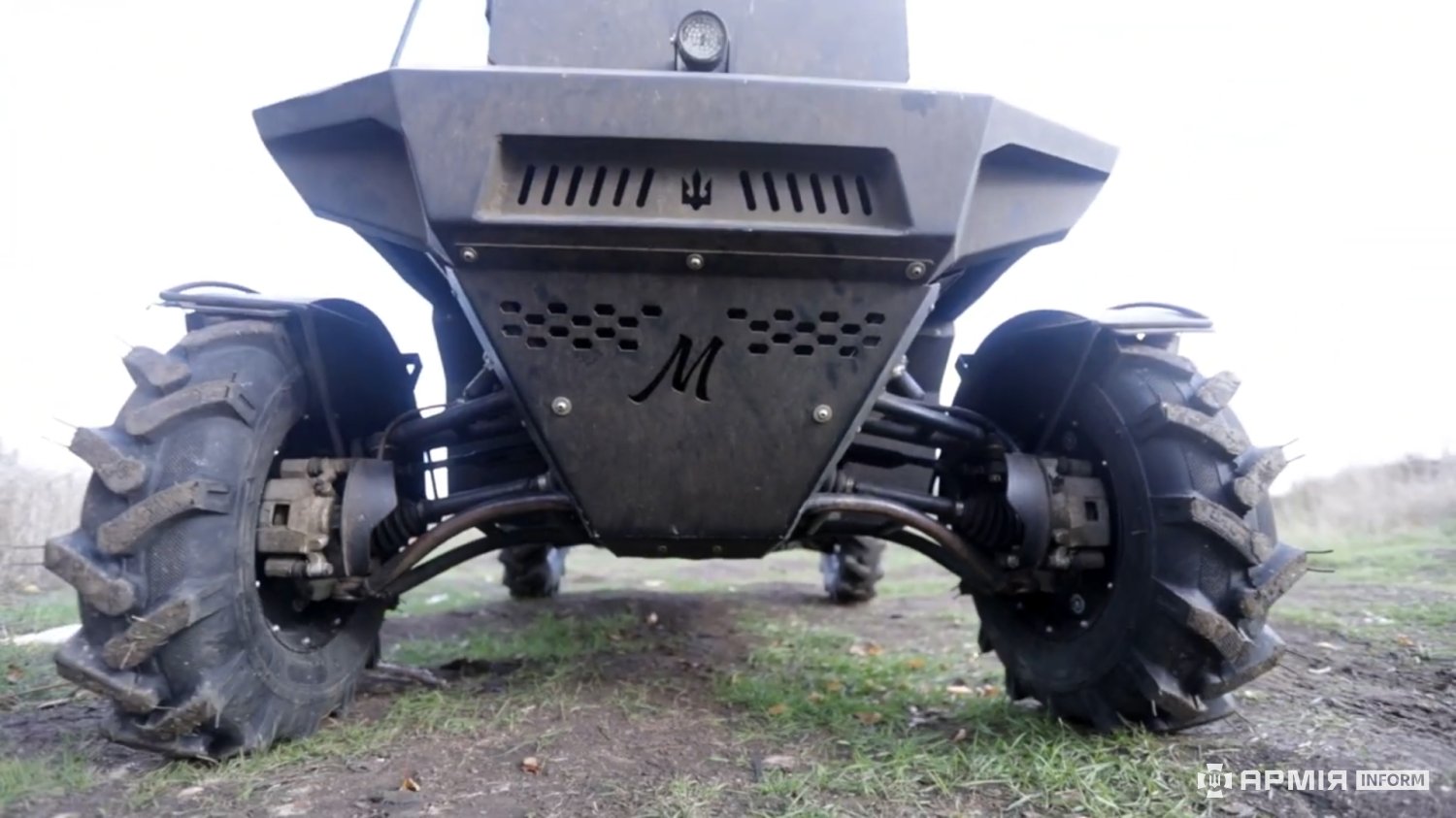
In addition to providing high speed, the internal combustion engine has another important advantage over electric propulsion, which requires powerful batteries — it is not afraid of cold.
“Imagine that severe frost hits and the batteries discharge faster. With this engine, there will be no such problem”, — Nataliia emphasizes.
After receiving a wheeled base with an internal combustion engine, the 1st Separate Medical Battalion installs the necessary equipment on the ground robotic system, turning the platform into a reliably protected evacuation module.
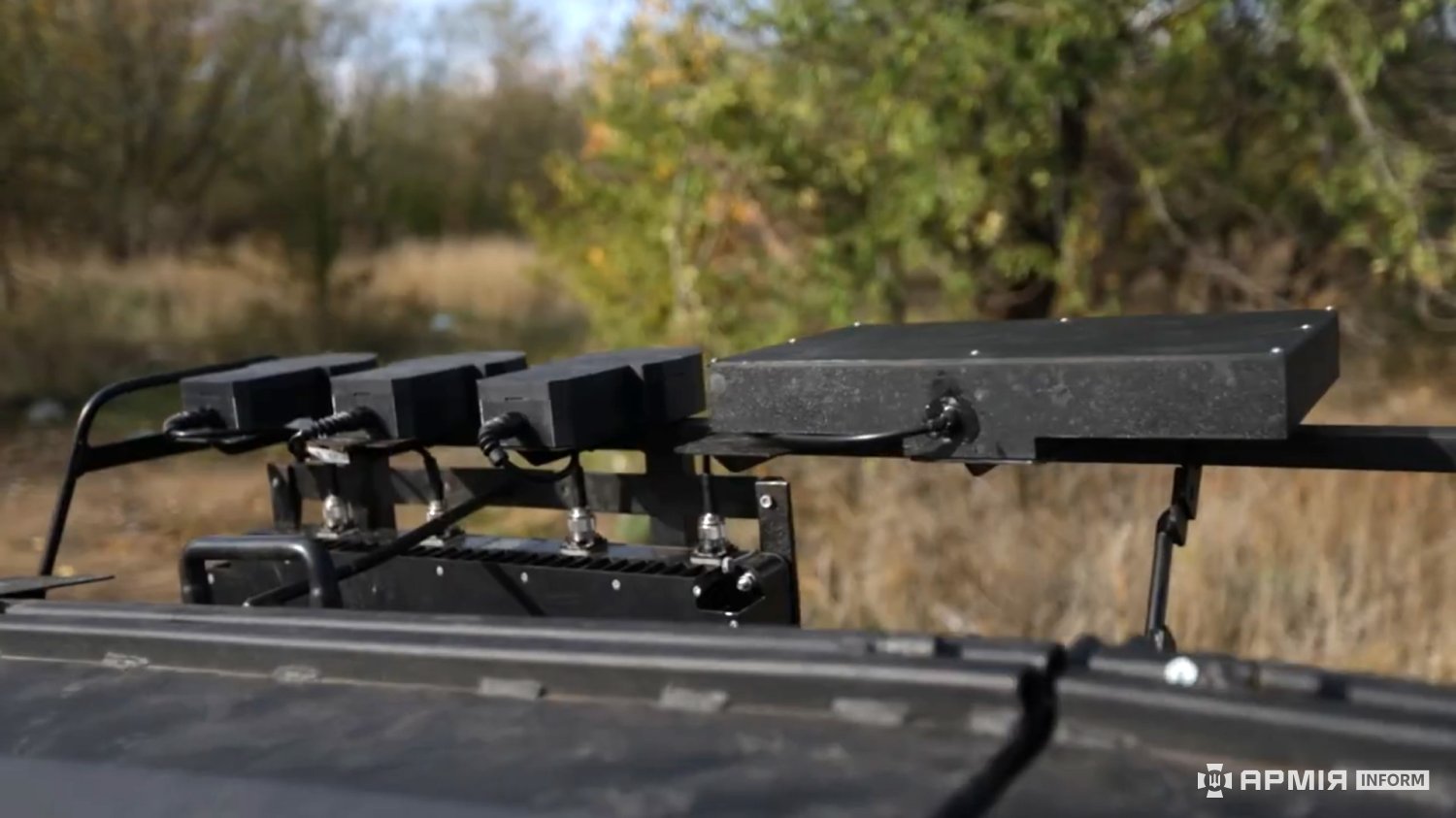
“We receive an already modified version, which we further equip. The camera is a communications element. All other electronics are hidden behind this shield”, — she shows, pointing to the additional elements installed on the base platform.
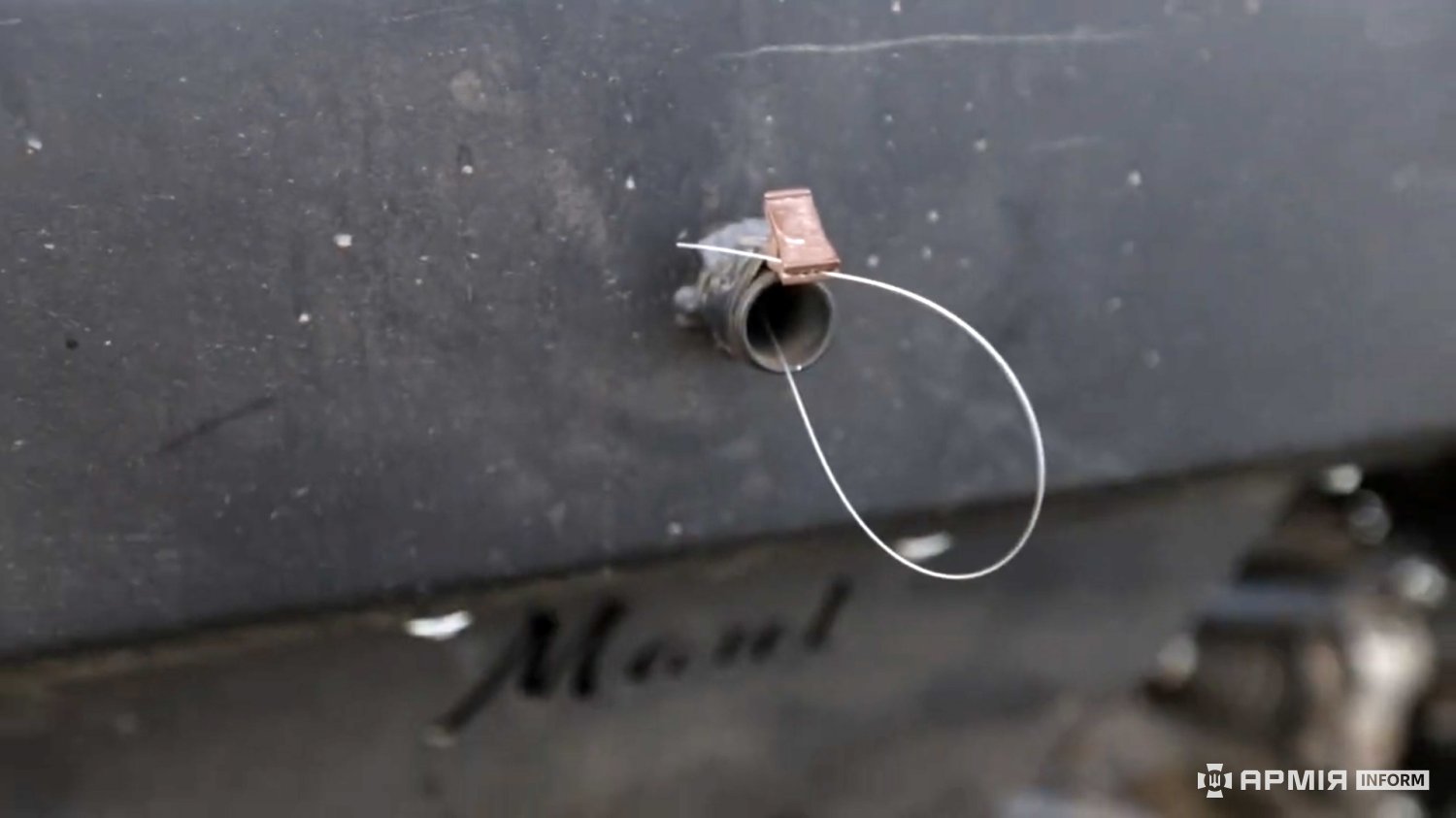
The ‘Tailless’ MAUL is more reliable: why the ‘Tether’ was abandoned
An important element of the drone’s modification is ensuring reliable, uninterrupted communications for controlling it over long distances, despite the enemy’s attempts to jam the signal. For this purpose, MAUL was equipped with four different types of communications that can back each other up.
“All evacuations take place from scratch, and there is not very good communications there. In general, I can say that four different types of communications were tested here. We have currently settled on one, but it can switch depending on which signal is stronger at the moment”, — the servicemember explains.
At the same time, the use of fiber-optic cable was abandoned for now, as experimental use showed that keeping MAUL ‘on a tether’ is impractical. This is due to the specifics of ground drone movement, which has to traverse terrain covered with potholes, bumps, and vegetation. Therefore, fiber-optic communication was abandoned.
“Now we have abandoned this idea. This ‘tail’ is an appendix, it is already an atavism. Perhaps someday we will return to it when there are reels of proper quality and of the length we need. As you can see, this is far from an ideal road. When it moves, there will be vibration and shaking. And for the fiber-optic cable not to break, it needs to unwind evenly. Any jerk can cause it to break”, — the servicemember says.
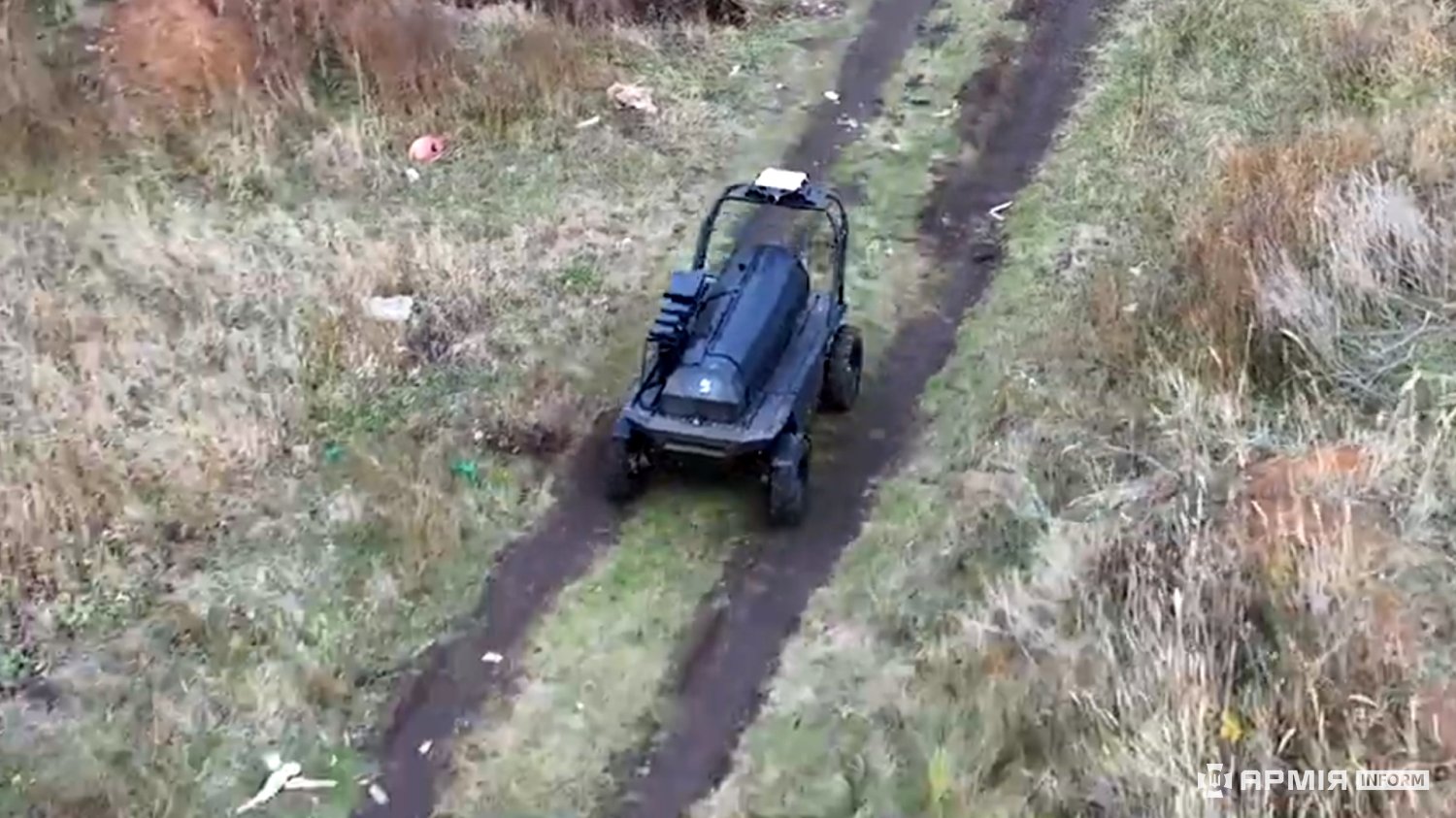
“The more complex, the worse”: a ground robotic system must be simple
Controlled via other types of communications, MAUL can continue moving even after it overturns. Such an accident would definitely have caused the thin fiber-optic thread to break, whereas without it the ground robotic system is capable of getting back onto its wheels.
“There were even cases when it overturned and then got back onto its wheels and continued driving. That is, it is a fairly robust design”, — Nataliia recalls.
MAUL’s unique ability to get back “on its feet” is achieved, among other things, by improving and maximizing the simplification of the design.
“It was made more stable, with a wider frame. The more complex, the worse. You have to weigh and consider how to ensure that every such improvement does not add work for engineers who will install, maintain, and configure it, but instead brings some additional percentage of success”, — she emphasizes.
From a standstill to a sprint: why MAUL loves speed
MAUL is also very simple to control and extremely agile — just give it a little gas and it immediately bursts forward.
“It’s a bit fast and sharp, but very responsive in control. It really loves being accelerated, because then the image quality is better”, — says ground robotic system pilot Maksym.
The drone responds to commands almost instantly — it is enough to catch the slightest play in the control elements on the controller, and MAUL will obediently respond to the pilot’s commands.
The distance between the external pilot and the drone, provided stable communications are available, is not important and can be virtually unlimited.
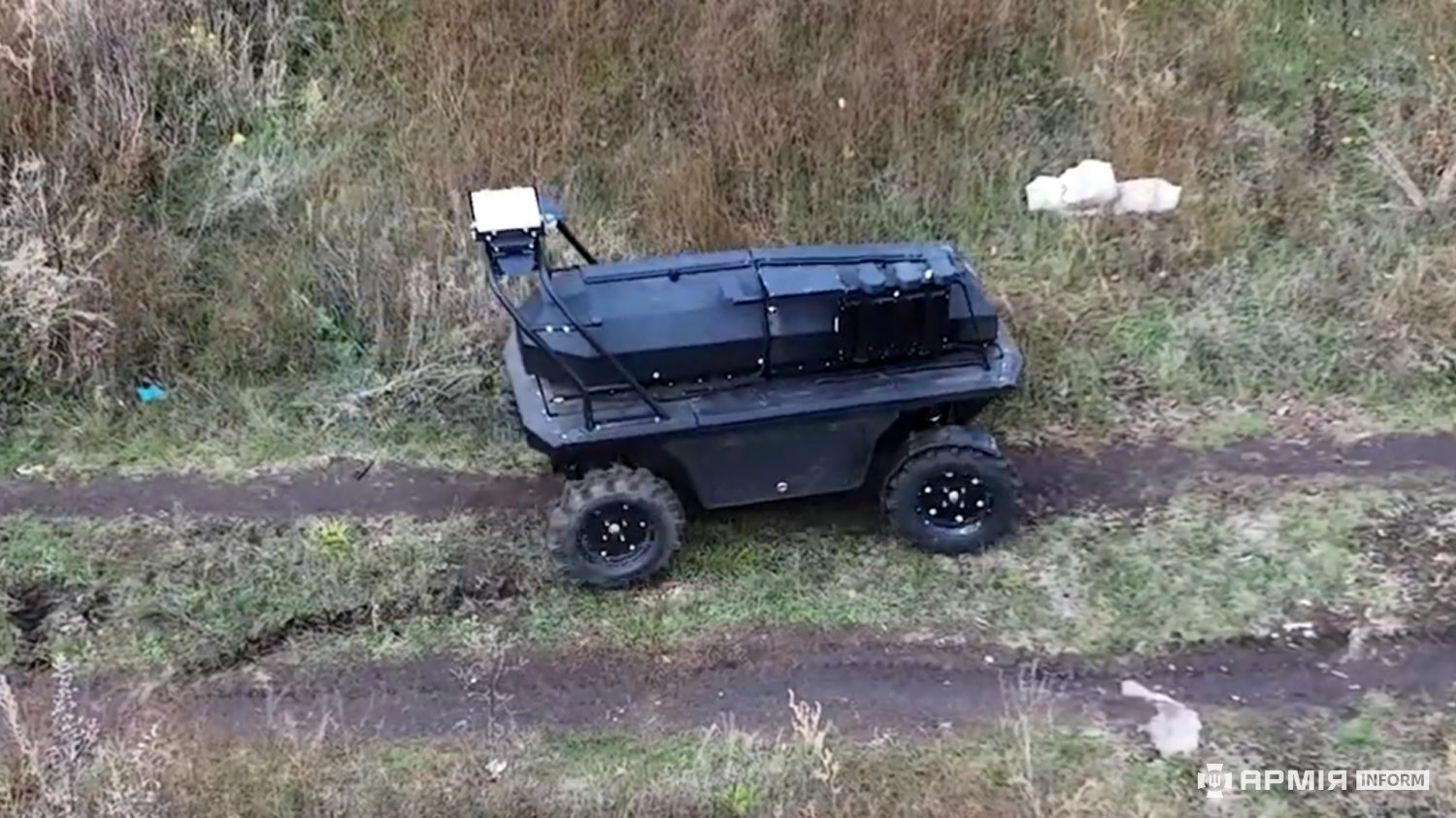
A rescue capsule — like on a spaceship
The ability to control the drone from a significant distance makes it possible not to risk a CASEVAC crew during evacuation operations — this protects the lives of four people.
“It replaces a CASEVAC vehicle. So as not to risk CASEVAC crews — that’s four people — this little machine goes instead, which is controlled by six people or even, in fact, three, although six are involved”, — says Bohdan, squad leader of the unmanned systems platoon of the 1st Separate Medical Battalion.
The wounded person inside is also maximally protected — they are placed in a closed capsule, similar to those designed to rescue spacecraft crews in science fiction films.
“It protects against shrapnel. A person is placed here on soft stretchers. I personally was also placed in this capsule during training”, — says Nataliia, an engineer of the unmanned systems company.
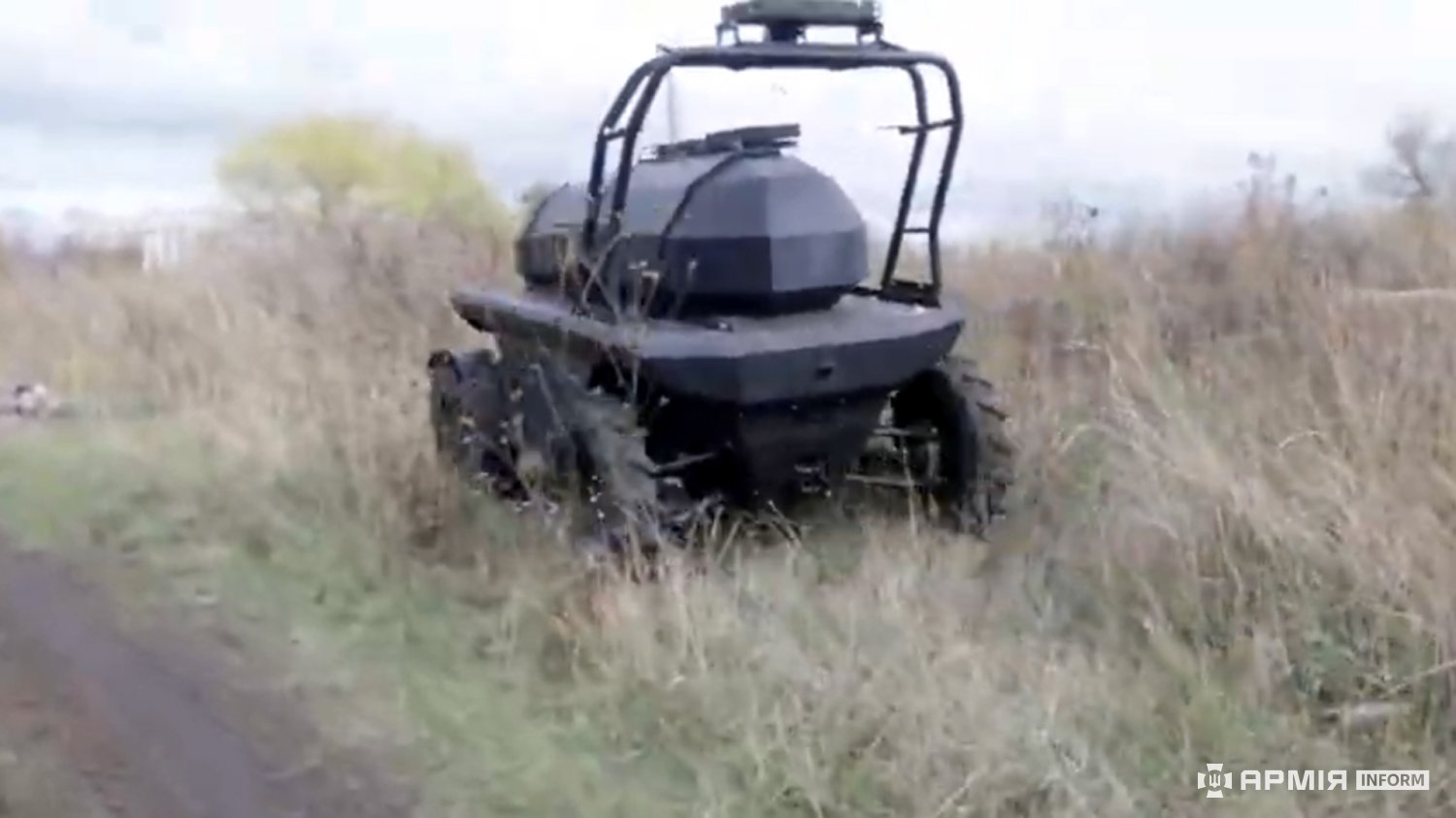
MAUL is a unique evacuation drone
The capsule is armored and maximally protected, and MAUL itself is extremely resilient and survivable, capable of withstanding even direct hits from FPV drones and close artillery shell explosions.
“A lot of money was probably spent on it from their side. But the little one kept going. FPVs and artillery. There were two drops, it was even on fire. They set it on fire, but it kept going”, — Bohdan says somewhat emotionally.
On another occasion, MAUL withstood about 30 close artillery shell explosions and shrapnel hits, yet even this failed to damage it. Accurately hitting such a fast, maneuverable target as a ground robotic system with artillery is practically impossible.
Speed, maneuverability, high cross-country capability, endurance, powerful protection, good controllability, and reliable communication with the pilot make the MAUL ground robotic system a unique evacuation drone capable of changing evacuation standards in the world’s leading armies.
@armyinformcomua

Upon the submission of President Volodymyr Zelenskyy, the Verkhovna Rada of Ukraine adopted a decision appointing Mykhailo Fedorov as Minister of Defense of Ukraine. His candidacy was supported by 277 members of parliament.
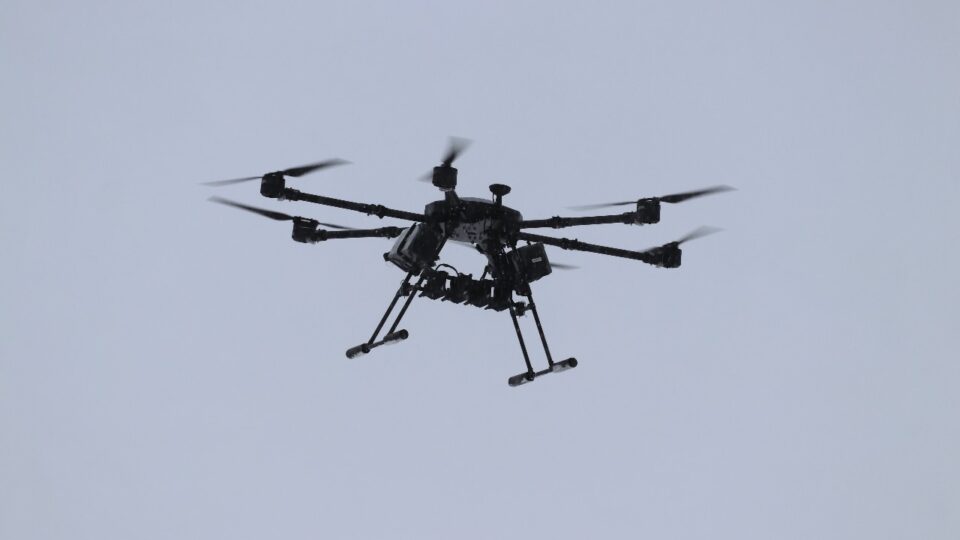
During the Kupiansk operation, crews of the 429th Separate Unmanned Systems Regiment “Achilles” carried out 689 sorties and delivered 9 tons of humanitarian cargo to frontline positions and adjacent units.

In the Oleksandrivka direction, the enemy is modifying its offensive tactics. Moreover, it is trying to combine assaults with logistical operations.
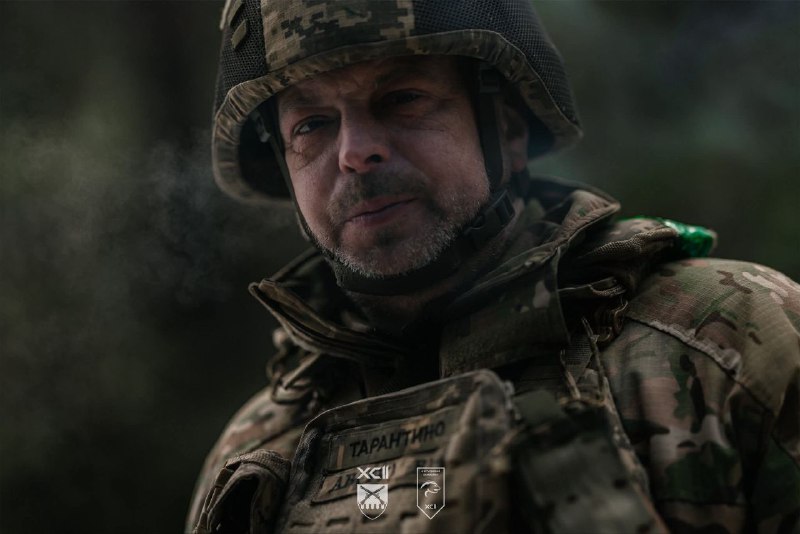
He is a BTR-4E driver. His brothers-in-arms — “Molodyi”, “Khripun”, Kolya, and Oleksii — serve in the battalion as gunners and drivers of the “Bucephalus”.
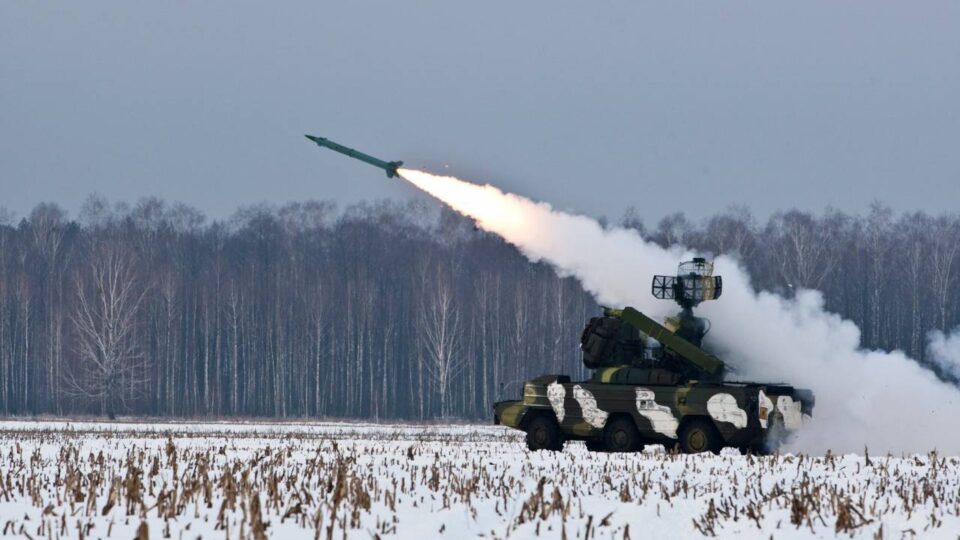
Deep in enemy territory, the “Scythian Griffins” unit successfully struck an Osa surface-to-air missile system. The high-value target, designed to protect troops and facilities from aerial attacks, was destroyed by a strike drone.
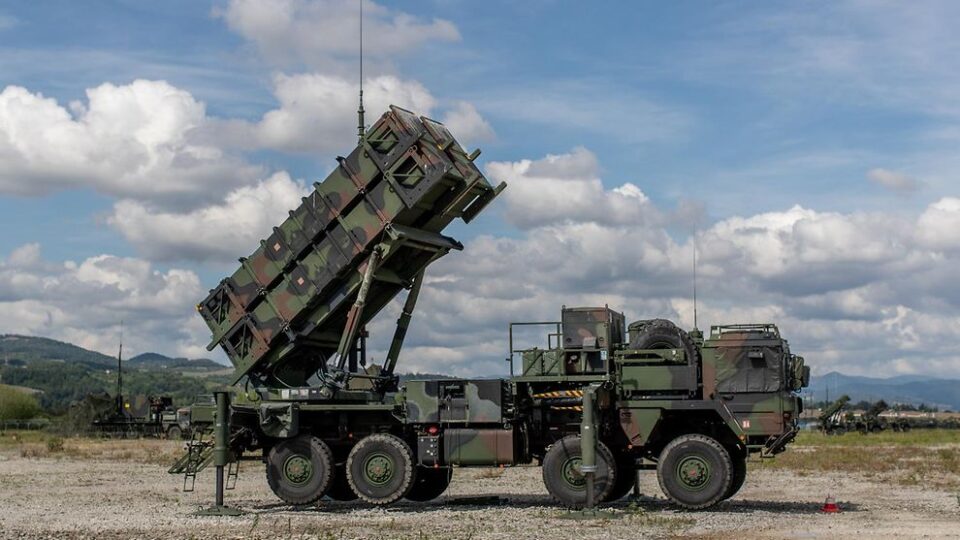
Strengthening air defense systems and missiles for those systems remains a top priority for Ukraine.
First, the brigade’s tankers destroyed an enemy MT-LB with two accurate shots from a T-64 turret gun, and then the…