He is a category 3 sergeant-manager of the recruiting group of the headquarters of the 95th Separate Air Assault Polissia…

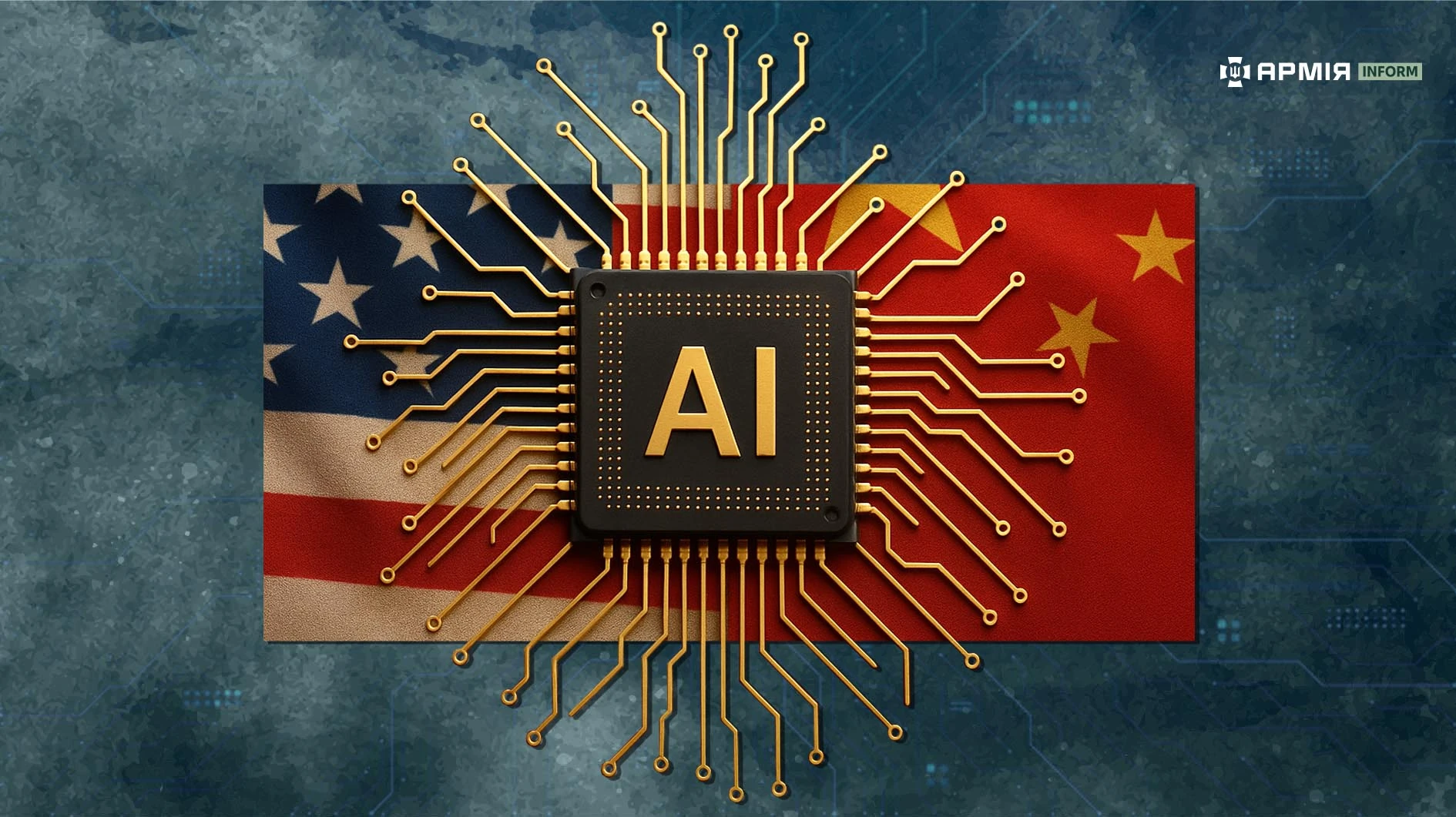
The Pentagon vs. Guofangbu. Who will have faster analysis, more precise targeting, and better “intelligent logistics” on the battlefield? The ArmyInform correspondent discussed this with military expert Anatolii Khrapchynskyi.
— Mr. Anatolii, in your opinion, how do the U.S. and China currently define the role of artificial intelligence in their military strategies? What are the key differences in their approaches?
— Today, the U.S. and China view military AI as the key to gaining an advantage in future wars, but they approach it with completely different philosophies.
The American model focuses on “responsible AI”: the Pentagon embeds ethical frameworks, limits autonomy, and preserves human control over decisions — even if this slows implementation. Washington tries to balance innovation with values to avoid creating weapons that move beyond human control.

China acts oppositely. For Beijing, AI is not an ethical debate but an instrument of state power, implemented aggressively and without hesitation. No brakes, no moral restraints — only national mobilization, millions of engineers, a centralized strategy, and the readiness to test systems considered risky or unacceptable in the West.
That is why, in my opinion, Chinese AI is developing faster. Beijing does not consider questions of autonomous weapons, privacy, or responsibility, while the U.S. must account for society, law, and allies. And this is the core of the strategic drama: China ignores human values and advances without caution.
— Can we say there is a “military AI race”? At what stage is it now, and who holds the advantage in critical technologies?
— Yes, today we can already speak of a full-fledged “military AI race,” and it is unfolding right before our eyes on the battlefield. This is one of the most technologically advanced wars in modern history, where algorithms, autonomous systems, and computational speed sometimes matter more than tons of metal or troop numbers.
We see Russia actively integrating Chinese solutions — from drones to communication components and elements of autonomy. This indicates deep technological cooperation between Beijing and Moscow, where China is effectively testing its developments in real combat conditions.
At the same time, we see the other side of this race: Ukraine and our European partners are increasingly using AI as a “combat assistant” — from intelligence analysis and air defense automation to mission planning for UAVs and logistics optimization. The race is not theoretical; it is happening right now.
It is accurate to say that the U.S. and its allies have advantages in key technologies — top chips, large models, tactical algorithms, sensor platforms. China, meanwhile, relies on scale, speed of adaptation, and the absence of ethical constraints. And Ukraine has become the proving ground where both models clash daily — and the outcome of this clash will shape the rules of next-generation warfare.
— How decisive is data-analysis speed for victory on the battlefield? Can algorithmic superiority compensate for technological inferiority in weaponry?
— Data-analysis speed has become decisive, because victory goes to whoever transforms an impulse into a decision faster. For an aerial or ground target, it works like this: a sensor detects an object, the algorithm classifies it, instantly predicts its trajectory, and calculates the interception point — all within milliseconds, which are unattainable for a human. That is why advantages in models and computation compensate even for shortcomings of the missile or platform itself.
— Targeting systems of the future: what capabilities does AI open for more precise strikes? And where is the line between automation and autonomy?
— Targeting systems of the future are shifting from “tables and corrections” to algorithms that optimize trajectories, choose entry points, and adjust flight paths in real time — working not by rules but by predictions.
AI allows a missile or drone to see the broader picture: identify targets by shape, heat signature, or behavior; distinguish a real object from a decoy; change routes under EW pressure; and find the most vulnerable point. The boundary will lie where the machine begins to make independent decisions about lethal actions — and that becomes a matter of politics, not just technology.
Automation is when AI assists the operator. Autonomy is when AI makes combat decisions. And this boundary will be the central technological debate in the coming years.
— AI-driven logistics. What does “intelligent logistics” mean in a military context, and how will it accelerate the movement of equipment, ammunition, and decisions?
— Intelligent logistics means that the movement of equipment, ammunition, and even decisions happens not according to static maps but dynamic computations updated every second. AI can chart safe routes for logistics convoys, bypassing potential fire zones, predicting threats, and indicating where a column will become vulnerable in 5–10 minutes.
The same applies to drones: algorithms analyze electronic-warfare interference, signal strength, terrain profiles, and automatically choose optimal bypass corridors.
Software can receive real-time data from intelligence, satellites, and sensor networks and immediately translate this into route adjustments or delivery decisions. This is logistics where humans do not adapt to the environment — the environment itself “suggests” the route, and AI instantly adapts troop movements.
— Does AI change the nature of war itself, or does it simply make traditional tools more effective?
— AI is gradually changing the nature of war, though not instantly. We still control the process, and for now, this is not a revolution but a sharp enhancement of traditional tools. Modern algorithms allow forces to see faster, plan more accurately, and strike where previously large staffs, complex systems, and significant time were required.
Drones, artillery, air defense, reconnaissance — all of this has become more effective due to AI, not instead of it. But in the long term, as computation moves to the edge and autonomous decisions become the norm, war will indeed change its nature.
— Real-time enemy prediction. How close are the U.S. and China to systems that can forecast enemy maneuvers using megadata?
— The U.S. and China are indeed moving toward systems capable of predicting enemy maneuvers in real time, but their levels differ. The Americans have long been ahead: they possess the world’s most powerful data-collection infrastructure and the most advanced computational platforms, which already work with predictive models for aviation, naval forces, and air defense.
The U.S. is actually testing systems capable of predicting the course of a missile, drone, or ship based on millions of historical trajectories, behavioral patterns, and real-time telemetry. China is still building individual algorithms and localized models but has another advantage — access to massive datasets and rapid scaling.

Most importantly, the democratization of high technologies, open-source models, and access to global libraries allow Beijing to rapidly close the gap.
— AI-powered military drones. Are scenarios of massive autonomous swarms realistic, and who is more advanced in their development?
— Autonomous drone swarms are not science fiction and not “maybe someday” — they are an immediate need on the front line, where speed and mass determine who survives. China frequently showcases impressive drone-light shows with hundreds of quadcopters, creating the impression it is close to combat swarms — but those are pre-scripted behaviors without threats, jamming, or EW.
Battlefield reality is completely different: aggressive signal suppression, chaos, fast target changes, and the need to adapt without an operator. And here, real progress is made by both us and the U.S. and allies: we test systems under combat load, with autonomous target search, data exchange between platforms, and millisecond decision-making.
Ukraine has effectively become the proving ground where these approaches are tested in practice. We see daily that without the intellectualization of drones, mass alone does not turn into advantage. To conclude: swarms are not a dream or a trend — they are the next inevitable step in warfare.
— Ethical and legal risks. Can international institutions control the use of combat AI, or are the “rules of the game” already outdated?
— International structures currently cannot keep up with the pace of military AI development. The rules written in the era of the human operator are rapidly becoming obsolete. We still refer to Asimov’s “laws of robotics” stating that machines must not kill humans — but these are now more moral guidelines than working tools.
The reality is that autonomous decisions appear faster than the law can adapt — and this may be the greatest risk of the military AI era.
— Vulnerability to cyberattacks. Will AI-driven military infrastructure become more vulnerable to enemy interference?
— Yes, military infrastructure that relies on AI becomes more vulnerable to cyber intrusions — but at the same time, new protection tools are emerging. The same algorithms that control battlefield systems will be able to detect anomalies, block data tampering, and react faster than a human.
An independent “AI-vs-AI” loop will essentially emerge, where defensive models constantly counteract the enemy’s models. And it will become an endless escalation of actions and counter-actions: whoever detects the threat first — keeps control.
— Prospects for Ukraine. Which military AI technologies may become the most critical for us in the next 3–5 years?
— For Ukraine, the most critical AI technologies in the next 3–5 years will be those that provide an advantage in the tempo of battle.
First of all, automated ballistic calculations for interceptor drones and air-defense systems, which will allow faster, more accurate intercepts even with simpler platforms.
Next comes the full automation of UAV employment processes — from route planning to targeting under electronic warfare conditions.
Drone swarms that interact with each other without an operator, exchange data, and adapt to the situation — this is the future of our low-altitude defense.
And finally, elements of autonomous decision-making at the level of tactical tasks, when a machine compresses the “detect–analyze–strike” cycle down to milliseconds. These are precisely the areas that will give us what the enemy dislikes most — speed that cannot be matched.
— What decisions must be made right now so as not to lose our chance in the new era of warfare dominated by artificial intelligence?
In the new era of war, we cannot wait — we must already invest in computational infrastructure, automation, and the “intellectualization” of drones and air defense systems to preserve our advantage in decision-making tempo.
Because victory will go to the one who can most rapidly transform an impulse into a decision — and do so at scale.
@armyinformcomua
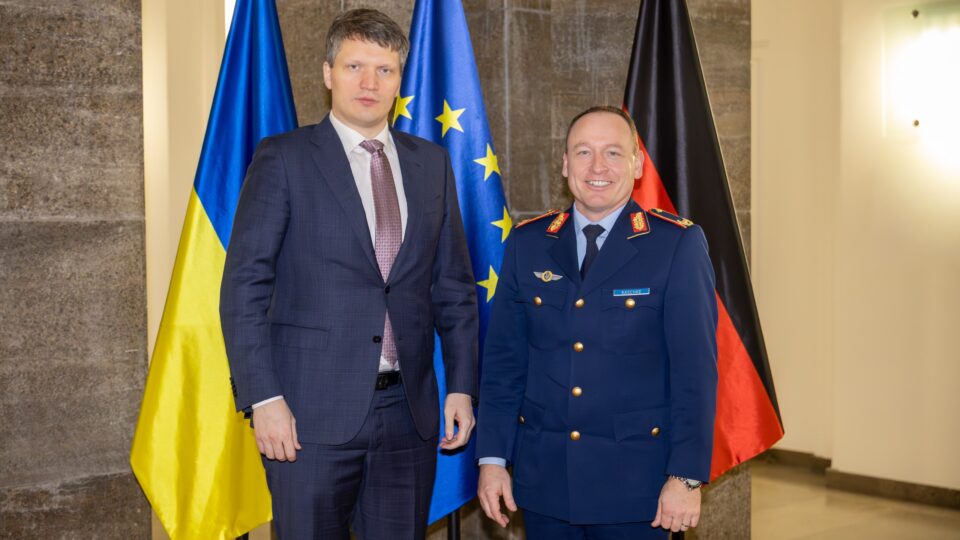
During a working visit to Berlin, Deputy Minister of Defense of Ukraine Serhii Boiev held a series of meetings with German officials aimed at strengthening Ukraine’s air defense and increasing the effectiveness of assistance provided to Ukraine.
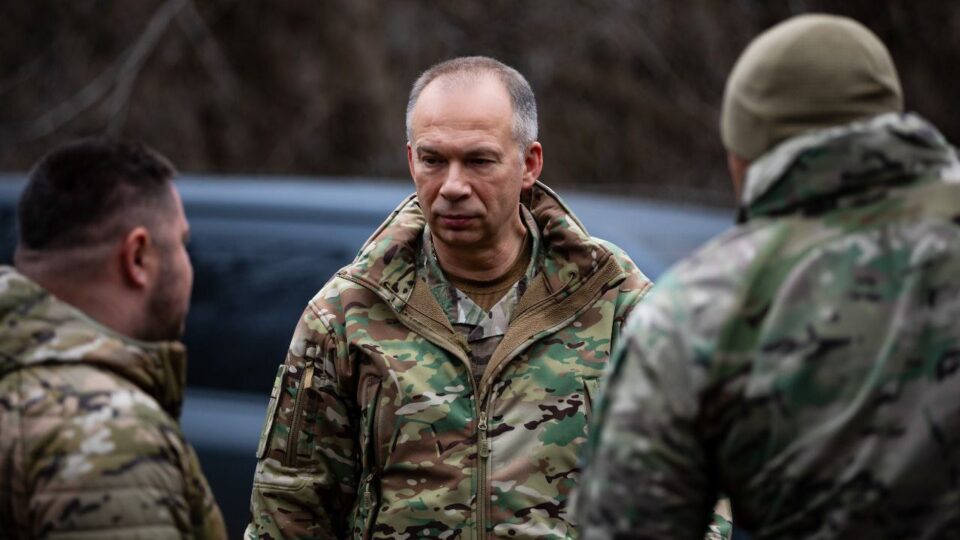
Commander-in-Chief of the Armed Forces of Ukraine, General Oleksandr Syrskyi, made a working visit to military command bodies that continue the operation and are holding the defense of the Pokrovsk–Myrnohrad agglomeration.

On the night of December 12, units of the Special Operations Forces carried out strikes on enemy targets in Donetsk Oblast using FP-2 strike UAVs.
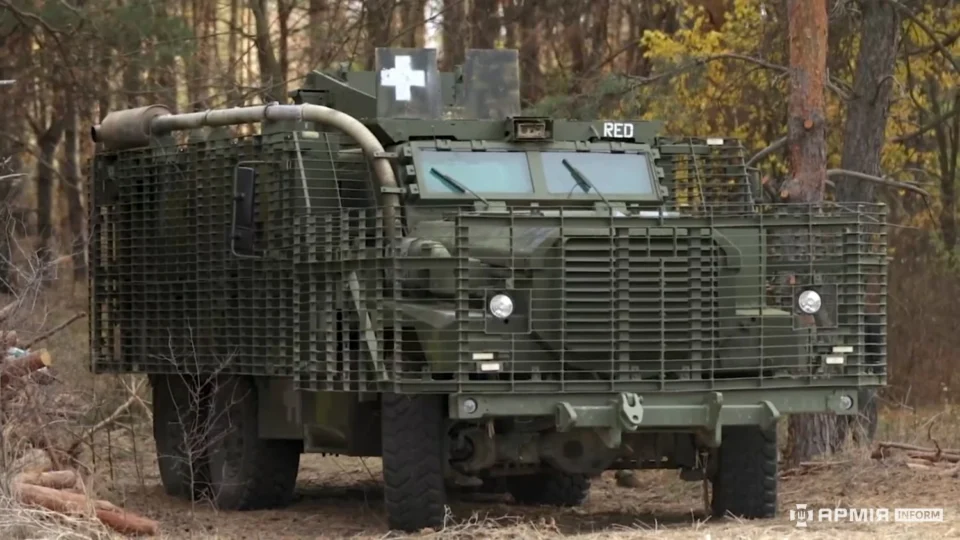
Resembling a large, kind dog, the Mastiff PPV combat armored vehicle is the British version of the American Cougar armored vehicle.

President of Ukraine Volodymyr Zelenskyy reported on several briefings by Minister of Defense Rustem Umerov regarding the active work of Ukrainian negotiating teams on international platforms.
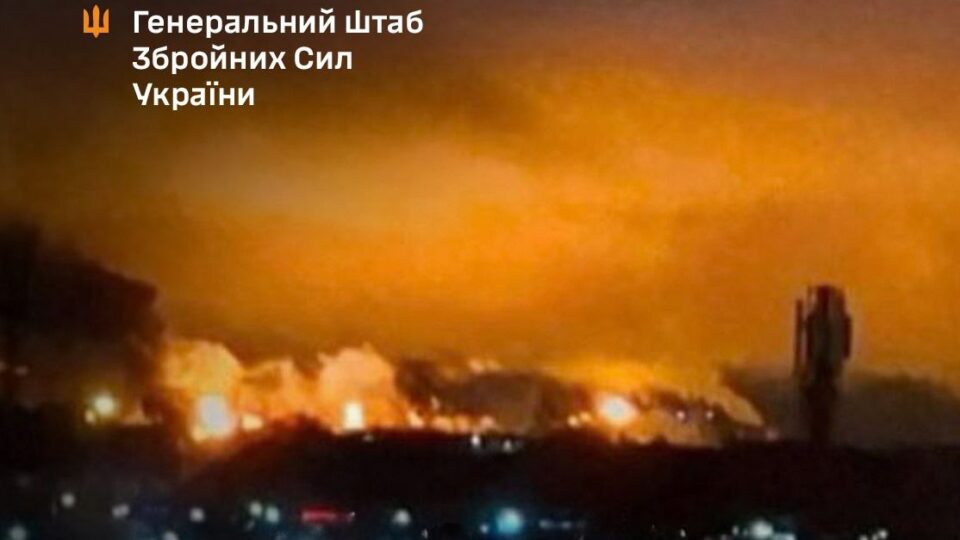
As part of efforts to reduce the enemy’s offensive potential, units of the Defense Forces of Ukraine struck the capacities of an enemy oil refinery, an ammunition depot, and areas where occupying forces were concentrated.
He is a category 3 sergeant-manager of the recruiting group of the headquarters of the 95th Separate Air Assault Polissia…