“Before we left, we were already eating once a day”: Ukrainian military delivered aid to residents of occupied Oleshky, but russian occupiers stole the food

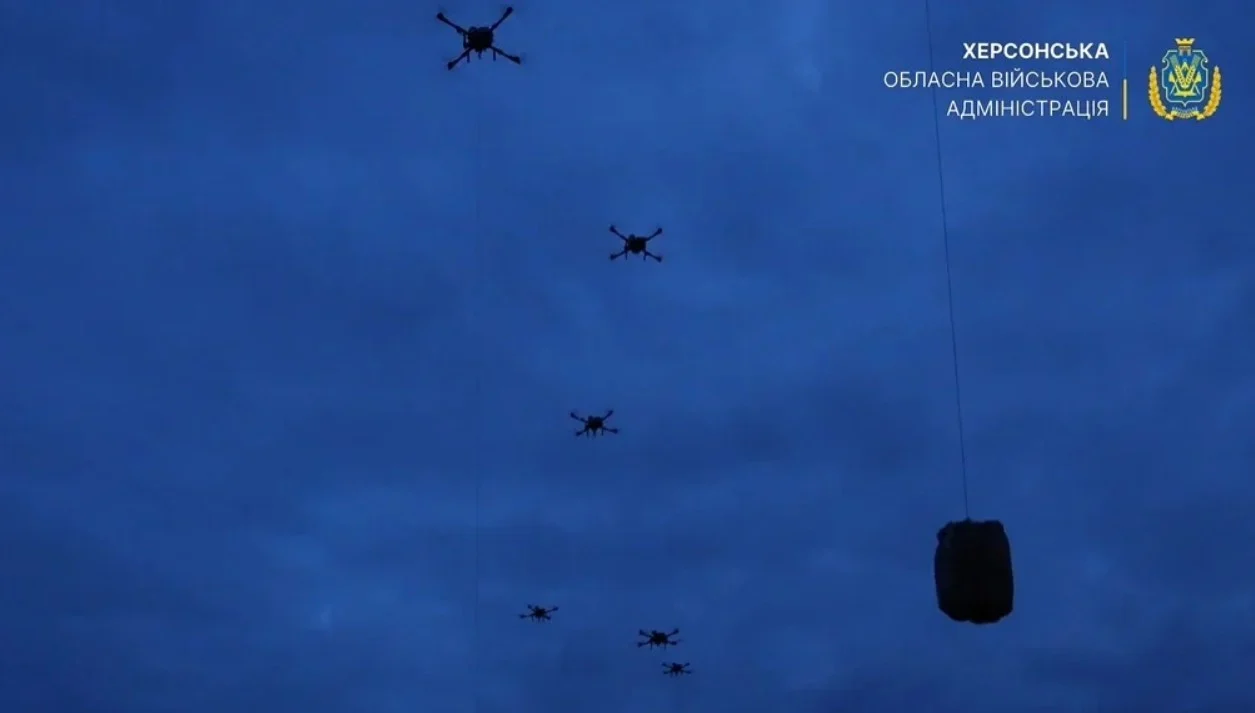
Evacuees from Oleshky have described how Ukrainian military personnel used drones to drop food and medicine to them.
Meanwhile Russian occupiers took humanitarian supplies intended for civilians for themselves.
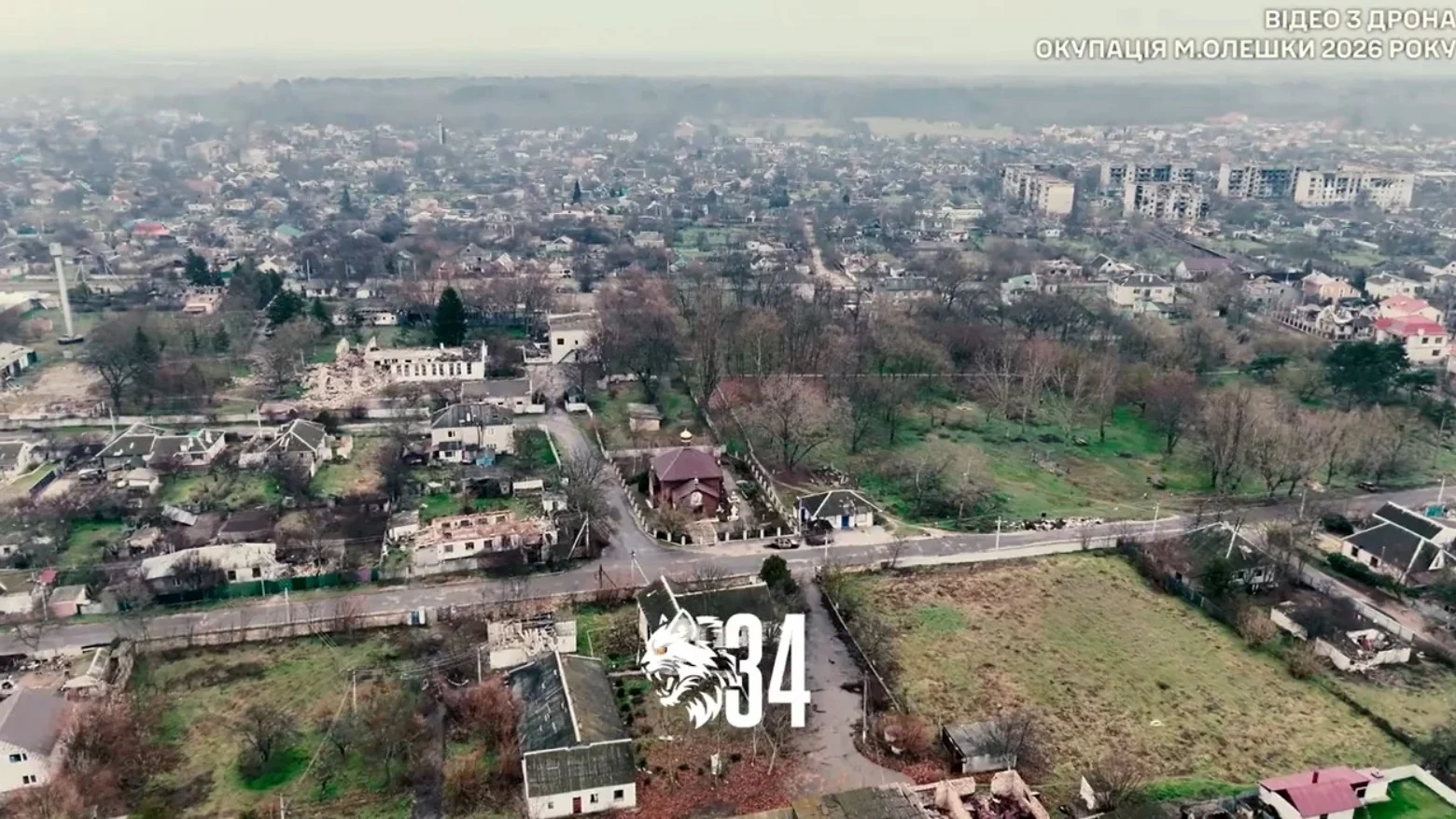
Oleshky, on the left bank of the Kherson region, came under Russian occupation at the beginning of the full-scale invasion. As early as February 24, 2022, columns of Russian military equipment advancing from occupied Crimea appeared on the outskirts of the city and moved towards the Antonivskyi Bridge.
The humanitarian situation in the city deteriorated significantly in 2025, and particularly throughout 2026. As residents faced shortages of food and medicine, Ukrainian units delivered aid using heavy-lift drones.
New accounts of what happened to the aid delivered to Oleshky residents emerged following the evacuation of civilians during a local ceasefire in late October and early November 2026.
The evacuees’ accounts added to reports from military personnel and government officials, who had already stated in September that Russian occupiers were stealing food supplies.
-
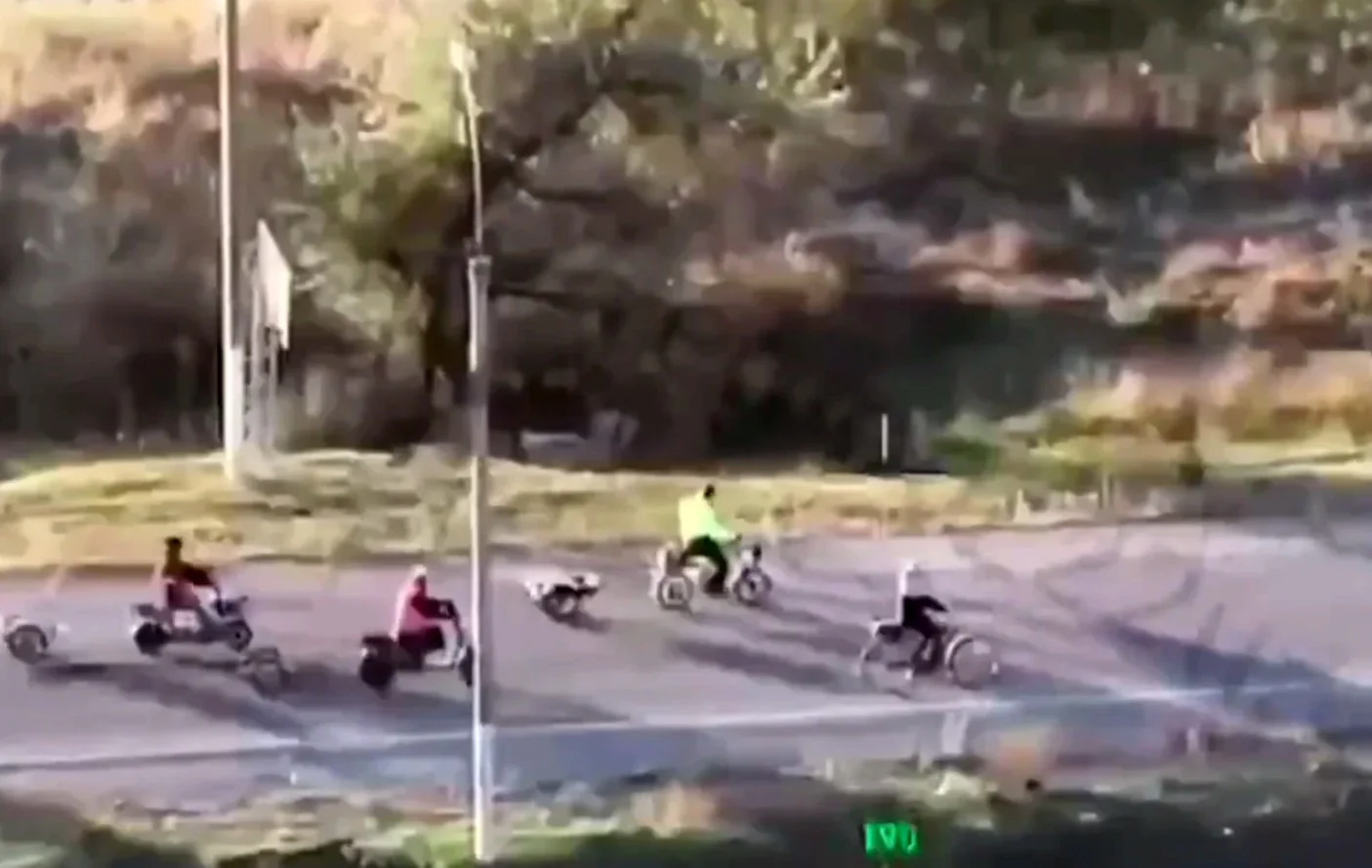
- Четверо людей їдуть дорогою на велосипедах і моторолерах. Уздовж дороги стоять опори та ростуть дерева.
“When you can’t eat properly, it’s a horrible situation”
After Oleshky was flooded as a result of the destruction of the Kakhovka Hydroelectric Power Plant, food supplies to the city became irregular. The situation gradually worsened, and from mid-2025 onwards, people who remained in the city reported food shortages and a sharp rise in prices.
“Last year, our friends in Oleshky said there was very little food left in the city and that supplies were running out. And if food was available, it was very expensive. Initially, the problem was the high prices, because there was so little food and not enough for everyone”, — Iryna Chukhalova, a native of Oleshky, told Frontliner in a report published on October 14, 2026.
By mid-2026, shortages of food and medical assistance had become the subject of a separate statement issued by the UN Human Rights Monitoring Mission in Ukraine on June 25, 2026. The Mission interviewed more than 20 residents of occupied frontline communities, including Oleshky and Hola Prystan.
According to the testimonies collected, the last grocery store in Oleshky stopped operating regularly in January 2026 due to a lack of supplies. People survived on their household food stocks and depended on irregular, occasional deliveries made by private individuals.
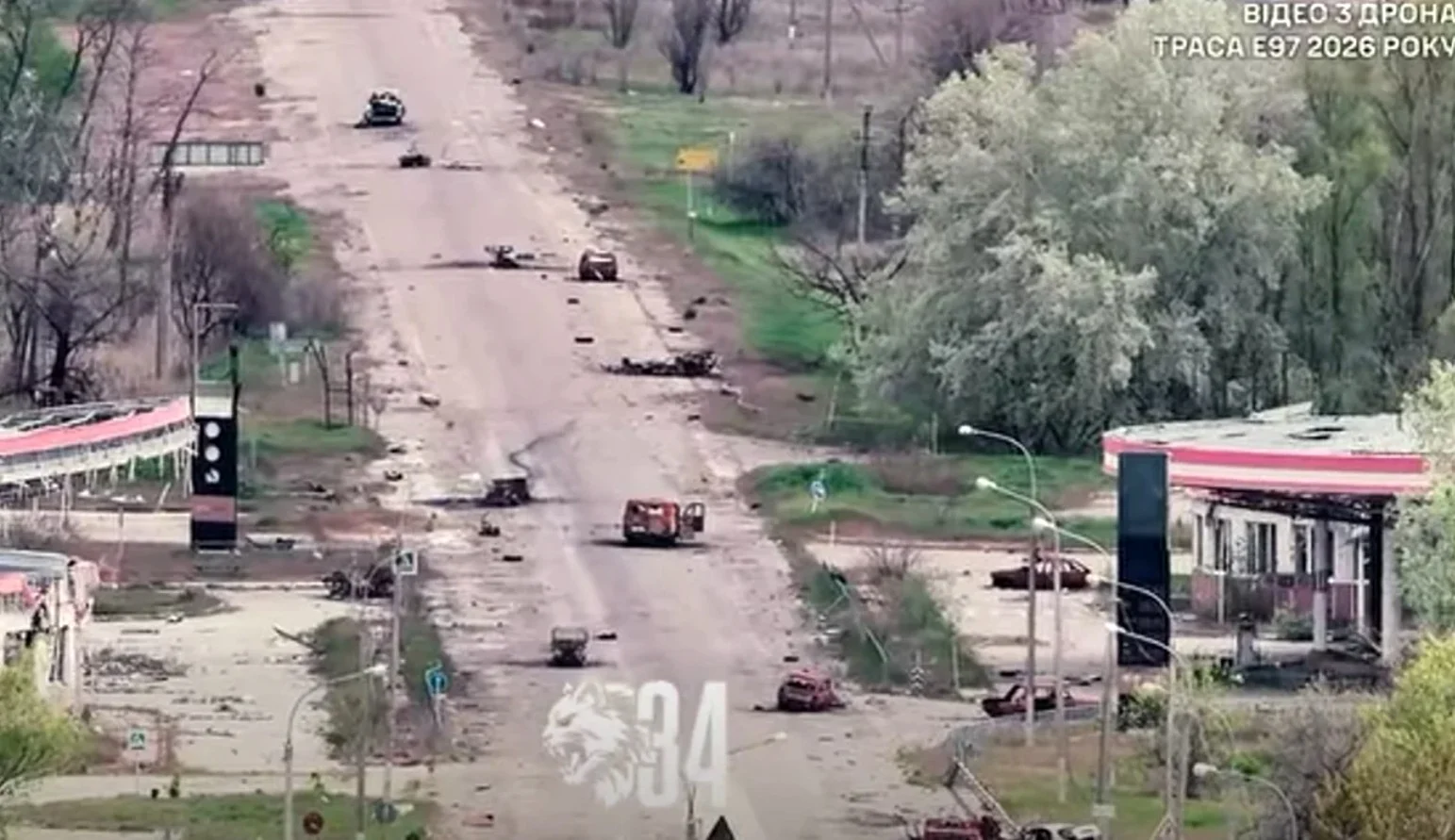
However, such trips to obtain food were extremely dangerous because of the fighting and landmines. The UN Mission reported that on June 2, a convoy of civilian vehicles carrying food and humanitarian aid struck a landmine at the entrance to Oleshky. One person was killed and three others were injured.
On October 27, 2026, Oleshky resident Vitalii described the consequences of the food shortage to Ukrainian Radio:
“Before we left, we were already eating once a day. There was very little food left. We would cook one cup of buckwheat or rice for the whole family — three people. That was how we ate.
To ease our hunger a little, we might also make a salad using one cucumber or tomato. We added purslane to it. That’s how we tried to satisfy our hunger.
When you have no food, when you can’t eat properly, when you have nothing — it is, of course, a horrible situation. You can’t afford anything”.
-
- Пошкоджені автомобілі на дорозі біля Олешок / скриншот з відео 34-ї окремої бригади морської піхоти «Борисфен»
“Quiet packages”
As early as 2025, Ukrainian military personnel began delivering packages of food and medicine to Oleshky using heavy-lift drones. Iryna Chukhalova told Frontliner that these efforts were not publicized and were referred to as “quiet packages”:
“We found out that people were suffering from hunger at the beginning of this year.
Together with friends and military personnel, we tried to make these deliveries regular, but it is extremely difficult because there are so many requests, and it is physically hard to handle such a large number of packages.
But it is not a rumor that people in Oleshky are frying grass. It is called purslane. It is very fatty, and people add it to borscht like cabbage to provide their bodies with at least some additional nutrients”.
At the beginning of 2026, when reports of starvation began emerging, volunteers and military personnel tried to organize regular deliveries. Yevhen Voronetskyi, spokesperson for the 34th Separate Marine Brigade “Borysfen”, told Hromadske Radio how they expanded the volume of aid. According to him, Volodymyr Obertas, a service member and native of Oleshky, suggested moving from small-scale deliveries to full-fledged food packages:
“Vova didn’t wait for the military unit to issue us supplies from the food warehouse. He went out and bought everything needed at the pharmacy, bought food — yeast, flour, various candies, bars…
Then it turned out that all the military personnel born on the left bank were also buying food. They put together packages, we made several trips, and even filmed the entire process — how everything was packed, attached, and sent off. But this footage could not be shown, so we set it aside”.
One of the Marines from the 34th Separate Marine Brigade, who was born in Oleshky, spoke about these humanitarian missions carried out by service members. He explained that it was impossible to supply an entire city through such deliveries.
Moreover, every delivery involved risks. Russian forces tried to shoot down the humanitarian drones, while Ukrainian military personnel also had to ensure that each flight did not endanger either the recipients or the Ukrainian troops themselves.
“Every time a drone takes off to make a delivery, it can be a one-way mission. It’s not simply a matter of taking off and landing. These are people’s lives — both military personnel and civilians on the left bank”.
-

- Олешки з українського дрона / скриншот з відео 34-ї окремої бригади морської піхоти «Борисфен»
“Around four tonnes of food and medicine”
One of the largest known aid deliveries to Oleshky using heavy UAVs took place in an operation reported by the Kherson Regional Military Administration on September 27, 2026. At the time, Ukrainian military personnel delivered around four tonnes of food and medicine to 100 locations across the city.
“Approximately four tonnes of food and medicine were delivered by heavy drones directly to 100 locations across the city. Each package was lowered on cables to the places where it was most eagerly awaited”.
The Kherson Regional Military Administration identified the participants in the mission as the 30th Marine Corps, the “Hrim” Tactical Group, the 34th Marine Brigade “Borysfen”, the 34th National Guard Regiment, the “Bolharychi” unit of the 11th National Guard Brigade, and the 79th Border Guard Detachment. Partners and volunteers helped assemble the cargo.
A second major joint operation took place overnight on October 4, 2026. According to Ukraine’s Minister of Internal Affairs, Ivan Vyhovskyi, National Guard personnel from the 11th Brigade and the 34th Kherson Regiment, together with Marines and border guards, delivered nearly 400 packages weighing almost four tonnes in total.
The packages contained food, medicine, and children’s kits collected by local communities, educational institutions, charitable donors, and volunteers.
“All the packages, without exception — nearly 400 of them — were successfully delivered. While the Russians are effectively holding residents of occupied Oleshky hostage, leaving them without food, water, or medicine, our units continue to do everything possible to save Ukrainians from starvation”, — the Minister of Internal Affairs wrote at the time.
Myroslav, call sign “Myron”, commander of a strike unmanned aerial systems company of the 34th Brigade, told Suspilne that residents of Oleshky had managed to receive at least some of the delivered packages:
“Reconnaissance drones provided illumination and monitored people as they came out to collect the packages. Our drones could clearly see people actually picking up the packages. In addition, people who were able to contact their relatives also reported that they had received their packages”.
-
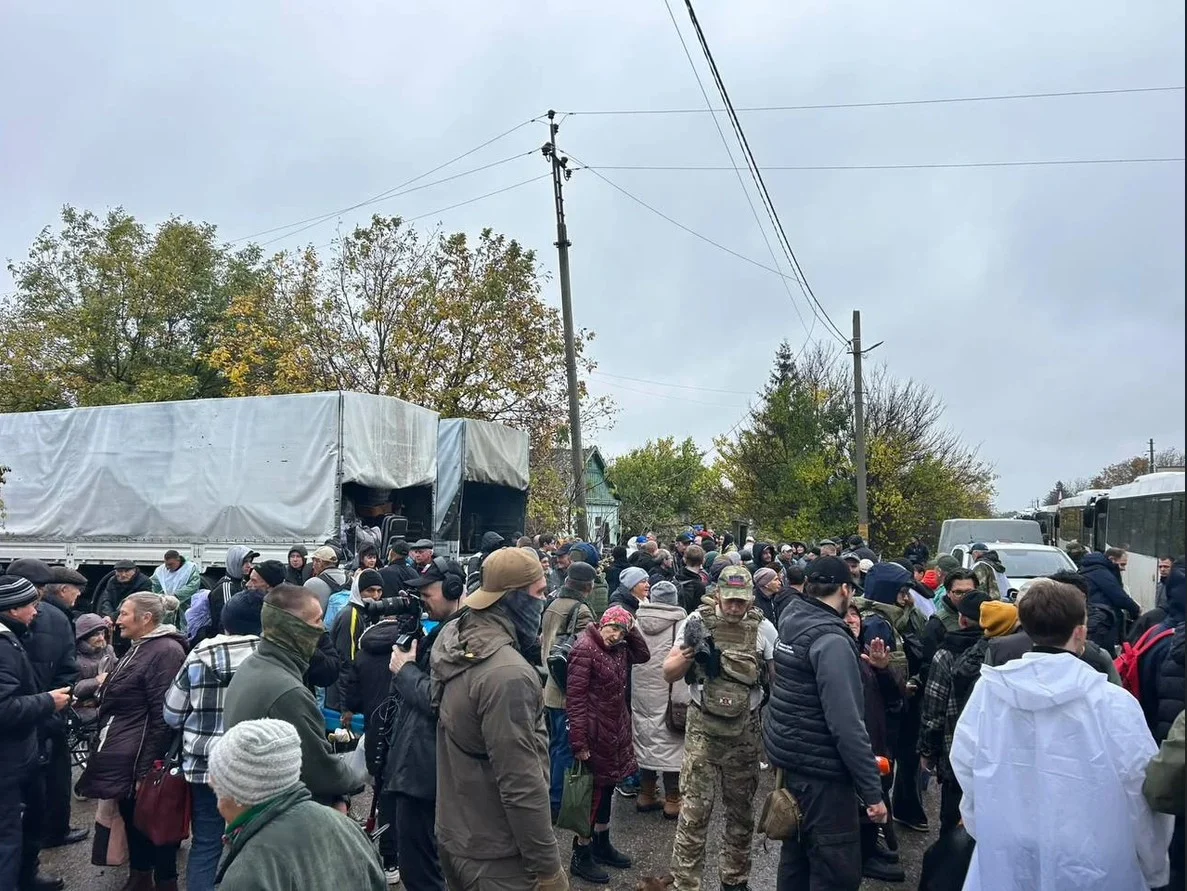
- Натовп людей стоїть біля вантажівки з тентом, мікроавтобусів та автобусів. Чоловік у навушниках тримає відеокамеру, поруч стоять люди в камуфляжному одязі.
“And most importantly, there was a Ukrainian palianytsia on top”
Personal accounts from Oleshky residents about the aid they received from Ukrainian military personnel began to emerge following the evacuation from the occupied city, which took place in late October and early November 2026.
On November 3, a local resident evacuated from the city told BBC News Ukraine that when food was dropped off at designated aid collection points in the spring, people did not manage to collect it because “the Russians took everything”.
On November 11, another man evacuated from Oleshky, named Mykhailo, told LB.ua that he had found a box of food near his house and quickly carried it inside with his wife:
“In the morning, we went out into the yard, and I thought, what if there’s something there? I looked around the corner of the house — there was a box, wrapped in black! We quickly dragged it into the house, and when we opened it, we almost burst into tears: grains, canned food, stewed meat, condensed milk, and most importantly, on top — a palianytsia”.