Ukraine’s Unmanned Systems Forces: one year of a branch the world had never seen

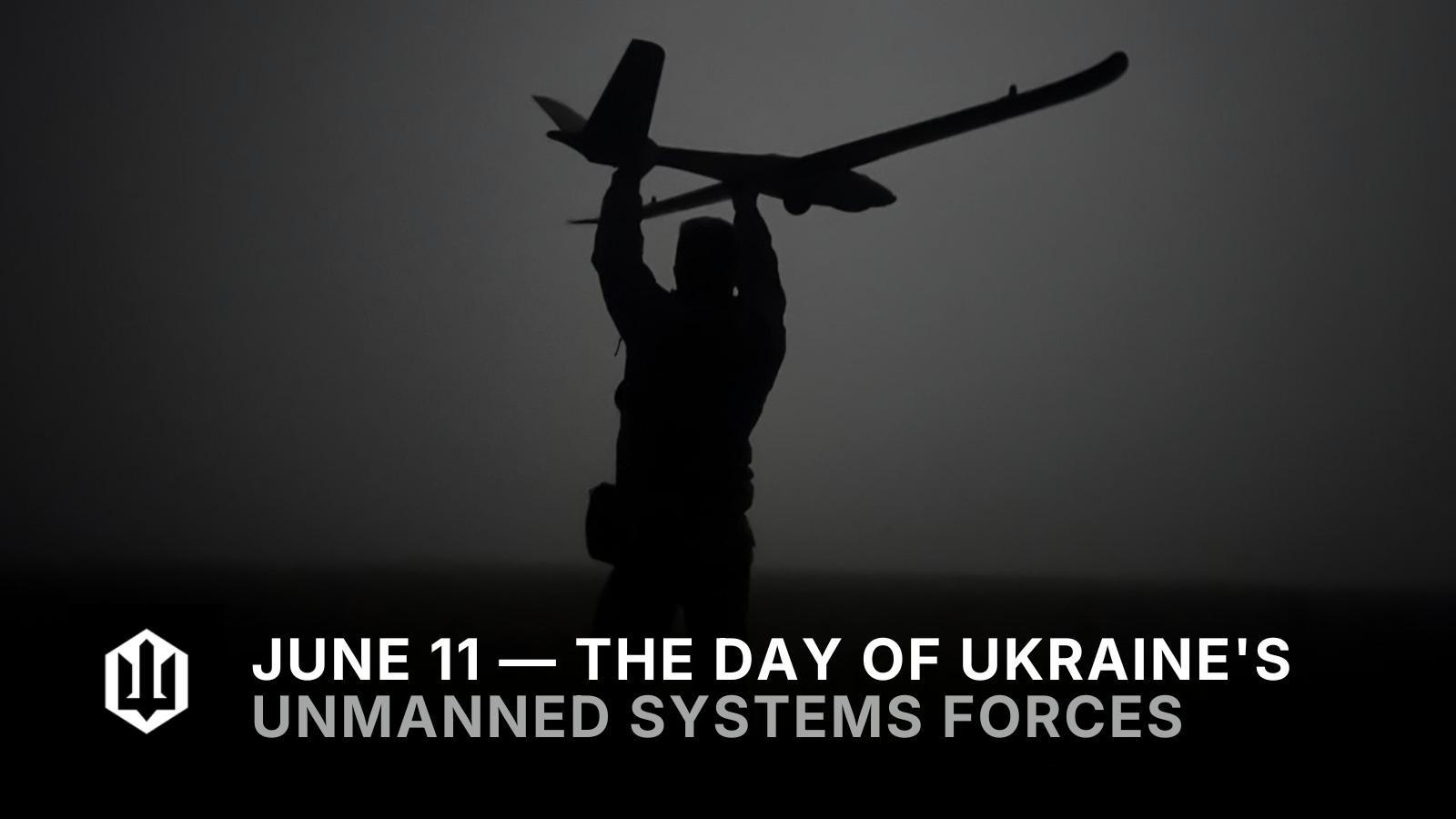
Three percent of Ukraine's military. Nearly $40 billion in Russian targets destroyed. Today, the Unmanned Systems Forces mark their first anniversary.
On June 11, 2025, Ukraine did something no country had done before: it established an Unmanned Systems Forces as a fully independent branch of its military. One year later, that decision has produced results that are reshaping the arithmetic of the war — and rewriting assumptions about what drone warfare can accomplish at strategic scale.
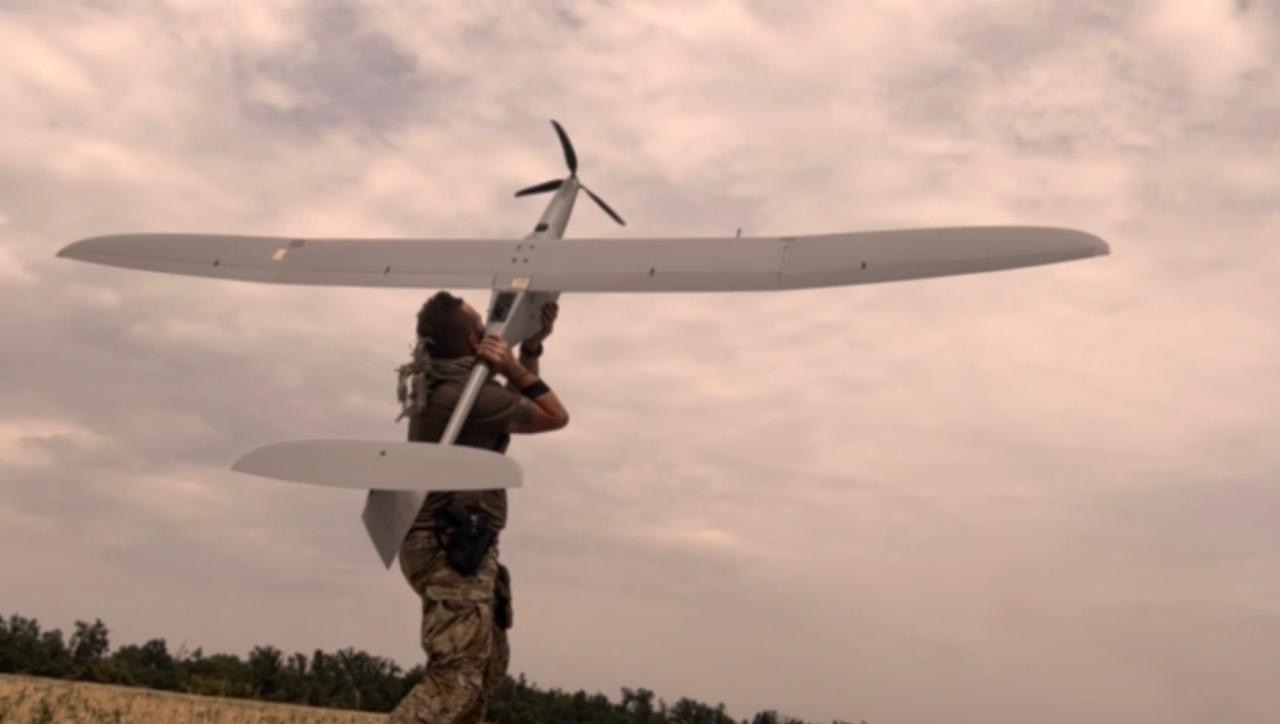
Today, the Armed Forces of Ukraine mark the first Day of the Unmanned Systems Forces. The occasion is more than ceremonial. In twelve months, the branch has grown from a newly formalised institution into an operational system with its own doctrine, eleven combat units, a deep strike coordination centre, and a confirmed damage record measured in billions of dollars.
From Decree to Doctrine: The Institutional Timeline
The path to June 11 began more than two years earlier. On February 6, 2024, President Volodymyr Zelensky signed Decree No. 51/2024, initiating the formal process of establishing a new branch of the Armed Forces. On June 25, 2024, Decree No. 382/2024 officially incorporated the Unmanned Systems Forces into the structure of the Armed Forces of Ukraine — the first such formation in the history of any military.
On June 3, 2025, Major Robert “Magyar” Brovdi was appointed commander. On June 20, 2025, the UAS Forces Grouping was formed, consolidating units of the Drone Line and the Unmanned Systems Forces under unified command. On December 25, 2025, the Deep Strike Centre of the UAS Forces Grouping was established — a dedicated coordination body for planning strikes at operational and strategic depth.

The commander, Major Brovdi, is himself a product of this trajectory. A Hero of Ukraine, founder of the “Magyar’s Birds” unit, and one of the primary architects of Ukraine’s FPV doctrine, he rose from volunteer to commander of an independent branch of the Armed Forces over the course of the full-scale war.
The Operational Record
The numbers compiled over the first year of the UAS Forces Grouping define the scale of what the branch has become. Ukraine’s President Zelensky confirmed that in the year following the formation of the Grouping, the UAS Forces struck Russian targets worth nearly $40 billion. The branch executed over 1.65 million combat missions, destroyed more than 350,000 enemy targets, and neutralised more than 100,000 Russian military personnel. Over 7,600 Shahed drones and Gerber munitions were intercepted. More than 26,000 Russian logistics vehicles were destroyed.
These figures represent the combined output of front-line strike operations, mid-range interdiction, and deep strike missions — three operational tiers that the UAS Forces run as an integrated system rather than as separate mission types.
The Strike Architecture: Front, Middle, Deep
The operational logic of the UAS Forces is defined by its three-tier strike structure, each tier preparing conditions for the next. At the front line, UAS crews conduct real-time strike missions against enemy personnel, armoured vehicles, and tactical positions. The “Standard-10” formula, developed by Commander Brovdi, defines the target: ten confirmed enemy personnel casualties per month per strike crew. At 15 to 20 combat days per month, this translates to one confirmed kill every two to three operational days. Delta system data for March and April 2026 confirmed that UAS operations alone were generating over 33,000 confirmed enemy casualties per month.
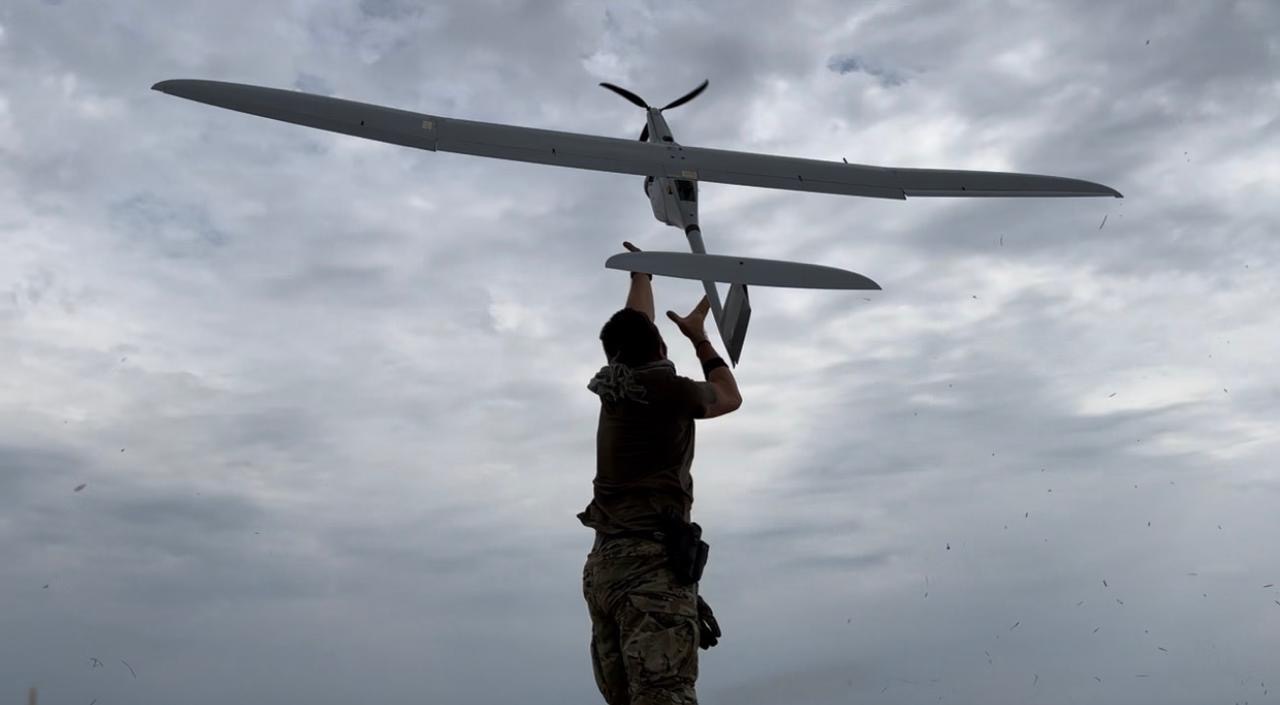
The significance of that figure becomes clear in comparison: Russia’s average monthly military reinforcement during the same period was approximately 29,500 personnel. For the fifth consecutive month, Russia was losing more soldiers than it was replacing. Ukraine’s Ministry of Defence has set a strategic target of 50,000 enemy casualties per month. According to Brovdi, Standard-10 makes it achievable.
At the mid-range level, UAS units conduct nightly raids against radar stations, air defence missile systems, communications nodes, and command posts at operational depth — hundreds of kilometres behind the front line. This is not support work. It is a prerequisite for deep strike operations. By systematically degrading Russian air defence coverage, mid-range strikes open corridors through which deep strike drones can reach targets that would otherwise be protected.
In March and April 2026, UAS Forces destroyed 17 Russian air defence systems at operational depth. The destruction of mobile surface-to-air missile systems and long-range early warning radars directly expanded the accessible target set for deep strike operations.
At strategic depth, UAS Forces have struck aviation repair plants, oil terminals, refineries, and military-industrial facilities at distances of 1,500 to 2,000 kilometres from the front line. The April 2026 strikes on the Tuapse refinery, the ports of Primorsk and Ust-Luga, and the Yaroslavl and Ryazan refineries caused damage estimated in the hundreds of millions of dollars. The Tuapse direction alone generated over $300 million in confirmed losses within a single month.
A Doctrinal First: Real-Time Storm Shadow Correction
In March 2026, the UAS Forces achieved what Commander Brovdi described as a historic operational milestone: for the first time, UAS crews corrected a Storm Shadow missile strike against a strategic Russian military-industrial facility in real time. The operation demonstrated the integration of long-range cruise missile capability with drone-based targeting — a combined-arms application that had not previously been executed in combat. UAS aircraft provided live targeting data during the missile’s terminal phase, enabling precision adjustment against a hardened facility at strategic depth. The capability represented by that single operation — real-time correction of a NATO-supplied long-range missile using organic drone assets — illustrated the doctrinal evolution the UAS Forces have undergone in twelve months.
Air Defence Without Traditional Air Defence
Russia launches hundreds of Shaheds and reconnaissance drones daily against Ukrainian territory. The UAS Forces developed a systematic response that does not depend on traditional air defence platforms. Interceptor drones now destroy incoming strike drones without expending a single conventional air defence missile. UAS units were the first in Ukraine’s Defence Forces to place Shahed interception on a systematic operational footing. They were also the first to shoot down a Shahed using an interceptor drone launched from a surface platform — a capability that extends the intercept envelope beyond fixed ground-based positions.
Electronic warfare suppression has additionally neutralised tens of thousands of enemy drones across UAS zones of responsibility. According to the branch’s own assessment, no mass aerial assault by Russian forces in UAS-designated zones of responsibility has achieved its intended objective.
The Strategic Impact: Russia’s Economy Under Pressure
The cumulative effect of the deep strike campaign has moved beyond tactical disruption into macro-economic consequence. Ukraine has struck 15 oil refineries supplying Russia’s military since January 2026. By May, assessments indicated that approximately 40 percent of Russia’s primary oil refining capacity had been degraded. Russia imposed a ban on aviation fuel exports — the first such restriction in modern Russian history. Fuel rationing was introduced in multiple Russian regions and across occupied Ukrainian territory. The financial consequence has entered Russia’s sovereign budget planning. Due to collapsing hydrocarbon export revenues, Russia budgeted an 11 percent reduction in defence spending for 2026 — the first military budget cut in four years of full-scale war.
Commander Brovdi has been explicit about the operational logic behind the economic targeting: “These territories are no longer a peaceful rear.” The statement applies to facilities 1,500 to 2,000 kilometres from the front line. The Kuibyshev Refinery in Samara — struck by UAS Forces on June 10, 2026, one day before this anniversary — lies more than 1,000 kilometres from Ukraine’s border.
The Institution Behind the Results
The UAS Forces are not solely a collection of drone operators. The branch encompasses engineers, designers, programmers, and analysts alongside operational crews — a structure designed to compress the cycle between technological development and battlefield deployment.
The Deep Strike Centre, established December 25, 2025, coordinates strike planning across operational and strategic depth, integrating intelligence, targeting, air defence suppression, and strike execution into a unified planning architecture. The Centre represents the institutionalisation of what had previously been ad hoc coordination — a transition from operational improvisation to repeatable doctrine. The branch also conducts logistics, medical evacuation, and supply delivery to forward positions using ground robotic systems — tasks that extend the UAS mission beyond strike operations into the full spectrum of front-line support.
Assessment
Ukraine’s Unmanned Systems Forces reached their first formal anniversary having demonstrated something that no military doctrine had previously specified: that an independent branch organised around unmanned systems, operating across all range tiers simultaneously, can generate strategic-level effects against a peer adversary.
The branch that did not exist in any army on June 25, 2024 has, in its first year of recognised existence, contributed to a measurable degradation of the Russian military-industrial complex, demonstrated the ability to correct long-range cruise missile strikes in real time, constructed an interceptor drone capability that operates outside the traditional air defence framework, and maintained a monthly attrition rate against Russian forces that exceeds Russia’s replacement capacity.
The military establishments of every country engaged in serious defence planning are studying what Ukraine has built. The model is operational. The data is public. The doctrine is evolving in real time.
Ukraine built it first.