
The international delegation, headed by Ana Lucía Bueno, ICRC Public Health Coordinator, and Sujit Panda, Head of the Physical Rehabilitation…


The Ministry of Defense of Ukraine has integrated the command of the 1st Corps of the National Guard of Ukraine “Azov” into the digital logistics management system (LMS) for ground weapons systems.
This was reported by the Ministry of Defense on January 19.
“Thanks to this, the Logistics Forces Command of the Armed Forces of Ukraine can track stock levels and receive supply requests for the Corps, while ‘Azov’ command can see resource allocation decisions in real time”, — the statement reads.
The Ministry noted that previously, document circulation between the Logistics Forces of the Armed Forces of Ukraine and the National Guard was complicated: units are subordinated to different ministries, and paper-based procedures often caused supply delays of up to several weeks.
With the implementation of the LMS, the exchange of requests and allocation orders for weapons, equipment, and property occurs instantly, avoiding delays and significantly accelerating supply.
“The integration of ‘Azov’ into the logistics management system is an example of how modern digital solutions increase the speed and accuracy of logistics in the interests of units that play a key role in repelling armed aggression”, — emphasized Oksana Ferchuk, Deputy Minister of Defense for Digital Development, Digital Transformations, and Digitalization.
“Under constant enemy pressure at the front, reaction speed in logistics becomes one of the key factors determining the ability of units to perform combat missions. Every supply delay, every untimely transfer of information directly affects combat capability and personnel safety.
That is why the introduction of the LMS in the Corps was a logical and timely decision. A centralized platform accelerates data exchange, automates key processes, increases inventory transparency, and reduces response time to changes in the operational situation”, — commented Senior Lieutenant Oleksandr ‘Corvin’ Nikolenko, Head of the Armament Department of the 1st NGU “Azov” Corps.
The Ministry of Defense reported that the LMS is built on the SAP platform — a defense resource management system used by over 90% of NATO armies. It enables real-time visibility of available resources, tracking their movement, planning supplies, and making decisions based on up-to-date data.
In addition, the system reduces the human factor and dependence on paper processes, which during wartime create risks of errors, delays, and non-transparent decisions. Instead, commanders and logistics services work with current data and can respond more quickly to unit needs — from the front to the rear.
“For the military, this means faster supply, more accurate planning, and resource distribution. For the state — process control, procurement transparency, and more efficient use of every hryvnia. For partners — clear and transparent rules compatible with NATO standards”, — the Ministry emphasized.
Ultimately, the system directly affects combat effectiveness: when resources are correctly accounted for, move predictably, and reach where they are truly needed, decisions are made faster and the military fights more effectively.
The Ministry of Defense stated that the LMS is planned to be rolled out to military units subordinate to the “Azov” Corps and to other National Guard units in the ground weapons systems domain, as well as expanded to other areas.
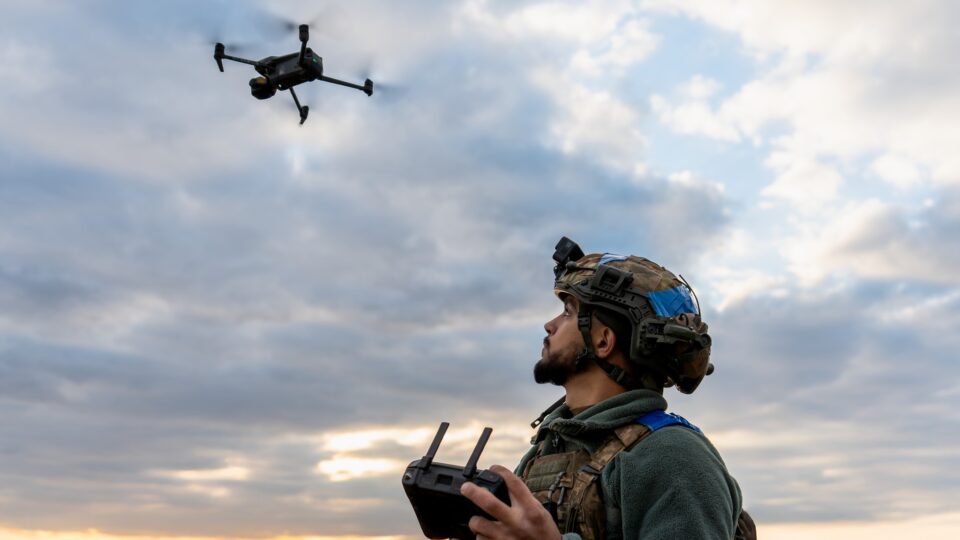
Over the past day, units of the Unmanned Systems Forces grouping struck or destroyed 1,209 enemy targets.

Drone units of the Joint Forces’ Iron Brigade are continuously destroying enemy UAVs (“chortolyoty”) and personnel.

On the night of March 20, the enemy attacked with 156 strike UAVs, including Shahed-type drones, “Gerbera”, “Italmas”, and other types.
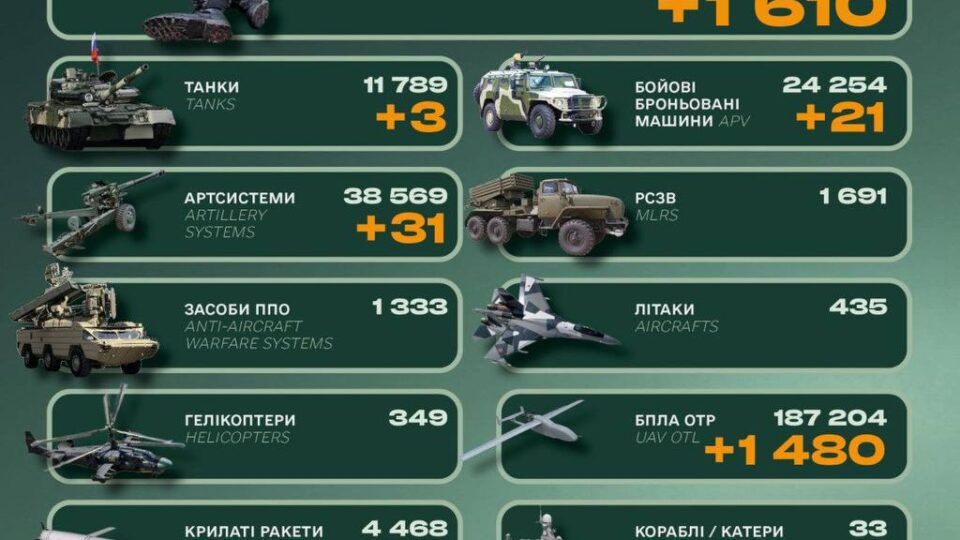
Over the past day, Russian occupation forces lost 1,610 personnel on the battlefield.

A UAV operator of the “Typhoon” unmanned systems unit with the callsign “Nimets” can strike the enemy even blindly.
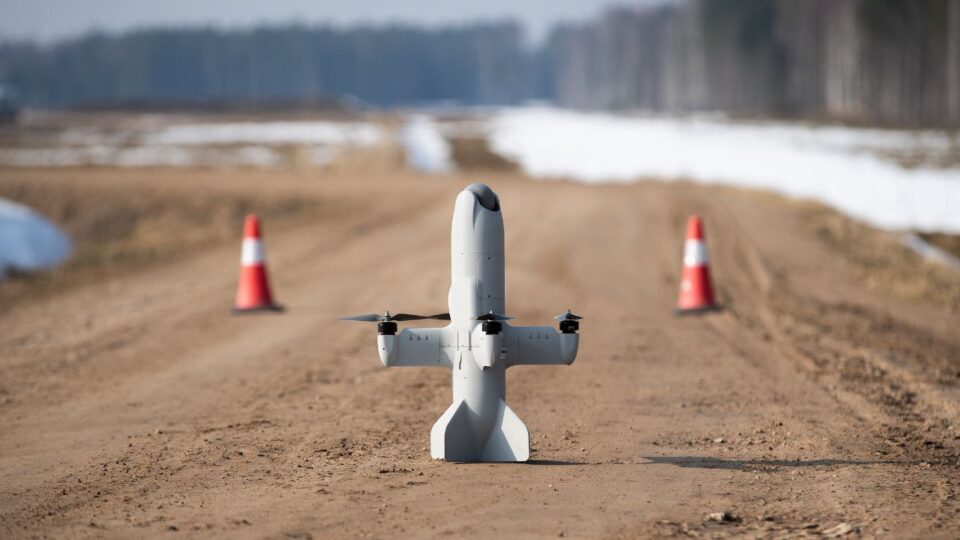
The first cycle of testing, evaluation, verification, and validation of unmanned aerial systems took place at NATO’s innovation range for unmanned systems.
The international delegation, headed by Ana Lucía Bueno, ICRC Public Health Coordinator, and Sujit Panda, Head of the Physical Rehabilitation…