Strikes on 21 targets deep inside enemy and occupied territories in 6 Days — USF AFU

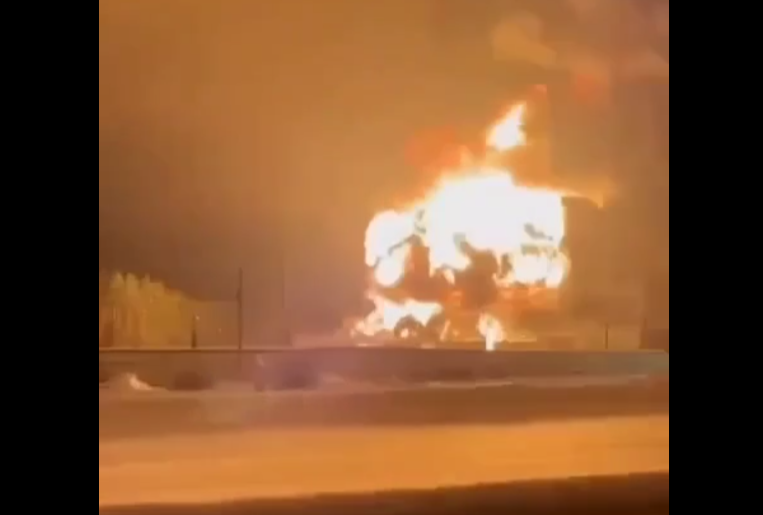
Between January 2 and 7, oil refineries, logistics warehouses, and chemical plants were hit both on the territory of the aggressor state and in temporarily occupied territories.
The list of strikes was published on January 7 by Major Robert “Madyar” Brovdi, Commander of the Unmanned Systems Forces of the Armed Forces of Ukraine.
“The diversity of targets is as follows:
On January 4, the birds of the 1st SBS Center ignited the largest defense plant in the swamps producing chemical power sources:
- ‘Energiya’ defense enterprise (Yelets, Lipetsk Oblast, Russia) — a defense plant producing power sources for Iskander missiles, sea-launched guided missiles, and modules that convert unguided aerial bombs into guided ones.
USF birds nightly keep the ‘wormholes’ of fuel depots and chemical plants in check. Among the sensitive targets pecked between January 2 and 7 were:
- Novokuibyshevsk Oil Refinery (Samara Oblast, Russia) — joint operation of the 1st SBS Center, Kairos Battalion of the 414th Separate UAV Brigade ‘Birds of Madyar,’ and Special Operations Forces — night of 02.01;
- Almetyevsk oil hub (Republic of Tatarstan, Russia) — primary crude oil processing complex with capacity up to 15 million tons per year — night of 02.01;
- Afipsky Oil Refinery — night of 02–03.01 (Krasnodar Krai, Russia);
- Ryazan Oil Refinery — 04.01 (Ryazan Oblast, Russia);
- Yaroslavl Oil Refinery — night of 05–06.01 (Yaroslavl, Russia);
- Kirovo-Chepetsk Chemical Plant (Kirov Oblast, Russia), a producer of nitric acid and nitrate-sulfate mixtures for the explosives industry — night of 05–06.01;
- Dorogobuzh Chemical Plant (Novomykhailivske, Smolensk Oblast, Russia) — production of up to 1.5 million tons per year of concentrated nitric acid used as raw material for TNT, octogen, hexogen, and other explosives — night of 05–06.01;
- Vypolzovo oil depot (Stary Oskol, Belgorod Oblast, Russia) — 06–07.01.
To suppress enemy aviation activity, regular operations are conducted against enemy airfields and air bases.
Every night we strike military targets in both TOT and non-TOT:
- logistics hub, Khliborobne (Zaporizhzhia Oblast, TOT);
- logistics hub, Sofiivka (Zaporizhzhia Oblast, TOT);
- ammunition depot, Novokazankuvate (Zaporizhzhia Oblast, TOT);
- fuel and lubricants depot, Sorokyne (Luhansk Oblast, TOT);
- forward command post of the 76th Air Assault Division, Selidove (Donetsk Oblast, TOT);
- command and observation post of the 76th Air Assault Division, Hirnyk (Donetsk Oblast, TOT);
- artillery ammunition depot, Mizhhiria (Autonomous Republic of Crimea, TOT),” — the USF commander said.