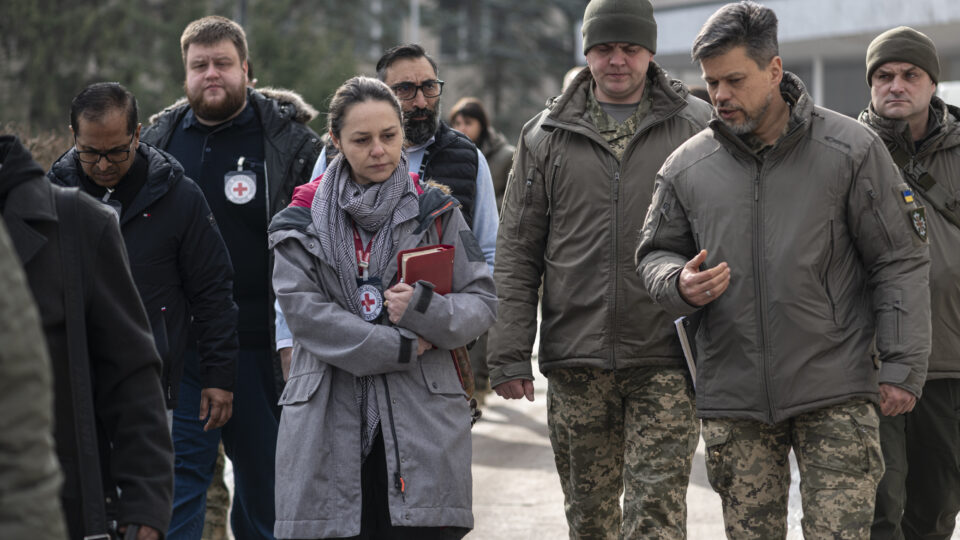
The international delegation, headed by Ana Lucía Bueno, ICRC Public Health Coordinator, and Sujit Panda, Head of the Physical Rehabilitation…

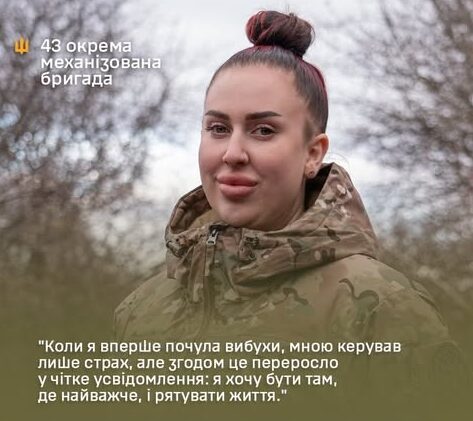
Diana, call sign “Gorgona”, serves as a sanitary instructor in the evacuation unit of the medical company of the 43rd Separate Mechanized Brigade. She decided to join the army after working and living in the frontline settlement of Borova in the Kharkiv region.
This was reported in a publication on the page of the 43rd Separate Mechanized Brigade.
Borova under shelling
Diana is a certified physical education teacher. At the age of 18, she began working for the Aurora retail chain and within a few years rose to the position of support team curator, responsible for launching new stores across Ukraine. It was precisely a business trip that brought her to the settlement of Borova during a period of active hostilities.
The first days meant nighttime arrivals, destroyed infrastructure, lack of transportation, and constant danger. The servicemembers who helped her find shelter and housing at that time became her first personal contact with the front line.
The decision to join the Army
Life in the frontline zone quickly stripped away illusions. A guided aerial bomb struck near her place of residence, work at the store took place amid the sounds of explosions, and locals had long learned to distinguish “falling boxes” from shelling.
It was then that a thought emerged that would not let her go for more than six months: to enlist and be useful where it was hardest. Diana made the final decision together with a friend — both restored their documents and went to the Territorial Recruitment and Social Support Center (TCRSS) together.
The path to a combat medic
In the army, Diana was offered non-combat positions, but she insisted on a medical role. She prepared for training independently — studying the MARCH protocol even before basic training. The most difficult part was combat medic training: there were people with medical education around her, and the exams were hard.
Receiving the certificate became her first major victory. Later, she herself asked to work at a stabilization point — where the workload is the heaviest.
Combat experience and service today
Her first shifts in the operating room were a trial: panic, overload, work at the limit of one’s abilities. Over time, Diana pulled herself together and fully engaged in the process. Thus a professional habit emerged — the main thing was to save lives, regardless of circumstances.
The hardest part, she says, was treating wounded civilians who refused evacuation until the very last moment. Today, “Gorgona” works as a sanitary instructor in the evacuation unit of the medical company and at the same time studies in the specialty of General Medicine to become a professional physician.
“Fo now — to defeat the enemy”
She speaks cautiously about plans after the war: the main thing is victory and saving lives. The possibility of remaining in the army after the war is quite real for her.

The enemy is attempting to develop the production of naval drones and copy successful Ukrainian practices — both technical solutions and tactics.
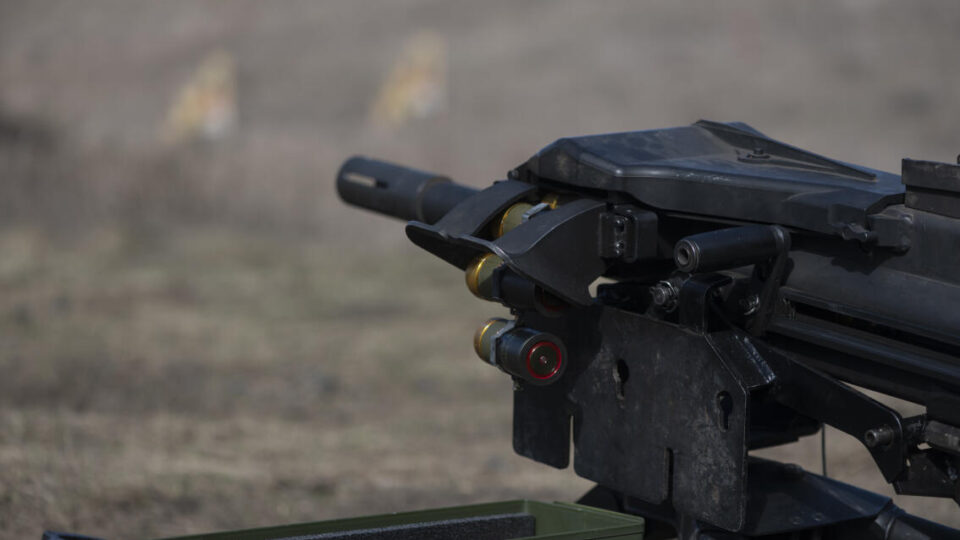
Fighting continues in the northern part of the city of Pokrovsk in the Pokrovsk direction. A mechanized assault was repelled there the day before.
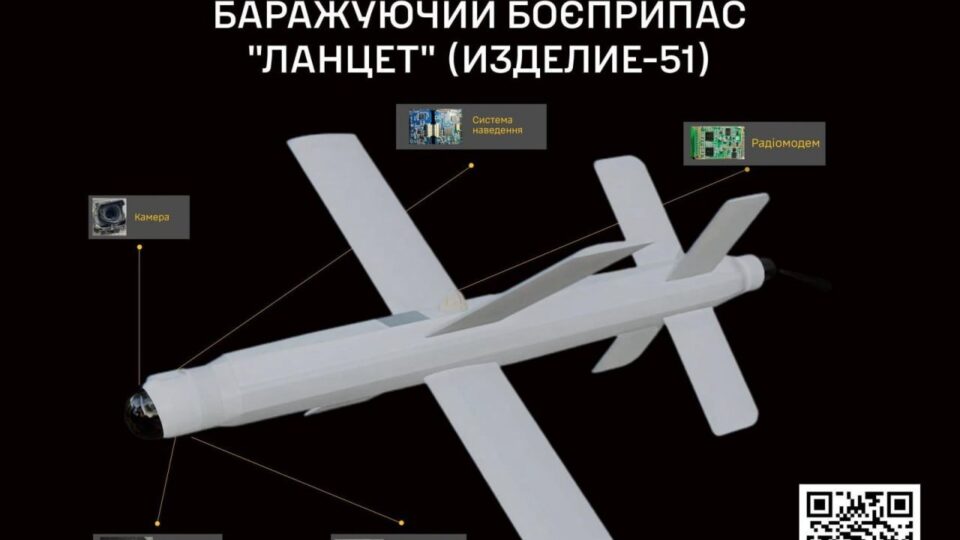
The Main Intelligence Directorate of the Ministry of Defense of Ukraine has published data on enterprises involved in the production of Russian loitering muniti

Another two-day round of negotiations between Ukraine and the United States concluded in Florida on March 22.
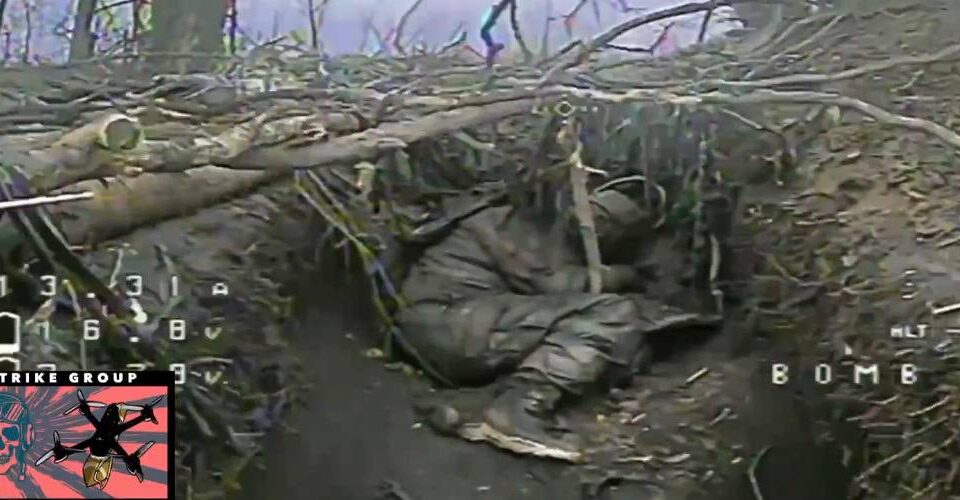
The enemy continues daily pressure and attempts to break through Ukrainian defenses in the Sloviansk direction.
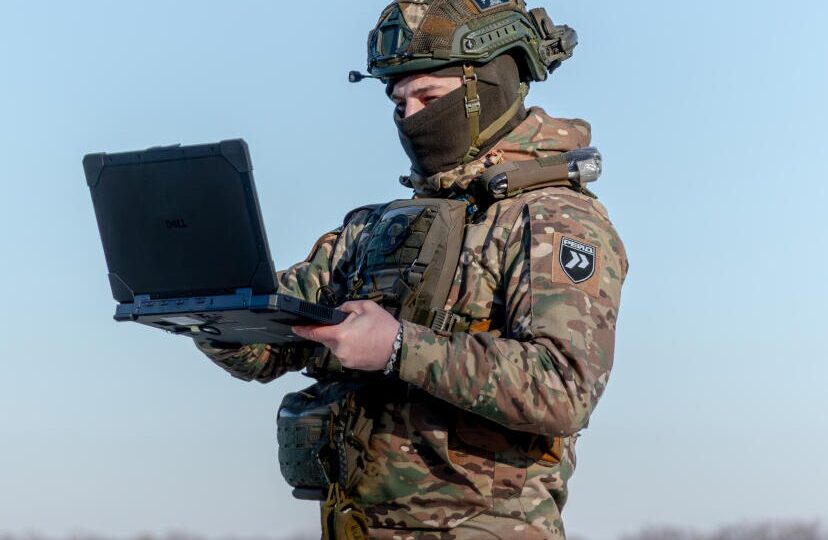
Over the past day, units of the Unmanned Systems Forces struck/destroyed 1,078 enemy targets.
The international delegation, headed by Ana Lucía Bueno, ICRC Public Health Coordinator, and Sujit Panda, Head of the Physical Rehabilitation…