
The international delegation, headed by Ana Lucía Bueno, ICRC Public Health Coordinator, and Sujit Panda, Head of the Physical Rehabilitation…


The Main Intelligence Directorate of Ukraine’s Ministry of Defense has released details of a new modification of the Russian unmanned aerial vehicle “Geran-2,” which the aggressor state has equipped with an R-60 air-to-air aviation missile.
This is reported in the “Components in Weapons” section of the War&Sanctions portal.
According to intelligence data, Russia has adapted the old Soviet R-60 missile for installation on UAVs of the “E” series. The primary purpose of this configuration is to engage Ukrainian helicopters and aircraft involved in intercepting enemy drones.
The missile, together with the APU-60-1MD (P-62-1MD) aircraft launch rail, is mounted on a special bracket in the upper forward part of the “Geran” fuselage.
The modified UAV is equipped with two network cameras—one in the nose section and another behind the missile launch rail. Video transmission and control commands are carried via a Chinese mesh modem, the Xingkay Tech XK-F358.
The flight controller, navigation, and inertial units remain standard for other “Geran” UAVs. For satellite navigation under conditions of active electronic warfare, a 12-channel jam-resistant “Kometa” module is used.
The electronic payload also includes a single-board microcomputer Raspberry Pi 4 (United Kingdom), a tracker, and two GSM modems for telemetry transmission.
The countries of origin of the electronic component base remain typical for Russian UAVs of this type: the United States, China, Switzerland, Taiwan, Japan, Germany, and the United Kingdom. A full list of components with markings and photographic materials is available via the link.
The likely principle of missile employment is that imagery from the drone’s cameras is transmitted to the operator, who, upon detecting a Ukrainian aircraft or helicopter within the engagement zone, issues a launch command. After launch, the R-60’s infrared homing seeker independently acquires the target.
Another option being considered is pre-acquisition of the target by the seeker head, followed by transmission of the relevant information to the operator to decide on launch.
DIU emphasizes that the main objective of this new development is to create a threat to Ukrainian army and tactical aviation and to reduce its effectiveness in intercepting enemy UAVs. Thus, the multi-role version of the Iranian Shahed-136 has acquired yet another combat role.
Intelligence officials do not rule out that experience from such use could be transferred to Iran. The DIU of Ukraine’s Ministry of Defense continues to systematically expose the technological solutions of the aggressor state and the international supply chains that fuel Russia’s war machine.

The enemy is attempting to develop the production of naval drones and copy successful Ukrainian practices — both technical solutions and tactics.
Fighting continues in the northern part of the city of Pokrovsk in the Pokrovsk direction. A mechanized assault was repelled there the day before.
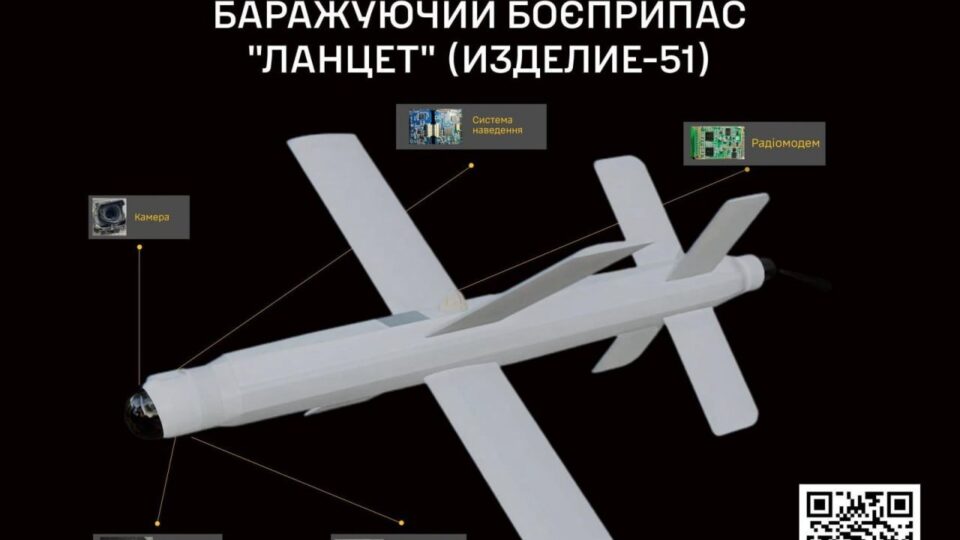
The Main Intelligence Directorate of the Ministry of Defense of Ukraine has published data on enterprises involved in the production of Russian loitering muniti

Another two-day round of negotiations between Ukraine and the United States concluded in Florida on March 22.

The enemy continues daily pressure and attempts to break through Ukrainian defenses in the Sloviansk direction.
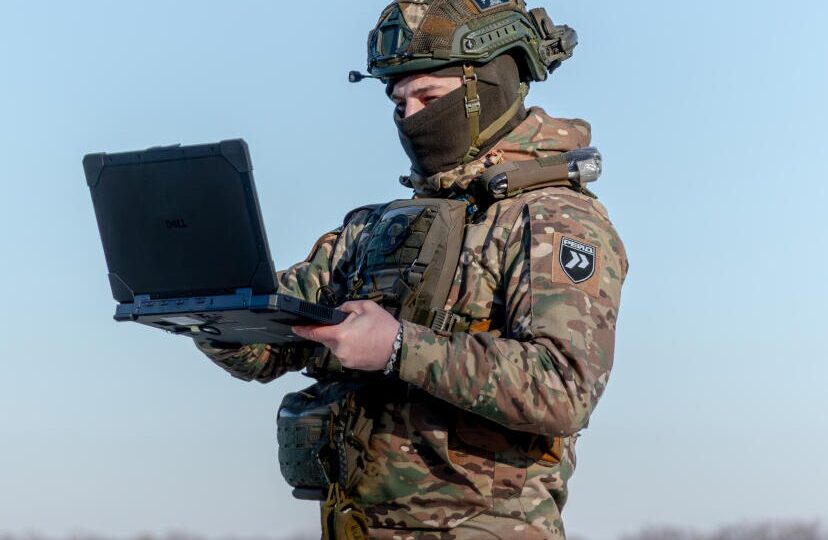
Over the past day, units of the Unmanned Systems Forces struck/destroyed 1,078 enemy targets.
The international delegation, headed by Ana Lucía Bueno, ICRC Public Health Coordinator, and Sujit Panda, Head of the Physical Rehabilitation…