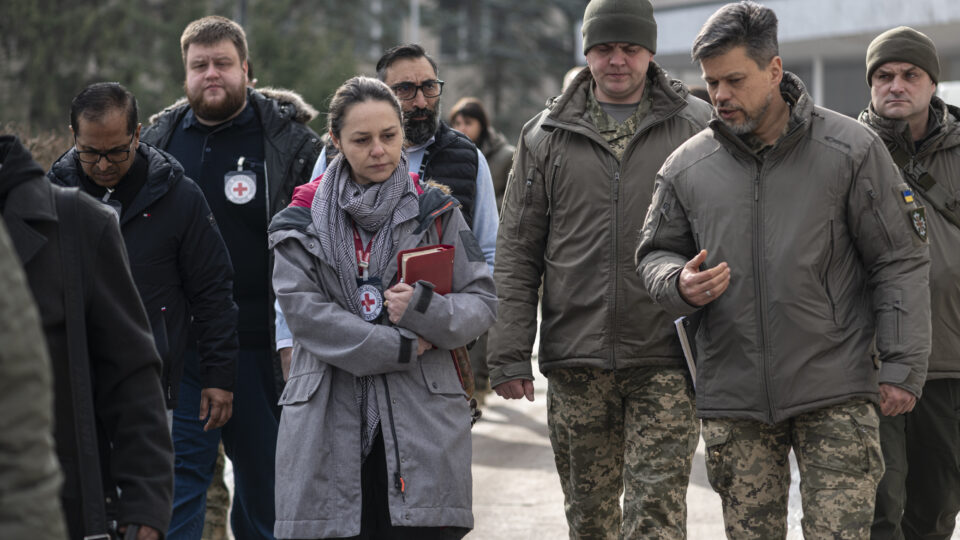
The international delegation, headed by Ana Lucía Bueno, ICRC Public Health Coordinator, and Sujit Panda, Head of the Physical Rehabilitation…

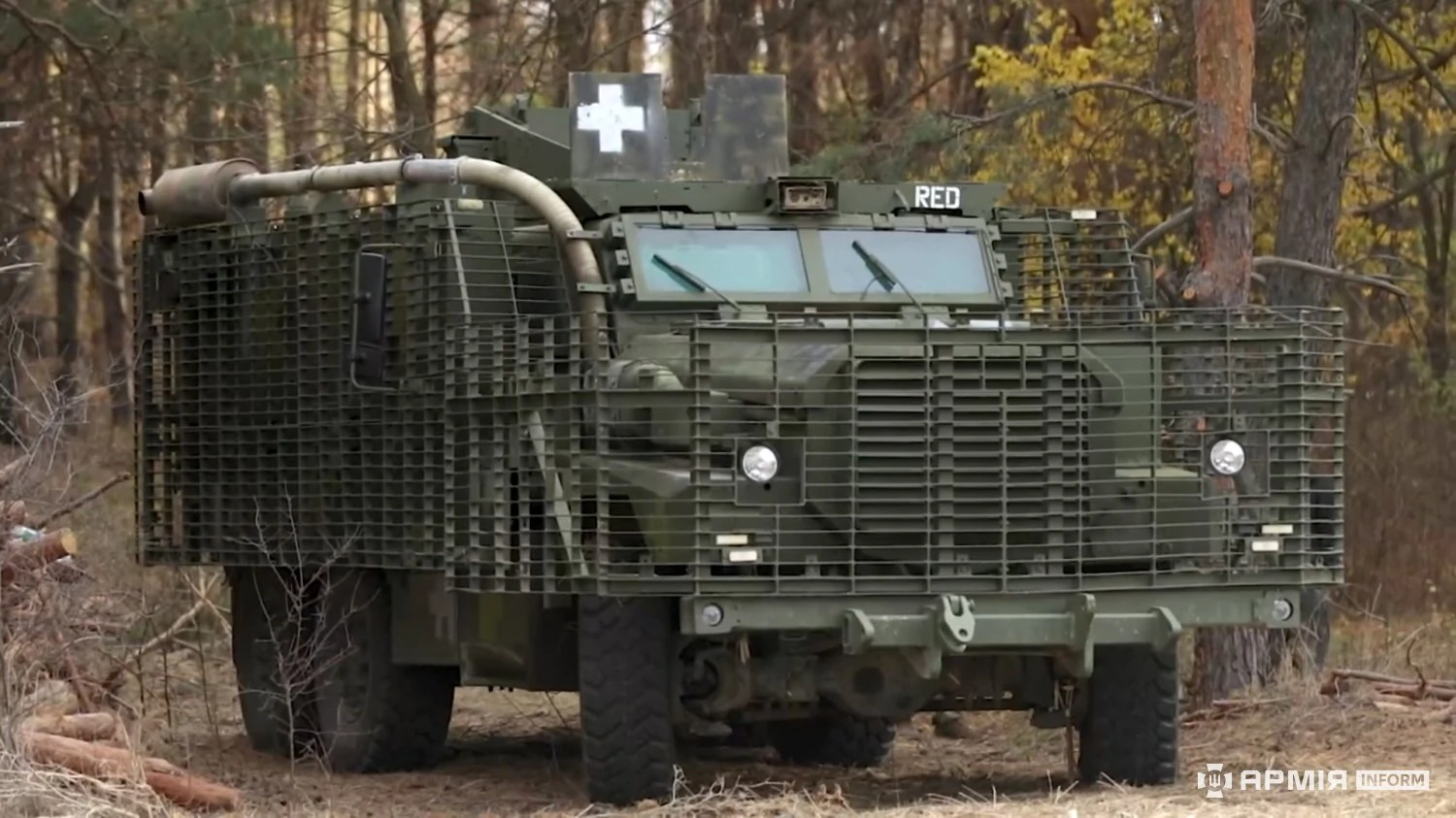
Resembling a large, kind dog, the Mastiff PPV combat armored vehicle is the British version of the American Cougar armored vehicle.
Designed to provide maximum crew protection under mine and explosive threat conditions, the Mastiff belongs to the MRAP (Mine Resistant Ambush Protected) class — specialized armored personnel carriers with enhanced mine-resistant and ballistic protection.
Fighters of the 505th Separate Battalion of the 37th Separate Marine Brigade shared their experience of combat operations using the heavy and powerful “iron dog” in the conditions of modern warfare.

“There’s no refrigerator, but there is a heater”
— The engine is quite solid — it has 330 horsepower pulling it. It handles the tonnage well. The automatic transmission is fail-safe. No matter how much I’ve driven it here, carrying out combat missions — it has never let me down, — says the driver-mechanic of the armored combat vehicle with the call sign “Red”.
His call sign is written on the outside, on the armor of the roof above the driver’s seat. Despite being produced in the UK, the American Cougar on which the Mastiff is based was not adapted for left-hand traffic in Great Britain.
“Red” has been carrying out missions in the Mastiff for more than two and a half years. This is a strong indicator of the vehicle’s durability and safety. Despite numerous enemy hits and mine explosions, the driver suffered no critical injuries and, at worst, usually escaped with concussions.


— I’ve been driving it for two and a half years — I was hit, I don’t even know how many times — and I’m still alive. So I can tell you this machine has more advantages. Far more advantages. As for drawbacks — that’s subjective, everyone judges by their own comfort. There’s no refrigerator, you know. But it even has a heater, — the serviceman jokes.
The driver emphasizes that the Mastiff has performed exceptionally well during many combat missions, taking part in both purely logistical operations and assault actions.
— This machine is worthy. In difficult situations during combat missions, it has withstood and continues to withstand everything with dignity. It does everything. It can do both — assaults and logistics — and it greatly helps the infantry, — “Red” stresses.

How ten Mastiffs stormed Novodonetske
A serviceman with the call sign “Kalyna” speaks about the combat use of Mastiffs during assault operations. He also speaks very highly of the armored vehicle, especially emphasizing its survivability on the battlefield and the very high level of protection for the driver, the vehicle commander, and the dismounted troops.
— It was the assault on the settlement of Novodonetske. Our column of ten Mastiffs went in to storm the settlement. That was when we first saw what these vehicles were capable of. When we approached the outskirts of the settlement, two vehicles — one on the right and one on the left — hit mines. But what’s most remarkable — as we later learned — is that no one inside those vehicles was injured, — he says.
Both armored vehicles detonated anti-tank mines designed to disable much heavier and better-protected armored equipment. However, the Mastiffs not only saved the lives of the personnel inside, but also proved fully repairable.

The Mastiff PPV withstood hits from hand-held anti-tank grenade launchers as well — even when the projectile struck not the armor, but the windshield of the armored vehicle. In those cases, the armored glass absorbed the impact and did not completely shatter.
— You’re just holding the steering wheel and in a split second you see an RPG grenade flying into your windshield. Then the glass just turns into a kind of mesh. A spiderweb, a net — and that’s it, — “Kalyna” recalls.
He says the first RPG round hit the windshield on the driver’s side, and the second exploded on the glass in front of the vehicle commander’s seat. The Mastiff withstood both hits and finally stopped only after the enemy also hit the radiator, while fragments from mine explosions shredded all the wheels.
— First there was an RPG hit to the driver’s windshield — it held. Then they hit the commander’s glass. After that I couldn’t drive anymore because I couldn’t see anything. Then they hit the radiator. And the wheels — those were mines, fragments. The wheels were shredded by fragments and the vehicle stopped, — the serviceman says, emphasizing that everyone inside the armored vehicle remained unharmed.
Assessing the Mastiff’s armor protection on a five-point scale, “Kalyna” gives it a solid and confident five.
— If we’re using a five-point scale, then for the tasks it was designed for — it’s a five, — he says.

“They say it can withstand a tank shell hit”
— The armor is good — very good on this machine. It withstands serious impacts. They say it can even withstand a direct hit from a tank round. Thank God no one here has tested that. But I think it probably can, because it’s very strong, — “Red” confirms his comrade’s words.
He notes that the armor protection has repeatedly withstood FPV drone strikes, saving the lives of both the driver and the dismounted infantry. However, he also points out a feature of the Mastiff that he does not particularly like: the lack of side doors for the driver and the navigator — the vehicle commander — to exit the cabin.
— I’ve driven other vehicles, for example the Kirpi. On the Kirpi, the doors open. When I was hit, the ability to open the door saved me. Once I was hit by a drone — smoke, gases, nothing to breathe. I opened the door — it ventilated, — “Red” recalls.

But on this vehicle they made good, solid armor — and the doors don’t open. The driver and the vehicle commander leave the Mastiff last. That’s why they made such armor — so we wouldn’t jump out of the vehicle, — he explains.
Additional protection is provided by a dense metal grille installed at the factory. It covers the hood with the radiator and the sides of the armored vehicle.
— It’s factory-standard — it came with this “grill” already installed, — says “Red.”
He notes that the protective grille is actually very useful, as it can catch a projectile and cause it to detonate at a certain distance from the armor, significantly reducing the blast impact.

“You just press the gas — and it goes”
Despite its considerable weight — about 16–17 tons — the Mastiff can reach high speeds and has good maneuverability. Driving the armored vehicle is not much more difficult than driving a regular SUV. Any experienced driver can operate the Mastiff without special instructions or lengthy training.
— On the highway it can hold “a hundred” (100 km/h — ed.). On rough terrain — 60 km/h max. Fuel consumption in that mode is about 35–40 liters, and in combat conditions it can be up to 60 liters, — “Red” says.
The driver is convinced that the Mastiff is significantly better and of a higher class than any Soviet or Russian armored vehicle.

— They’re completely different classes. Here you just press the gas — and it goes, — he notes.
According to the serviceman, the automatic transmission is extremely helpful, allowing the driver not to be distracted by shifting gears. This is especially important during night driving with night-vision devices or when it’s necessary to drive relying solely on the image transmitted to the screen by the roof-mounted camera.
— What saves you is the automatic transmission — no need to shift gears. You don’t think about anything, you just accelerate. It thinks for you, and you just need to watch the road and focus on it, — “Red” explains.
In his combat experience, there were cases when he had to drive relying exclusively on the image on the monitor. In those situations, they managed to successfully escape dangerous areas and save all the dismounted infantry.

“The Mastiff is coming!”
The infantry have a special attitude toward the Mastiff. The low rumble of its approaching engine calms them and instills confidence. Because when this reliable armored “dog” is coming for you, everything will definitely end well.
— When they ride in this vehicle, when I come to pick them up, they’re so happy! They say: “We’ve been waiting so much! We hear it rumbling: ‘Guuuu!’ That means it’s coming, it’s coming! The Mastiff is coming! We’re already calm because it will get us out no matter what,” — “Red” smiles.
He himself served in the infantry and knows well how much confidence it gives soldiers when a reliable armored vehicle with an experienced driver arrives for them. If the driver and vehicle commander are confident and calm, that mood quickly transfers to the troops.

The interior of the Mastiff is designed for eight dismounted soldiers, although “Red” has had to transport twice that number. In those cases, the soldiers had to squeeze in. When the troop compartment is filled as intended, the ride is quite comfortable.
— The troop compartment is very well designed. Everything is for the military, for the troops. Mounts for rifles, seat belts so the troops aren’t thrown upward, because the vehicle does bounce. When the troops are riding so their heads don’t spin, we say: “Watch TV, guys, so you can see we’re going in the right direction,” — the driver jokes, pointing to the monitor where the infantry can see the road ahead.
The serviceman explains that thanks to so-called run-flat inserts, the Mastiff can extract the troops and crew from even the most difficult situations.
— These wheels are equipped with run-flats. What’s a run-flat? Inside the rim there’s a thick rubber insert. Why is it there? In case the tire is punctured. If it’s hit by an FPV drone or shrapnel, it can still drive about 30 kilometers. There were times when we arrived and not a single wheel was intact, — the driver recalls.

“They are afraid of this machine gun”
The Mastiff’s formidable weapon is a large-caliber Canik machine gun of Turkish manufacture. During assaults on enemy positions, it can “reduce to zero” any temporary enemy shelter that hasn’t been properly fortified.
— Some of our vehicles perform machine gun combat tasks. There’s an armored group that can rush in to support the infantry — the machine gunner fires, the troops load up, and then the vehicle carries out evacuation. So that the machine gunner can fight effectively, nothing is mounted to the left, right, or rear.
I think when the orcs hear it coming out and opening fire, they start running. They are afraid of this machine gun. It penetrates very powerfully and provides strong support to the infantry, — “Red” says.

He recalls an incident when Russian forces managed to bypass Ukrainian positions from the flank. A Mastiff with a machine gun was sent in support — and the problem was solved.
— In the area where we’re fighting now, those b****ds came in from the side. They somehow managed to slip through. Our armored group rushed in on the Mastiff with a machine gunner assistant. They went to where five or ten enemies had arrived on motorcycles.
The Mastiff drove almost point-blank up to the house where they were holed up — and dismantled everything there. The house completely collapsed. The enemies were destroyed utterly, — the serviceman says with satisfaction.
“We’re holding on — and they won’t get close”
“Red” emphasizes that coordination between the driver and the vehicle commander, who acts as a navigator, is critically important. It is precisely this teamwork that allows them to accomplish the most difficult combat missions.
— It’s a tandem, that’s everything. Not just the driver alone, but also the guide next to him, who points out the right route. And the machine gunner covering you. All of this works as a tandem, plus a good vehicle. And that’s why we’re holding on — they won’t get close, — he says confidently.

The enemy is attempting to develop the production of naval drones and copy successful Ukrainian practices — both technical solutions and tactics.
Fighting continues in the northern part of the city of Pokrovsk in the Pokrovsk direction. A mechanized assault was repelled there the day before.
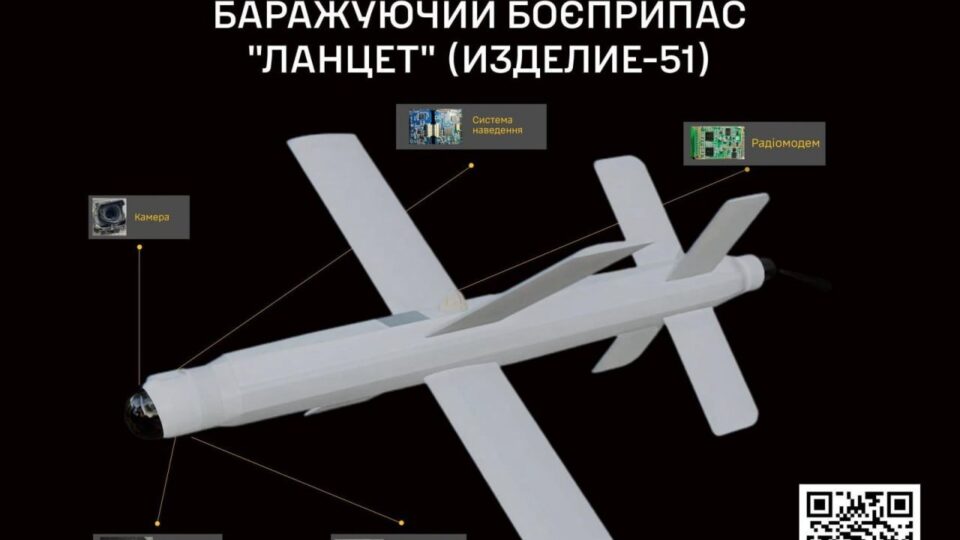
The Main Intelligence Directorate of the Ministry of Defense of Ukraine has published data on enterprises involved in the production of Russian loitering muniti

Another two-day round of negotiations between Ukraine and the United States concluded in Florida on March 22.
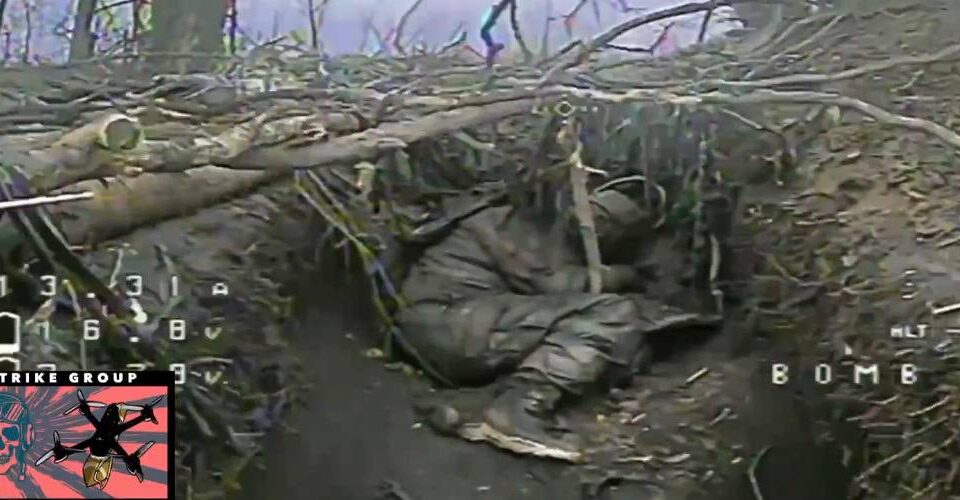
The enemy continues daily pressure and attempts to break through Ukrainian defenses in the Sloviansk direction.
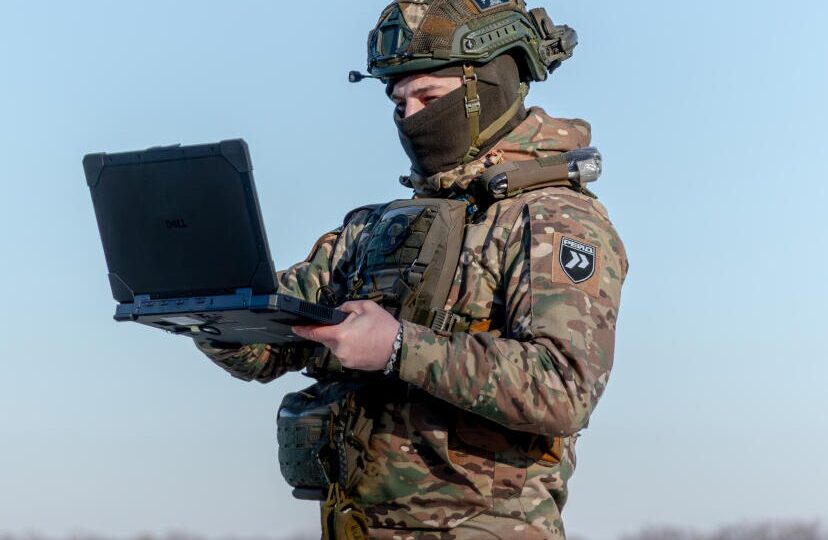
Over the past day, units of the Unmanned Systems Forces struck/destroyed 1,078 enemy targets.
The international delegation, headed by Ana Lucía Bueno, ICRC Public Health Coordinator, and Sujit Panda, Head of the Physical Rehabilitation…