The international delegation, headed by Ana Lucía Bueno, ICRC Public Health Coordinator, and Sujit Panda, Head of the Physical Rehabilitation…


The evolution of military technologies is moving at the speed of light, and today’s soldier on the battlefield is no longer just an infantryman.
One of the leading topics in the development of both military art and projects in the high-tech weapons sector is the integration of Augmented Reality (AR) directly into a soldier’s gear.
AR systems promise to turn an ordinary helmet into an intelligent interface that provides real-time threat visualization, merges data from drones and sensors, and creates shared situational awareness. Essentially, we are talking about creating a “digital sixth sense” for the soldier.
To take a detailed look at the concept, history, and prospects of AR on the battlefield, we invited Bohdan Dolintse, an expert on weapon development and advanced technologies.
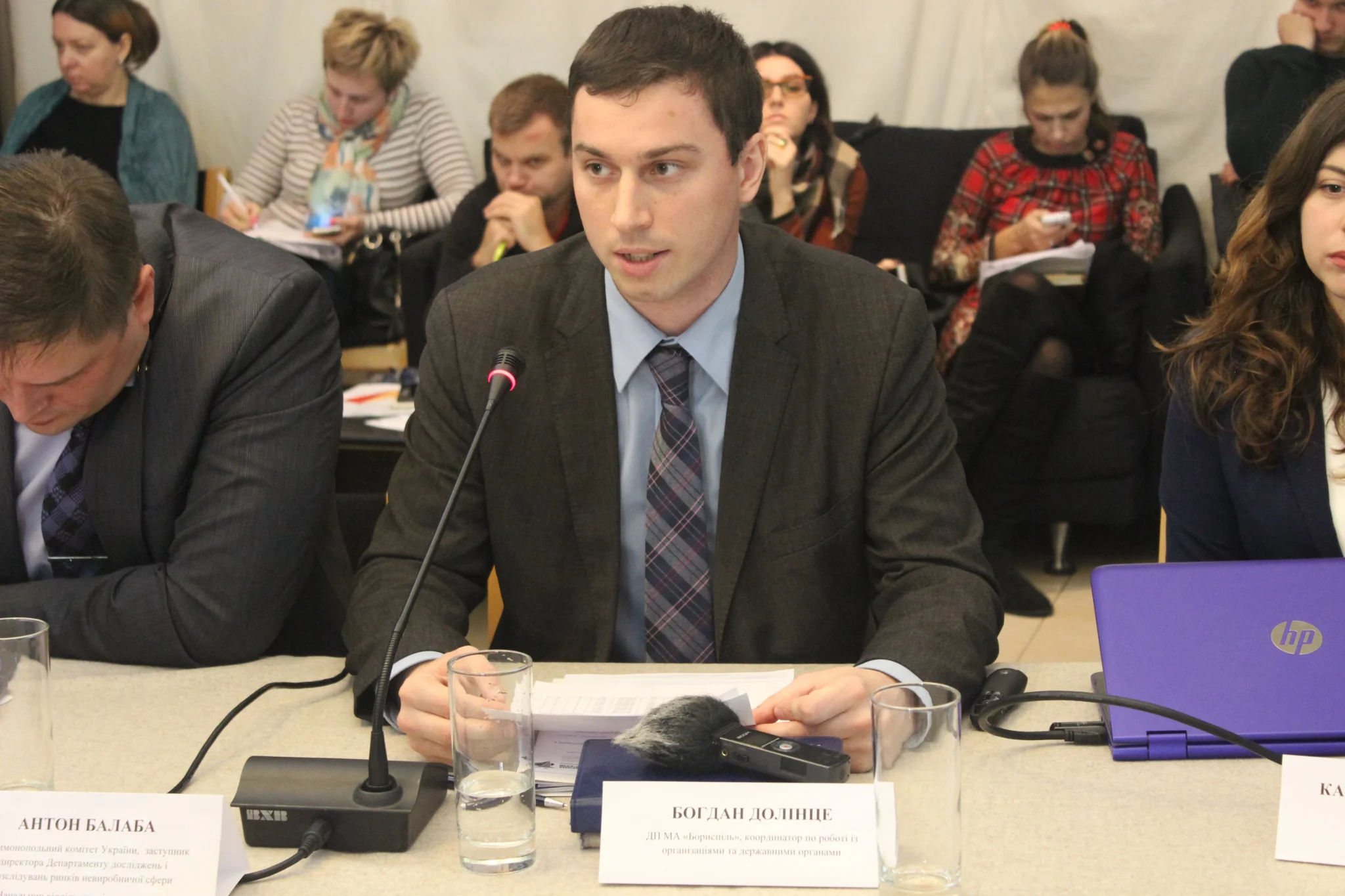
— So, Mr. Bohdan, what exactly do we mean when we talk about “Augmented Reality (AR) on the battlefield”? How does AR differ from virtual reality (VR) systems and conventional Heads-Up Displays (HUD) already used in aviation?
— When we talk about AR on the battlefield, it’s not about “pretty graphics”, but about reducing the decision-making cycle from minutes to literally 2–3 seconds. In modern warfare, this is the advantage.
AR is about enabling a soldier to see more than the eyes allow. Aviation was the first field to use this. It was there that the relevant displays first appeared, allowing additional situational awareness information to be projected directly onto a transparent screen in the cockpit, enabling the pilot to see simultaneously through the aircraft’s canopy.
As for the difference between augmented reality and virtual reality, I’ll elaborate a bit more.
First of all, when we talk about augmented reality, it means the user is working with the actual environment around them. But they also have additional sources of information, processed in certain ways and provided to them for making tactical decisions in real time.
This contrasts with virtual reality, where we are essentially talking about a completely closed information system. This means the user is fully immersed in artificially created reality, which usually may have no connection at all to the real environment surrounding them. Or this reality may undergo prior processing through special information systems.
If we talk about the development of augmented reality systems, the first aircraft sights and information displays appeared back in the 1940s, and by the 1960s they had already become standard technology for military aviation.
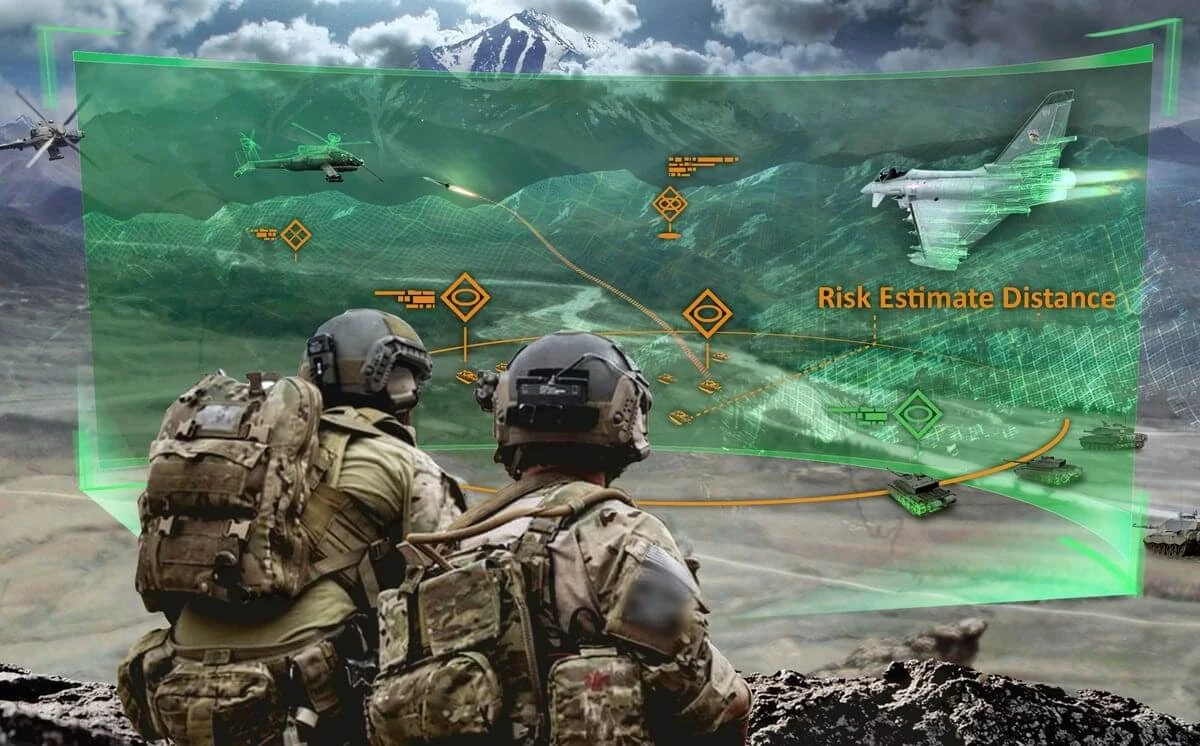
Let’s focus specifically on the possibility of using such solutions in real combat conditions directly on the battlefield at the level of individual combat units, such as a person, a platoon, an armored vehicle, or a tank.
Today, these technologies are only beginning to develop at the level of individual ground systems. The first such projects emerged not so long ago: around 2010. Since then, their implementation has depended on several important factors, such as the significant reduction in the cost of the components needed to make this possible.
These include semi-transparent displays, special cameras, communication and data-exchange systems. At the same time, the computational power of processors that can be integrated directly into soldiers’ helmets has increased.
And such systems can operate for several days on standard power sources.
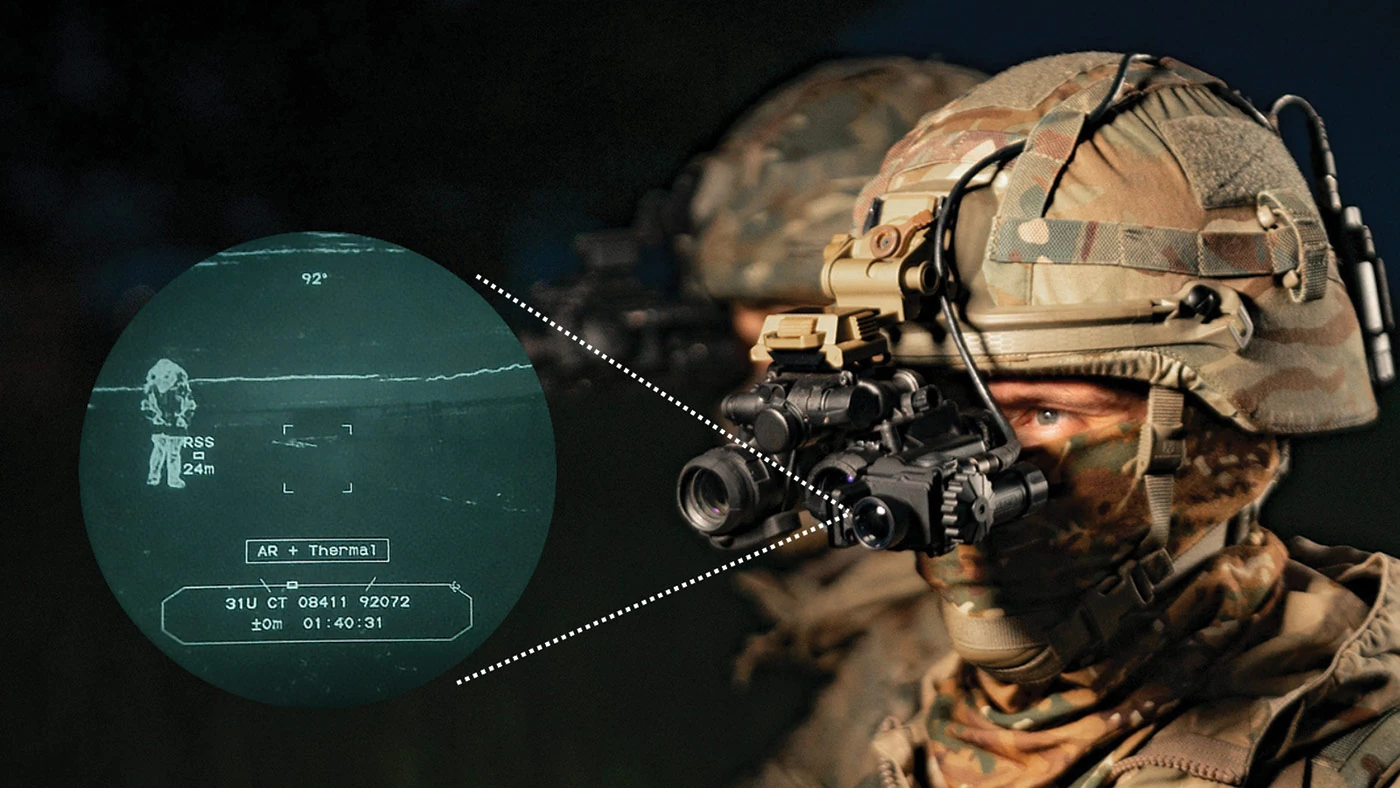
— How exactly do AR helmets or glasses assist a soldier in real time? What information can they display: maps, routes, ammunition data, thermal imagery?
— This is one of the tools of situational awareness for the service member who uses it. These are additional sources of information beyond ordinary visuals and sound, what they see or hear themselves. A modern AR helmet should have a delay of no more than 10–20 ms — this is the threshold at which the eye no longer “notices” lag.
First, it enables the overlay of static information — that is, data previously uploaded into the “smart” helmet. These can include various types of maps: satellite imagery, orthophotos from aerial platforms, or maps of enemy movement routes.

Second, it provides information from additional sources. This may include data about the plan of a particular operation. A soldier does not necessarily need to know the entire plan — the display can reveal it step by step, similar to completing a quest in a video game.
In other words, upon achieving certain assigned objectives, a further scenario of executing the combat plan may unlock. This limits the flow of unnecessary or irrelevant information at a given moment.
Even if a soldier or their equipment falls into enemy hands, the enemy will not be able to access the final mission plan for quite some time. This allows other units in the area of responsibility to continue the mission.
— How do AR systems ensure shared situational awareness (SSA) between units? How exactly are data from drones, sensors, and adjacent units integrated into each fighter’s field of view?
— We must add external sources of information. This includes the ability to receive additional real-time data, such as information from UAVs or from other systems operating in the same area. For example, from another soldier’s camera or vehicle.
Meanwhile, a commander can see the complete picture of their unit, including data on the vital signs of each individual soldier — in real time, provided the soldier’s equipment is equipped with the right sensors.
Another important element is integration with unified information systems of command structures. This makes it possible to receive real-time information when someone enters data into the general system regarding the passage of an enemy drone — where it is and what its coverage zone is. This allows understanding when to camouflage or refrain from active actions.
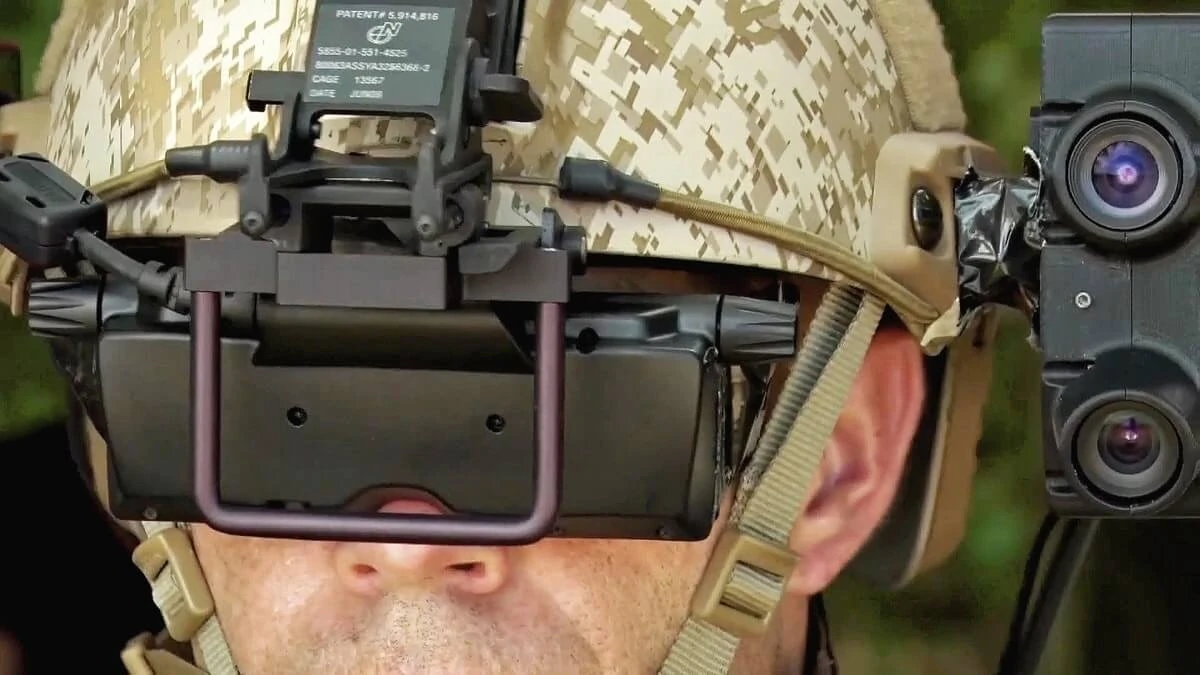
Thus, a company commander can see in the helmet the markings of their own soldiers’ locations and enemy positions based on drone data, even if they are outside the commander’s direct line of sight. The system can alert personnel when an enemy UAV approaches and suggest low-visibility shelter options.
Or, for example, detect enemy artillery activity — noting in real time the possible location, range, and azimuth of potential targets, allowing real-time operation adjustments and risk assessment.
— How effectively can AR be used for automatic aiming of small arms, grenade launchers, or even the artillery you mentioned? Can the system automatically highlight targets and calculate corrections?
— It’s important to note that target highlighting is not itself a part of augmented reality elements. These are additional tools already used for target designation. They may or may not be integrated.
However, we must remember that any target-designation systems usually reveal the position from which such actions are carried out. Therefore, they are generally not integrated directly into such systems. But there can be an alternative mechanism whereby an operator, upon noticing an enemy target, can mark it and transmit its coordinates.
This can be done even in simplified mode using voice commands, marking targets and adding them to a unified situational awareness system, such as the Ukrainian “Delta”. Adjacent units will then see the corresponding threats in real time.
Such solutions allow commanders to receive updates from drones and sensors in real time and make better decisions about striking targets, adjusting operational plans and tactical actions on the fly.
— We’ve discussed the advantages. Now — the potential problems. Is there a risk that too much information on the display may cause cognitive overload and worsen, rather than improve, situational awareness?
— It’s important to understand that effective information use is always an important factor — both in terms of dosage and the types of data soldiers receive on the battlefield.
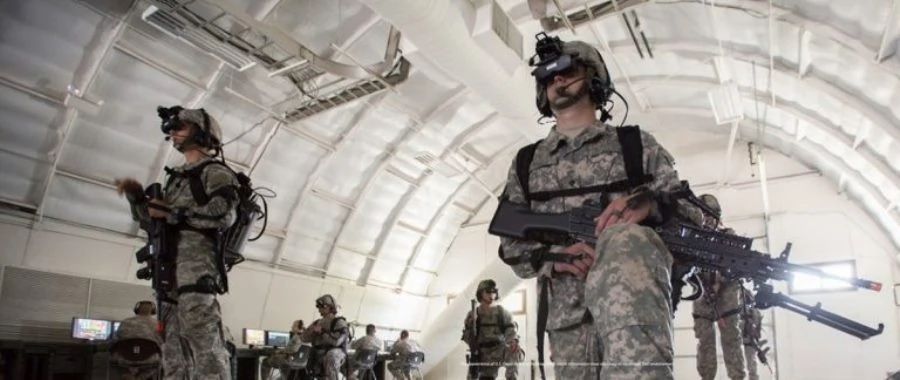
First, these systems can be configured. This means a soldier can independently adjust both the volume and types of information to receive only what is necessary and within set parameters.
Second, as a rule, these systems are always auxiliary. The primary decision must remain with the operator or user. Imagine a soldier looking at a building and the system immediately highlights a possible sniper shot zone, or a drone detects a heat signature that instantly appears in the helmet. This is AR in combat.
The most vulnerable part of AR is not the helmet, but the data transmission channel. If the enemy injects even one or two false markers, the unit may make the wrong decision.
— What major technological barriers stand in the way of mass implementation of these systems? For example: energy consumption, weight, data transmission delay, protection from strikes.
— The key barrier so far is the cost of components. These systems remain quite expensive.
If we talk about equipping even a single unit — from 10 to 30 people — we are already talking about millions and millions of dollars. In the IVAS program, one set costs about $50,000–60,000, so equipping a platoon means about $1–1.8 million.

There are still many unresolved issues: communication and data-exchange channels between system components and with command posts or base stations, which create risks of signal detection.
Another critical problem is the existence of unified data-processing infrastructure. These systems generally cannot operate effectively autonomously.
To ensure these systems truly perform their tasks, there must be a higher-level situational awareness infrastructure coordinated and supported by specially trained operators who can validate, record, and input data, service the system, and monitor intrusion or data-leak risks.
In 5–7 years, AR for ground operations will become as standard as thermal imagers or drone detectors are today. But those who will win are those who teach the system to work with AI and learn to correctly prioritize information.
— Which countries, besides the U.S. (IVAS project), are leaders in implementing AR technologies for infantry and armored vehicles? Are there projects in Eastern Europe or Asia worth noting?
— Such technologies are kept under strict secrecy today. This can be one of the key battlefield advantages. It is known that at least China, besides the United States, may be working in this direction.
There is virtually no open information about their sale. This may indicate a high level of protection for such technologies and developments to safeguard national advancements.
— In your opinion, how far have Ukrainian manufacturers and developers progressed in creating similar systems?
— Speaking broadly about domestic experience, we see that today Ukraine is probably one of the leaders in developing strategic and tactical situational awareness systems.
These include monitoring systems, UAV strike recording, artillery strike detection systems, and the well-known “Kropyva.” High-level systems in Ukraine are not only developed but are likely among the best in their class.
As for the development of systems directly for the battlefield — at the platoon or soldier level — we currently do not see ready solutions adapted to these conditions. Or they are not publicly disclosed.
Thus, the key task now is to integrate existing Ukrainian situational awareness systems with personal AR devices so they function as a unified battlefield ecosystem. Including using AI elements that would allow the system to collect more information about the enemy and help make balanced and effective real-time operational decisions.

The enemy is attempting to develop the production of naval drones and copy successful Ukrainian practices — both technical solutions and tactics.
Fighting continues in the northern part of the city of Pokrovsk in the Pokrovsk direction. A mechanized assault was repelled there the day before.
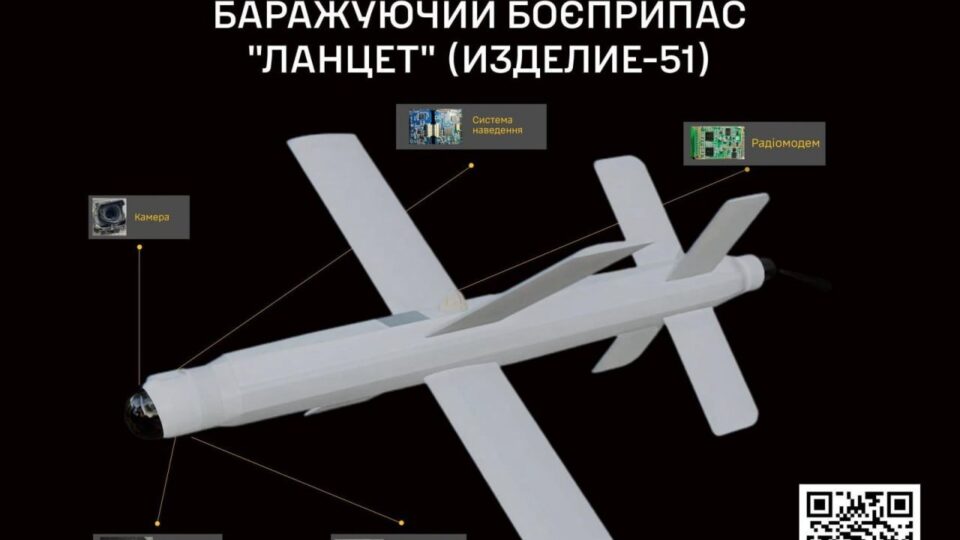
The Main Intelligence Directorate of the Ministry of Defense of Ukraine has published data on enterprises involved in the production of Russian loitering muniti

Another two-day round of negotiations between Ukraine and the United States concluded in Florida on March 22.
The enemy continues daily pressure and attempts to break through Ukrainian defenses in the Sloviansk direction.
Over the past day, units of the Unmanned Systems Forces struck/destroyed 1,078 enemy targets.
The international delegation, headed by Ana Lucía Bueno, ICRC Public Health Coordinator, and Sujit Panda, Head of the Physical Rehabilitation…